






Norfolk Terrier
Norfolkterrier, Norfolkinterrieri
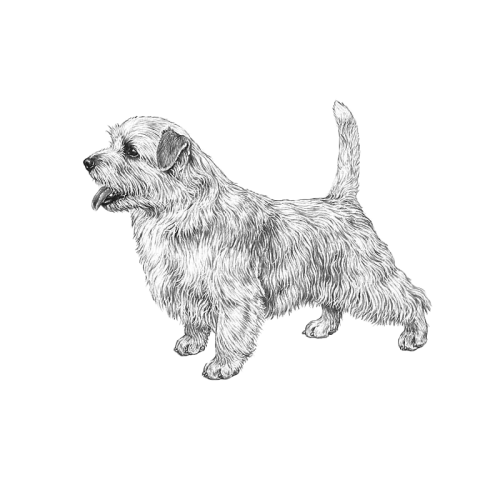
The originated in the 19th century in East Anglia, England, where it was bred to hunt small game like rats and foxes, often working alongside larger terriers. Known for its small size, wiry coat, and expressive face, it was prized for its courage, determination, and affectionate nature, becoming a beloved companion while maintaining its strong hunting instincts.
FCI Group
Terriers
AKC Group
Terrier
TKC Group
Terrier
Country of Origin
GB

Norfolk Terrier
Health Testing Requirements by Country
Autoimmune and Allergies
 FI
FI
Eye Conditions and Blindness
Cardiac and Circulatory
Skeletal and Muscular
Other Breed-Specific Considerations
Test Relevances
Epidermolytic Hyperkeratosis
Moderate Relevance
Asymptomatic Macrothrombocytopenia
Some Relevance
Muscular Dystrophy (Duchenne-type, DMD) GRMD
Some Relevance
Primary Lens Luxation (PLL)
Some Relevance
Coat Colour Dilution, dilution, MLPH-related
No Evidence
Degenerative Myelopathy
No Evidence
Hair, Long
No Evidence
Connections
- Updated