






Bearded Collie
Partacollie
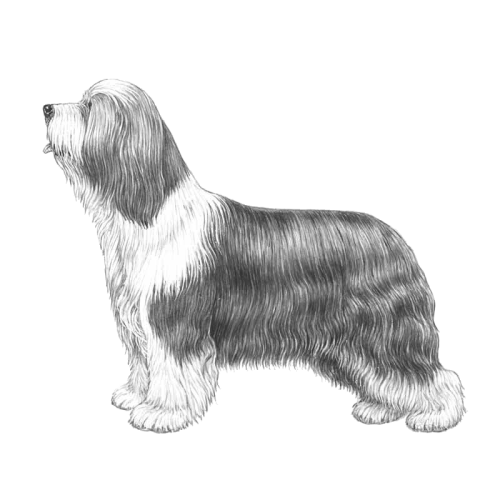
The Bearded Collie is a herding breed known for its long, shaggy coat and cheerful personality. Friendly and energetic, it thrives in active households and enjoys activities like herding, agility, and obedience training.
FCI Group
Sheepdogs and Cattledogs (except Swiss Cattledogs)
AKC Group
Herding
TKC Group
Pastoral
Country of Origin
GB

Bearded Collie
Health Testing Requirements by Country
Skeletal and Muscular
 UK
UK
Endocrine and Pancreas
 SE
SE
Eye Conditions and Blindness
Autoimmune and Allergies
 FI
FI
Other Genetic Testing
Genetic Material and Diversity
Temperament
Skin, Hair, and Nails
Test Relevances
Hyperuricosuria and Hyperuricemia (HUU)
Moderate Relevance
Multidrug Resistance 1 (MDR1)
Moderate Relevance
Canine Cyclic Neutropenia (Grey Collie Syndrome)
Some Relevance
Collie Eye Anomaly (CEA/CH)
Some Relevance
Degenerative Myelopathy
Some Relevance
Coat Colour Dilution, dilution, MLPH-related
No Evidence
Dermatomyositis
No Evidence
Pyruvate Kinase Deficiency
No Evidence
Von Willebrand Disease I
No Evidence
Von Willebrand Disease II
No Evidence
Progressive Retinal Atrophy (PRA-prcd)
No Evidence
- Updated