






Australian Stumpy Tail Cattle Dog
Bouvier australien courte queue, Perro pastor australiano stumpy tail Australian töpöhäntäinen karjakoira
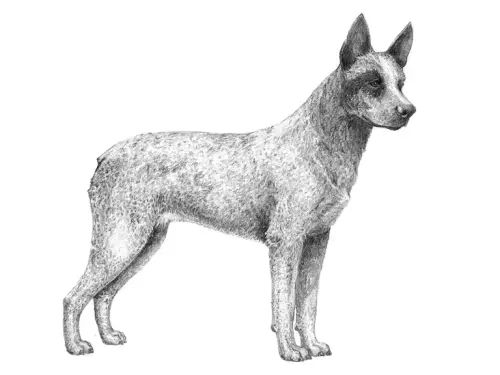
The Australian Stumpy Tail Cattle Dog is a herding breed developed to manage cattle in rough terrain and hot climates. Known for its naturally short tail, strong work ethic, and independence, it thrives with active owners and plenty of physical and mental stimulation.
FCI Group
Sheepdogs and Cattledogs (except Swiss Cattledogs)
AKC Group
Foundation Stock Service
TKC Group
Not Recognized
Country of Origin
AU

Health Testing Requirements by Country
Skeletal and Muscular
 FI
FI
Test Relevances
Neuronal Ceroid Lipofuscinosis 5 (NCL5)
Some Relevance
Primary Lens Luxation (PLL)
Some Relevance
Progressive Retinal Atrophy (PRA-prcd)
Some Relevance
Tail length, Short
Some Relevance
Coat Colour Dilution, dilution, MLPH-related
No Evidence
Cystinuria Type I-A
No Evidence
Degenerative Myelopathy
No Evidence
Myotonia Congenita
No Evidence
Von Willebrand Disease I
No Evidence
- Updated