






Table of Contents
- Breeds Overview - 'In a nutshell'
- What do caretakers of Corgis need to know?
- Population Statistics for Corgis - the Trends
- Corgis - Disease Conditions and Health Strategies
- Key Health Concerns for Welsh Corgis
- References and Databases
Breeds Overview - 'In a nutshell'
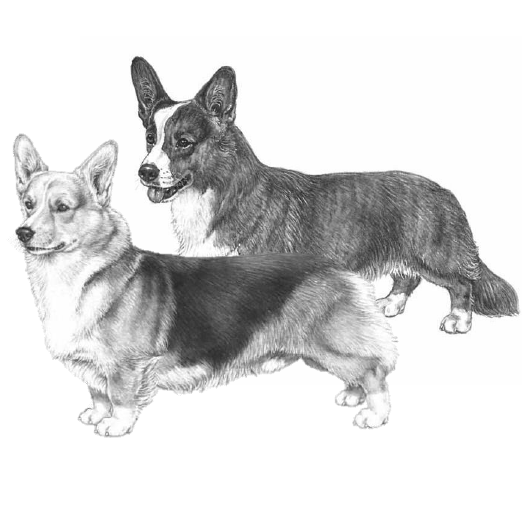
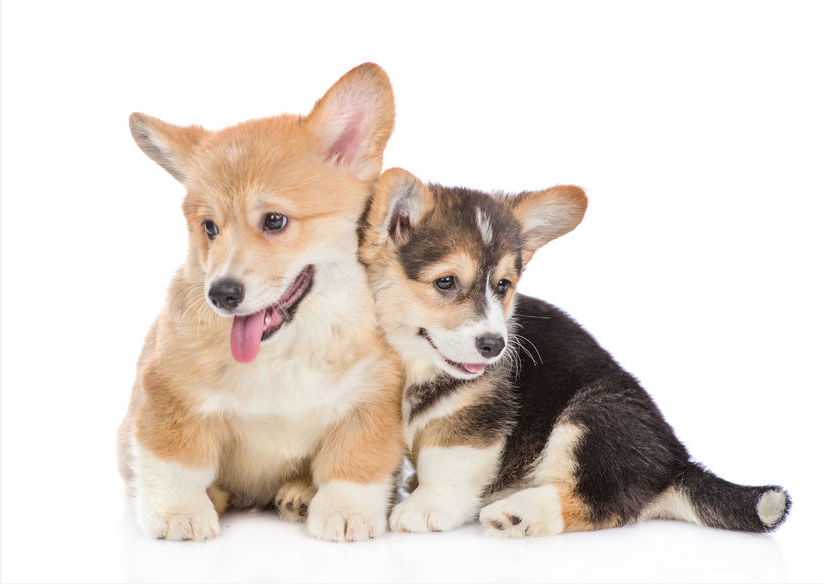
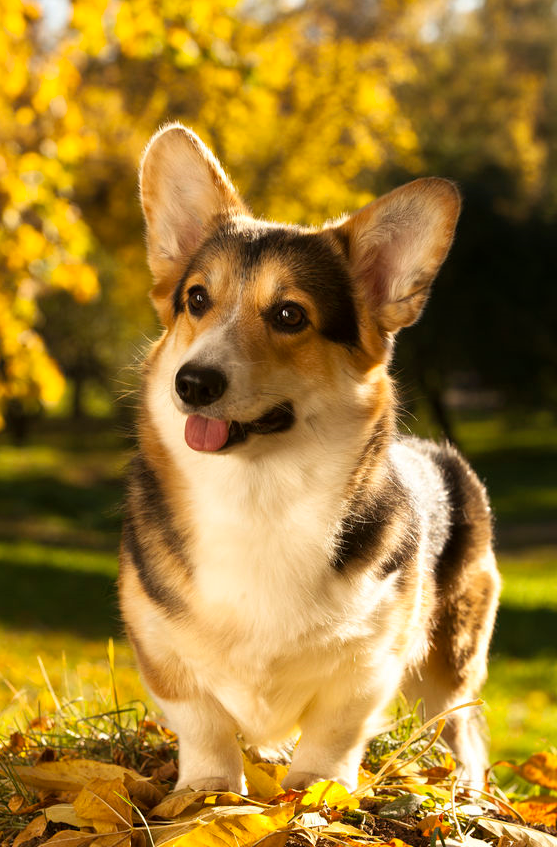
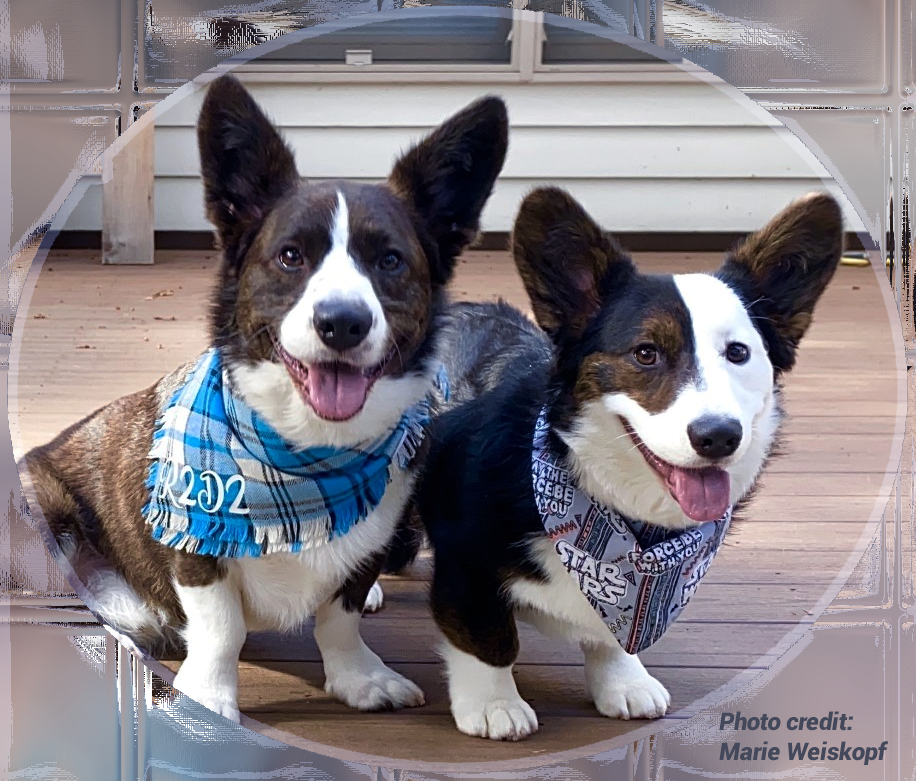
- Welsh Corgis include the Pembroke Welsh Corgi and the Cardigan Welsh Corgi
- Herding Breeds (cattle/livestock - considered as heelers/drovers, watch dogs) – are devoted to their family
- Generally speaking, healthy – lifespans > 10 -15 years
- Health screening is done; for health management – the number of clinically affected dogs is low for many of the conditions for which tests are available.
- Both breeds are Chondroplastic (dwarf)
- Conformation – short-legged, long backs - there are conformation/phenotypic differences between the 2 breeds.
What do caretakers of Corgis need to know?
These breeds are intelligent and athletic - weight management, regular daily exercise and early socialization and training are of importance. Skeletal health conditions (spine and joint issues) can impact quality of life. Originally bred as tractable working/herding dogs appropriate handling of their energy level and managing herding tendencies can be challenging.
Population Statistics for Corgis - the Trends
The Pembroke Welsh Corgi is the more popular of the 2 Corgi breeds - in US, increasingly popular year over year for the past decade, the breed reached the #10 AKC ranking in 2019. The population in EU countries has been steadily rising over the past several years as well. With the surging popularity of Designer breeds over the past decade, the Pembroke has been crossbred with numerous other breeds (Dorgi, Cosenji, Borgi, Cojack, etc..). Recognizing health and character/temperament concerns inherent in breeds that are used to create the Designer breeds is essential to ensure inherited traits of a deleterious or problematic nature are not produced in offspring. 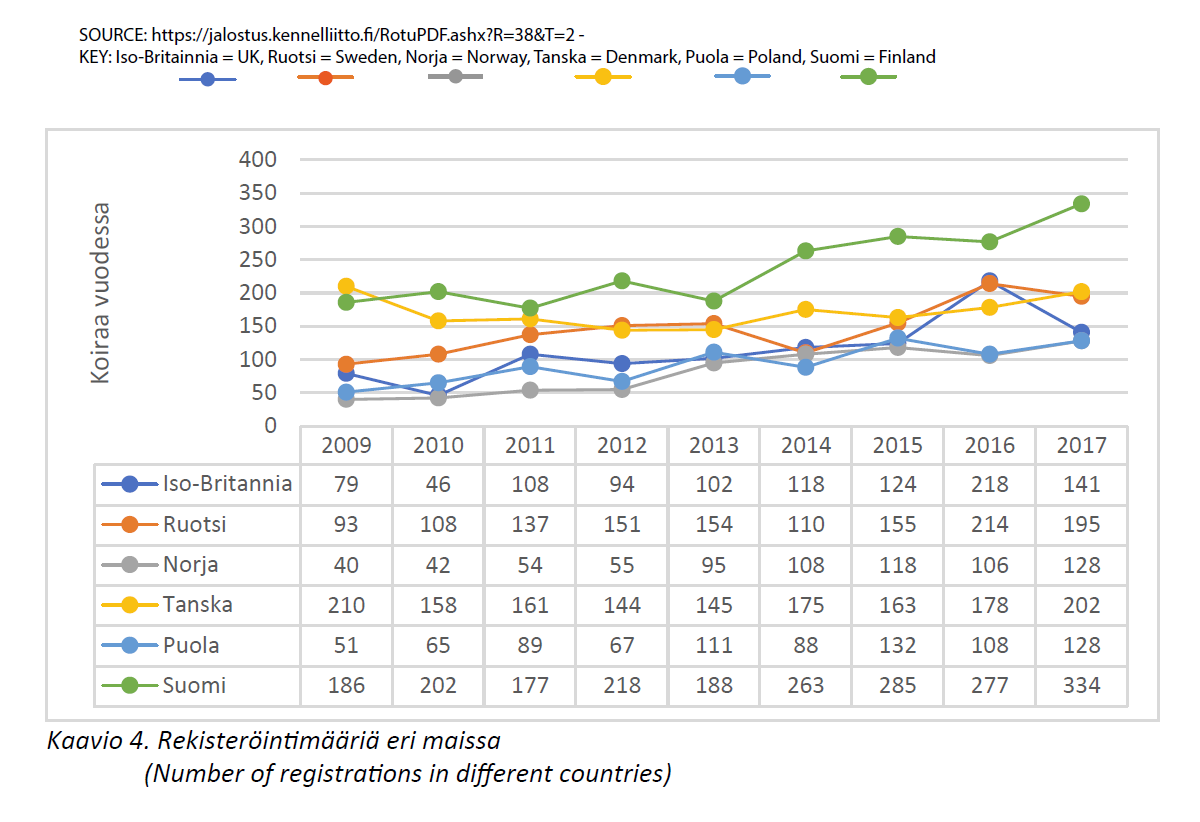
The Cardigan Welsh Corgi shows a low population size in EU – considered as “Vulnerable” (<300 annual registrations) by UK-KC) - ranked #66 by AKC in 2019. See Registrations data for several EU countries...
Table: Registrations: source: https://jalostus.kennelliitto.fi/RotuPDF.ashx?R=38&T=2 - Iso-Britainnia = UK, Ruotsi = Sweden, Norja = Norway, Tanska = Denmark, Puola = Poland, Suomi = Finland >>>>>>>>>>>>>>
Corgis - Disease Conditions and Health Strategies
Pembroke Welsh Corgi - Conformation, Distinguishing information
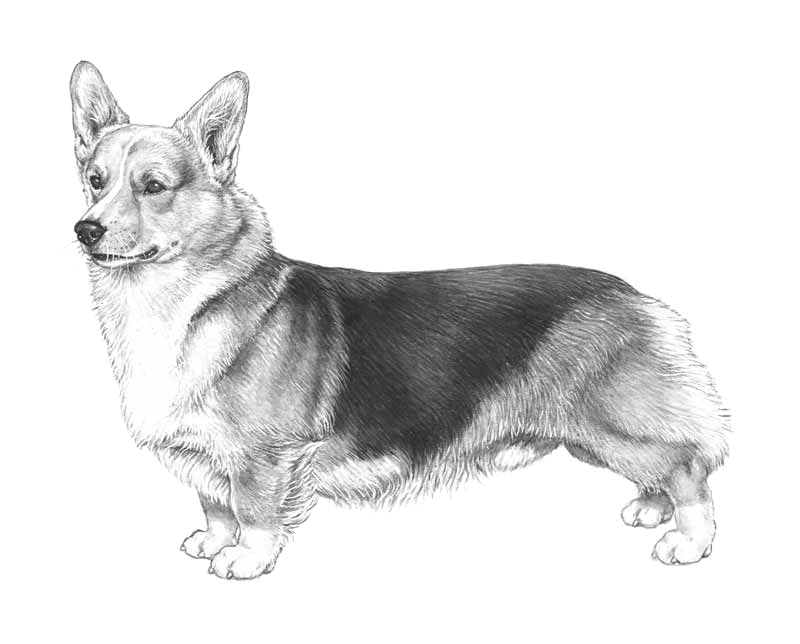
- Short tails/cropped (where docking is allowed)
- Smaller than the Cardigan
- Descended from the Nordic Spitz breeds
Health Testing Recommendations and Requirements for Pembrokes
The table below represents an overview of the focus, management strategies and approaches to health testing protocols for this breed which are available from several Kennel and Pembroke Welsh Corgi Breed Clubs, i.e. US, UK, Sweden, Finland, Denmark*... Testing for conditions may be recommended, required for registration, and/or acknowledged as present in individual dogs or as more or less prevalent in some family lines - management of health testing in populations can vary from country to country. The "All strategies" designation indicates broad agreement among breed managers on performing testing for the condition. Recognition of the value of performing a given test in the All Strategies designation may not reflect the incidence of or clinical impacts for the condition within a breed.
* A word on Health & Breeding Strategies... See references below for a list of Breeding strategy document links.
Documentation including breeding strategies, health surveys and links to Pembroke Breed clubs are available on the PWC page in our Pedigree Dogs Database. We encourage anyone with an interest in Pembrokes to visit the Breed Club websites to access information relevant to understanding breed characteristics (Breed Standards, Illustrated Standards) and educational content related to health and welfare management.
| Available Tests | Breeding Strategy – Comments |
|---|---|
|
Hip evaluation
|
All strategies (Hip ratings of tested dogs generally speaking fall into OFA's good-fair range/EU scheme's B-C range.)
|
|
Eye Evaluation
|
All Strategies
|
|
DNA – PRA (rcd3) (gPRA)
|
All strategies/coupled with Eye Evaluation. Of concern in management of breed in all countries/tested as affected % is low.
|
|
Obesity/diabetes
|
Obesity is a concern in management of breed in all countries/diabetes ancillary.
|
|
Elbow Evaluation
|
Testing is conducted in multiple countries/Clinical symptom evaluations
|
|
Shoulders, patellas
|
Testing is conducted in multiple countries/Clinical symptom evaluations
|
|
Spinal Evaluation
|
Testing is conducted in multiple countries/Clinical symptom evaluations
|
|
Reproduction
|
Of concern in management of breed in all countries; bitch conformation, dystocia, fertility in females and males
|
|
Urinary
|
Mentioned in Swedish population (Agria), UK health survey
|
|
DNA – Chondrodystrophy (Type 1 IVDD)
|
??? - newer test. # of evaluations – unknown/breed tendency to develop spinal issues due to conformation/weight & conditioning mismanagement
|
|
DNA – Coat Color/Type
|
Red, sable, fawn, or black and tan – dilutes an issue; 'fluffy' coats exist-serious fault/conformation showing
|
|
DNA – Degenerative Myelopathy
|
US – testing is done - stats available at OFA. Position of non-US clubs: onset and disease development need further study – populations other than US may not be significantly affected. General advice: Test if condition is evident/present in pedigree. FOR ANALYSIS SEE: PWCCA: Article: Degenerative Myelopathy: Jerold Bell: http://pwcca.org/about-pembrokes/canine-degenerative-myelopathy-and-genetic-testing-in-pwcs/
|
|
DNA – vWD
|
Testing done/multiple countries
|
|
DNA – Exercise Induced Collapse (EIC)
|
Awareness of condition in multiple countries, some testing done
|
|
|
|
|
|
|
NOTE: Tests and Health matters
Epilepsy, Hypothyroidism, Digestive Issues, Auto-immune issues, Heart murmur, Dentition issues (tooth loss) as well as cancers are topics present in multiple countries' club health information on the Corgi breeds. The prevalence and/or clinical expression of these conditions appears to be rare in the breeds (based on available data). Important: behaviour and temperament are strong breeding selection criteria.
Cardigan Welsh Corgi - Conformation - Distinguishing Information
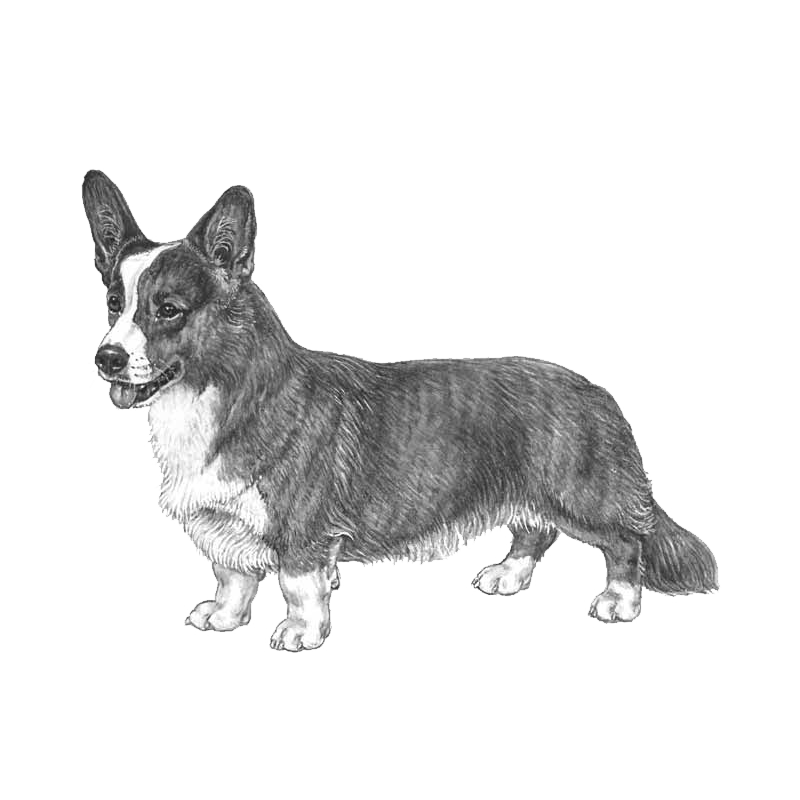
- Larger than the Cardigan
- Long tails/not cropped
- Larger, longer in back/more waist definition, smaller eye than Pembroke
- Rounded ear tip
- Descended from the German Teckel (Dachshund) - theory
Health Testing Recommendations and Requirements for Cardigans
The table below represents an overview of the focus, management strategies and approaches to health testing protocols for this breed which are available from several Kennel and Cardigan Welsh Corgi Breed Clubs, i.e. US, UK, Sweden, Finland, Denmark, Norway, France*... Testing for conditions may be recommended, required for registration, and/or acknowledged as present in individual dogs or as more or less prevalent in some family lines - management of health testing in populations can vary from country to country. The "All strategies" designation indicates broad agreement on performing testing for the condition. Recognition of the value of performing a given test in the All Strategies designation may not reflect the incidence of or clinical impacts for the condition within a breed.
*A word on Health & Breeding Strategies... See references below for a list of Health & Breeding strategy document links.
Documentation including breeding strategies, health surveys and links to Pembroke Breed clubs are available on the CWC page in our Pedigree Dogs Database. We encourage anyone with an interest in Cardigans to visit the Breed Club websites to access information relevant to understanding breed characteristics (Breed Standards, Illustrated Standards) and educational content related to health and welfare management.
| Available Tests | Breeding Strategy – Comments |
|---|---|
|
Hip evaluation
|
All strategies (Hip ratings of tested dogs generally speaking fall into OFA's good-fair range/EU scheme's B-C range.)
|
|
Eye Evaluation
|
All Strategies
|
|
DNA – PRA (rcd3) (gPRA)
|
All strategies/coupled with Eye Evaluation. Of concern in management of breed in all countries/tested as affected % is low
|
|
Obesity / diabetes
|
Obesity is a concern in management of breed in all countries/diabetes ancillary
|
|
Elbow Evaluation
|
Testing is conducted in multiple countries/Clinical symptom evaluations
|
|
Shoulders, patellas
|
Testing is conducted in multiple countries/Clinical symptom evaluations
|
|
Spinal Evaluation
|
Testing is conducted in multiple countries/Clinical symptom evaluations; mentioned in Swedish Agria BP and OFA Health Survey - IVDD/spondylosis/vertebral anomalies
|
|
Reproduction
|
Narrow breeding base: Global Population Management necessary. Whelping difficulties/Cesarean Sections mentioned as issue to track.
|
|
Urinary
|
Mentioned in Swedish Agria BP, OFA Health Survey
|
|
DNA – Chondrodystrophy (Type 1 IVDD)
|
??? - newer test. # of evaluations – unknown/breed tendency to develop spinal issues due to conformation/weight & conditioning mismanagement
|
|
DNA – Coat Color/Type
|
Black & White; Blue Merle & White; Brindle & White; Red & White; Sable & White. Dilutes an issue; 'fluffy' coats exist-serious fault/conformation showing
|
|
DNA – Degenerative Myelopathy
|
US – testing is done - stats are available at OFA. Position of non-US clubs: onset and disease development need further study – populations other than US may not be significantly affected. General advice: Test if condition is evident/present in pedigree. FOR ANALYSIS SEE: CWCCA: Article: https://cardigancorgis.com/cwcca/breed/health/dm/
|
|
DNA – vWD
|
few tests in US/notes indicate unknown # of affected - sporadic incidence
|
|
DNA – Exercise Induced Collapse (EIC)
|
Evidence of EIC in Pembrokes, testing not common practice in Cardigan breed.
|
|
|
|
|
|
|
NOTE: Tests and Health matters
Epilepsy, Hypothyroidism, Digestive Issues, Auto-immune issues, Heart murmur, Dentition issues (tooth loss) as well as cancers are topics present in multiple countries' club health information on the Corgi breeds. The prevalence and/or clinical expression of these conditions appears to be rare in the breeds (based on available data). Important: behaviour and temperament are strong breeding selection criteria.
Key Health Concerns for Welsh Corgis
 Below we are offering data analysis from Swedish Agria Breed Profiles - 2011-2016 on 1.7 million dog-years-at-risk for all breeds and >2,500 for the Corgis. You can read more about the Breed Profiles and how they are used by breed clubs to in development of breed health strategies HERE.
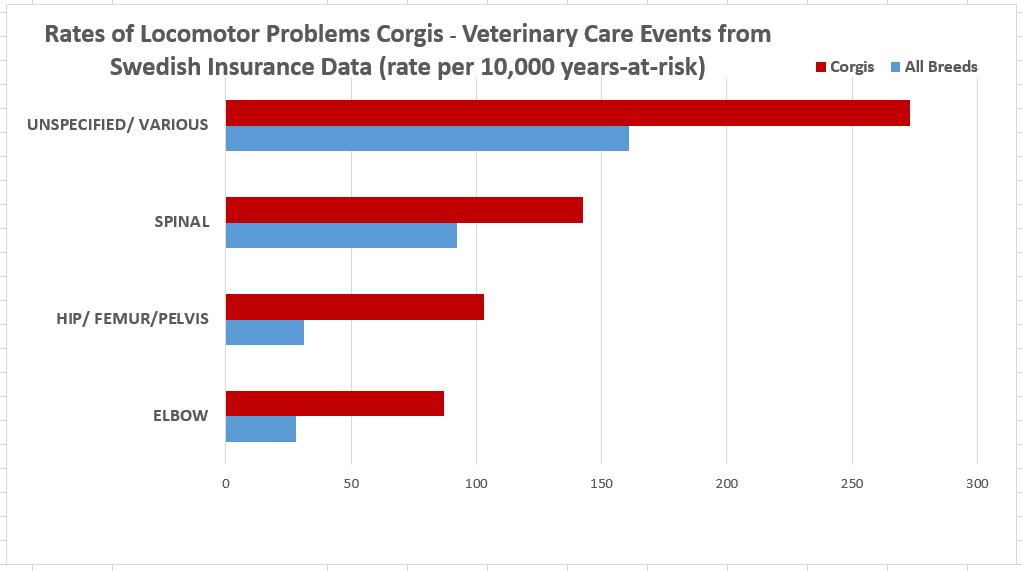
The Agria data (Veterinary Care Events) indicates...locomotor issues exist in Corgis...
Among 203 breeds, Corgis ranked: 8th highest for Hip; 17th for Elbow; 35th for Unspecified / Various, and 41st for Spinal diagnosis. All these can be aggravated by weight/obesity, an important concern in these dogs.
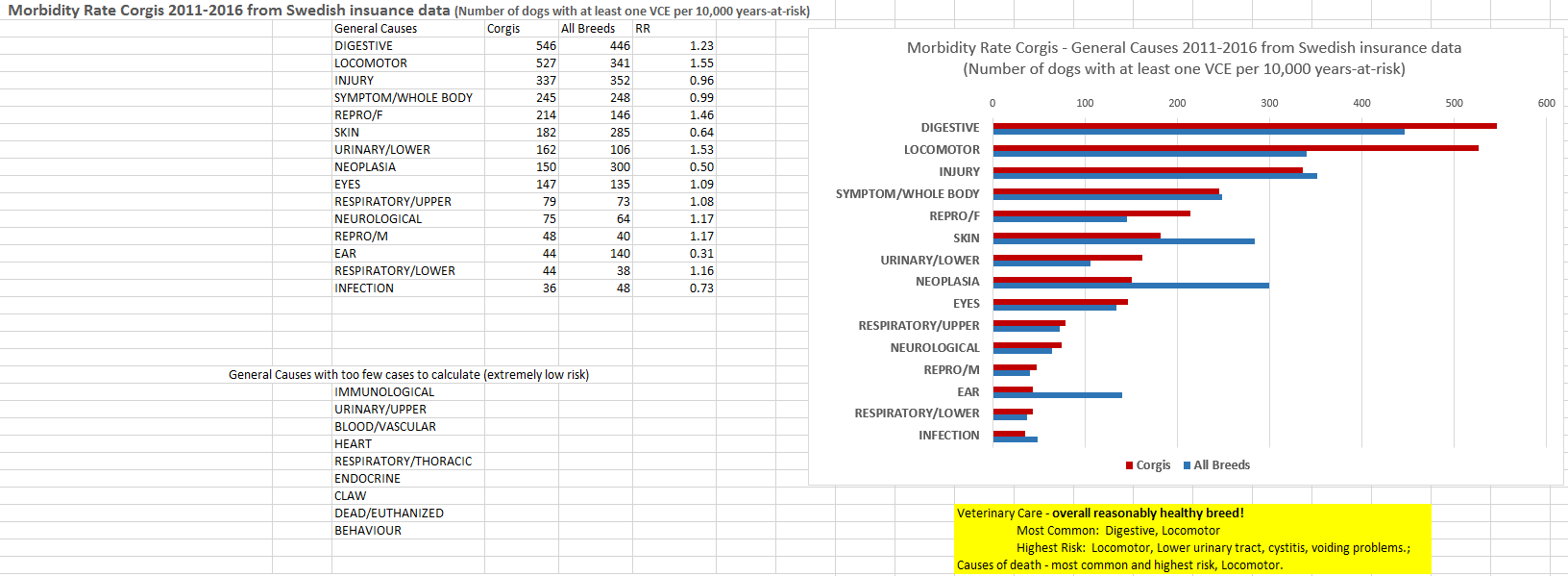
Veterinary Care - overall reasonably healthy breeds!
- Most Common: Digestive, Locomotor
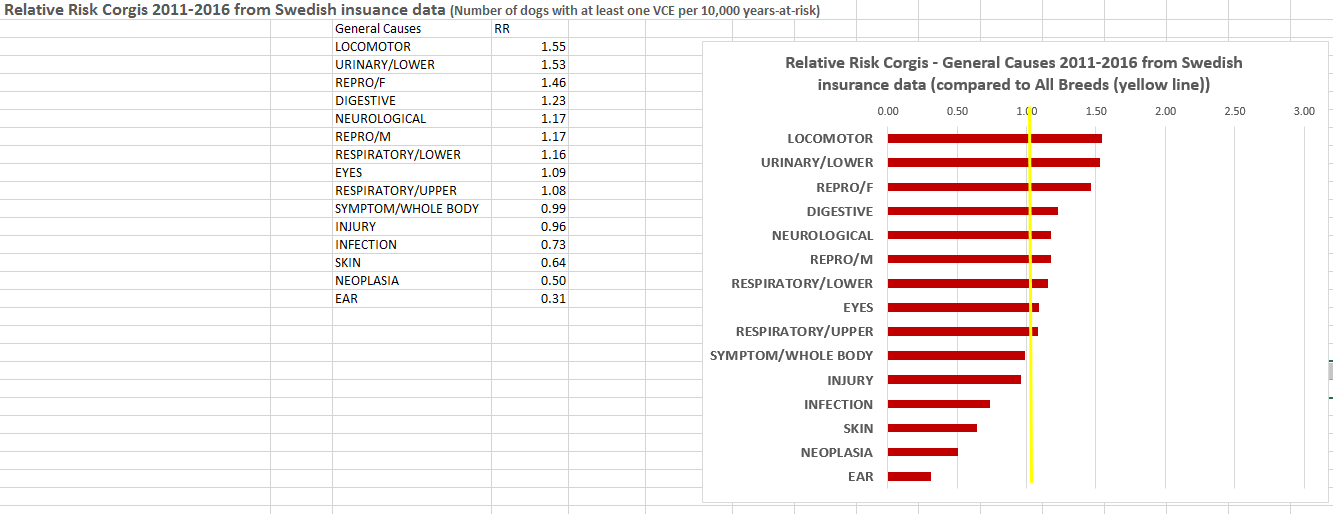
- Highest Risk: Locomotor, Lower urinary tract, cystitis, voiding problems.;
- Causes of death - most common and highest risk, Locomotor.
Morbidity Rate Corgis 2011-2016 from Swedish insurance data (Number of dogs with at least one VCE per 10,000 years-at-risk)
MOST COMMON
Relative Risk Corgis 2011-2016 from Swedish insurance data (Number of dogs with at least one VCE per 10,000 years-at-risk)
HIGHEST RISK
PDF version Most Common - Highest Risk
VC-Corgi-Agria 2011-16 Most Common - Highest Risk.pdf
When we look at the two Corgi breeds - their appearance, their original purpose and development we can compare the Corgis to... All Breeds, other herding breeds and dachshunds... Data from the 2011-2016 Agria Breed Profiles...

References and Databases
DogWellNet Corgi Resources
DogwellNet Pedigree Dogs Database
Genetic Tests (HGTD)
PEMBROKE Welsh Corgi: Health/Breeding Strategy Documents and Links:
- US: OFA: CHIC: https://www.ofa.org/recommended-tests?breed=WCP
- OFA: Breed Summary Report: https://secure.ofa.org/regSums/PEMBROKE WELSH CORGI.pdf
- UK/TKC: Breed Watch: https://www.thekennelclub.org.uk/services/public/breed/watch/display.aspx?breed=5145
- Sweden: RAS: RAS VERSION 4 WELSH CORGI PEMBROKE: https://www.skk.se/globalassets/dokument/rasdokument/ras-welsh-corgi-pembroke.pdf
- Denmark: Health Schemes relevant to PWC: https://www.hundeweb.dk/dkk/public/openPage/tjenester/avlsrestriksjoner/raseData.html?RAID=0390
- Finland: JTO: 2020-2024 - WELSH CORGI PEMBROKE: https://jalostus.kennelliitto.fi/RotuPDF.ashx?R=39&T=2
- PEVISA 2020: https://www.kennelliitto.fi/en/media/3794 : https://www.corgiseura.net/jalostus/pevisa/
Health Surveys
- OFA: https://www.ofa.org/about/educational-resources/health-surveys
- UK: KC: 2004 Health Survey: https://www.thekennelclub.org.uk/media/16778/welsh corgi pembroke.pdf
- UK: KC: 2014 Health Survey: https://www.thekennelclub.org.uk/media/749806/welsh_corgi__pembroke_.pdf
- UK: KC: Population Analysis: https://www.thekennelclub.org.uk/media/686608/welsh_corgi__pembroke_.pdf
CARDIGAN Welsh Corgi: Health/Breeding Strategy Documents and Links:
- UK: The Kennel Club: Breed Watch: https://www.thekennelclub.org.uk/services/public/breed/watch/display.aspx?breed=5144
- Health Schemes relevant to this breed: https://www.thekennelclub.org.uk/services/public/breed/health.aspx?id=5144
- Denmark: Health Testing Requirements (Danish): https://www.hundeweb.dk/dkk/public/openPage/tjenester/avlsrestriksjoner/raseData.html?RAID=0380
- Norway: Rasespesifikk avlsstrategi (RAS): http://www.corgi.no/ras/
- Finland:
- Sweden: RAS: https://www.skk.se/globalassets/dokument/rasdokument/ras-welsh-corgi-cardigan.pdf
- France: Cotation: http://www.welshcorgi.fr/le-club/documents-utiles/demande-de-cotation
- Netherlands: Generations & Health Online database: Search Database by NHSB number, name or chip number. The Generations & Health Online database contains the data of dogs registered in the Dutch Dog Studbook (NHSB) born in or after 1997. https://www.houdenvanhonden.nl/generaties-gezondheid-online/
- US: CHIC: https://www.ofa.org/recommended-tests?breed=WCC
Health Surveys
- OFA Health Survey: https://www.ofa.org/about/educational-resources/health-surveys#api_summary
- UK/KC 2004: https://www.thekennelclub.org.uk/media/16774/welsh corgi cardigan.pdf
- UK/KC 2014: https://www.thekennelclub.org.uk/media/749802/welsh_corgi__cardigan_.pdf
- UK/KC Population Analysis: https://www.thekennelclub.org.uk/media/686604/welsh_corgi__cardigan_.pdf
- 126 Cardigan Welsh Corgi registered by the Kennel Club in 2019: See KC stats at: https://www.thekennelclub.org.uk/registration/breed-registration-statistics/
Note: IPFD cannot be held responsible for inaccurate content or any outcome from the use of information or resources found on this site.
Listing in the HGTD Database does not represent an accreditation or endorsement of any Genetic Test Provider.
The Overviews of Breeding and Health Strategies, collected lists of tests and health information for these breeds presented herein do not represent an endorsement of any Breeding or Health management strategy.
IPFD and The World Small Animal Veterinary Association
See our series of Meet the Breed articles in the WSAVA Bulletin and associated Get a GRIHP! Articles on DogWellNet.com:
Get a GRIHP! Articles on DogWellNet.com:
- Welsh Corgi
- Dachshund
- French Bulldog
- Australian Shepherd
- Saluki
- Golden Retriever
- Bernese Mountain Dog
- Black Russian Terrier
- Pug
- Finnish Spitz
- Rhodesian Ridgeback
- Rottweiler
- Whippet
- Belgian Shepherd
- English Bulldog
- Irish Soft Coated Wheaten Terrier
- Dalmatian
- Border Terrier
- Staffordshire Bull Terrier
- Siberian Husky
- Dobermann
- Shih Tzu
- English Setter
- Beagle
- Chihuahua
Recommended Comments
Join the conversation
You can post now and register later. If you have an account, sign in now to post with your account.
Note: Your post will require moderator approval before it will be visible.