





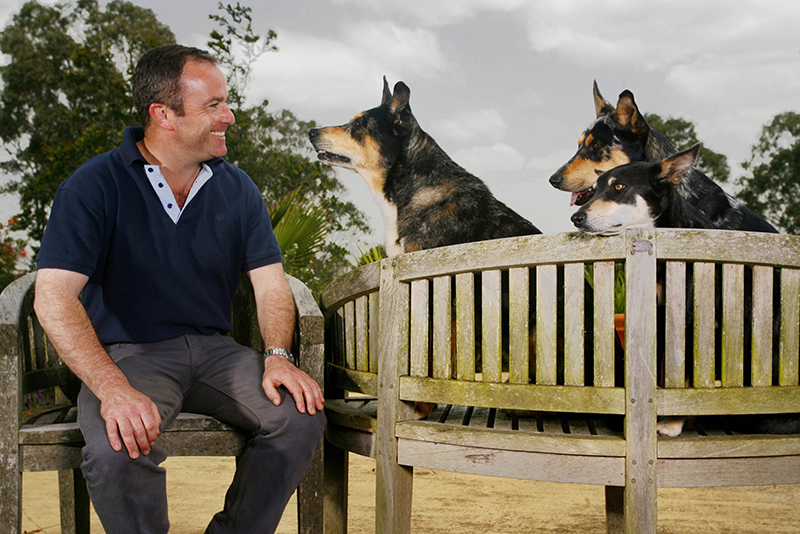
 While Dr. McGreevy was very positive about veterinary involvement in the animal welfare movement, that sentiment has not always been formally recognized by the veterinary profession in all countries. For example, not until 2010 was animal welfare added to the American Veterinarian Oath. Other organizations, such as the World Small Animal Veterinary Association, emphasize a need for including animal welfare into all oaths. A 2003 Canadian article, "How might veterinarians do more for animal welfare?", states that the "profession has tended to keep some distance from the animal welfare movement", even though some veterinarians are already involved in animal welfare. It is unclear whether those distance-keeping sentiments are still reflected today as there seems to be a growing interest in animal welfare.
Dr. McGreevy discussed that potential conflicts of interest are one of the biggest overall hurdles for veterinarians in animal welfare. Extending the lives of our pets is an area that emphasizes these conflicts of interests. While enjoying our pets longer generally is in the best interest of the human caretaker, is that what is in the best interest of the animal? Are expensive medical and surgical interventions that veterinarians offer benefiting the life of the animals directly? Using Quality of Life (QOL) scales can help make that determination. While developing them can be challenging, as seen in a QOL cancer survey, they can be used to expand on the physical well-being of the dog to include psychological factors and social behaviors.
One could also say there is a conflict of interest for veterinarians in reducing the number of inherited diseases in their client populations. Treating these diseases provides valuable income for veterinarians. This point is illustrated in Dr. McGreevy's article, "Breeding for quality of life", when he points out that there could be financial disincentives for veterinarians to do more about inherited disorders.
In addition to the numerous papers he has written on dog behaviour and welfare, Dr. McGreevy and colleagues recently developed the One Welfare portal. One Welfare is an Australian and New Zealand cooperative for veterinary educators that offers interactive welfare scenarios, descriptions of different species and their animal welfare needs, and resources for veterinary students.
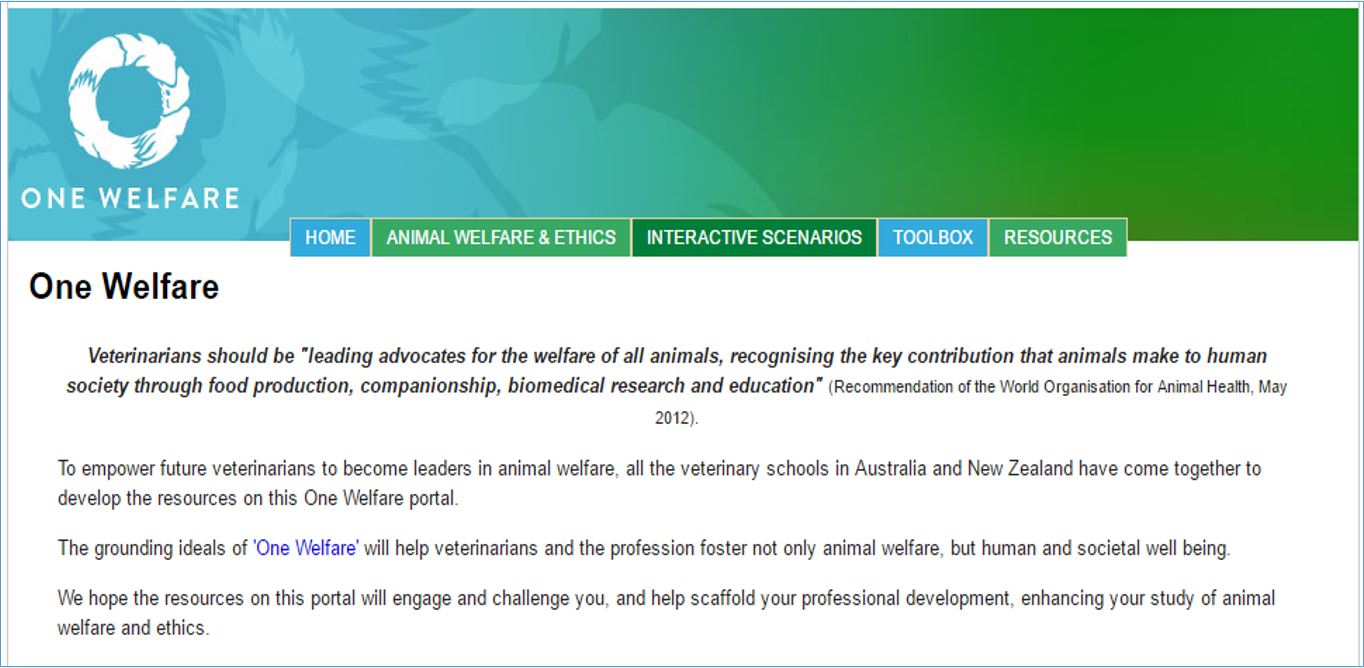
Dr. McGreevy sees One Welfare as a "platform for veterinarian education in animal welfare and ethics." True to that, the portal is designed with those main themes in mind — welfare and ethics. These pages include discussion on the scope of welfare exceeding clear-cut scientific inquiry. They integrate sentience and ethical elements to the conversation. Beyond the two main themes, there are six subcategories, including production animals, wildlife, working animals, research animals, aquatic animals, and companion animals. While the site does not directly focus on dogs, many of the examples include dogs and the complexities surrounding the welfare of breeding dogs.
A central part of One Welfare explores animal welfare concerns using scenario-based learning. Through these scenarios, complex questions are raised that bring to light additional complexities surrounding bias, welfare ideals, and communication. For example:
- How should veterinarians deal with questions regarding convenience euthanasia?
- What if a veterinarian is aware their client is an animal hoarder but the client is unable to pay for the veterinarian's help?
- What is the impact of surgical repair of anatomic abnormalities related to dog breeds?
See DogWellNet's One Welfare's Brachycephalic Dog Scenario article for a continued conversation on the scenarios.
The One Welfare site also uses tools, such as Chatterbox, for interactive learning. In these online exercises, students position themselves on a continuum of opinion related to animal welfare statements. They can re-assign their position in the light of the views they have heard from their peers. While this tool is not offered for free from One Welfare, it can be hired to encourage discussion and engagement among students.
Educating younger veterinary generations on the importance of animal welfare will only enhance the profession. Discussing complex topics with Dr. McGreevy and exploring the One Welfare site encourage improved animal welfare education. As a veterinary student, this is important to me as my career interests are focused on animal welfare. For additional perspectives on this topic, see Veterinary Welfare Education in the United States.
And, finally, a few of Dr. McGreevy's articles are below for a deeper look at his work.
Johnson, J., Collins, T., Degeling, C., Fawcett, A., Fischer, A.D., Freire, R., Hazel, S.J., Hood, J., Lloyd, J., Phillips, C.J.C., Stafford, K., Tzioumis, V., & McGreevy, P.D. (2015). The First Shared Online Curriculum Resources for Veterinary Undergraduate Learning and Teaching in Animal Welfare and Ethics in Australia and New Zealand. Animals, 5(2), 395-406. Retrieved from http://www.mdpi.com/2076-2615/5/2/395
Asher L., Diesel G., Summers J.F., McGreevy P.D., Collins L.M. (2009). Inherited defects in pedigree dogs. Part 1: disorders related to breed standards. The Veterinary Journal, 182(3):402-11. Retrieved from http://www.ncbi.nlm.nih.gov/pubmed/19836981
Summers J.F., Diesel G., Asher L., McGreevy P.D., Collins L.M. (2010). Inherited defects in pedigree dogs. Part 2: Disorders that are not related to breed standards. The Veterinary Journal, 183(1):39-45. Retrieved from http://www.ncbi.nlm.nih.gov/pubmed/19963415
Additional interest in the "One Welfare" Approach…
Beyond the site described above, several other organizations have also echoed the "one welfare" approach, with some variations. The World Small Animal Veterinary Association has a graphic titled "One Welfare, One World" (Dated link: see: https://web.archive.org/web/20150205043705/http://www.wsava.org/article/introducing-new-veterinary-oath-wsava . The Ontario Veterinary College is hosting an International One Welfare Conference next month. Using this wording indicates that there is a growing interest in a diverse approach to tackle modern animal welfare concerns.
UPDATES 2023:
World Small Animal Veterinary Association One Health Certificate Course at Colorado State Veterinary Teaching Hospital
VETCE - WSAVA One Health Certificate Lectures VETCE
Article provided by Kelly Arthur, one of our DogWellNet Veterinary Student content partners
Recommended Comments
Join the conversation
You can post now and register later. If you have an account, sign in now to post with your account.
Note: Your post will require moderator approval before it will be visible.