






Pedigree Breeds
184 entries in this category
-
- Last comment date
- Title
- Start Date
- Most Commented
- Most Viewed
- Last Updated
- Publish Date
- Brief Description
- Content
- Links to Breed Descriptions
- Other Names for Breed
- Country of Origin and Parent Breed Club
- Health and Well-Being
- Breed-Specific Articles
- Breed Standards
- Breed-Specific Statistics
- Breeding/Health Strategy Documents
- Breed-Specific DNA Tests
- Other Breed-Specific Webpages
- Breed-Specific Research
- Breed Clubs
- Custom
-
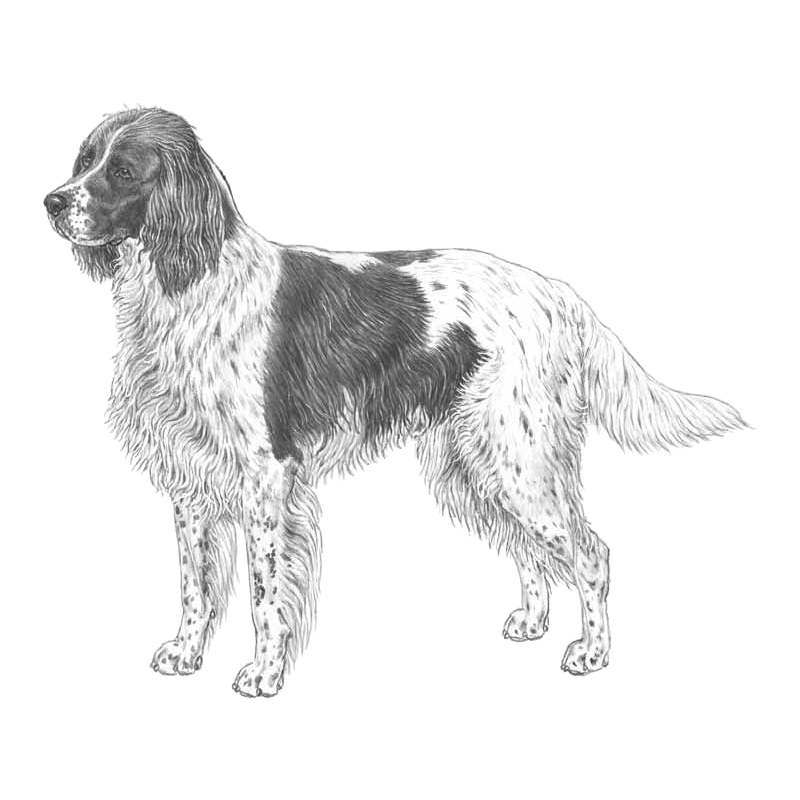
The French Spaniel (Epagneul Français) was developed in France as a hunting dog, descended from dogs of the 14th century.
(Source: AKC)
-
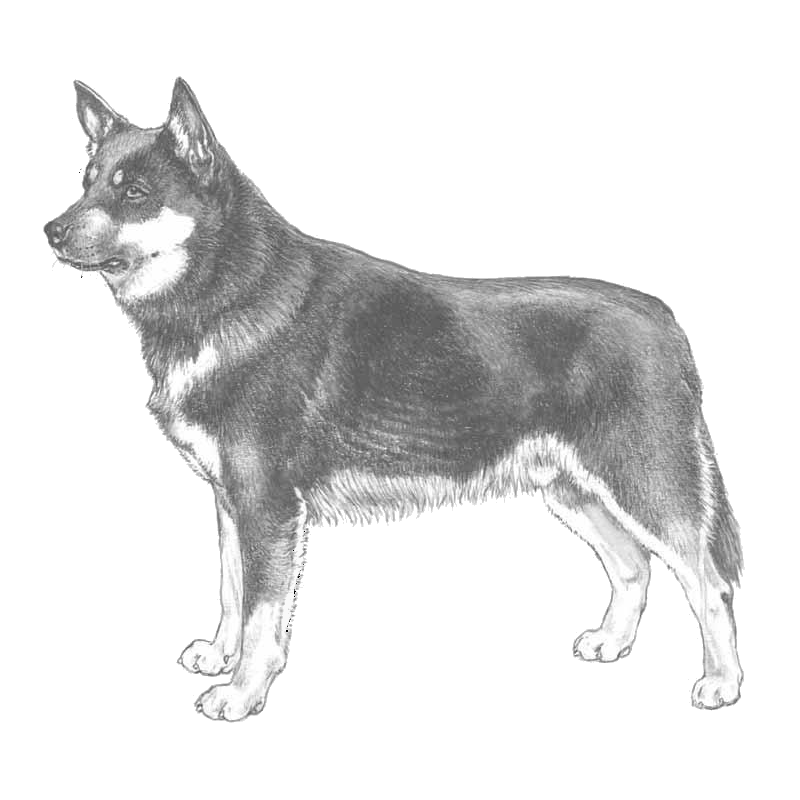
The Lapponian Herder has a good temperament; it is calm, quick to learn, energetic and eager to serve. It barks a lot when working. It is friendly to people, but not suited to be a companion dog only because it demands action as well. It can handle being outdoors all the time.
From: Kennelliito (The Finnish Kennel Club, IPFD Founding Partner) Native Breeds: Lapponian Herder
-

Many hunters consider the Finnish Hound to be the world's best game-pursuing breed at the moment.
The Finnish Hound is a native breed and one of the most popular dog breeds in Finland. It is used almost solely to hunt hares or foxes. It works independently, tracking either earth or airborne scent and will pursue game and bark passionately. The long hunting season for hares and foxes contribute to the breed's popularity. The Finnish Kennel Club registered 1,475 Finnish Hounds in 2012. In total, 20,030 Finnish Hounds were registered in 2003-2012.
From: Kennelliito (The Finnish Kennel Club, IPFD Founding Partner) Native Breeds
-
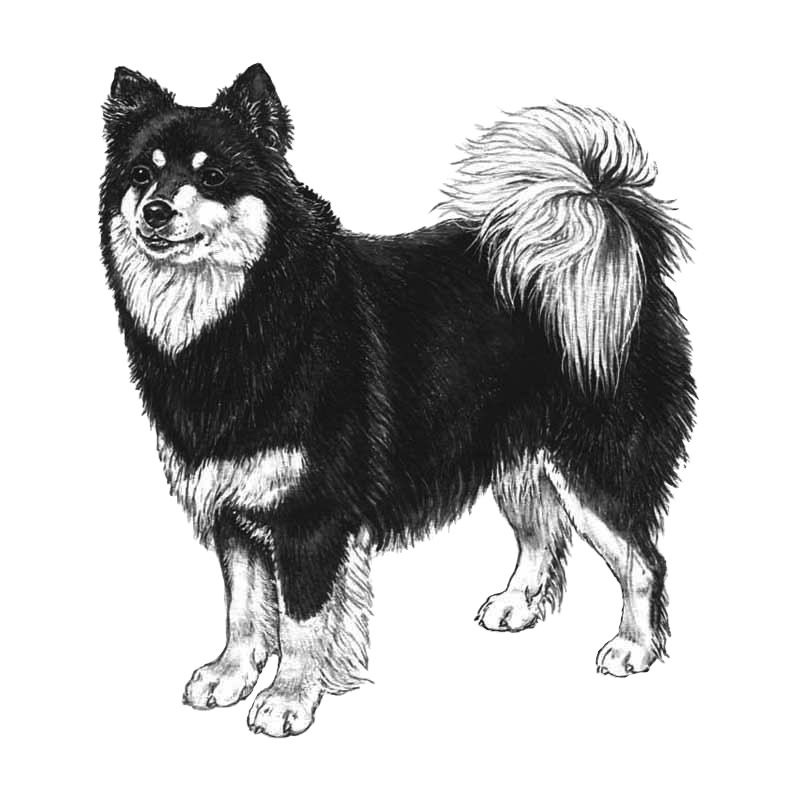
The Finnish Lapponian Dog shares its roots with the Lapponian Herder and the Swedish Lapphund. It is descended from the long-haired reindeer herding dogs that are common in the fell regions of Lapland and is nowadays a popular companion dog. The Finnish Lapponian Dog is intelligent, brave, eager to learn, friendly and fairly submissive. Its herding instinct is strong and it displays a clear disposition to guard.
From: Kennelliito (The Finnish Kennel Club, IPFD Founding Partner) Native Breeds
-
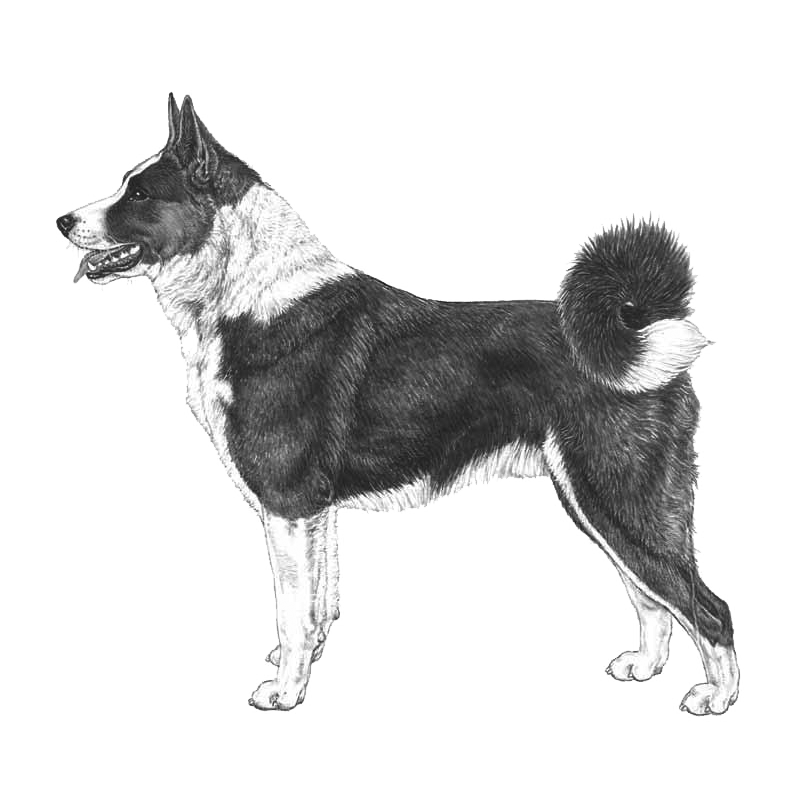
The Karelian Bear Dog is an old breed from the forested areas of Karelia. It is a traditional big-game hunting dog that is nowadays used by hunters to corner elk and bears.
The Karelian Bear Dog is a mid-sized, sturdily built, but not heavy, dog that is powerful and only a little longer than it is tall. It has a thick coat, which is black and white with clearly-defined markings. Its coat may, at times, have a slight shade of brown. Its eyes are relatively small, somewhat oval and dark-brown in colour. Its expression is alert and sharp. The ears are erect, mid-sized and only a little rounded at the tip.
From: Kennelliito (The Finnish Kennel Club, IPFD Founding Partner) Native Breeds
-
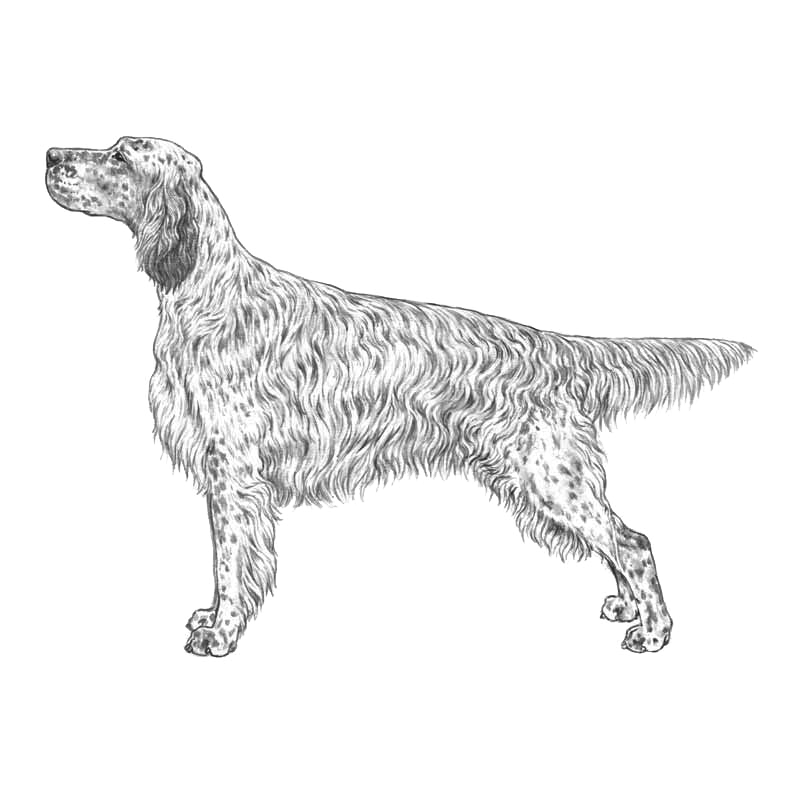
The English Setter is a medium size breed of dog. It is part of the Setter family, which includes the red Irish Setters, Irish Red and White Setters, and black-and-tan Gordon Setters.
Source: Wikipedia
-
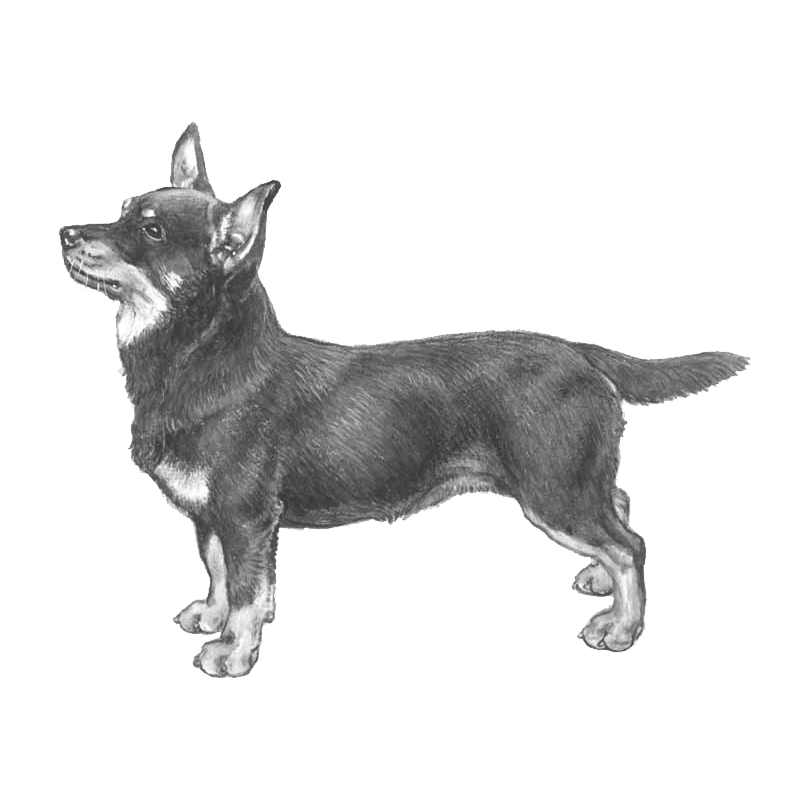 The Heeler is an intelligent, eager-to-please fellow, with a love of people; he enjoys being with children because he likes joining in games.
He is trainable but does best under a firm, kindly owner; he can be a handful if he is not kept occupied as he is possessed of a prodigious amount of energy in his small frame. If he gets excited, he can revert to his calling and take a nip at the rear end of anyone who is handy, but he is not basically a ‘biter’, being content to warn the intruder by noise accompanied by a furiously wagging tail. He has a hearty appetite to go with his super-abundant energy.
Source: https://www.thekennelclub.org.uk/search/breeds-a-to-z/breeds/pastoral/lancashire-heeler/
-
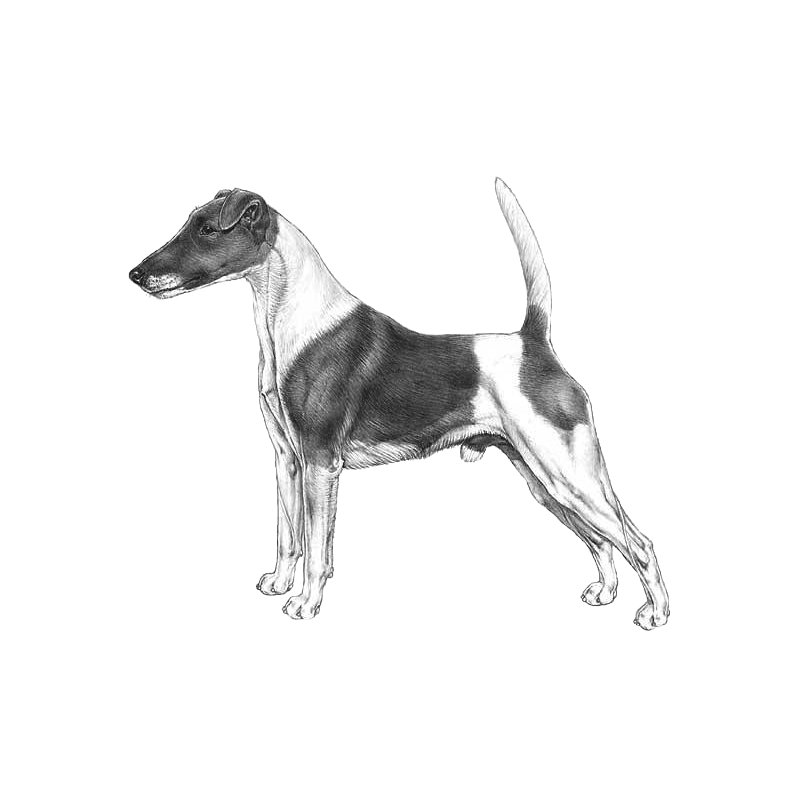
It was the first breed in the fox terrier family to be given official recognition by The Kennel Club (circa 1875; breed standard 1876). It is well known, and although not a widely popular breed today outside of hunting and show circles, it is extremely significant due to the large number of terriers believed descended from it.
-
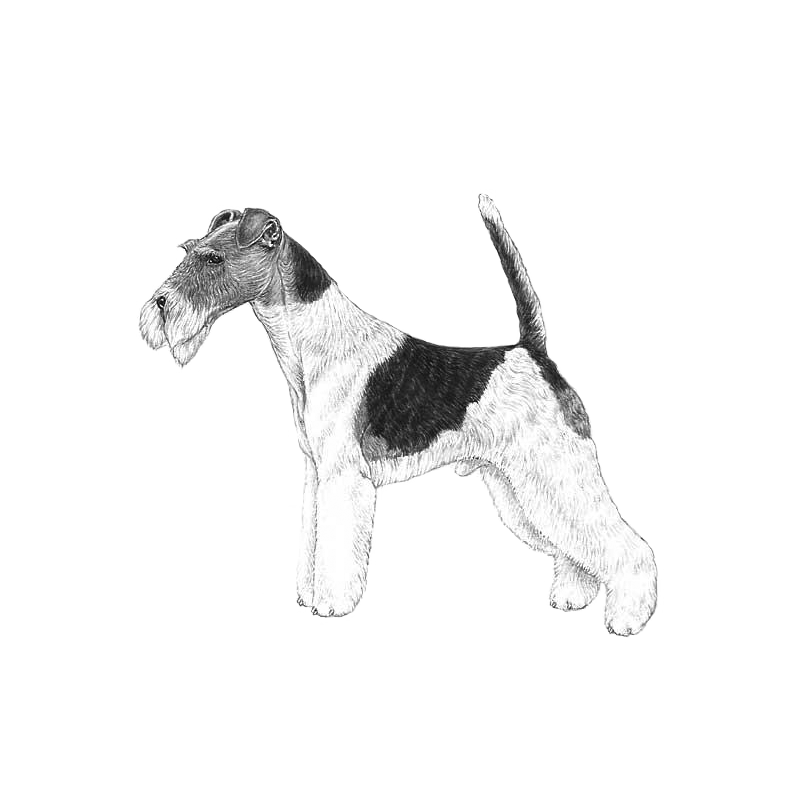
It is a fox terrier, and although it bears a resemblance to the smooth fox terrier, they are believed to have been developed separately.
-
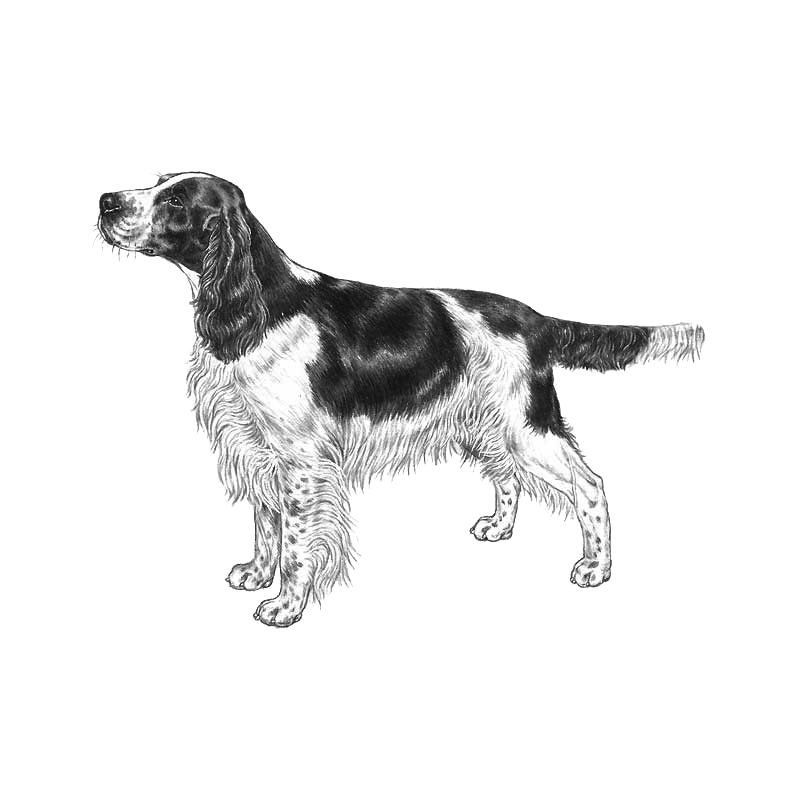
Developed to flush game from cover and to retrieve it, the English springer spaniel's coat is liver and white, black and white or tri-coloured. The English Springer is the most popular of the spaniels for working in the field. A happy and very biddable temperament lends itself well to family life. Field-bred and bench-bred dogs are available - as the names suggest the Field type is used in the field for hunting and the Bench type is bred for their looks in the show ring. Field dogs tend to be taller on leg, not as heavily bodied or boned, shorter coated and may be more energetic/hunting work oriented than their show counterparts.
-
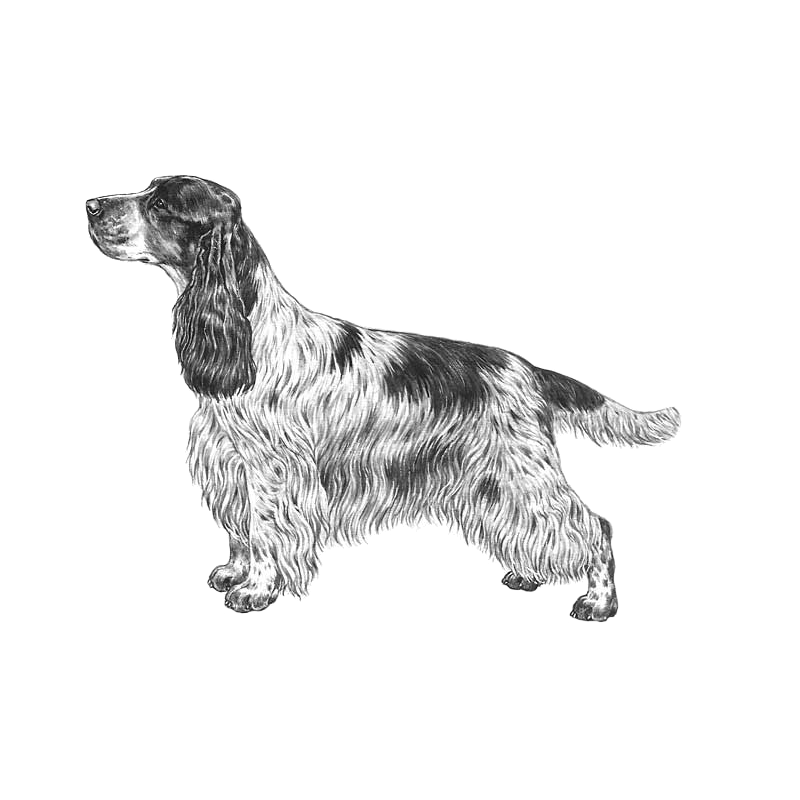
The English Cocker Spaniel is a breed of gun dog. The English Cocker Spaniel is an active, good-natured, sporting dog standing well up at the withers and compactly built.
Source: Wikipedia
-
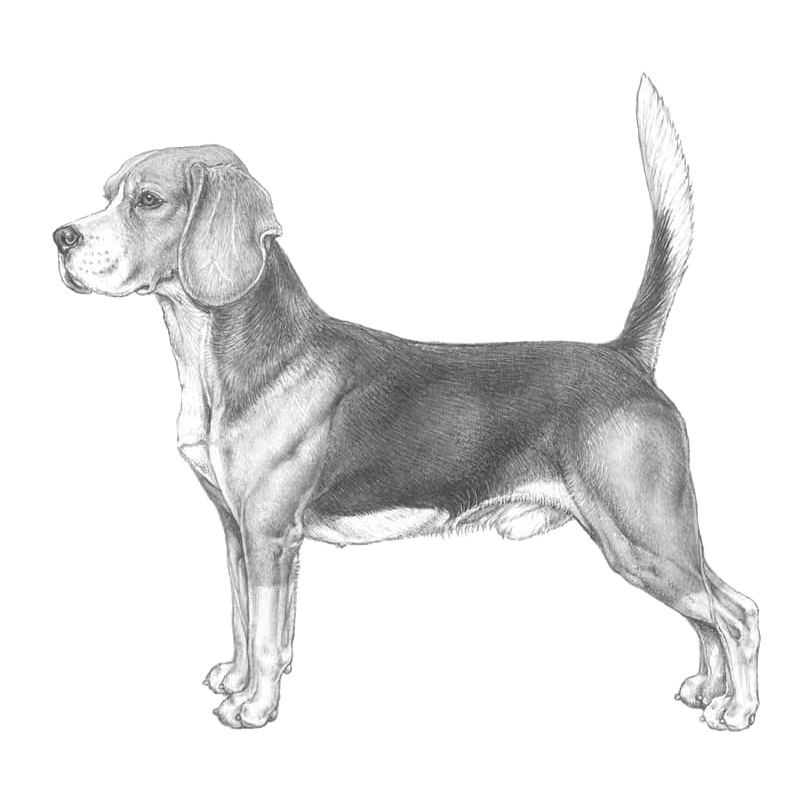
A member of the hound group, it is similar in appearance to the foxhound, but smaller with shorter legs and longer, softer ears. Beagles are scent hounds, developed primarily for tracking hare, rabbit, deer, and other small game.
Source: Wikipedia
-
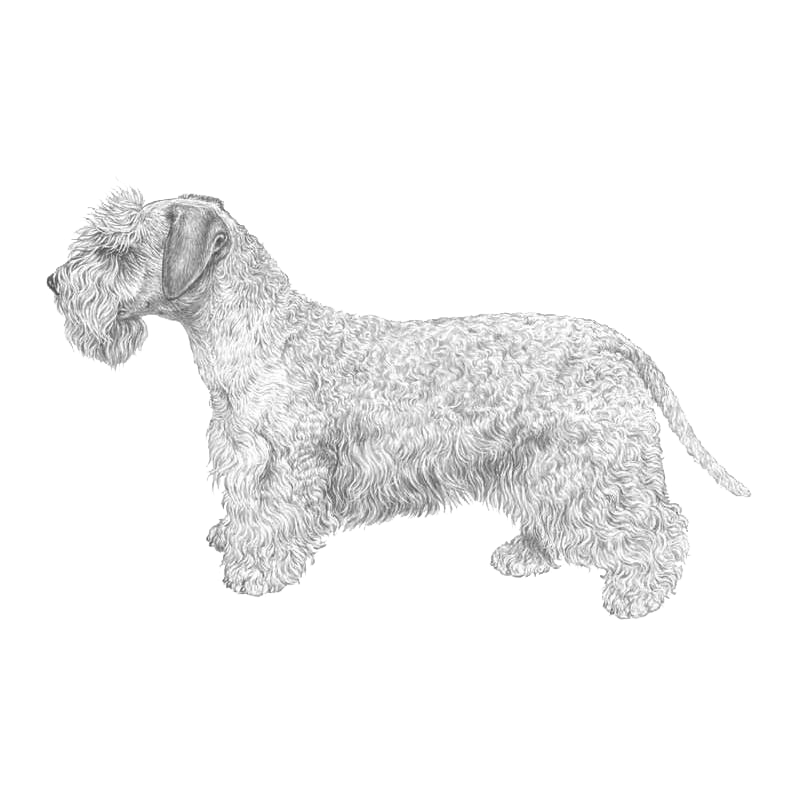
The Cesky Terrier was created by a Czech breeder, František Horák, in 1948, as a cross between a Sealyham Terrier and a Scottish Terrier, to create a terrier suitable for hunting in the forests of Bohemia.
Source: Wikipedia
-
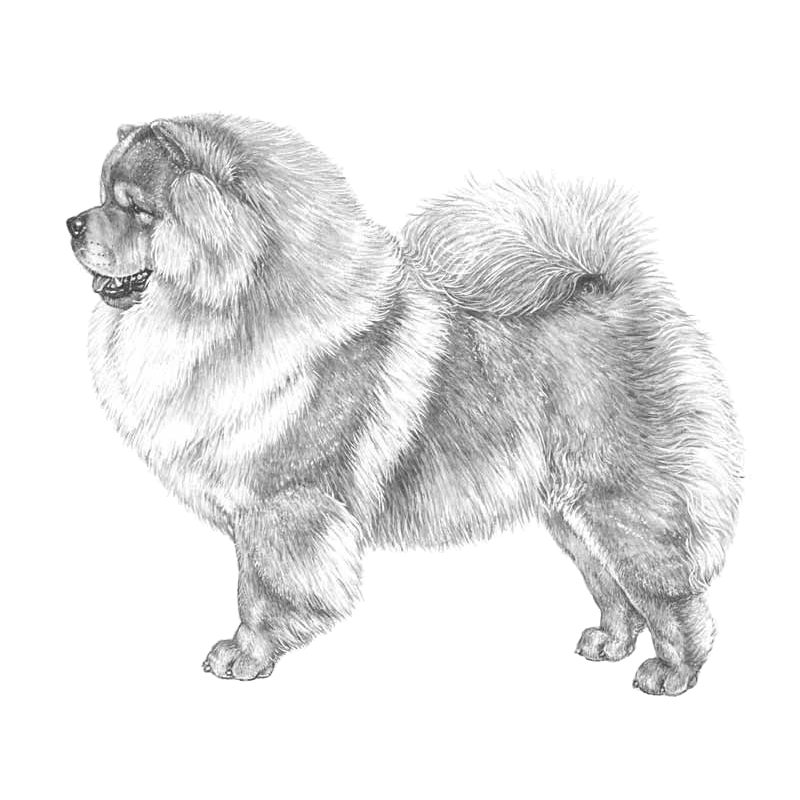
The Chow Chow (sometimes simply Chow) is a dog breed originally from northern China,] where it is referred to as Songshi Quan (Pinyin: sōngshī quǎn 鬆獅犬), which means "puffy-lion dog".
Source: Wikipedia
-
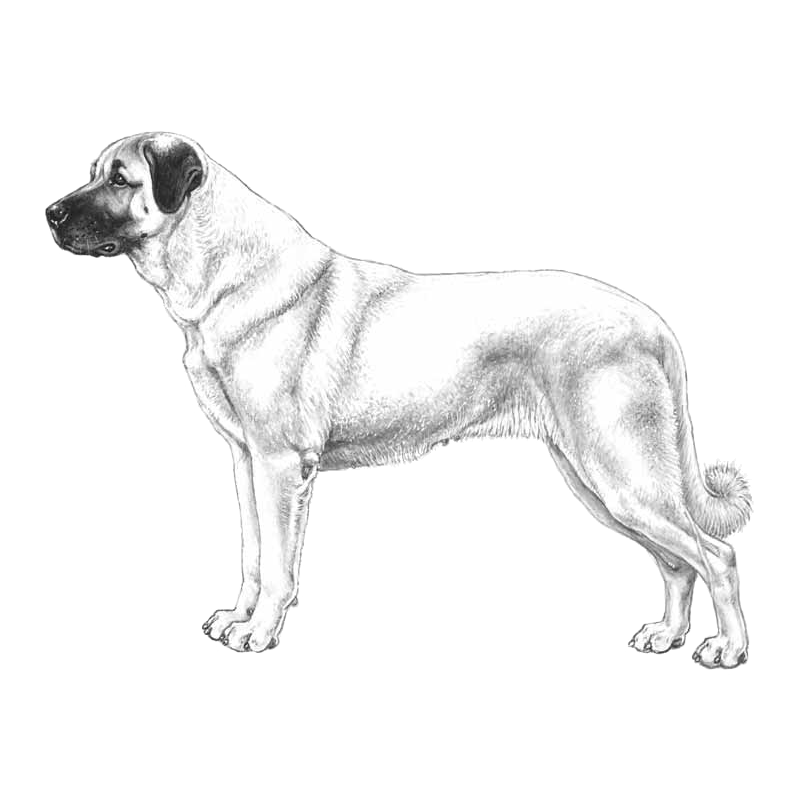
Large, rugged and powerful, the Anatolian Shepherd Dog is a working guard dog, possessing a superior ability to protect livestock. While not a "glamour" breed, the Anatolian's loyalty, independence and hardiness is cherished by breeders and owners.
Source: AKC
-
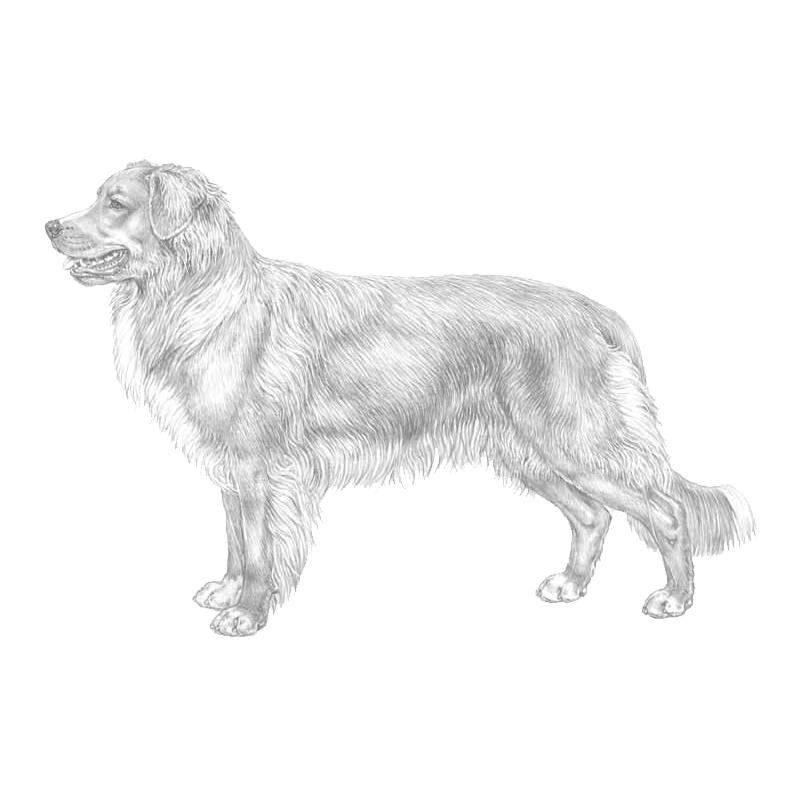 AKC: http://www.akc.org/dog-breeds/nova-scotia-duck-tolling-retriever/
The Toller is a medium-sized, powerful, compact, balanced, well-muscled dog; medium to heavy in bone, with a high degree of agility, alertness and determination. The Toller is highly intelligent, easy to train and has great endurance. A strong and able swimmer, he is a natural and tenacious retriever on land and from water setting himself for springy action the moment the slightest indication is given that retrieving is required.
Source: http://www.fci.be/en/nomenclature/NOVA-SCOTIA-DUCK-TOLLING-RETRIEVER-312.html
-
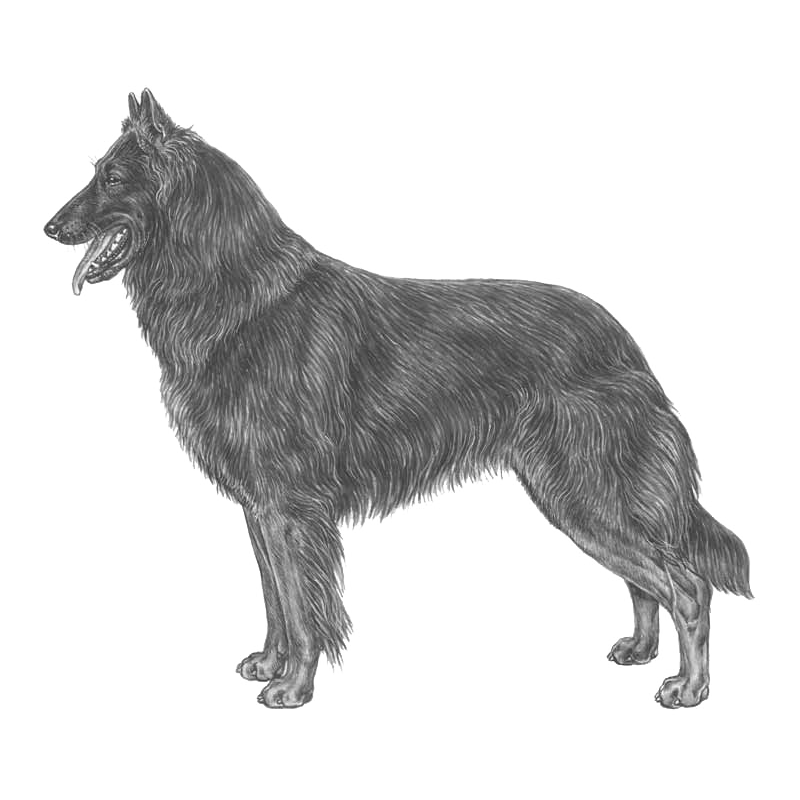
The Groenendael /ˈɡroʊnɨndæl/ is a dog that is included in the Belgian Shepherd breed. In the United States it is generally recognized under the name Belgian Sheepdog.
Source: https://en.wikipedia.org/wiki/Groenendael_(Belgian_Shepherd_Dog)
-
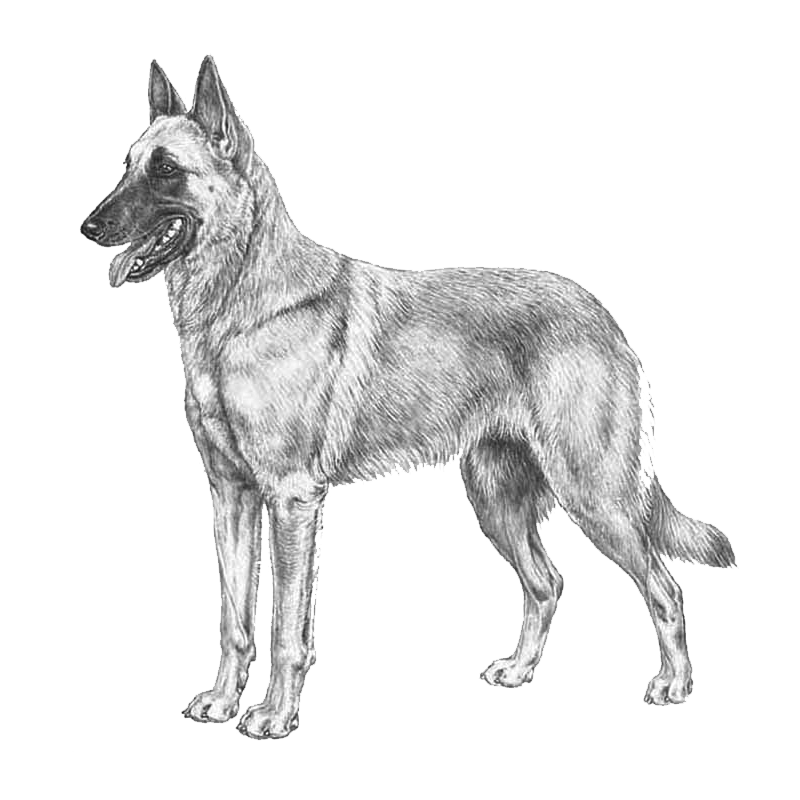
The Malinois /ˈmælɨnwɑː/ is a medium to large breed of dog, sometimes classified as a variety of the Belgian Shepherd Dog rather than as a separate breed. It is named after the Belgian city of Malines, where the breed originated. Its name is the French word for Mechlinian, which in Dutch is either Mechelse herder or Mechelaar (one from Mechelen).
Source: https://en.wikipedia.org/wiki/Malinois_(Belgian_Shepherd_Dog)
NOTE: The Federation Cynologique Internationale (FCI) describes the Malinois, together with the Groenendael, the Laekenois, and the Tervueren, as varieties of the Belgian Shepherd dog breed. The American Kennel Club, however, officially recognizes the Belgian Malinois, the Belgian Sheepdog (FCI: Groenendael), the Belgian Laekenois (FCI: Laekenois), and the Belgian Tervuren (FCI: Tervueren) as four distinct breeds.
Source: https://www.ncbi.nlm.nih.gov/pmc/articles/PMC7140874/
-
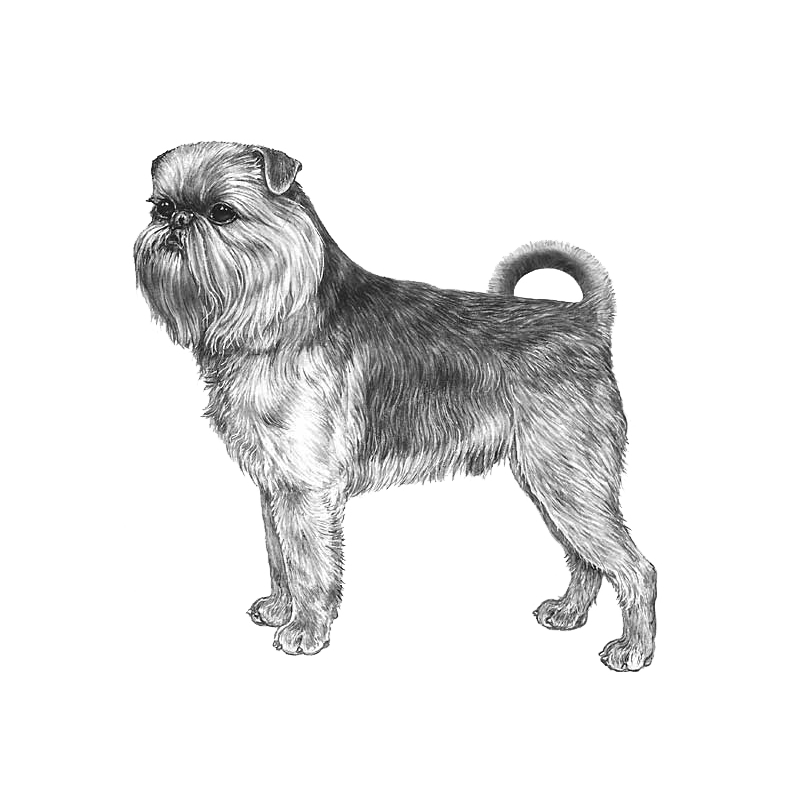
At one time known as the Belgian street urchin, this breed originated in Belgium and has traces of Affenpinscher in its ancestry. A variety of this little dog appeared in a painting by the Flemish artist Jan van Eyck as long ago as 1434 and the breed was already standard in type by the 1600s. He used to earn his keep as a stable dog where horses for hansom cabs were kept. He arrived in Britain in the late 1800s.
Source: The Kennel Club
-
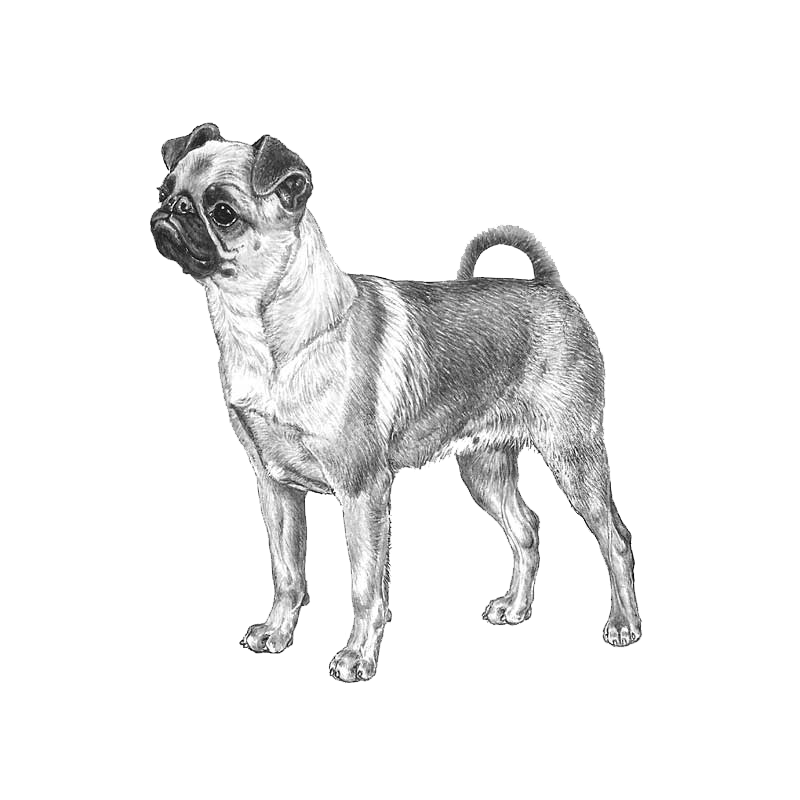
The Petit Brabançon is a small companion breed that was originally developed from ratters working in the stables of Belgian carriage men. The Fédération Cynologique Internationale (FCI) recognize them as one of three different breeds of griffon from Belgium, the other two being Belgian Griffon and Brussels Griffon. The American Kennel Club and Kennel Club recognize all varieties as a single breed.
Source: Worldly Dogs
Breed variants should be treated as a breed. All three breeds can be paired with each other and can be born in the same litter. Griffon bruxellois, griffon belge and petit brabançon are only separated by color and coat: Griffon Bruxellois (Brussels Griffon)- Rough-haired / red; Griffon Belge (Belgian Griffon)
Shaggy / black or black and tan; Petit Brabancon short haired / red, black or black and tan
-
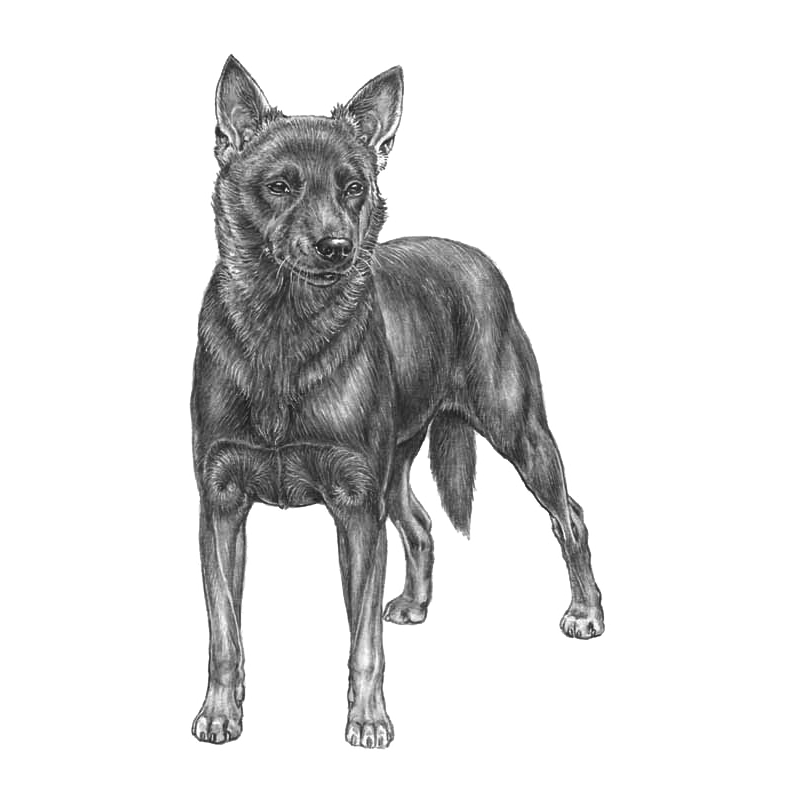
The Australian Kelpie, or simply Kelpie, is an Australian sheep dog successful at mustering and droving with little or no guidance. It is a medium-sized dog and comes in a variety of colours.
Source: Wikipedia
-
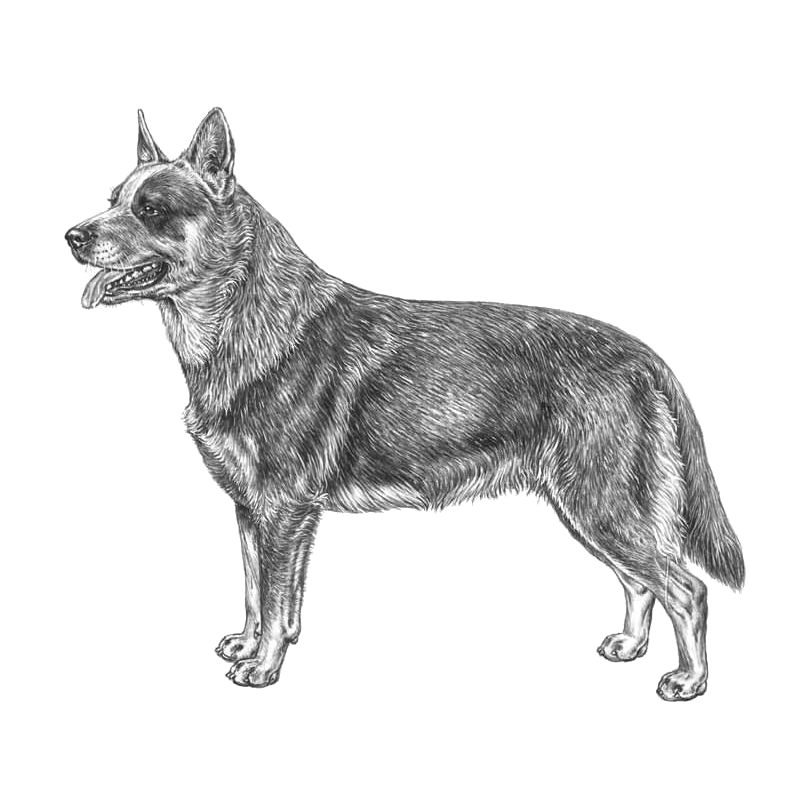
The Australian Cattle Dog (ACD), or simply Cattle Dog, is a breed of herding dog originally developed in Australia for droving cattle over long distances across rough terrain.
Source: Wikipedia
-
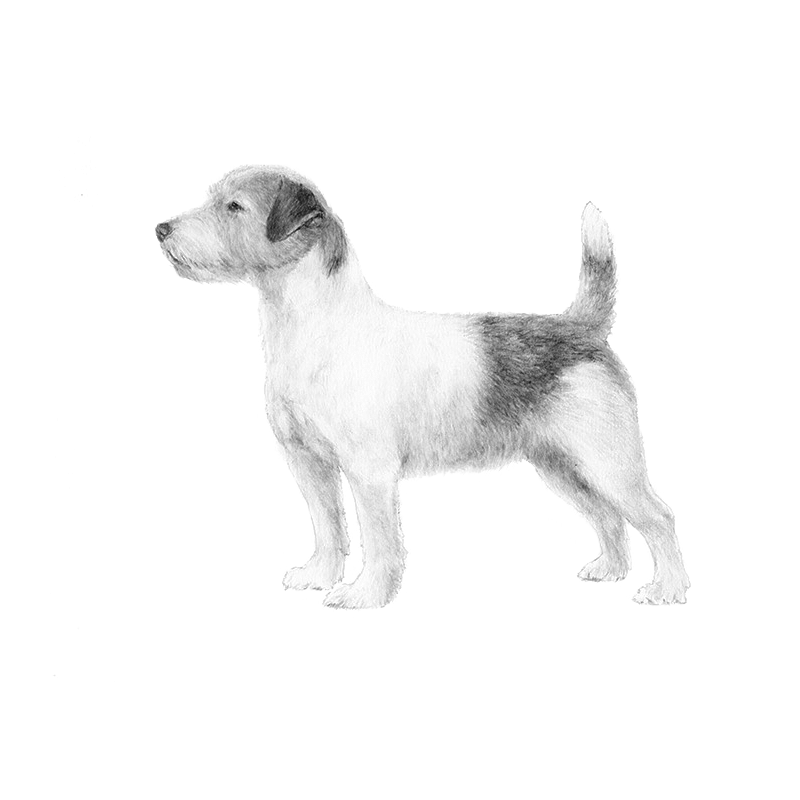
The Russell Terrier is a strong, hardy, earth-working Terrier. He is full of life and moves with confidence that matches his keen expression. The breed's handy size, small flexible chest, nose, strong voice and fearless nature make it an excellent specimen to work vermin below ground. Its weatherproof coat may be smooth, broken or rough and is predominantly white with tan and/or black markings.
-
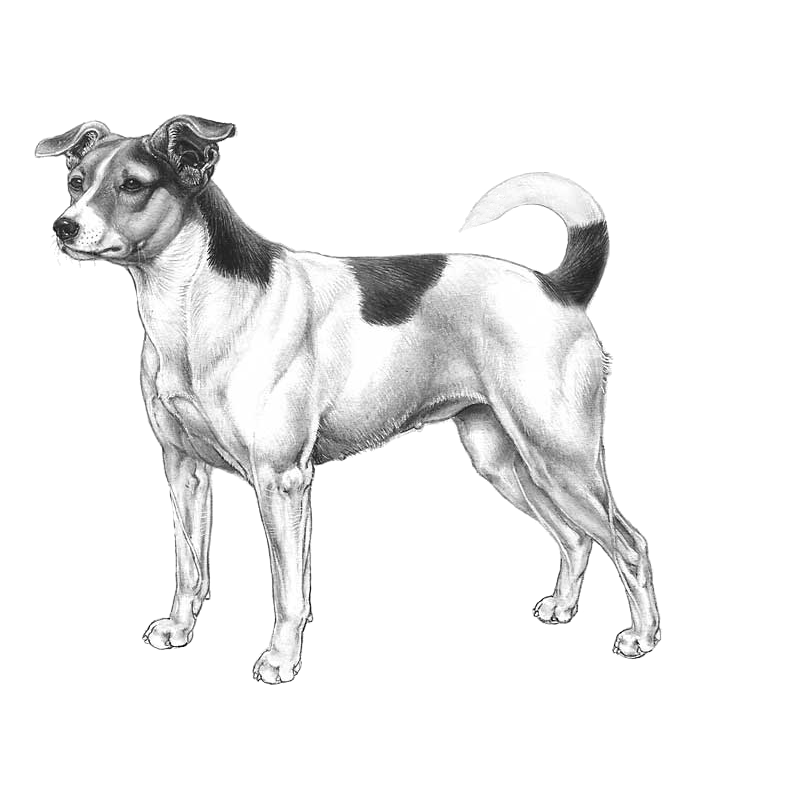
Dansk/svensk gårdshund (Danish–Swedish Farmdog) is a breed of dog that has its origin in Denmark and southern Sweden, but now has become popular all over Scandinavia.
Source: Wikipedia
The Danish-Swedish farm dog originally served to keep the farm free of rats and mice, for which it is equally suitable to today. The dogs are very teachable; and since the breed is small and light, with a lot of speed and intelligence, today they participate in various dog sports like agility, rally obedience, tracking training and obedience.
-
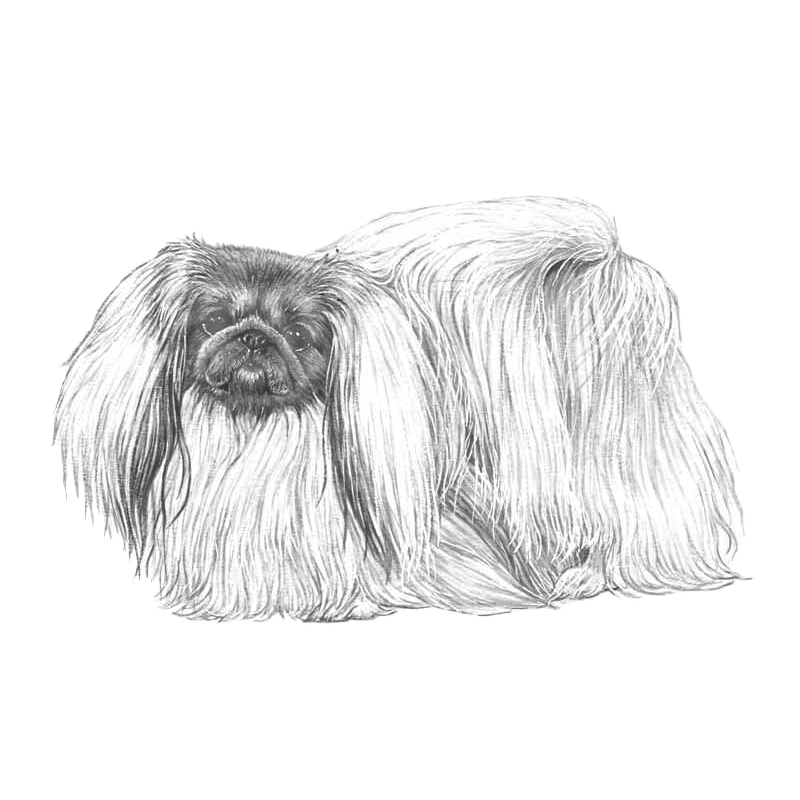
The Pekingese is an aristocrat, whose ancestry can be traced back to the Tang Dynasty. Similar dogs had been known in China since the eighth century, but by the early 1800s they had become the favourites of the Imperial court and no commoner was allowed to own one. However, following the British sacking of Peking in 1860, four were found and brought back to England. Subsequently, others were obtained by more normal means. The Pekingese was accepted for registration in the USA in 1909 and in the UK the following year.
Source: The Kennel Club (Patronage): https://www.thekennelclub.org.uk/search/breeds-a-to-z/breeds/toy/pekingese/