






Pedigree Breeds
184 entries in this category
-
- Last comment date
- Title
- Start Date
- Most Commented
- Most Viewed
- Last Updated
- Publish Date
- Brief Description
- Content
- Links to Breed Descriptions
- Other Names for Breed
- Country of Origin and Parent Breed Club
- Health and Well-Being
- Breed-Specific Articles
- Breed Standards
- Breed-Specific Statistics
- Breeding/Health Strategy Documents
- Breed-Specific DNA Tests
- Other Breed-Specific Webpages
- Breed-Specific Research
- Breed Clubs
- Custom
-
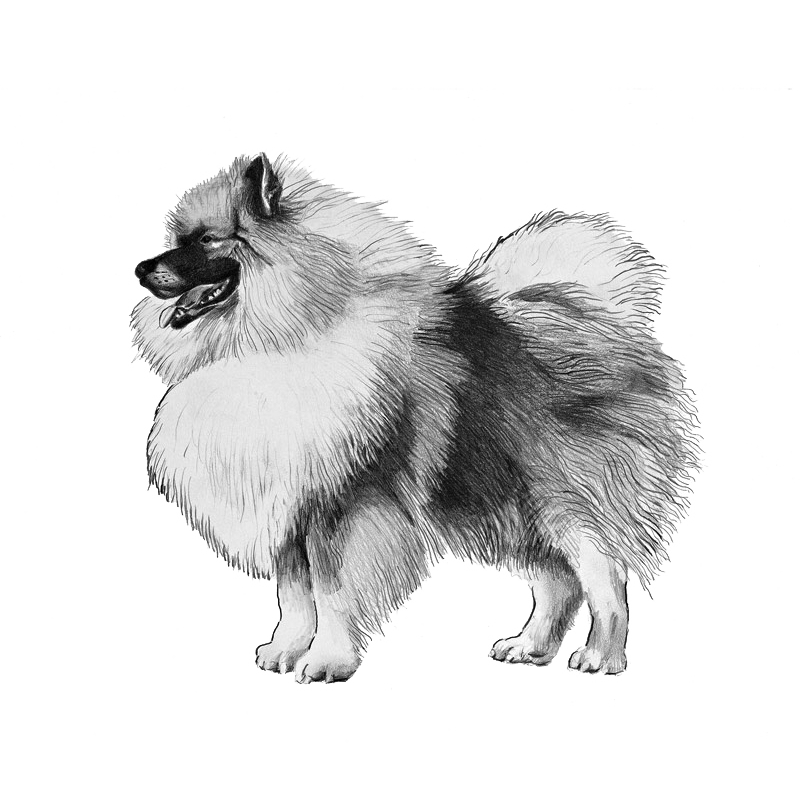
The Keeshond is a medium-sized dog with a plush, two-layer coat of silver and black fur with a ruff and a curled tail. It originated in Holland, and its closest relatives are the German spitzes such as the Großspitz, Mittelspitz, and Kleinspitz or Pomeranian.
Source: Wikipedia
-
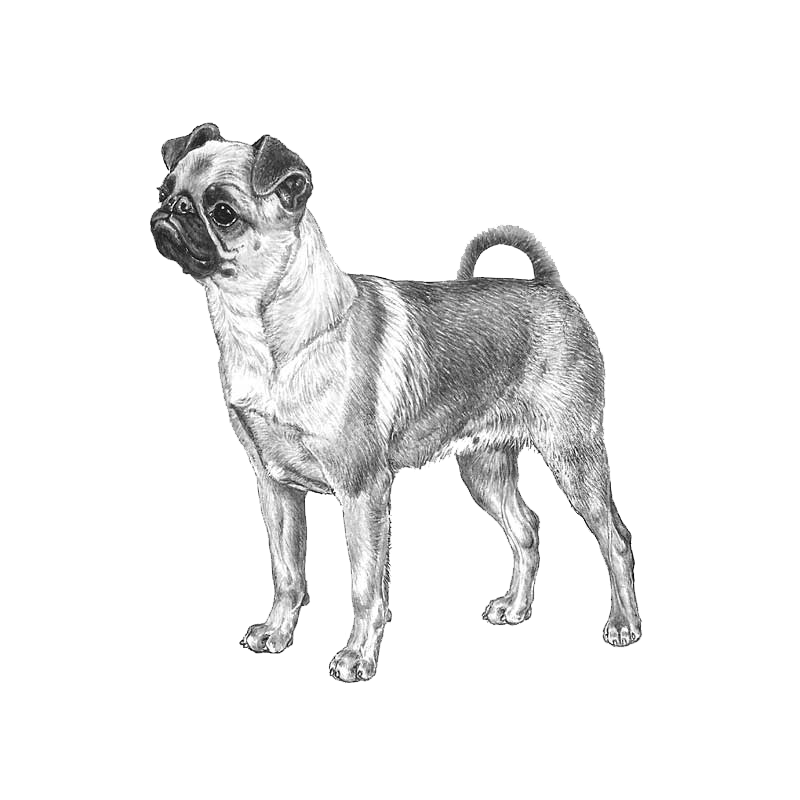
The Petit Brabançon is a small companion breed that was originally developed from ratters working in the stables of Belgian carriage men. The Fédération Cynologique Internationale (FCI) recognize them as one of three different breeds of griffon from Belgium, the other two being Belgian Griffon and Brussels Griffon. The American Kennel Club and Kennel Club recognize all varieties as a single breed.
Source: Worldly Dogs
Breed variants should be treated as a breed. All three breeds can be paired with each other and can be born in the same litter. Griffon bruxellois, griffon belge and petit brabançon are only separated by color and coat: Griffon Bruxellois (Brussels Griffon)- Rough-haired / red; Griffon Belge (Belgian Griffon)
Shaggy / black or black and tan; Petit Brabancon short haired / red, black or black and tan
-
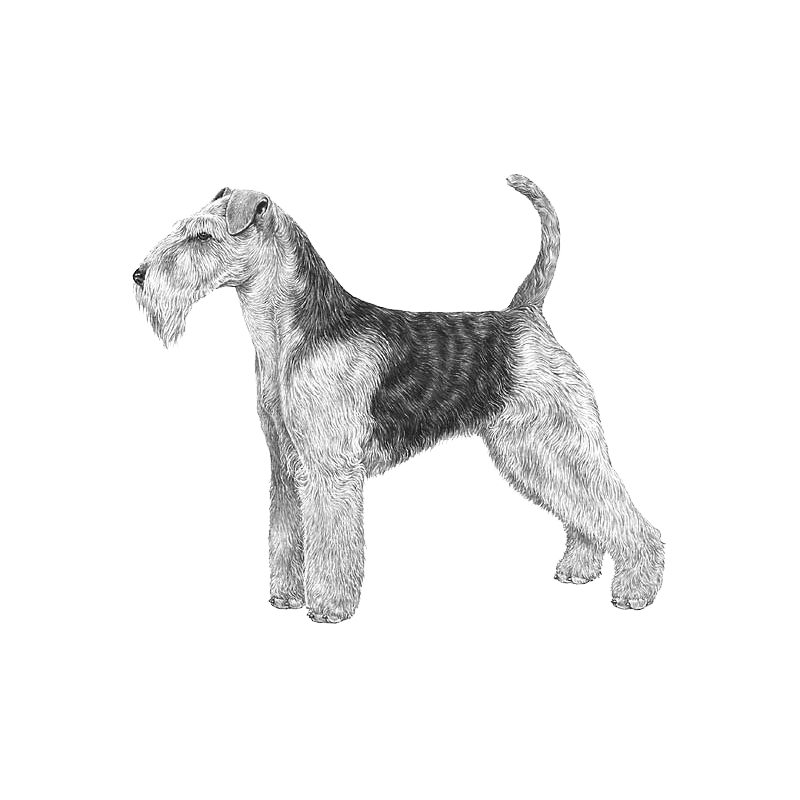
Originally used in hunting the fox, badger and even otter, the Welsh and Lakeland Terriers, which have considerable similarity, may well have had a common origin prior to the Roman invasion of Britain when their Celtic owners retreated to the Welsh mountains and the Lake District. He is a neat, workmanlike dog with a tight wiry coat normally of black and tan.
Source: IKC
-
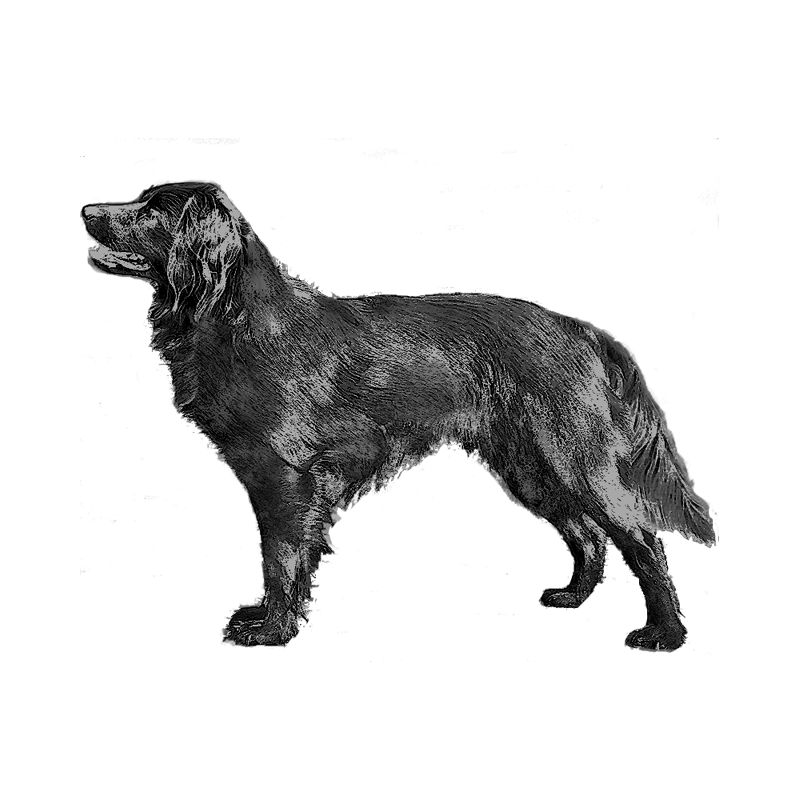
The Markiesje is an authentic Dutch Spaniel whose origin can be traced back to the Middle Ages. The Markiesje is finely built, black, elegant and intelligent. Cheerful and curious as long as it receives enough attention from its owner - this breed is 'under reconstruction'. Registration is done by the Dutch Kennel Club in a temporary register.
-
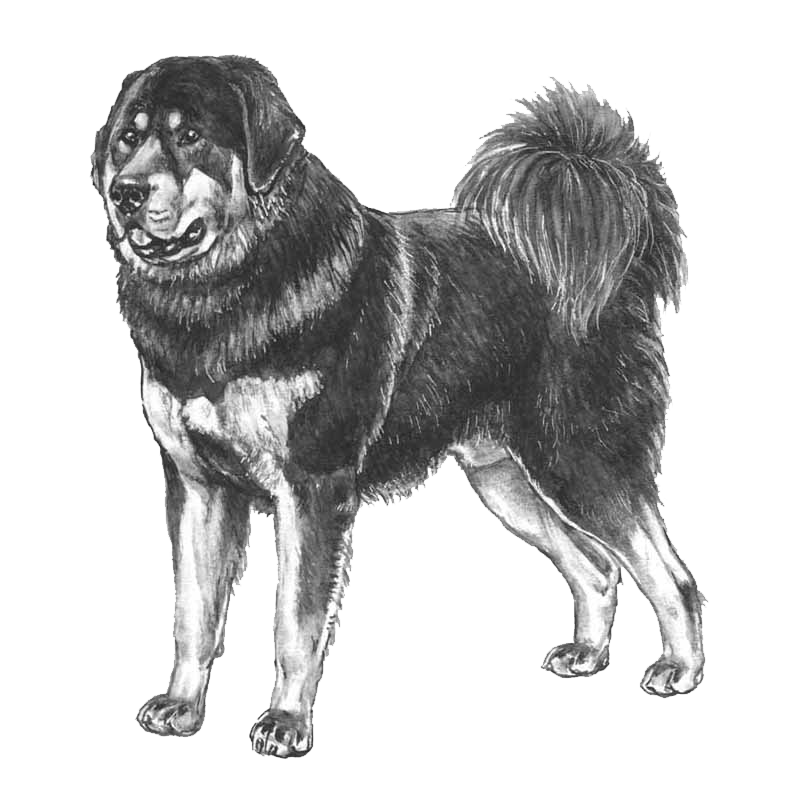
The Tibetan Mastiff (Do Khyi) is an ancient working breed of the nomad herders of the Himalaya and a traditional guardian of the Tibetan monasteries. Independent. Protective. Commands respect. Most loyal to his family and territory.
The dog itself is to be found all through central asia and has different names according to different locations. "The name Tibetan Mastiff is a misnomer; the Tibetan Mastiff itself is not a true Mastiff. The term "mastiff" was used by the Europeans who first came to Tibet because it was used to refer to nearly all large dog breeds in the West. A better name for the dog might be Tibetan mountain dog or, to encompass the landrace breed throughout its range, Himalayan mountain dog."
Source: F.C.I. Breed Standard (PDF)
Source: Wikipedia
-
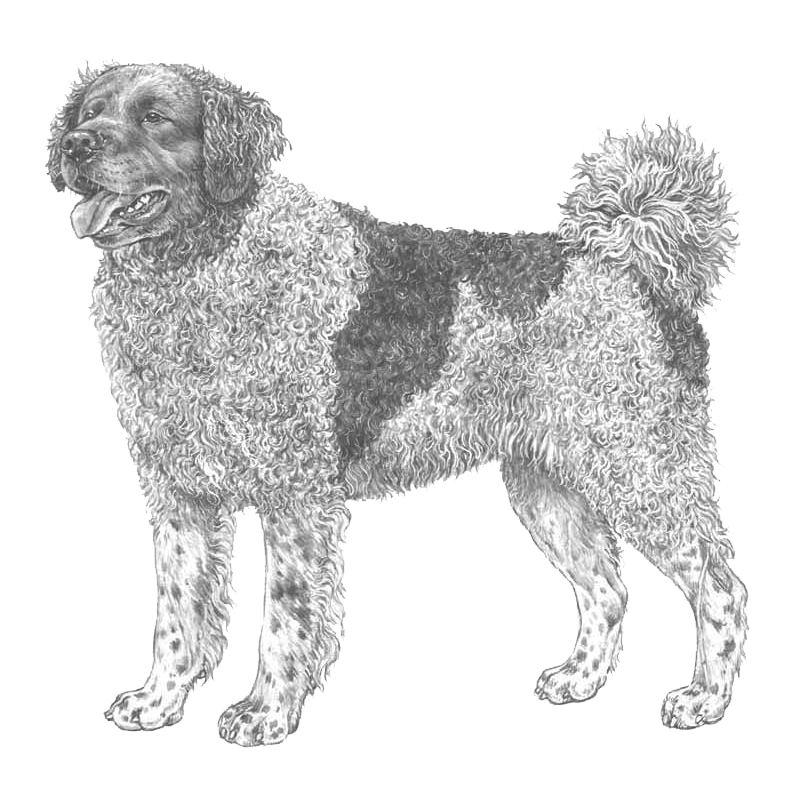
Traditionally used as a hunting dog for hunting small mammals and waterfowl in the province of Fryslan in the Netherlands, the breed is an excellent gun dog, effective as both a land and water retriever... its strong will and natural guarding abilities make early training a requirement. The breed standard describes the breed's temperament as reserved and "an ideal guard-dog"... though never aggressive, which makes it an excellent family-dog.
Source: https://en.wikipedia.org/wiki/Wetterhoun
-
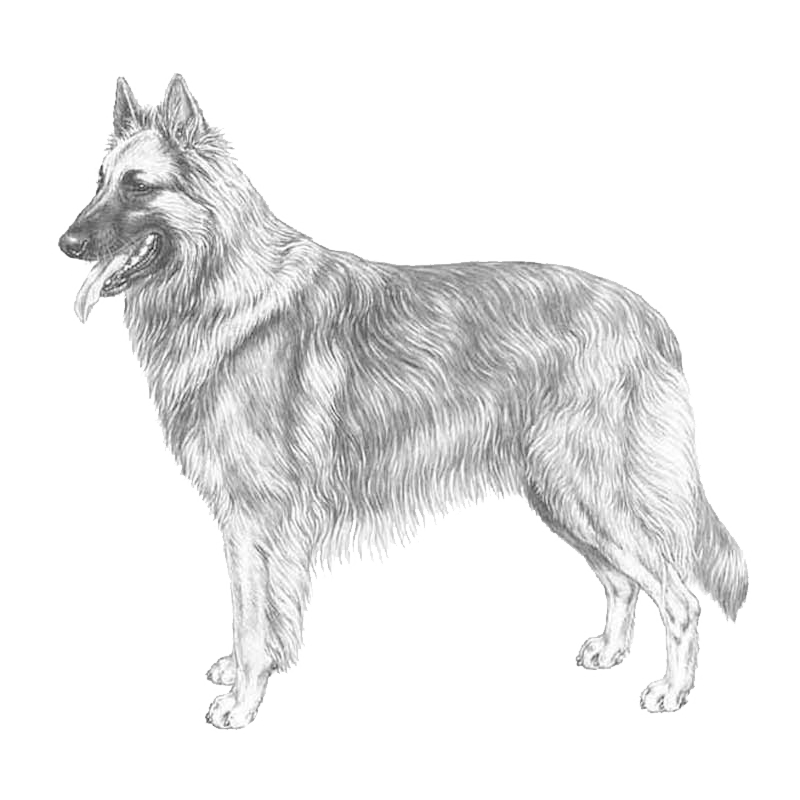
Originally the dogs were utilized on farms as herders and guardians; today’s Tervs are employed as military and police K-9s, as search-and-rescue, and as service dogs for the disabled as well as working companion that excel competing in a variety of dog sports.
NOTE: The Federation Cynologique Internationale (FCI) describes the Malinois, together with the Groenendael, the Laekenois, and the Tervueren, as varieties of the Belgian Shepherd dog breed. The American Kennel Club, however, officially recognizes the Belgian Malinois, the Belgian Sheepdog (FCI: Groenendael), the Belgian Laekenois (FCI: Laekenois), and the Belgian Tervuren (FCI: Tervueren) as four distinct breeds.
Source: https://www.ncbi.nlm.nih.gov/pmc/articles/PMC7140874/
-
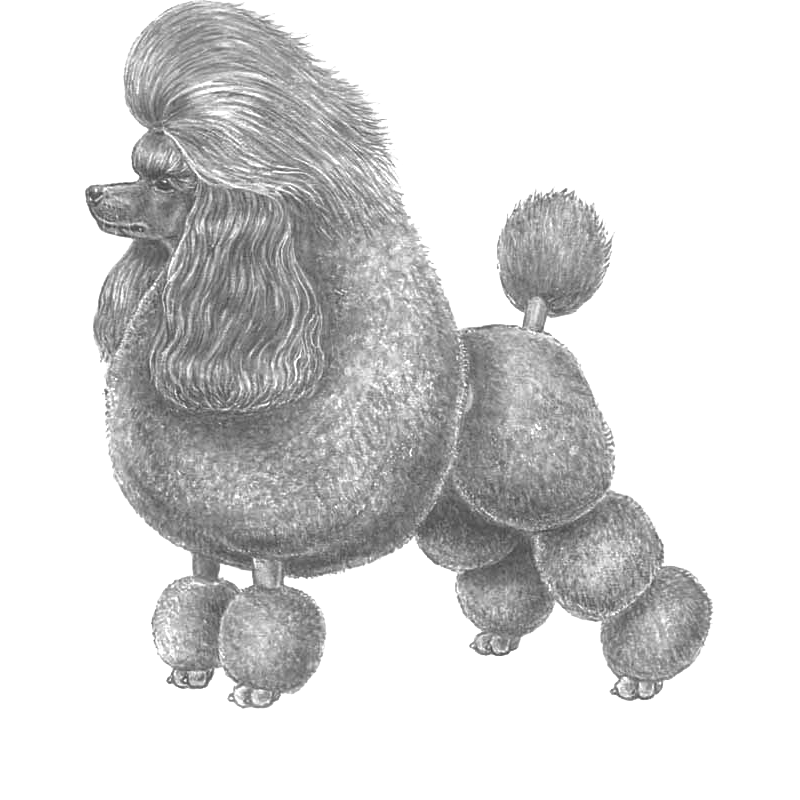
Originally the medium poodle was bred to be a hunting dog, specializing in retrieving birds from water. Today's dogs are versatile companions that compete in different dog sports/performance events. Poodles are well known competitors in the conformation show rings. The medium poodle is recognized by F.C.I. in European countries along with the other poodle sizes; variety data is from same resources. Size for the medium poodle is listed in the F.C.I. breed standard as between 35-45 cm. The AKC and UK Kennel Club do not recognize the medium poodle.
-
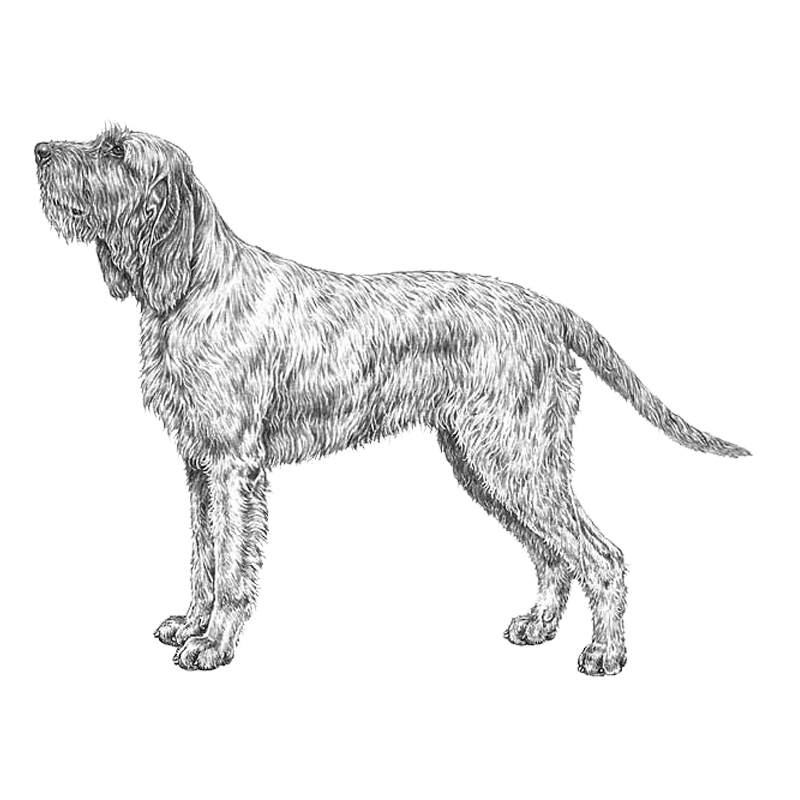
The Spinone Italiano is a "dog of solid construction, robust and vigorous with powerful bone, well-developed muscles and with a rough coat." "Naturally sociable, docile and patient, the Spinone is an experienced hunter in all terrains; very resistant to tiredness, goes easily into thorny underwood, or throws himself into cold water. He has remarkable dispositions for an extended and fast trot; by nature he is an excellent retriever."
Source: FCI Breed Standard (English)