





Marc’s 6th IDHW Reflections, Part Two

By Marc Ralsky in General
· Viewed: 1,017 times
Previous Entry: Part One of 6th IDHW Reflections...continued
Genetic Diversity Is Not a Side Conversation
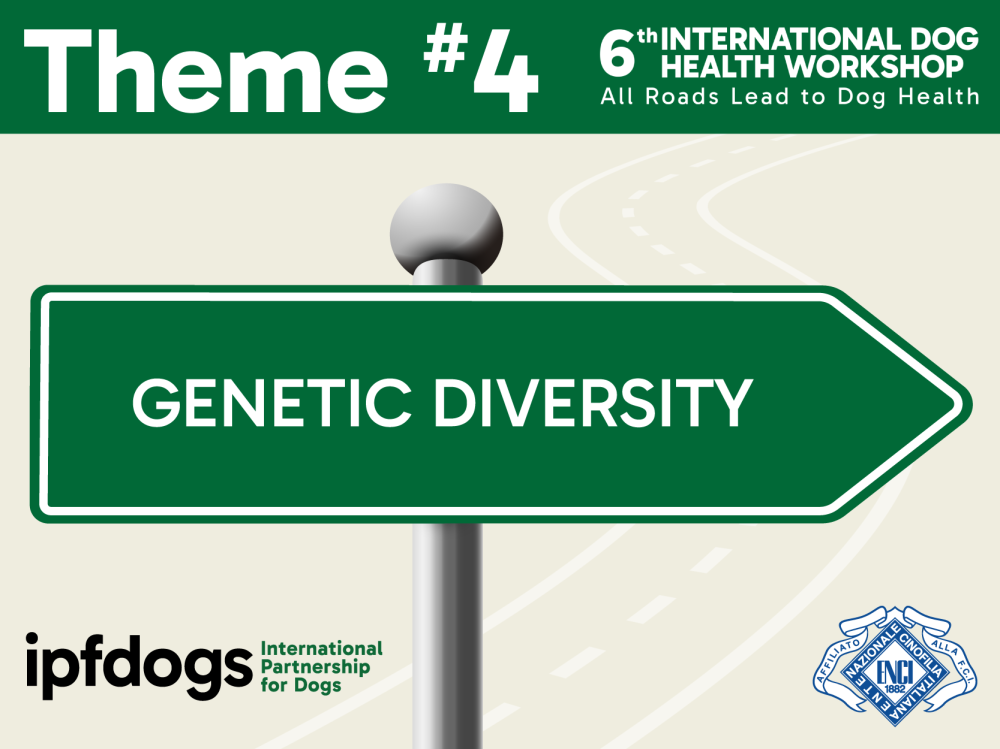
At the International Dog Health Workshop in Bologna, one message came through clearly in almost every discussion: We cannot improve dog health without talking about genetic diversity.
For too long, genetic diversity has been treated as something technical. Something for geneticists, population scientists, or people who enjoy complicated charts and long discussions about allele frequencies.
But what I gleaned from listening is that genetic diversity is not a side conversation.
It is about whether we are making breeding decisions with the whole population in mind, not simply the individual dog standing in front of us today.
That sounds straightforward. But it is one of the most difficult challenges in the dog world.
Breeders make decisions one litter at a time. One dog at a time. One hoped-for puppy at a time.
But the outcomes of those decisions reach much further. They could be decades of good, bad, or indifferent outcomes.
Every time a single dog is used repeatedly. Every time a popular sire becomes even more popular. Every time healthy animals are removed from breeding for reasons that have little to do with health but have more to do with politics or gatekeeping. Every time we focus intensely on one disease without considering the wider population, we can unintentionally narrow the genetic base of a breed.
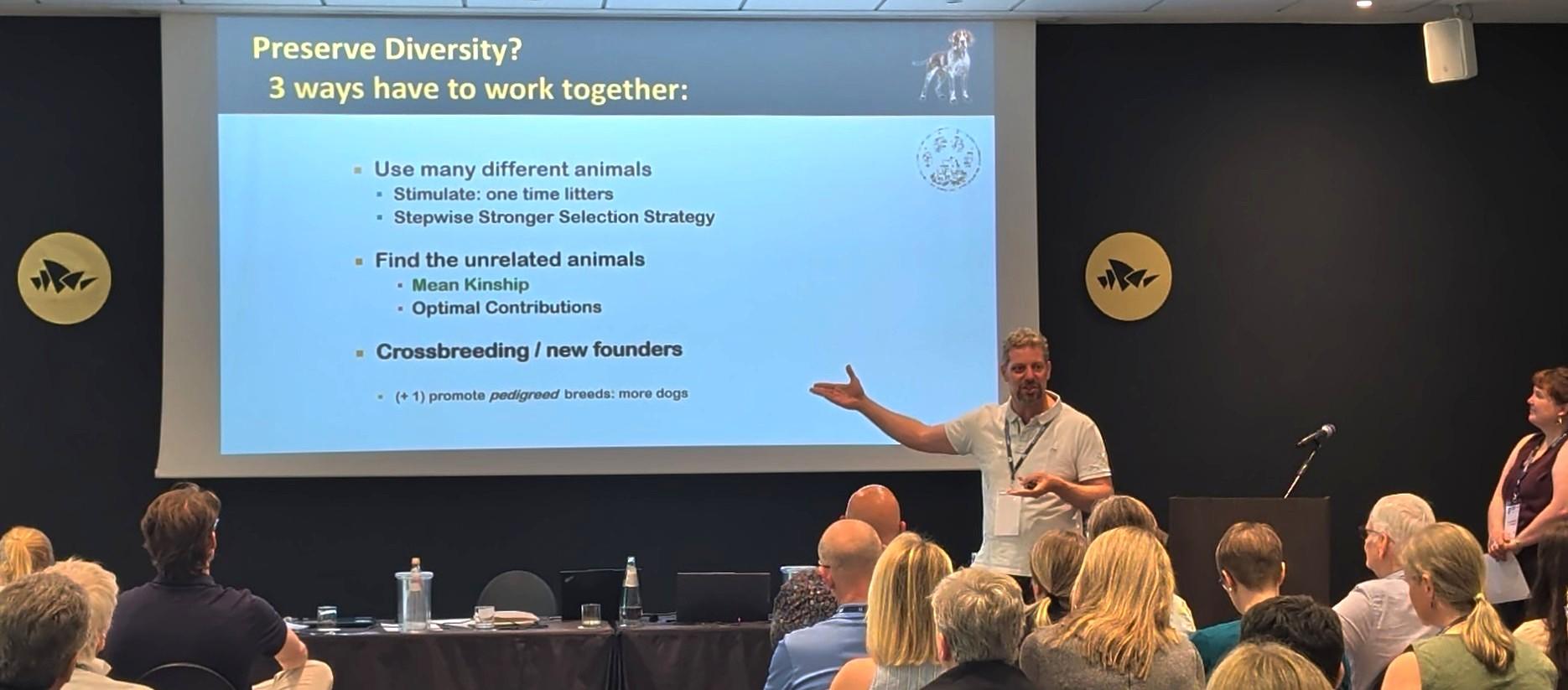
What the presenters were indicating, in my understanding, is that once diversity is lost, it is not easy to get back.
The conversations in Bologna were not about blaming breeders. In fact, one of the most important points raised was that breeders need to be much more visible and central in these discussions. But being at the forefront is a scary proposition for some.
Breeders are not a shadow somewhere at the side of the room.
They are the people making the choices. They are the people who live with the consequences. They are often the people holding the historical knowledge of their breeds, their pedigrees, their families, and their dogs.
We need them at the table.
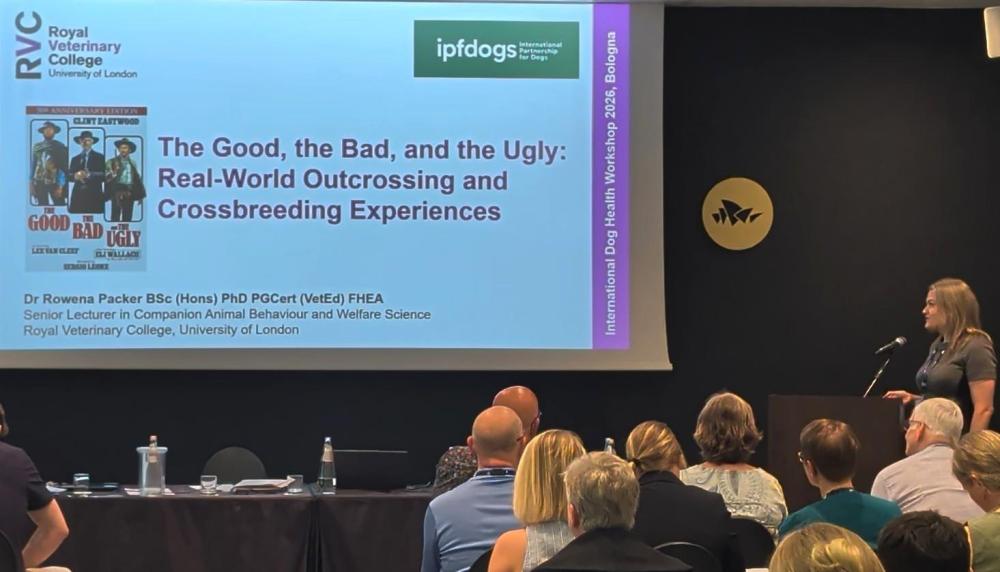 We also need to recognize that breeders are not all the same. A single message or program will not work for everyone. Some breeders are highly engaged with genetic testing. Others are just beginning to explore the topic. Some have access to data, mentorship, and resources. Others may be working in isolation.
That means education needs to be practical, clear, and respectful. It has to be accessible.
It also has to be engaging.
One of the most interesting ideas to emerge in Bologna was the possibility of recognizing and rewarding breeders who actively prioritize genetic diversity and population health. Breeders already value achievement. They value recognition. They value the opportunity to demonstrate that they are doing things well.
Could we create more ways to celebrate those who make responsible population-based breeding decisions?
Could we provide tools that are easier to understand and use?
Could we make genetic diversity part of the everyday conversation in the same way that DNA identification and disease testing have become commonplace?
These are not impossible ideas. But they will require creativity.
Another meaningful point raised in our discussions was the value of older, healthy dogs. In the show world and breeding world, attention naturally goes to the newest young star. The dog that is winning now. The dog everyone is talking about today. But an older dog that remains healthy, active, and sound has something very valuable to offer. It gives us information. It gives us perspective. It may offer an opportunity to preserve genetic diversity while also valuing proven health and longevity.
Of course, older dogs must also be used responsibly. We cannot simply create a new version of the popular sire problem. But the conversation reminded us that our breeding decisions should not be driven only by what is fashionable, current, or winning this weekend.
They need to be driven by a longer view.
The work ahead is not just about more testing. It is about better use of testing. Better sharing of information. Better engagement with breeders. Better education for judges, kennel clubs, and puppy buyers. Better recognition that every breed is a population, often spread across borders, not just a collection of individual dogs. It about collecting and sharing data.
That is where IPFDogs can help.
We can bring together people from different countries and different parts of the dog world. We can share examples. We can support better communication. We can help connect the science to the people who need to use it.
Genetic diversity can feel complicated. But the central idea is not.
We need to protect options for the future. For our breeds. For our breeders. And most importantly, for the generations of dogs to come.
Thank you to Agria, Royal Canin, and ENCI for their support of the workshop and of the conversations that will help shape that future.
More to come...
Recommended Comments