






Pedigree Breeds
184 entries in this category
-
- Last comment date
- Title
- Start Date
- Most Commented
- Most Viewed
- Last Updated
- Publish Date
- Brief Description
- Content
- Links to Breed Descriptions
- Other Names for Breed
- Country of Origin and Parent Breed Club
- Health and Well-Being
- Breed-Specific Articles
- Breed Standards
- Breed-Specific Statistics
- Breeding/Health Strategy Documents
- Breed-Specific DNA Tests
- Other Breed-Specific Webpages
- Breed-Specific Research
- Breed Clubs
- Custom
-
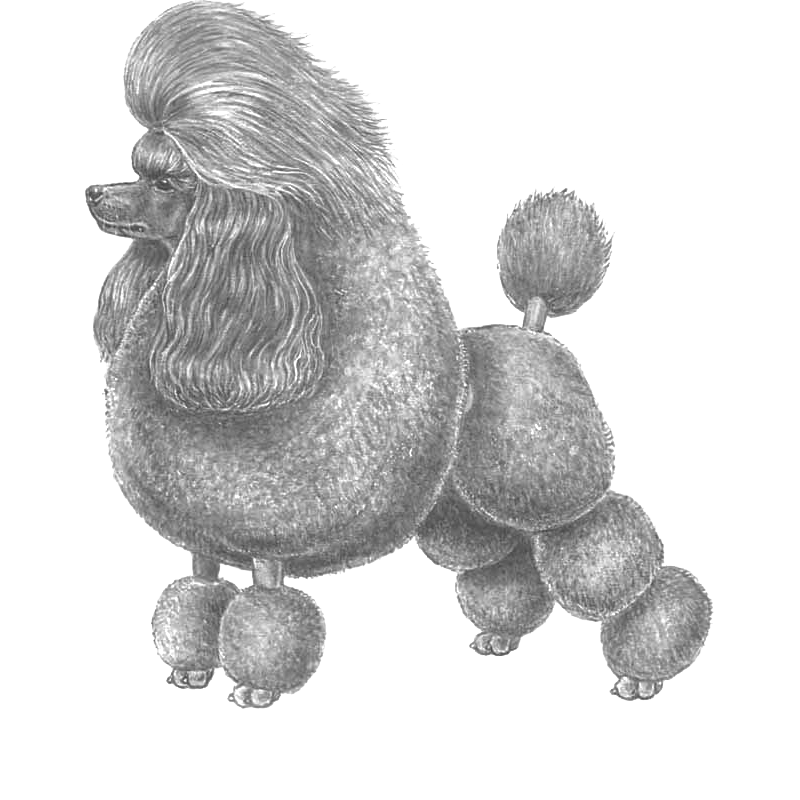
Traditionally the Standard Poodle, the largest of the subtypes, was a retriever or gun dog, used in particular for duck hunting and sometimes upland bird hunting.
-
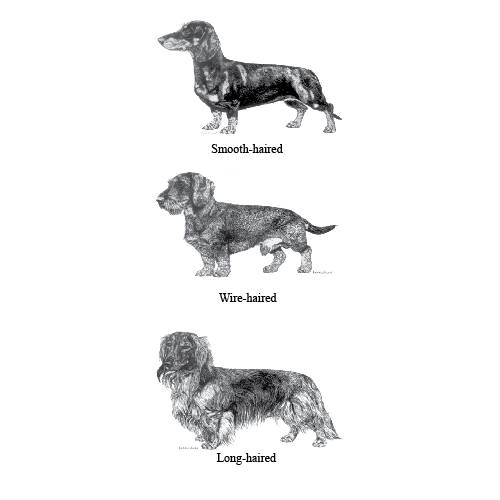
The Dachshund, also called Dackel or Teckel, has been known since the Middle Ages. Low, short legged, elongated but compact build, very muscular with cheeky, challenging head carriage and alert facial expression. His general appearance is typical of his sex. In spite of his legs being short in relation to the long body, he is very mobile and lithe. For decades the Dachshund has been bred in three sizes (Teckel, Miniature Teckel and Rabbit Teckel) and in three different kinds of coat (Smooth-haired, Wire-haired and Long-haired).
Source: FCI
-
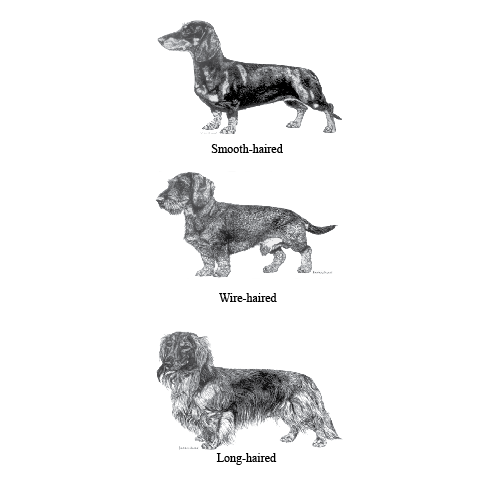 photo source: http://dgk.dk/wp-content/uploads/Diskusprolaps-hos-gravhunde_Charlotte-Mørck-Andersen-Tine-Marx.pdf
The Dachshund, also called Dackel or Teckel, has been known since the Middle Ages. Low, short legged, elongated but compact build, very muscular with cheeky, challenging head carriage and alert facial expression. His general appearance is typical of his sex. In spite of his legs being short in relation to the long body, he is very mobile and lithe. For decades the Dachshund has been bred in three sizes (Teckel, Miniature Teckel and Rabbit Teckel) and in three different kinds of coat (Smooth-haired, Wire-haired and Long-haired).
Source: FCI
-
- icelandic sheepdog
- swedish insurance data
- breed health database
- registration statistics
- international breed collaboration
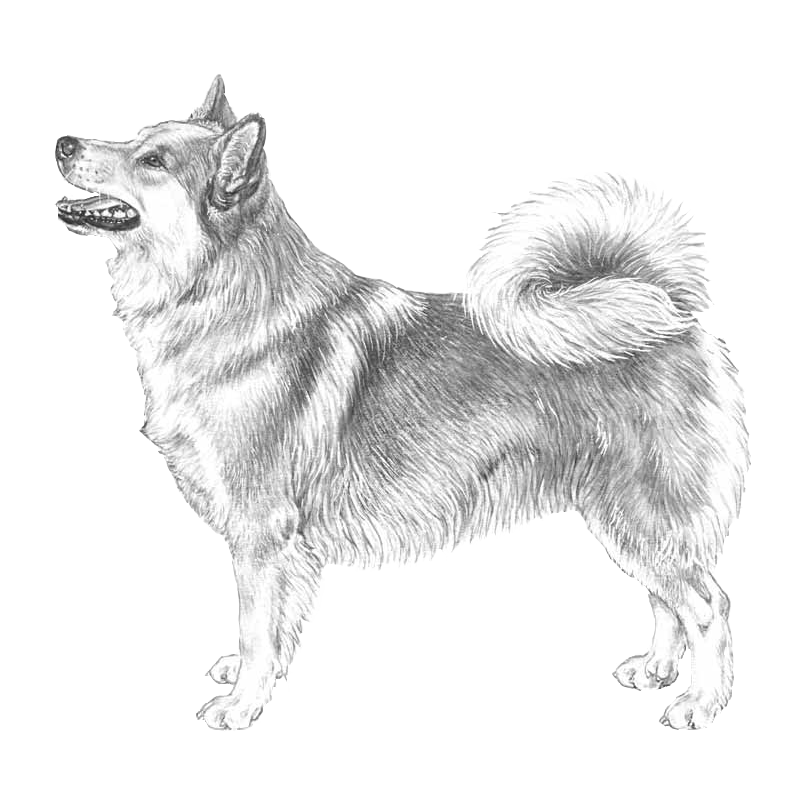
The Icelandic Sheepdog is a breed of dog of Spitz type originating from the dogs brought to Iceland by the Vikings. It is of similar type to the Norwegian Buhund and to the ancestor of the modern Shetland Sheepdog and Welsh Corgi.
-
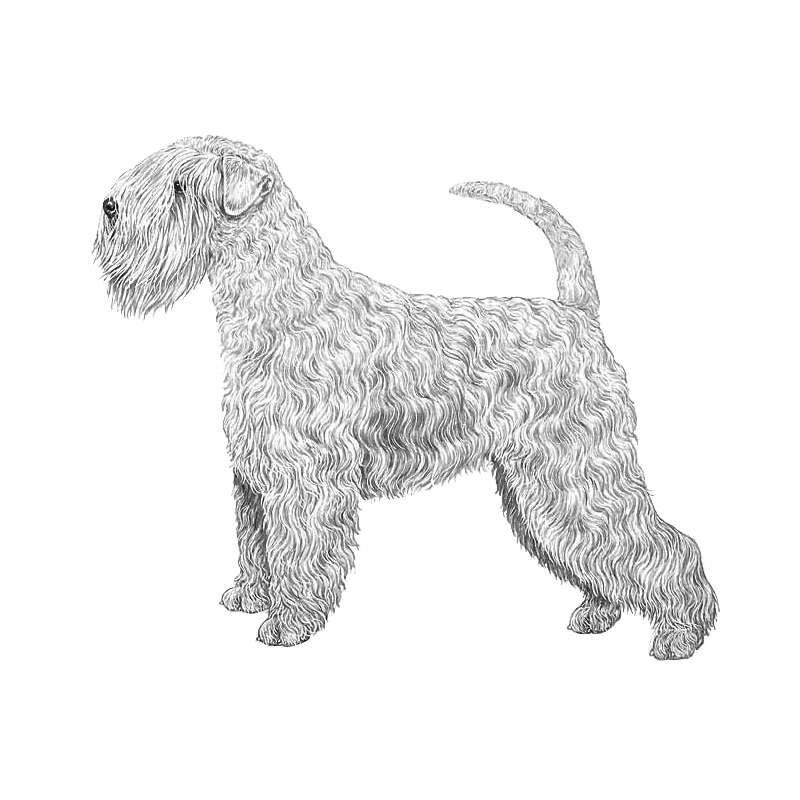 The Wheaten is probably the oldest of the four breeds. Its existence for at least 200 years can be inferred from textual references to "soft-coated" dogs.
- ireland
- registration statistics
- swedish insurance data
- soft coated wheaten terrier
- international breed collaboration
The relation of the modern Irish Terrier to the Wheaten, though less well documented, appears to have been the result of deliberate breeding experiments. So the humble Wheaten probably has a fairly mixed ancestry. Despite the long history of the Wheaten, it wasn't until 1937, that the Soft Coated Wheaten was officially recognised by the Irish Kennel Club. The breed has grown steadily in popularity since and is now well known world-wide.
Source: https://www.ikc.ie/dog-ownership/types-of-dog/breeds/breed-details/?breedId=74
-
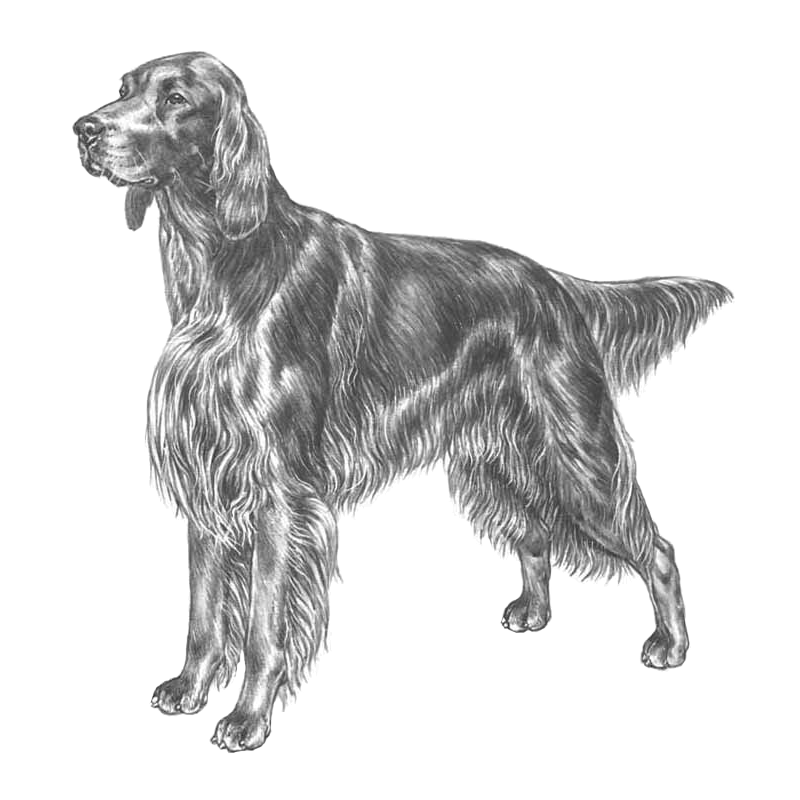 The breed is derived from the Irish Red and White Setter and an unknown solid red coloured dog. It was a clearly identifiable type in the 18th century.
The Irish Red Setter Club was established in 1882 to promote the Breed. The club issued the Breed Standard in 1886, and has organised field trials and shows to set the Standard for the Breed since that time. In 1998 the club published the working style for the breed. The standard and working style together describes the physical form and working ability of the breed. The Irish Red Setter has evolved down the years into a hardy, healthy, intelligent dog, possessed of excellent working ability and great stamina.
Source: http://www.ikc.ie/dog-ownership/types-of-dog/breeds/breed-details/50/
-
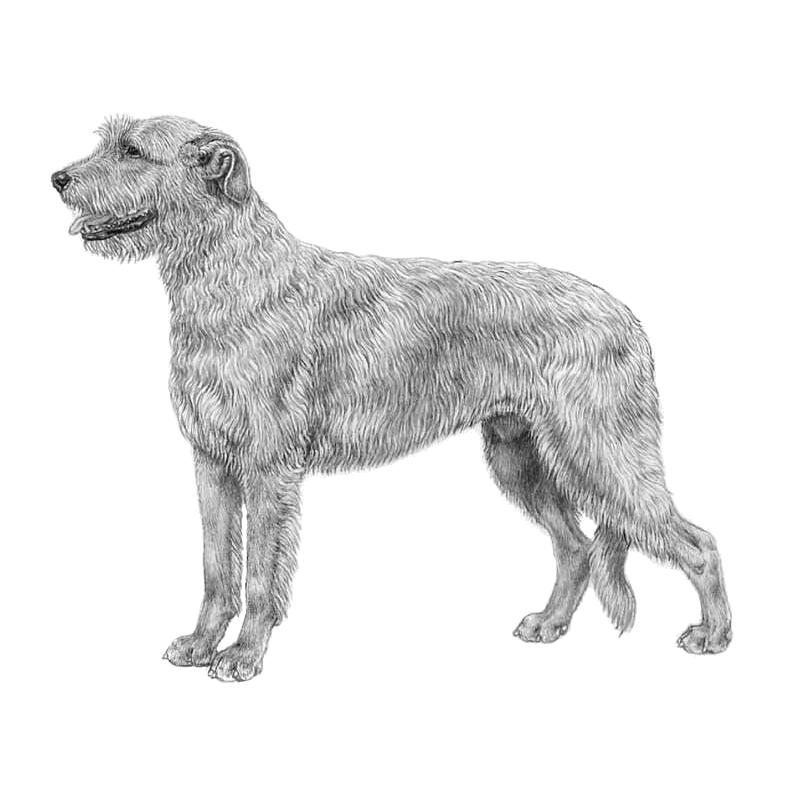
Up to the end of the17th century, Irish Wolfhounds were used for hunting wolves and deer in Ireland. They were also used for hunting the wolves that infested large areas of Europe before the forests were cleared.
Source: Irish Kennel Club
-
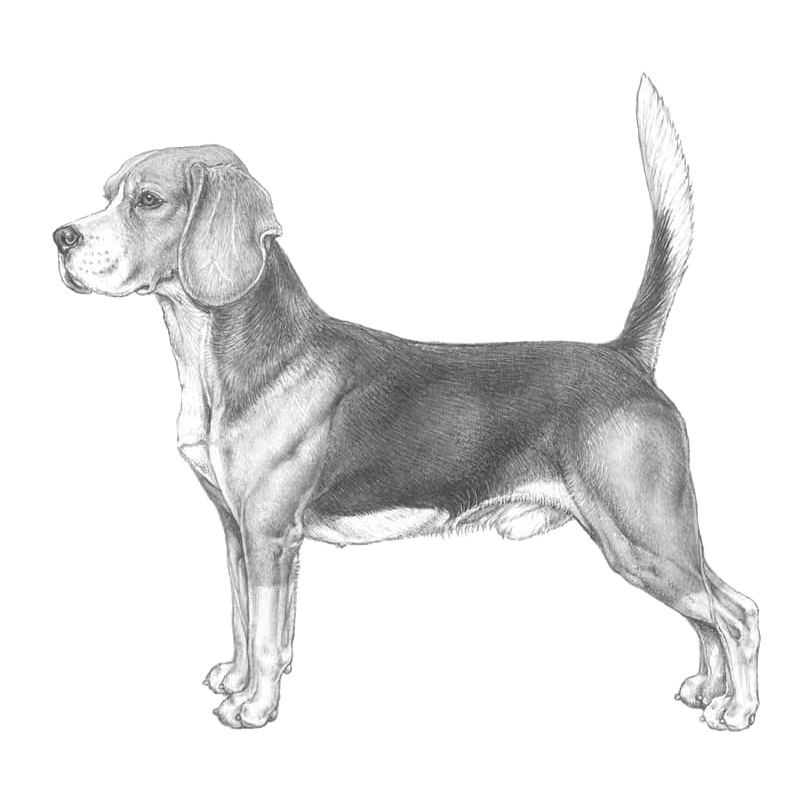
A member of the hound group, it is similar in appearance to the foxhound, but smaller with shorter legs and longer, softer ears. Beagles are scent hounds, developed primarily for tracking hare, rabbit, deer, and other small game.
Source: Wikipedia
-
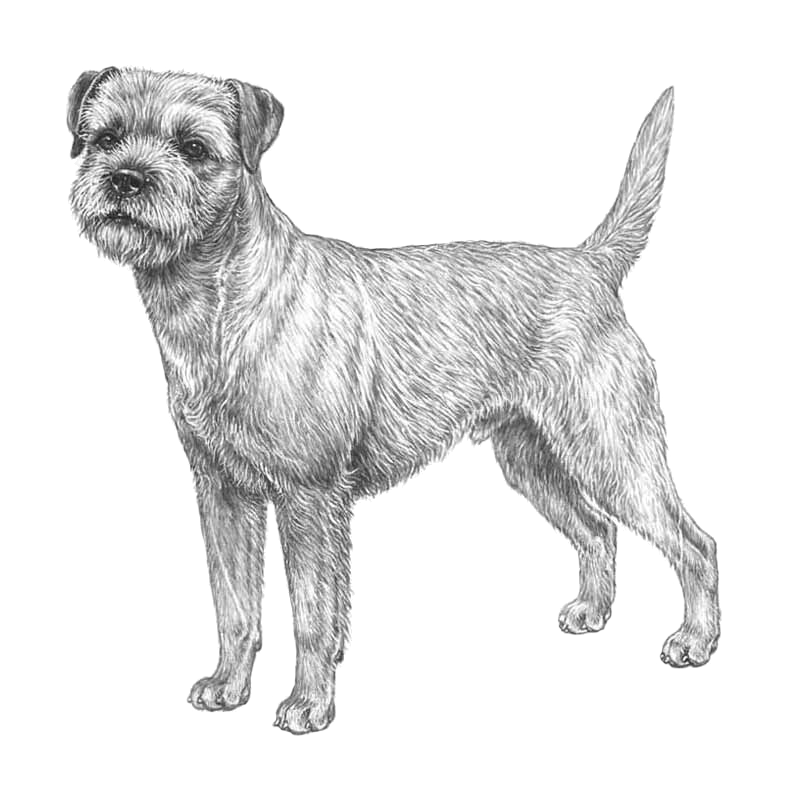
The Border Terrier is a small, rough-coated breed of dog of the terrier group. Originally bred as fox and vermin hunters, Border Terriers share ancestry with Dandie Dinmont Terriers, Patterdale terriers and Bedlington Terriers.
Source: Wikipedia
-
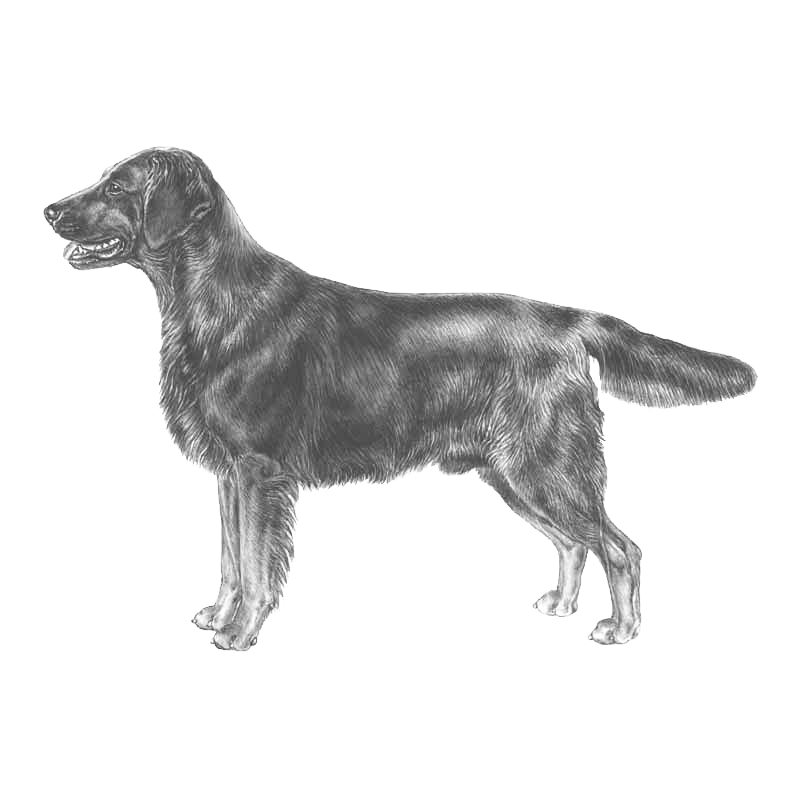
The Flat-Coated Retriever is a gundog breed originating from the United Kingdom. It was developed as a retriever both on land and in the water.
-
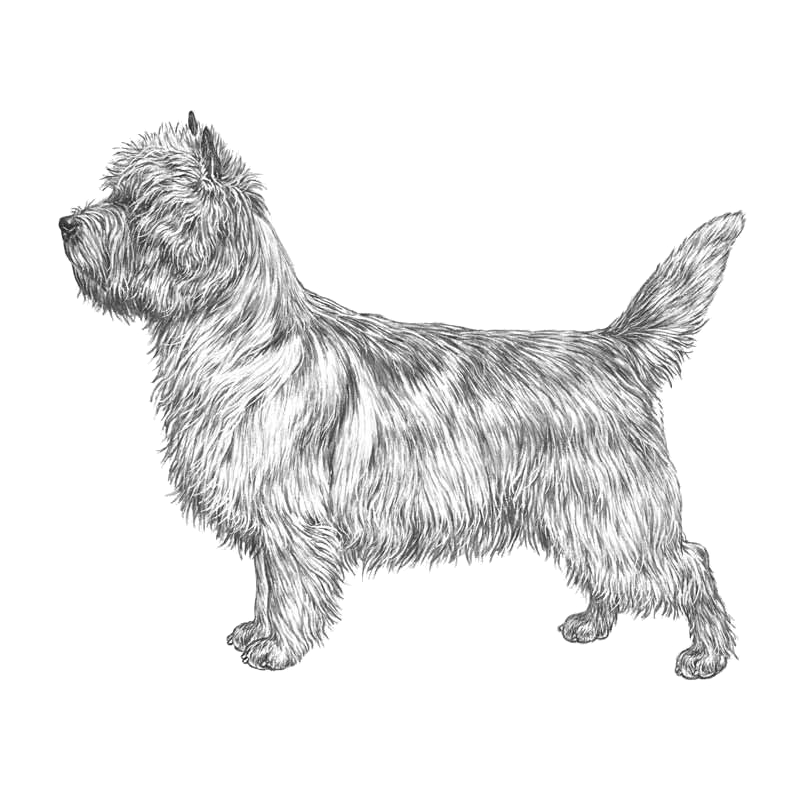
The Cairn Terrier is one of the oldest of the terrier breeds, originating in the Scottish Highlands and recognized as one of Scotland's earliest working dogs.
Source: Wikipedia
-
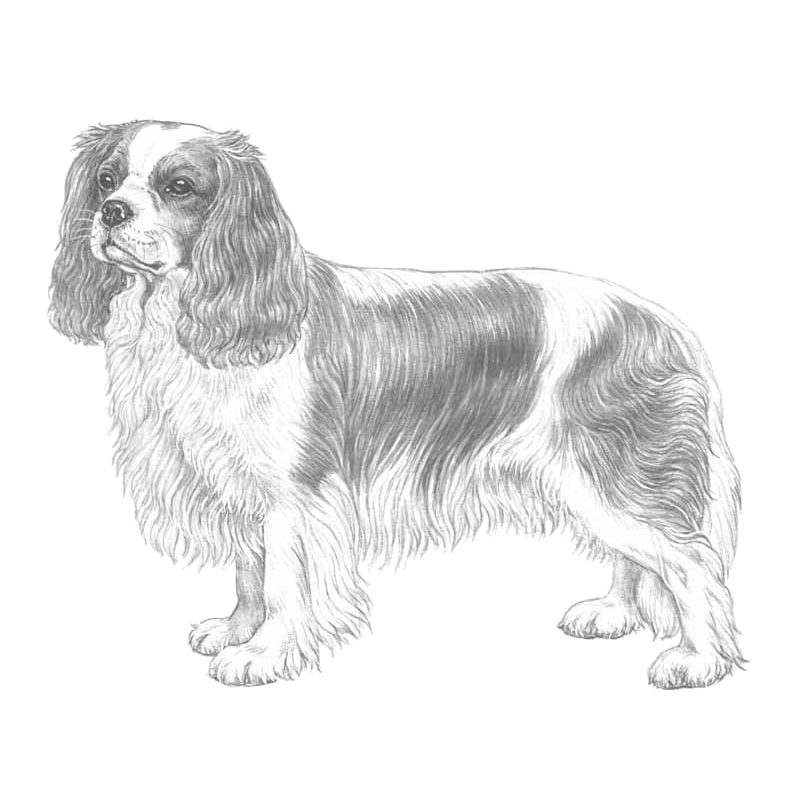
The Cavalier King Charles Spaniel is a small spaniel classed as a toy dog by The Kennel Club and the American Kennel Club.
Source: Wikipedia
-
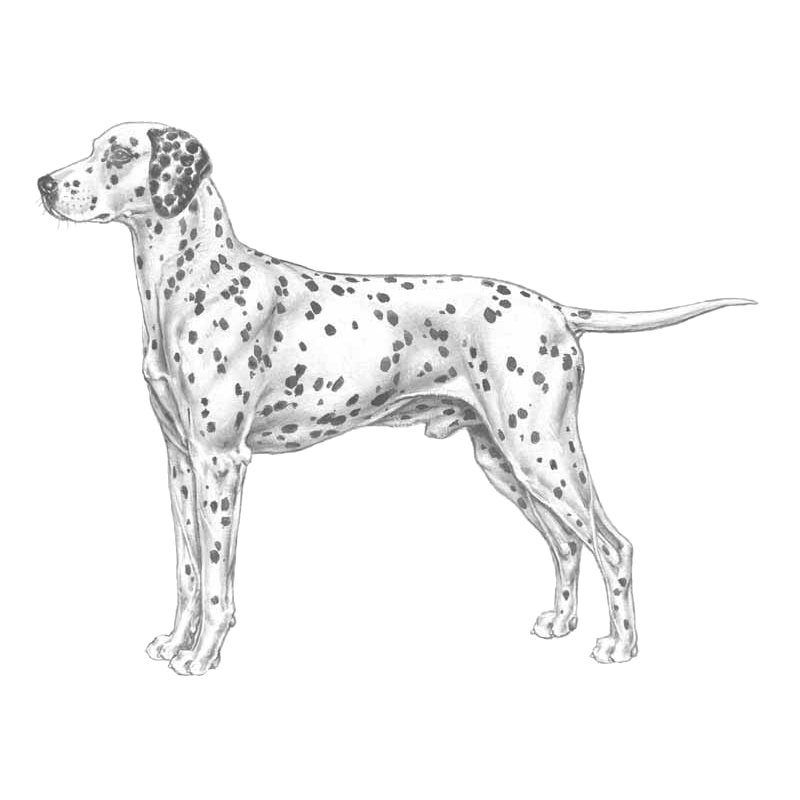
The Dalmatian is a large breed of dog noted for its unique black or liver spotted coat and was mainly used as a carriage dog in its early days.
Source: Wikipedia
-
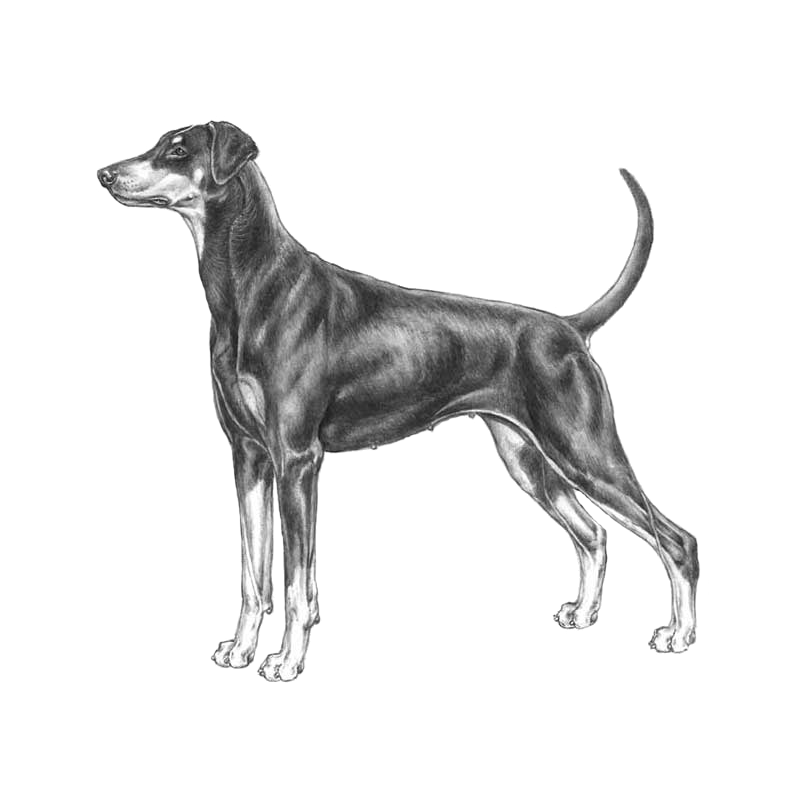 The Dobermann breed requires a medium sized, powerful, muscular dog. Despite his substance he shall be elegant and noble, which will be evident in his body line. He must be exceptionally suitable as a companion, protection and working dog and also as a family dog.
The Dobermann is the only German breed which bears the name of its original breeder, Friedrich Louis Dobermann (02.01.1834 – 09.06.1894). He was believed to be a tax collector, offal abbatoir manager (knacker) and a part time dog catcher, legally able to catch all stray dogs. He bred with animals from this reservoir that were particularly sharp. The so called “butcher’s dogs” which were already considered a relatively pure breed at that time, played a most important role in the origination of the Dobermann breed.
Source: FCI
-
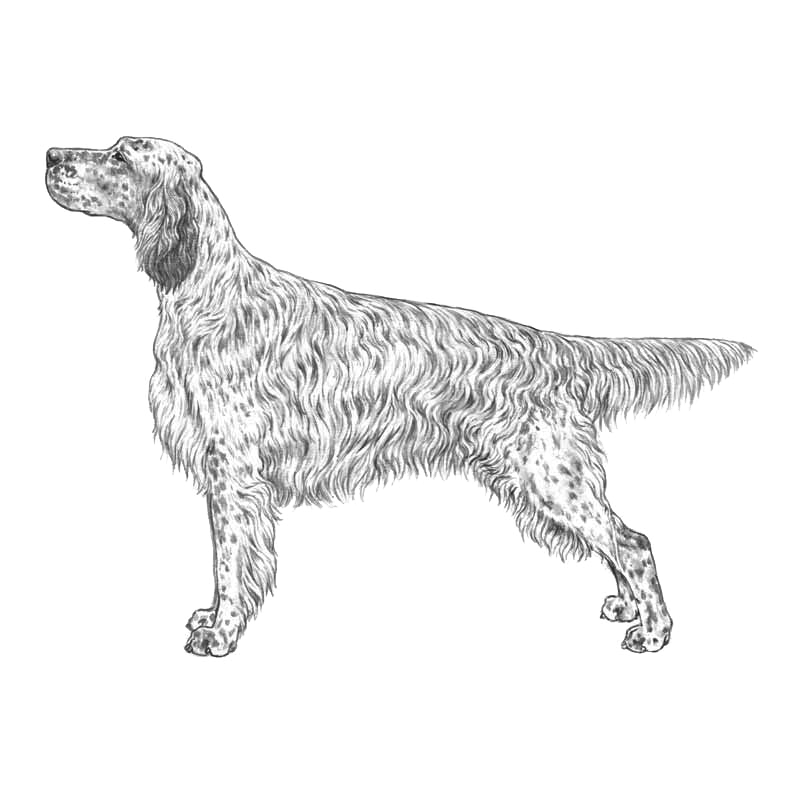
The English Setter is a medium size breed of dog. It is part of the Setter family, which includes the red Irish Setters, Irish Red and White Setters, and black-and-tan Gordon Setters.
Source: Wikipedia
-
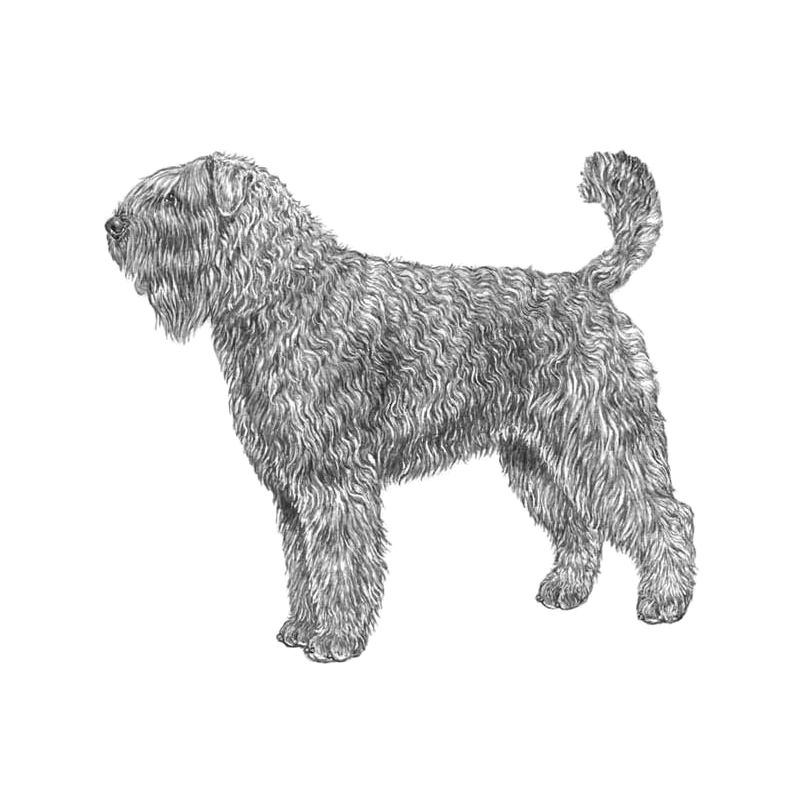
The Bouvier des Flandres is a herding dog breed originating in Flanders. They were originally used for general farm work including cattle droving, sheep herding, and cart pulling, and nowadays as guard dogs and police dogs, as well as being kept as pets.
Source: Wikipedia
-
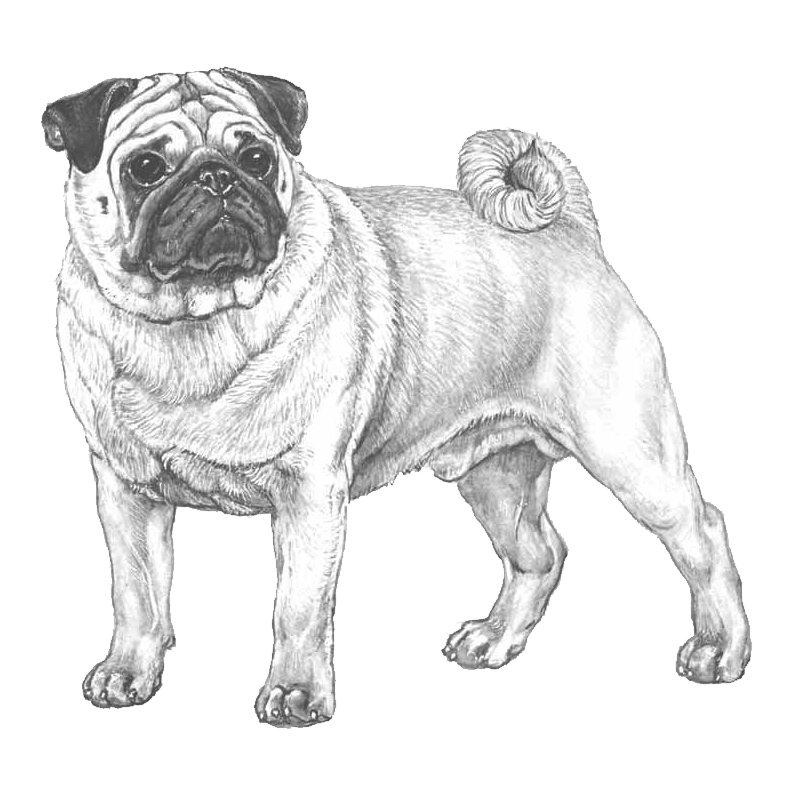
A dignified dog, very intelligent, good-natured and sociable, he is robust and self-reliant, with great character and personality. An adaptable companion for both young and old, and one who integrates himself very closely with family life. He can talk with his eyes, has his mischievous moments, and usually lives to a ripe old age.
Source: The Kennel Club: https://www.thekennelclub.org.uk/search/breeds-a-to-z/breeds/toy/pug/
-
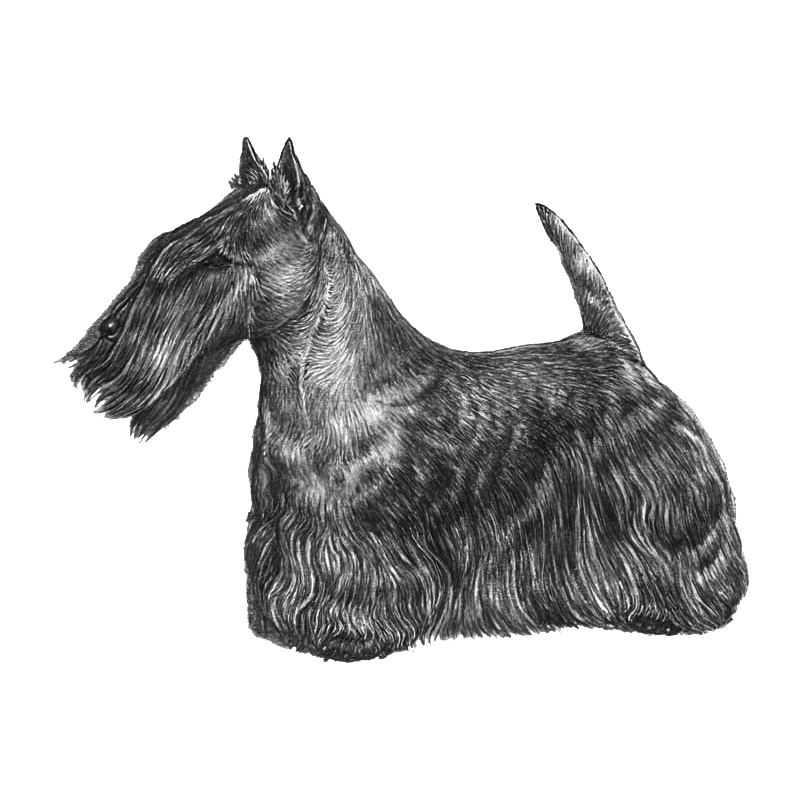
The Scottish Terrier (also known as the Aberdeen Terrier), popularly called the Scottie, is a breed of dog. Initially one of the highland breeds of terrier that were grouped under the name of Skye Terrier, it is one of five breeds of terrier that originated in Scotland, the other four being the modern Skye, Cairn, Dandie Dinmont, and West Highland White Terrier.
-
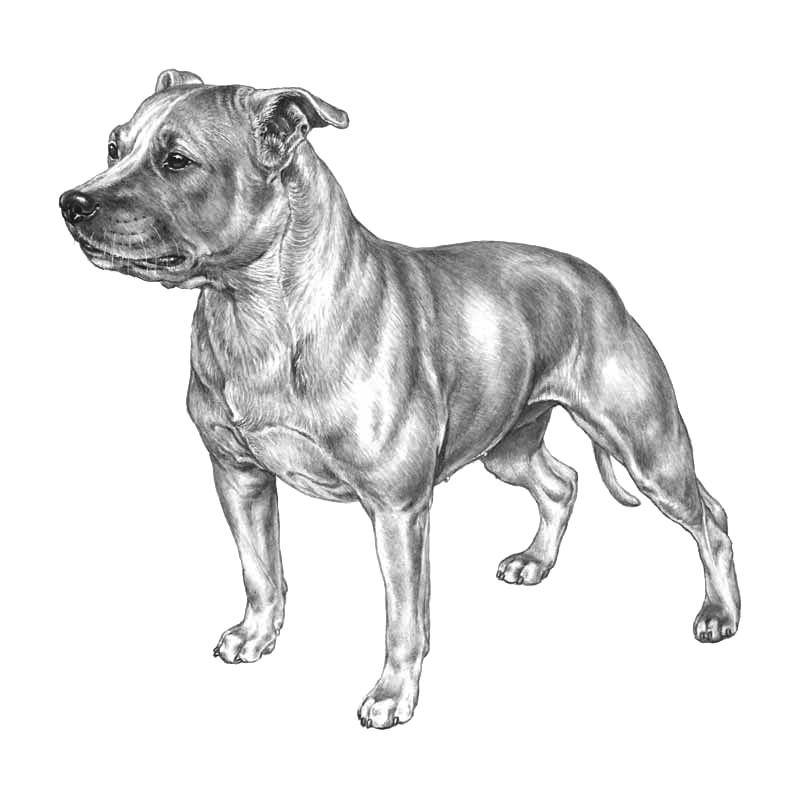
The Staffordshire Bull Terrier (informally: Staffie, Stafford, Staffy or Staff) is a medium-sized, short-coated breed of dog.
Source: http://en.wikipedia.org/wiki/Staffordshire_Bull_Terrier
-
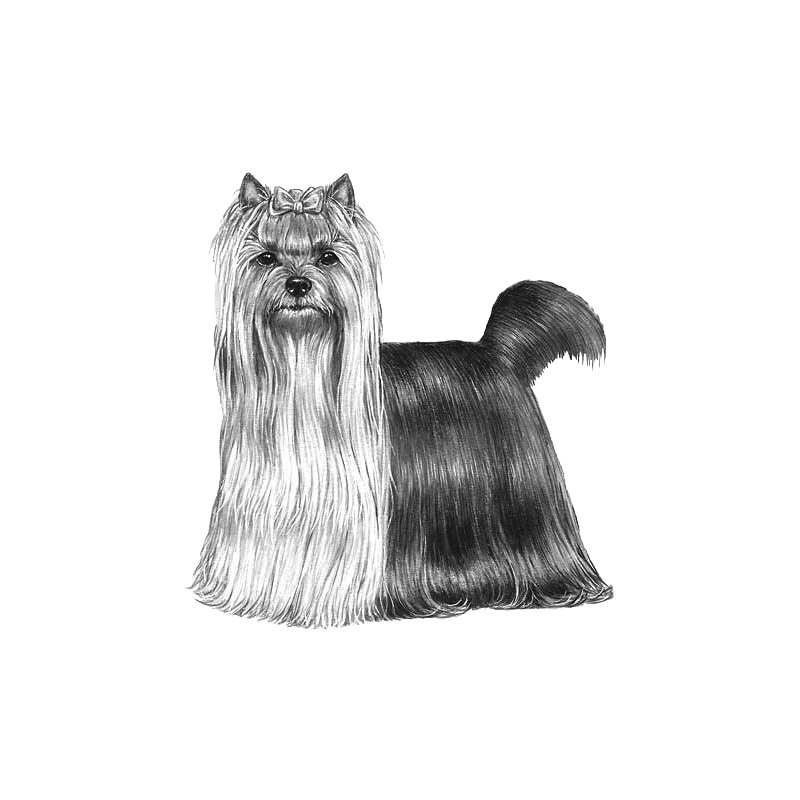
The Yorkshire Terrier is a small dog breed of terrier type, developed in the 19th century in the county of Yorkshire, England, to catch rats in clothing mills, also used for rat-baiting.
-
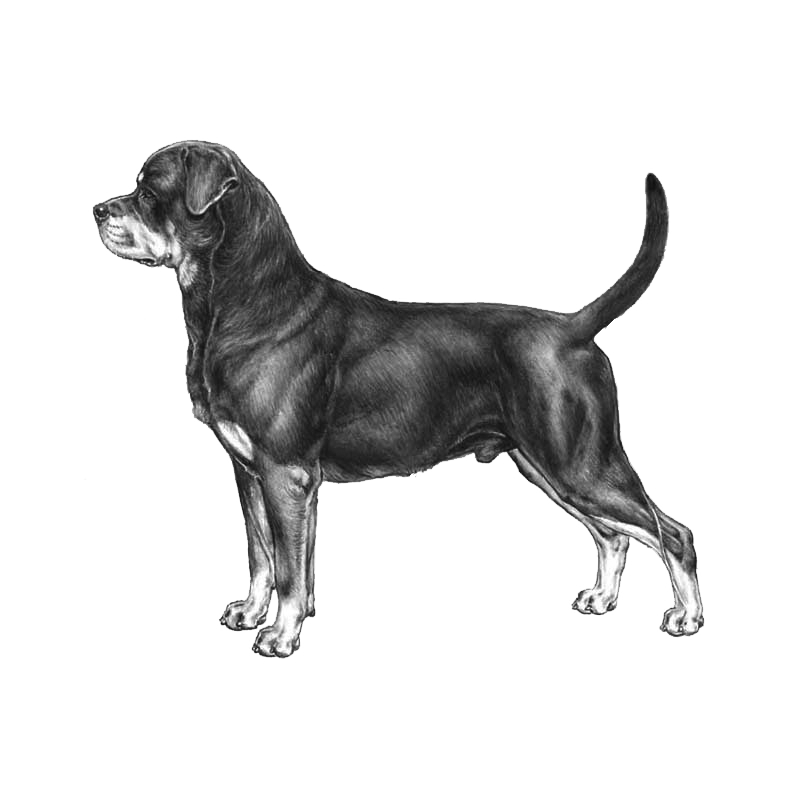 These Mastiff-type dogs stem from animals taken to Germany by Roman soldiers as they marched across Europe. Used to guard livestock, they were either discarded as the cattle were eaten or were left to guard outposts, and many finished up in Switzerland while others reached southern Germany. They were especially known around the town of Rottweil, which for 1,800 years was a centre for livestock trading. The evolving dog became a butcher’s dog, drover and draught dog. The Rottweiler, which fi
He is a very active dog that needs plenty of exercise, but his smooth coat requires only short periods of regular grooming to keep it in the desired shining condition.
Source: https://www.thekennelclub.org.uk/search/breeds-a-to-z/breeds/working/rottweiler/
-
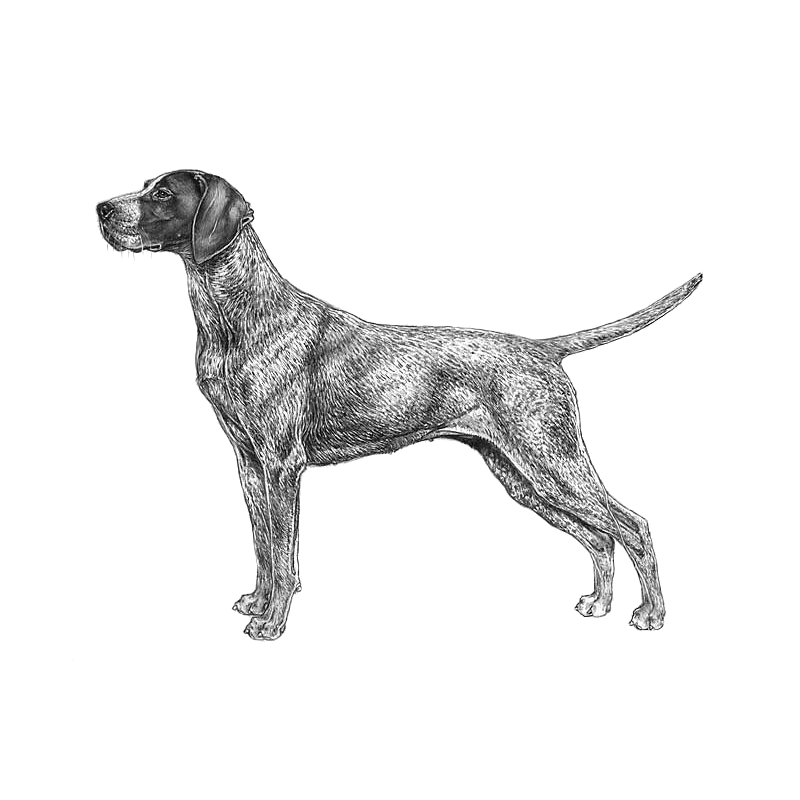
A dog of noble and balanced appearance, the conformation of which ensures strength, endurance and speed. Proud attitude, smooth outlines, lean head, well carried tail, firm shiny coat and well reaching, harmonious strides emphasize its nobility. Firm, balanced, reliable, restrained temperament, neither nervous nor shy or aggressive.
Source: http://www.fci.be/en/nomenclature/GERMAN-SHORT-HAIRED-POINTING-DOG-119.html
-
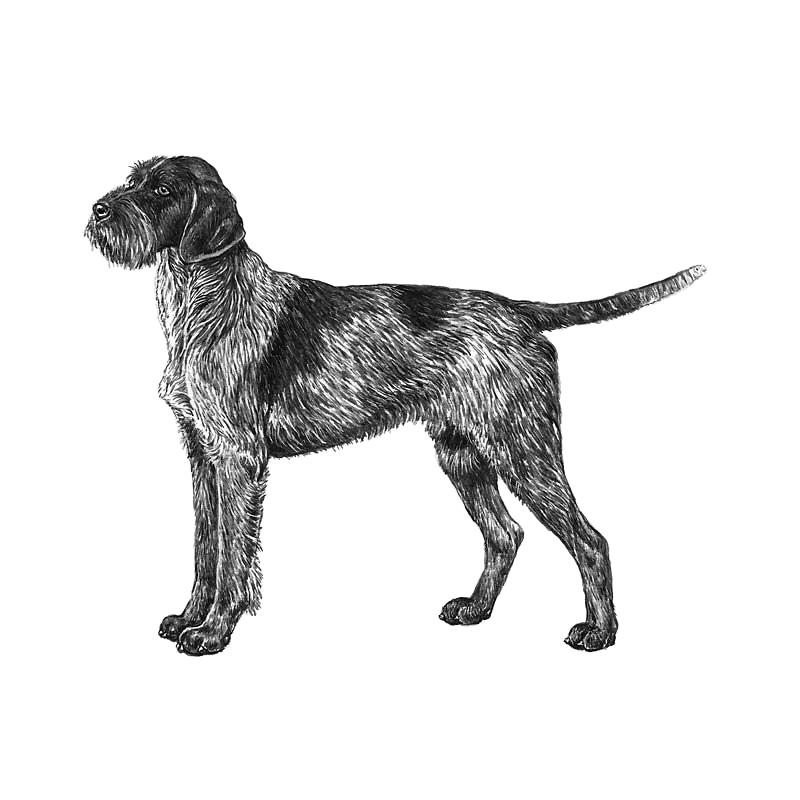
A pointing dog of noble appearance, with harsh coat completely protecting the skin, with an attentive expression full of energy. The movement should be powerful, ground covering, flowing and harmonious. Firm, self-controlled, wellbalanced, without shyness of game, neither sensitive when shots are fired nor shy or aggressive.
Source: http://www.fci.be/en/nomenclature/GERMAN-WIRE-HAIRED-POINTING-DOG-98.html
-
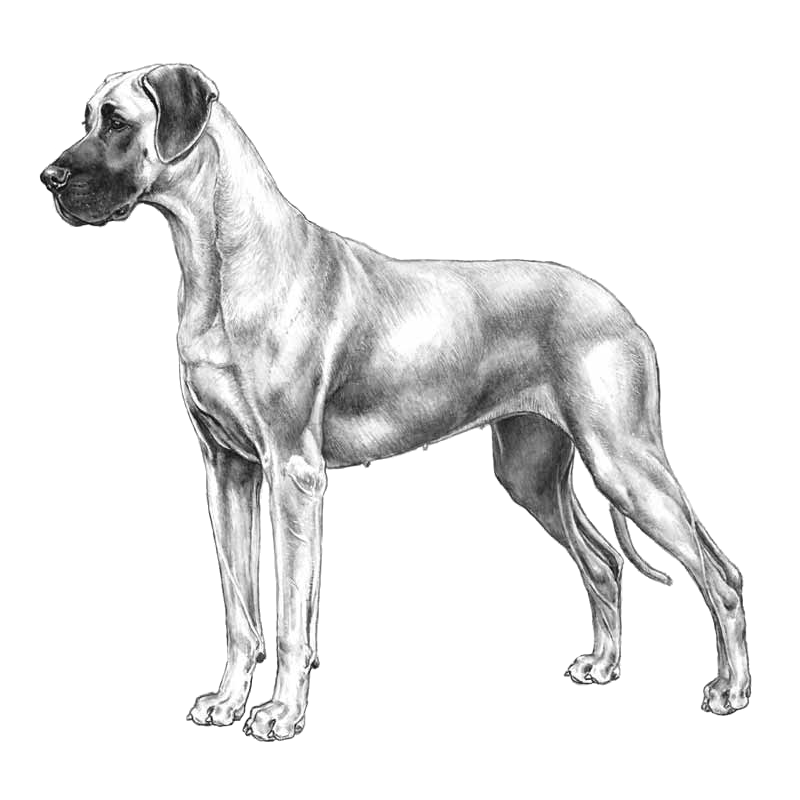 The Great Dane in his noble appearance combines a large, powerful well constructed body with pride, strength and elegance.
By substance together with nobility, harmonious appearance, well proportioned outlines, as well as an especially expressive head, the Great Dane strikes the onlooker as a noble statue, never coarse or with refined elegance. Perfect in balance and always with clearly defined sexual dimorphism. He is the Apollo amongst all breeds. Friendly, loving and devoted to his owners. Might be reserved towards strangers, but required is a confident, fearless, easily tractable, docile companion and family dog with high resistance to provocation and without aggression.
Source: FCI
-
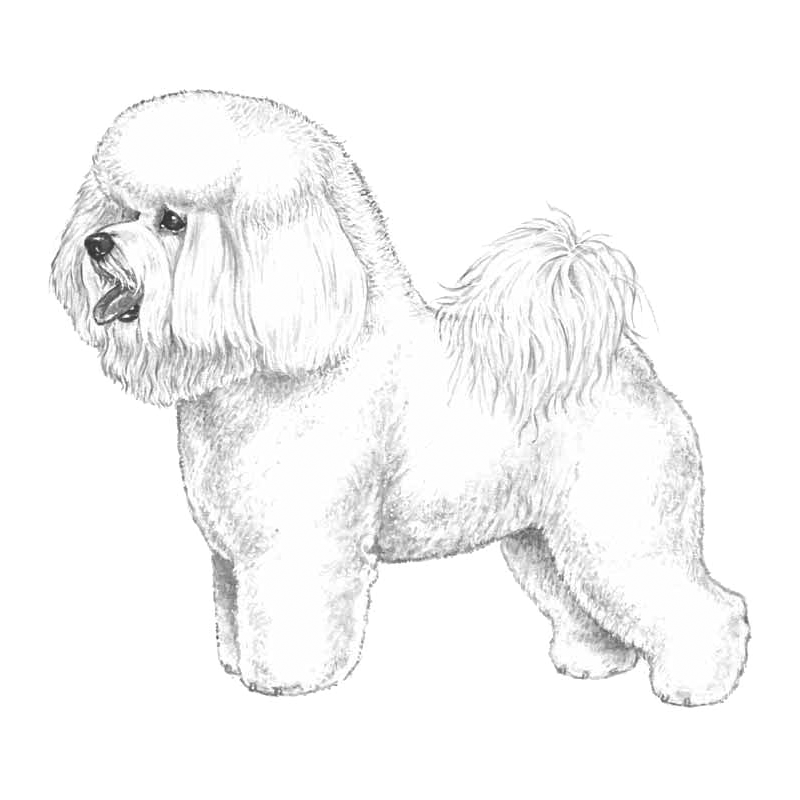
A Bichon Frisé (/ˈbiʃɒn ˈfriz/ or /ˈbiʃɒn frɪˈzeɪ/; French, meaning curly lap dog), is a small breed of dog of the Bichon type.
Source: Wikipedia