






Brachycephalics
Supporting work to address health and welfare issues in brachycephalic breeds and dogs.
29 articles in this category
-
 Brachycephalics: Research and Veterinary: External Resources Epidemiological associations between brachycephaly and upper respiratory tract disorders in dogs attending veterinary practices in England http://researchonline.rvc.ac.uk/9420/1/9420.pdf O'Neill et al. Canine Genetics and Epidemiology (2015) 2:10 DOI 10.1186/s40575-015-0023-8 Impact of Facial Conformation on Canine Health: Brachycephalic Obstructive Airway Syndrome http://journals.pl
 FECAVA: Healthy Breeding
- Brachycephalic issues: shared resources (multiple country's resources)
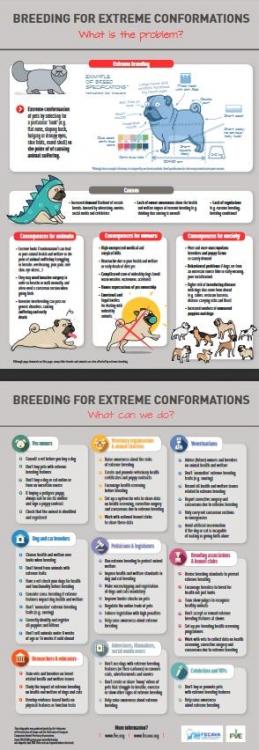
- Extreme Breeding Infographic BREEDING FOR EXTREME CONFORMATIONS - What is the problem? & What can we do? Causes, consequences...
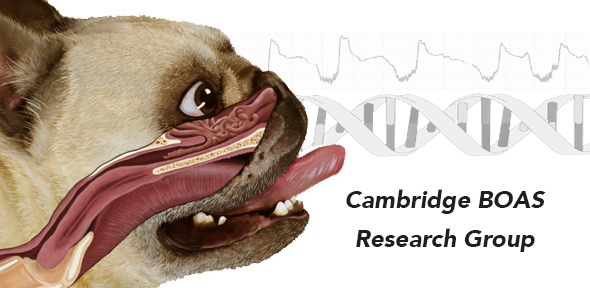 The Cambridge BOAS Research Group opened their new website in 2016. Great information on their programs and progress. Also background information on BOAS at a level for informed breeders, veterinarians and others. There are possibilities for dog owners and breeders in the UK to participate in and support this work.
Owners and breeders: See the flyer for an overview.
The Cambridge BOAS Research Group opened their new website in 2016. Great information on their programs and progress. Also background information on BOAS at a level for informed breeders, veterinarians and others. There are possibilities for dog owners and breeders in the UK to participate in and support this work.
Owners and breeders: See the flyer for an overview.
-
 Article: 2017 - Kennel Club Launches Learning Resource for Health Concerns in Brachycephalic Breeds Updated 5-28-2021: To Get Access to the Academy Resources: Create an account info is available on the KC's FAQ page. It's worth signing up! Brachycephalic obstructive airway syndrome - learn how it affects brachycephalic breeds (short-nosed dogs e.g. Pugs, Bulldogs and French Bulldogs) and the signs and symptoms that owners/potential owners should be aware of. An Overview: ht
- "The Kennel Club has launched a Brachycephalic Obstructive Airway Syndrome (BOAS) online learning resource on the Kennel Club Academy, to provide free and easily accessible education to those with an interest in BOAS and the research being undertaken at Cambridge University with brachycephalic dog breeds."
-
 Brachycephalic breeds - A few highlights from 2017 January 2017 - Vet Journal Research: Comparison of submaximal exercise test results and severity of brachycephalic obstructive airway syndrome in English bulldogs http://www.sciencedirect.com/science/article/pii/S1090023316302106 February 24, 2017 Health and Welfare: A research paper was published that explores the matter of people's motivations in purchasing breeds of dogs. Why do people buy dogs with potential welfare
- Addressing health issues in brachycephalic breeds remains an ongoing topic of interest across the veterinary, research and breed communities as well as impacts animal welfare laws and regulatory agencies in governments. Although there is growing awareness of the potential welfare issues involved, there is clearly still a requirement for education of veterinary professionals, dog breeders and the wider public. This article provides information on a few developments in 2017.
-
 Reporting of surgeries and deaths in brachycephalic dogs In April 2018, the Swedish kennel club introduced the possibility to report surgery in the respiratory tract of brachycephalic dogs with clinical problems. A possibility to report surgery on brachycephalic dogs have been requested for a long time from veterinarians and the Swedish kennel clubs´ (SKK) breed clubs. In a veterinary petition 2015*, a letter signed by hundreds of Swedish veterinarians, was sent to SKK and the Swedish
- SWEDEN Collaboration and problem solving -- brachycephalic breeds... thanks goes to the SKK for their continued work to address health and welfare issues in dog breeds. Here you will find information pertaining to management of brachycephalic dog breeds - discussion and actions - by representatives from Swedish Veterinary Association, the Swedish Board of Agriculture, the County Administrative Board, the Swedish University of Agricultural Sciences and SKK. Many thanks go to SKK's Linda Andersson for sharing this write-up with the DogWellNet community.