






Pedigree Breeds
184 entries in this category
-
- Last comment date
- Title
- Start Date
- Most Commented
- Most Viewed
- Last Updated
- Publish Date
- Brief Description
- Content
- Links to Breed Descriptions
- Other Names for Breed
- Country of Origin and Parent Breed Club
- Health and Well-Being
- Breed-Specific Articles
- Breed Standards
- Breed-Specific Statistics
- Breeding/Health Strategy Documents
- Breed-Specific DNA Tests
- Other Breed-Specific Webpages
- Breed-Specific Research
- Breed Clubs
- Custom
-
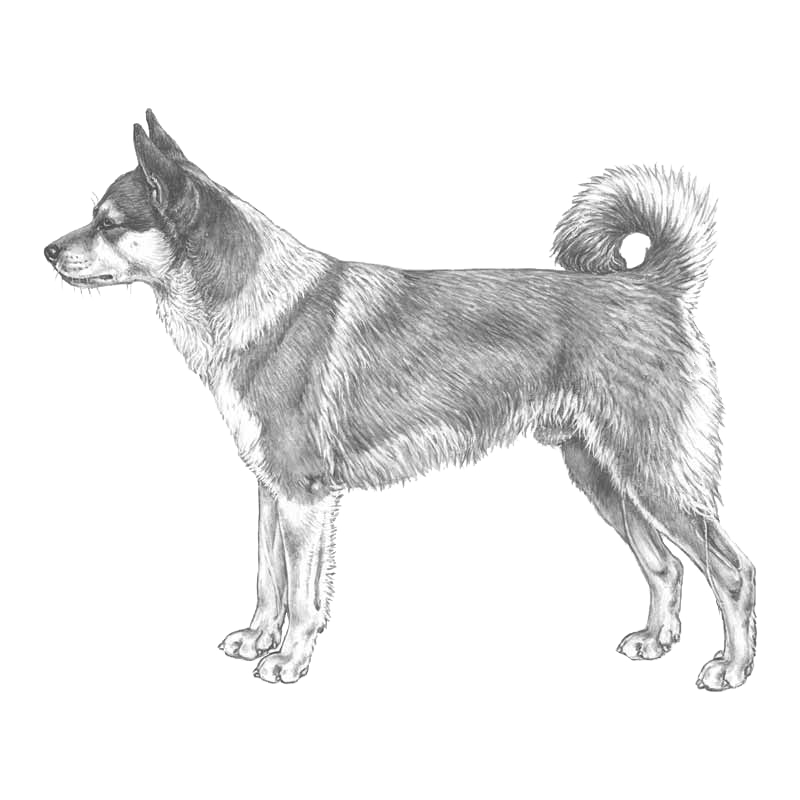
The Norwegian Lundehund is an ancient dog breed that was used to hunt seabirds along most of the Norwegian coast. The breed name is a combination of the Norwegian words ”lunde” (puffin, Fratercula arctica) and ”hund”, dog. Although the breed’s exact age is not known, there are descriptions of the use of dogs for puffin hunting that are more than 400 years old.
Source: The native dog breeds of Norway - http://www.skogoglandskap.no/f…/native_dog_breeds_norway.pdf (Internet Archive)
-
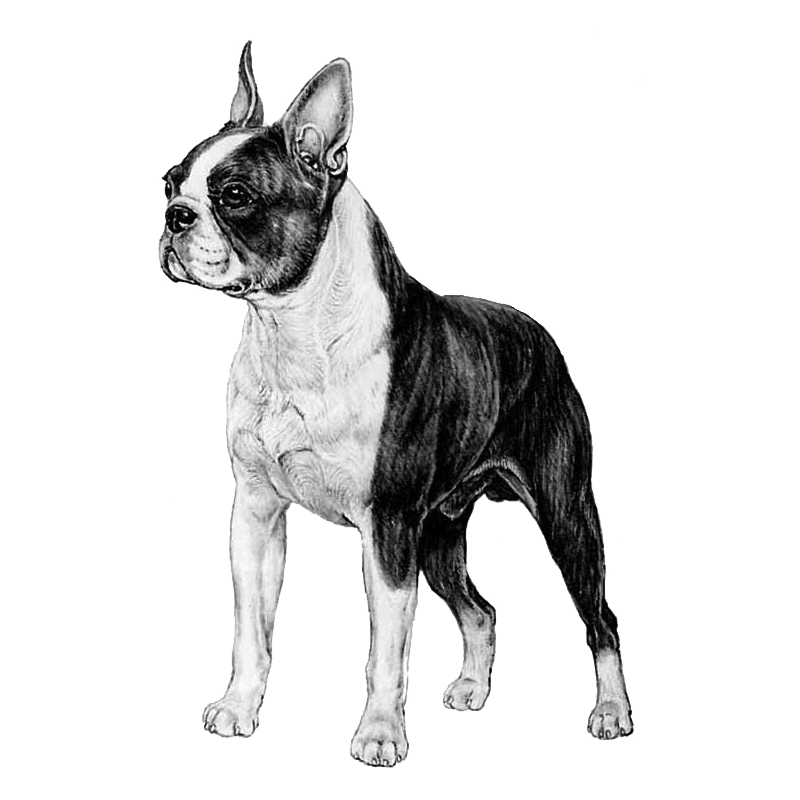
A real Yankee-Doodle-Dandy! Although he owes a little of his ancestry to the British Bulldog, the Boston Terrier actually came into being in the late nineteenth century in the eastern states of America when, in 1893, a mix of bull and terrier types produced the first pair of dogs that were to become the foundation of the breed.
Source: The Kennel Club
-
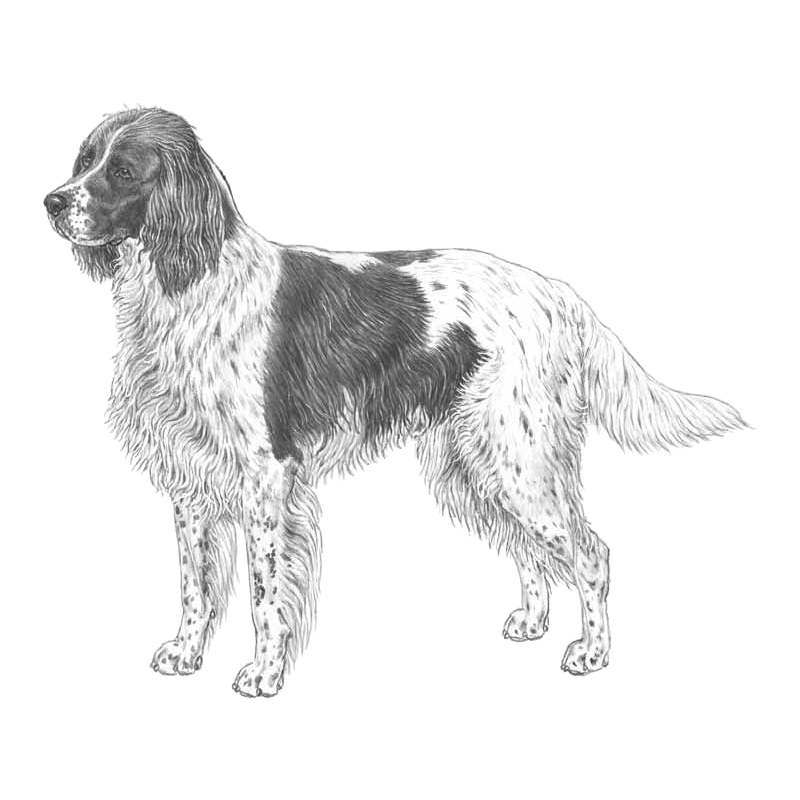
The French Spaniel (Epagneul Français) was developed in France as a hunting dog, descended from dogs of the 14th century.
(Source: AKC)
-
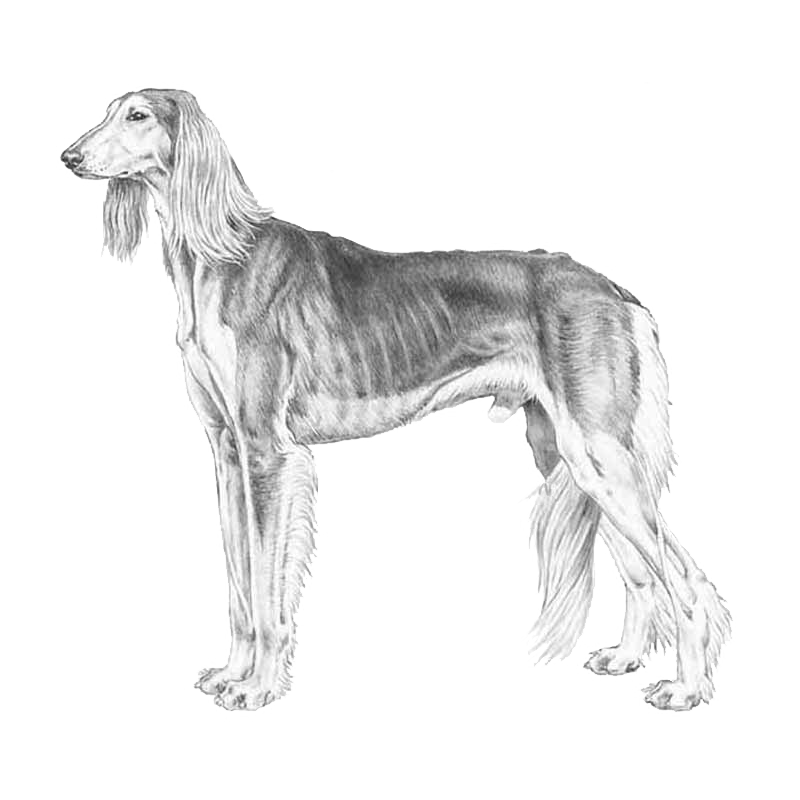 Salukis vary in type and the variation is desired and typical for the breed. The reason for the variation is the special place held by the Saluki in the Arab tradition and the immense size of the Middle East area where the Saluki has been used as a hound of the chase for thousands of years. Photo: Jessica Bolander, emoticon.se
The whole appearance of this breed should give an impression of grace and symmetry and of great speed and endurance coupled with strength and activity. Smooth variety: the points should be the same with the exception of the coat which has no feathering. Reserved with strangers, but not nervous or aggressive. Dignified, intelligent and independent.
-
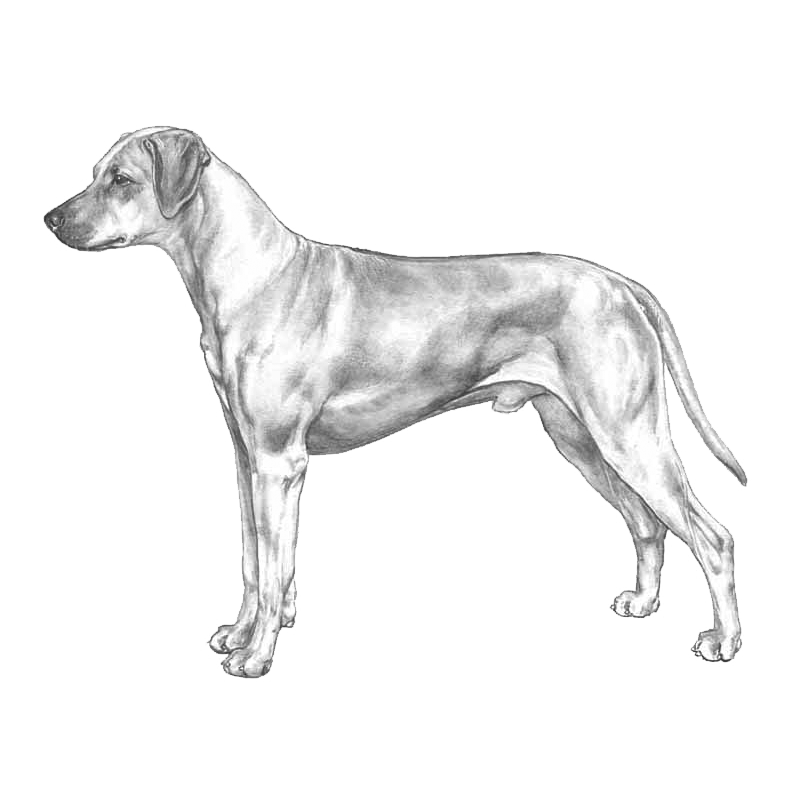
The Rhodesian Ridgeback is a dog breed developed in Southern Africa. Its European forebears can be traced to the early pioneers of the Cape Colony of southern Africa, who crossed their dogs with the semi-domesticated, ridged hunting dogs of the Khoikhoi.
-
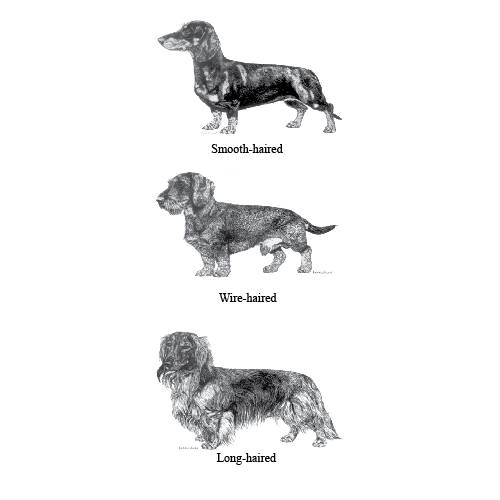
The Dachshund, also called Dackel or Teckel, has been known since the Middle Ages. Low, short legged, elongated but compact build, very muscular with cheeky, challenging head carriage and alert facial expression. His general appearance is typical of his sex. In spite of his legs being short in relation to the long body, he is very mobile and lithe. For decades the Dachshund has been bred in three sizes (Teckel, Miniature Teckel and Rabbit Teckel) and in three different kinds of coat (Smooth-haired, Wire-haired and Long-haired).
Source: FCI
-
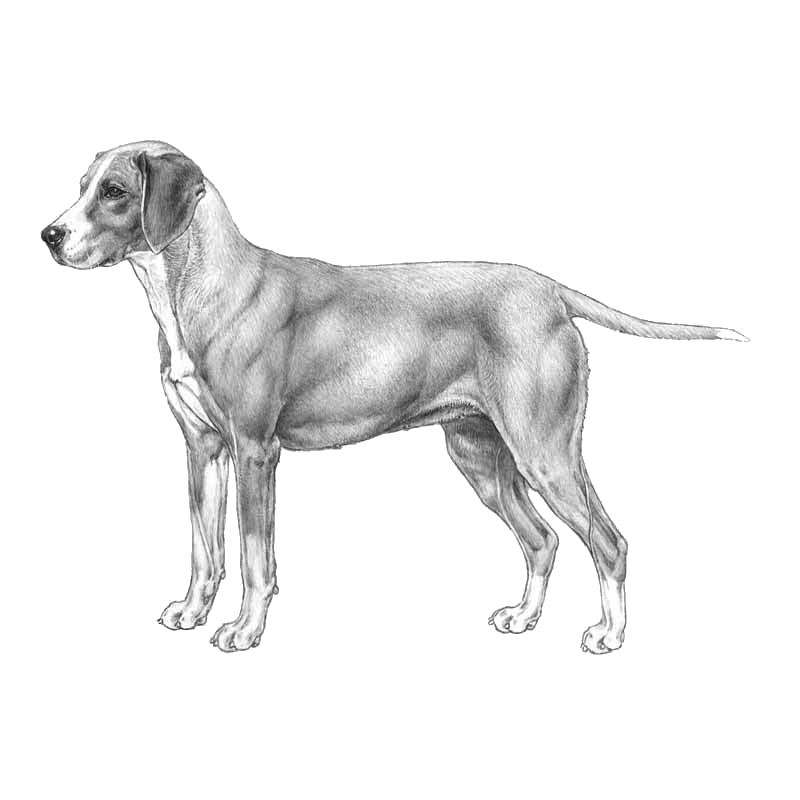
The Gotlandsstövare is rectangular in body, noble but with an impression of strength and endurance. Gotlandsstövaren is a driving hunting dog for hunting hare and fox. The race also serves as a companion provided that you take into account its strong hunting instinct and big business needs.
Source: http://www.skk.se/sv/hundraser/gotlandsstovare/?breed=Gotlandsstövare
-
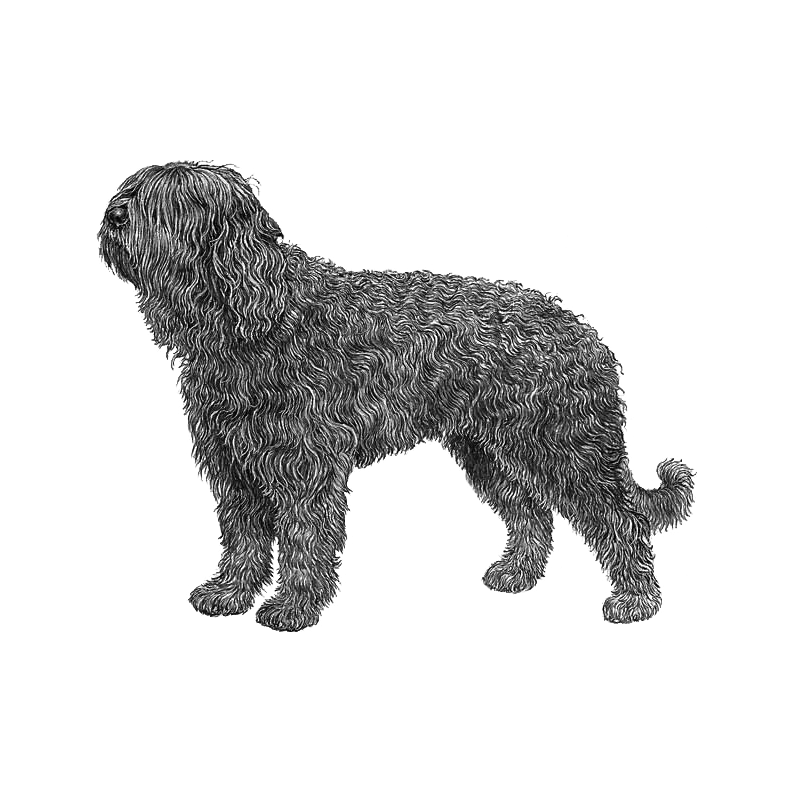
A very ancient breed, common throughout France, used for hunting waterfowl and described or mentioned in several works as early as the 16th century. Medium proportions, medium size, characterized by a thick, woolly coat which guarantees efficient protection against cold and damp. The coat forms a beard (French barbe) on the chin, which gave the breed its name (Barbet). Even disposition, very attached to his master, very sociable, loving water even when very cold.
Source: FCI
-
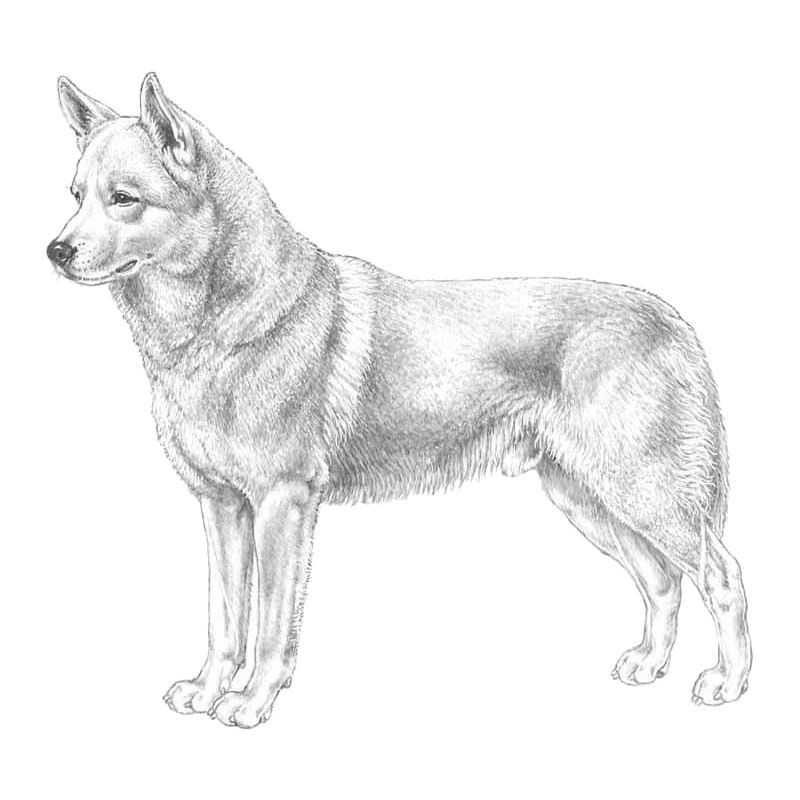
The Canaan Dog is a Pariah Dog of Israel and is the national dog of Israel. Nobody really knows the exact truth about their origins. These dogs are native to the Land of Canaan that made themselves useful to Bedouin and Hebrew tribes over thousands of years by herding and guarding their flocks. It is understood that the Canaan Dog is an ancient breed. Pre-biblical drawings and carvings depict dogs very similar to the Canaan Dog we know today. This breed existed solely as a free-living pariah until the end of the 1930s. The breed is a survivor, a sound and hardy animal that is capable of surviving in the very harsh environment of its natural home. A Canaan is a dog with all the traits that make them a good service dog — an alert and agile dog, being territorial and with highly developed senses. The Canaan Dog is still classified as a rare breed by The Kennel Club.
Sources: http://canaandog.co.uk/history-of-the-canaan-dog/ and http://www.fci.be/Nomenclature/Education/273g05-PRE-en.pdf
-
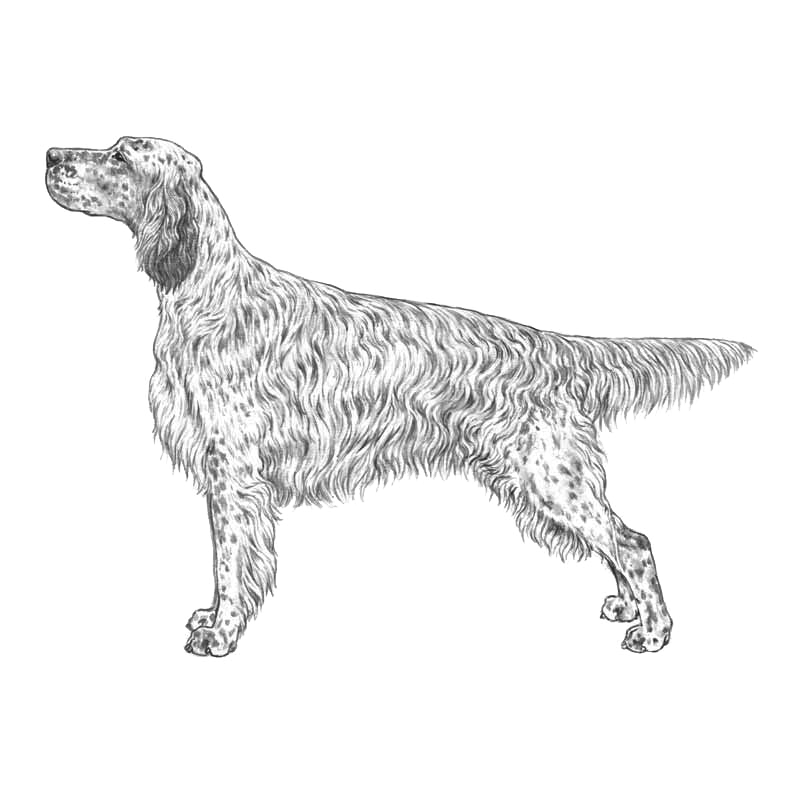
The English Setter is a medium size breed of dog. It is part of the Setter family, which includes the red Irish Setters, Irish Red and White Setters, and black-and-tan Gordon Setters.
Source: Wikipedia
-
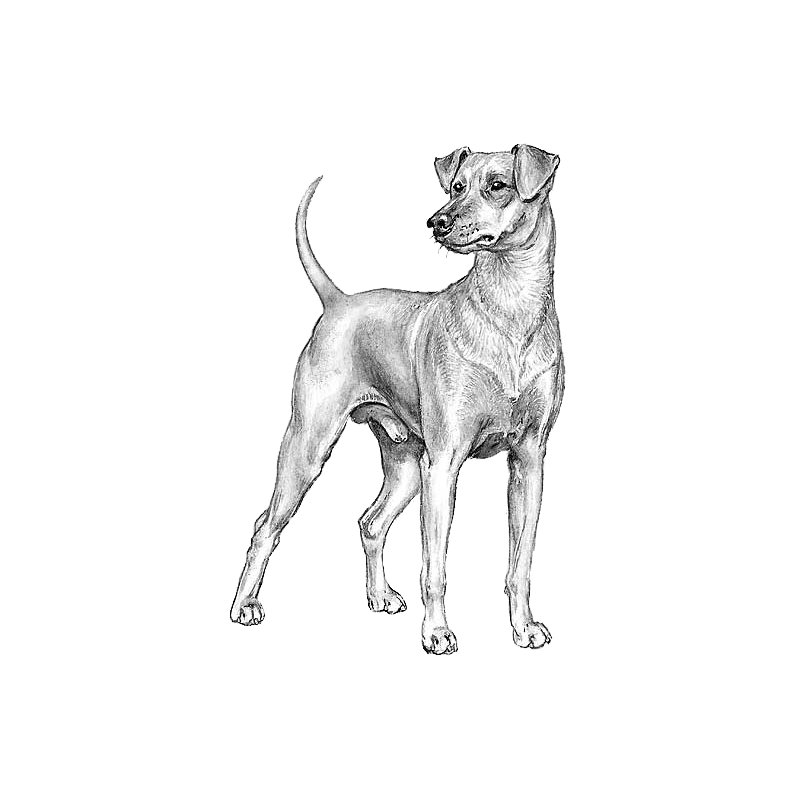
The German Pinscher is a medium-sized dog, usually weighing between 25–45 pounds (11–20 kilograms) and typically 17–20 inches (43–51 centimetres) in height, with a short coat. Colors for this breed include black and rust, red, fawn, blue and tan. The ideal German Pinscher is elegant in appearance with a strong square build and moderate body structure, muscular and powerful endurance and agility. For all countries where the Fédération Cynologique Internationale standard applies, only black and rust and solid red are allowed colors. Colors that became extinct during the world wars of the twentieth century include solid black, salt-and-pepper, and harlequin.
Source: https://en.wikipedia.org/wiki/German_Pinscher
-
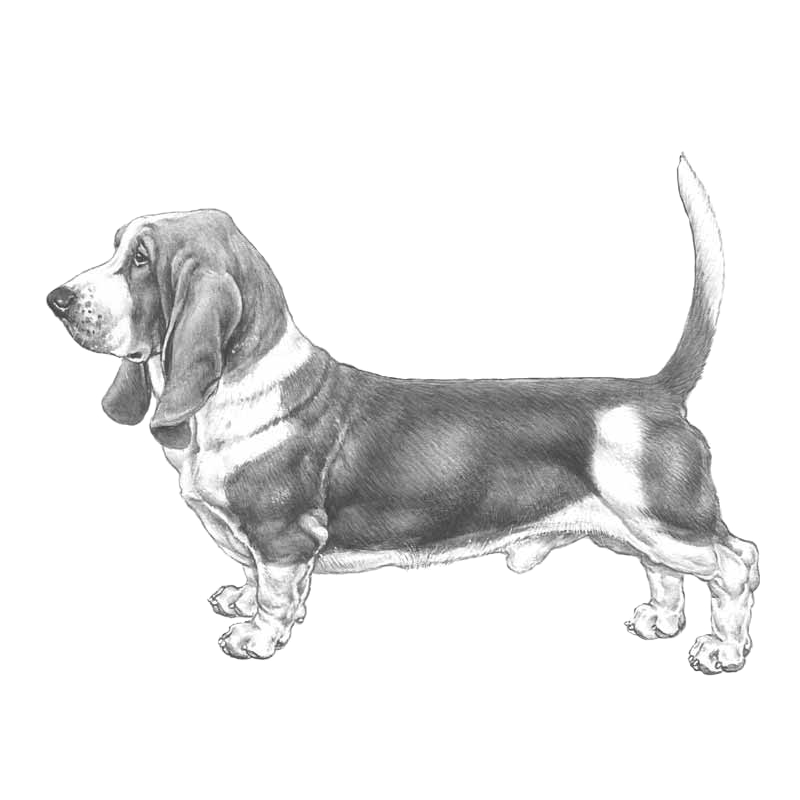
Depicted by cartoonists the world over as a kindly but worried canine buffoon, the Basset deserves his popularity as a family dog. Happy by the fireside or on the moors, he is a dog capable of hunting his natural prey, the hare, persistently at a relatively slow pace over prodigious distances.
Source: The Kennel Club
-
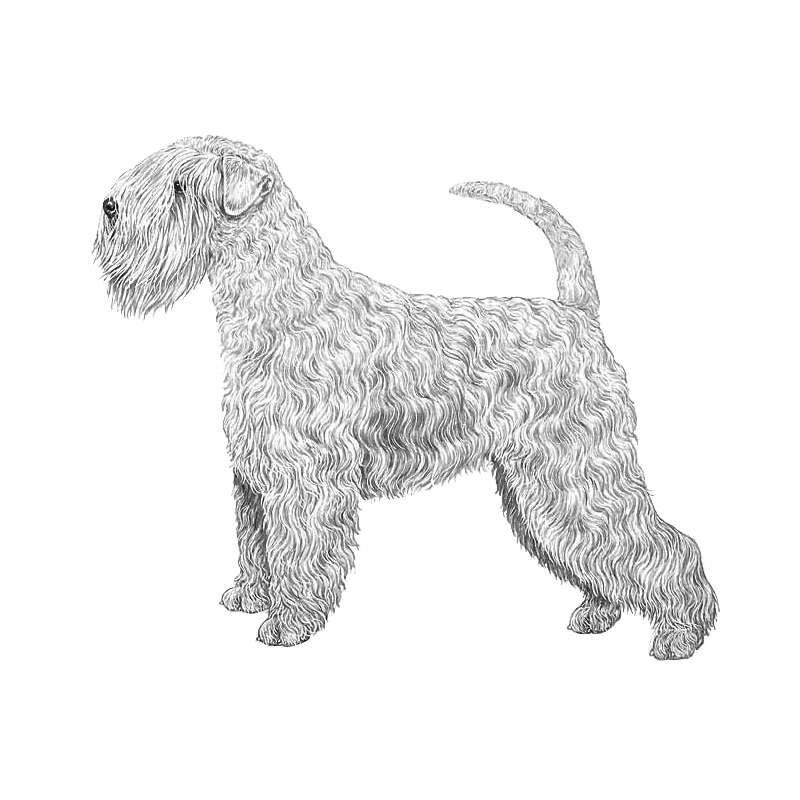 The Wheaten is probably the oldest of the four breeds. Its existence for at least 200 years can be inferred from textual references to "soft-coated" dogs.
- ireland
- registration statistics
- swedish insurance data
- soft coated wheaten terrier
- international breed collaboration
The relation of the modern Irish Terrier to the Wheaten, though less well documented, appears to have been the result of deliberate breeding experiments. So the humble Wheaten probably has a fairly mixed ancestry. Despite the long history of the Wheaten, it wasn't until 1937, that the Soft Coated Wheaten was officially recognised by the Irish Kennel Club. The breed has grown steadily in popularity since and is now well known world-wide.
Source: https://www.ikc.ie/dog-ownership/types-of-dog/breeds/breed-details/?breedId=74
-
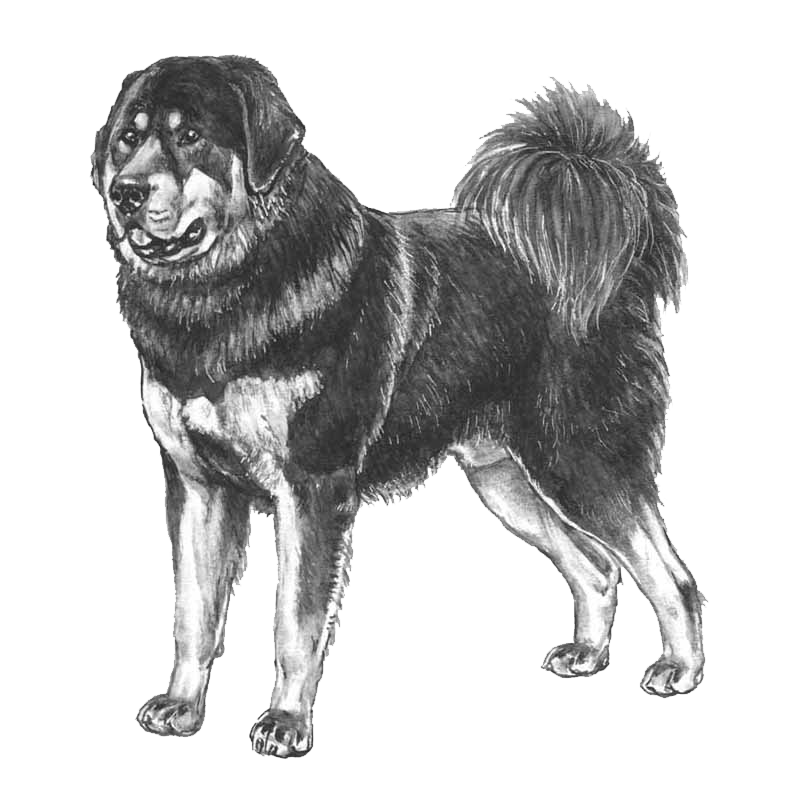
The Tibetan Mastiff (Do Khyi) is an ancient working breed of the nomad herders of the Himalaya and a traditional guardian of the Tibetan monasteries. Independent. Protective. Commands respect. Most loyal to his family and territory.
The dog itself is to be found all through central asia and has different names according to different locations. "The name Tibetan Mastiff is a misnomer; the Tibetan Mastiff itself is not a true Mastiff. The term "mastiff" was used by the Europeans who first came to Tibet because it was used to refer to nearly all large dog breeds in the West. A better name for the dog might be Tibetan mountain dog or, to encompass the landrace breed throughout its range, Himalayan mountain dog."
Source: F.C.I. Breed Standard (PDF)
Source: Wikipedia
-
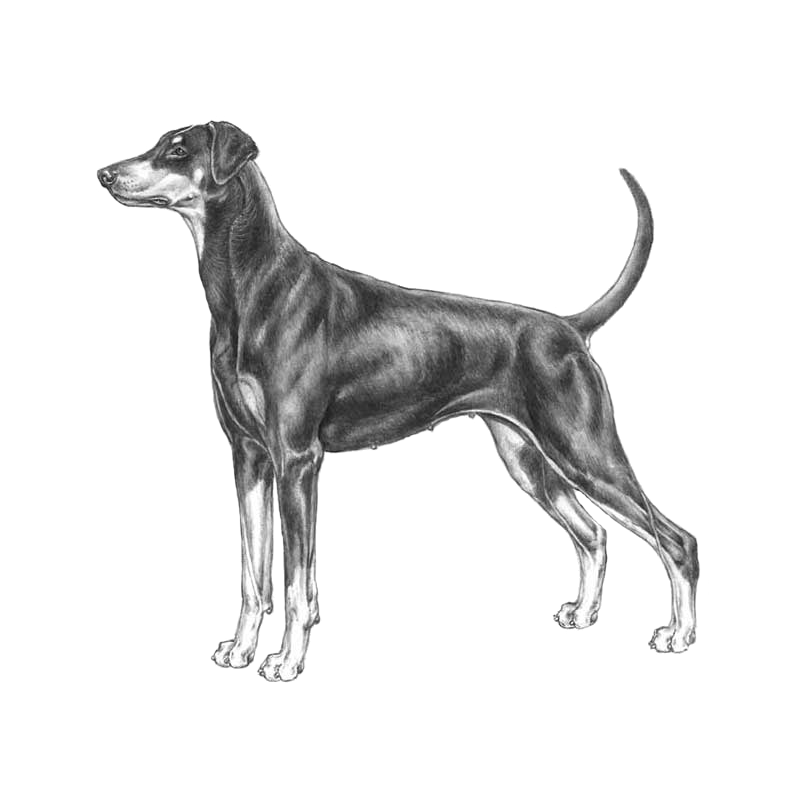 The Dobermann breed requires a medium sized, powerful, muscular dog. Despite his substance he shall be elegant and noble, which will be evident in his body line. He must be exceptionally suitable as a companion, protection and working dog and also as a family dog.
The Dobermann is the only German breed which bears the name of its original breeder, Friedrich Louis Dobermann (02.01.1834 – 09.06.1894). He was believed to be a tax collector, offal abbatoir manager (knacker) and a part time dog catcher, legally able to catch all stray dogs. He bred with animals from this reservoir that were particularly sharp. The so called “butcher’s dogs” which were already considered a relatively pure breed at that time, played a most important role in the origination of the Dobermann breed.
Source: FCI
-
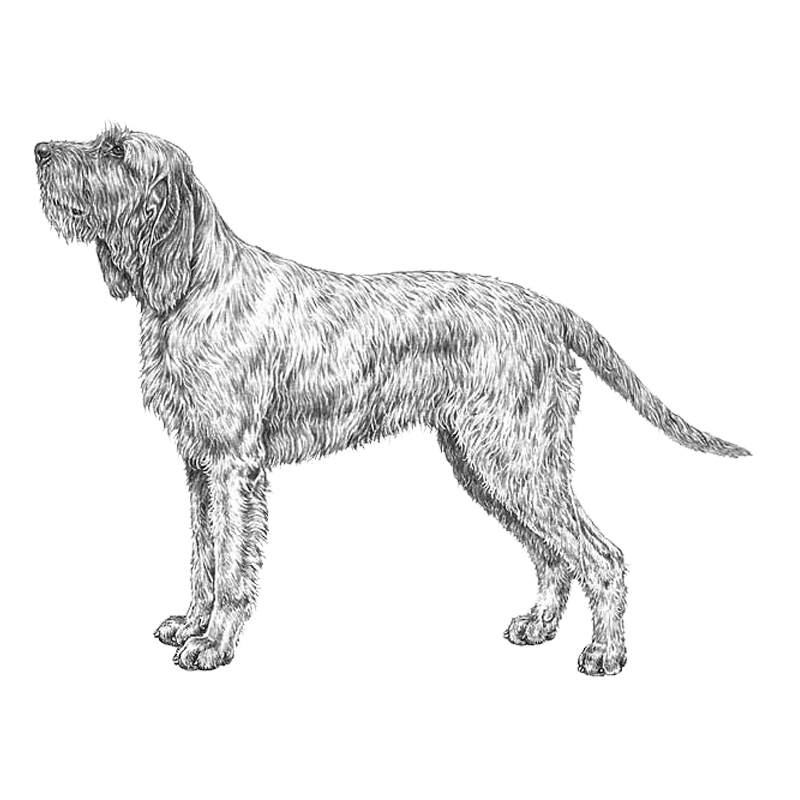
The Spinone Italiano is a "dog of solid construction, robust and vigorous with powerful bone, well-developed muscles and with a rough coat." "Naturally sociable, docile and patient, the Spinone is an experienced hunter in all terrains; very resistant to tiredness, goes easily into thorny underwood, or throws himself into cold water. He has remarkable dispositions for an extended and fast trot; by nature he is an excellent retriever."
Source: FCI Breed Standard (English)
-
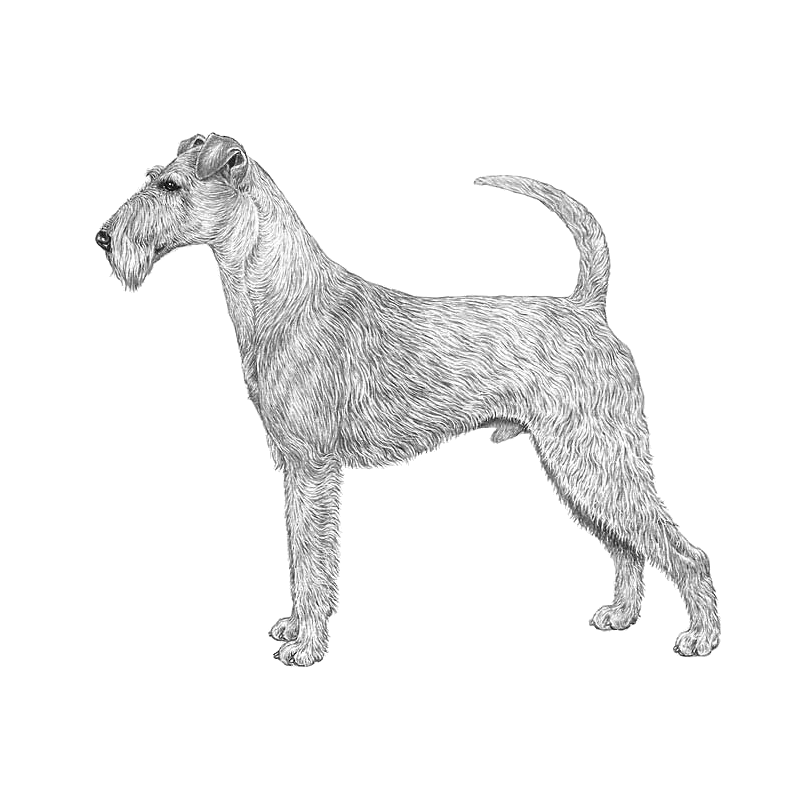
Versatile farmyard dog, family pet, guard dog with utter contempt for danger or hurt, hunter and gundog. The dog must present an active, lively, lithe and wiry appearance; lots of substance, at the same time free of clumsiness, as speed and endurance as well as power is very essential. The Irish Terrier must be neither “cloddy nor cobby” but should be framed on the “lines of speed” showing a graceful racy outline.
Source: http://www.ikc.ie/dog-ownership/types-of-dog/breeds/native-breeds-of-ireland/native-irish-breed/73/
-
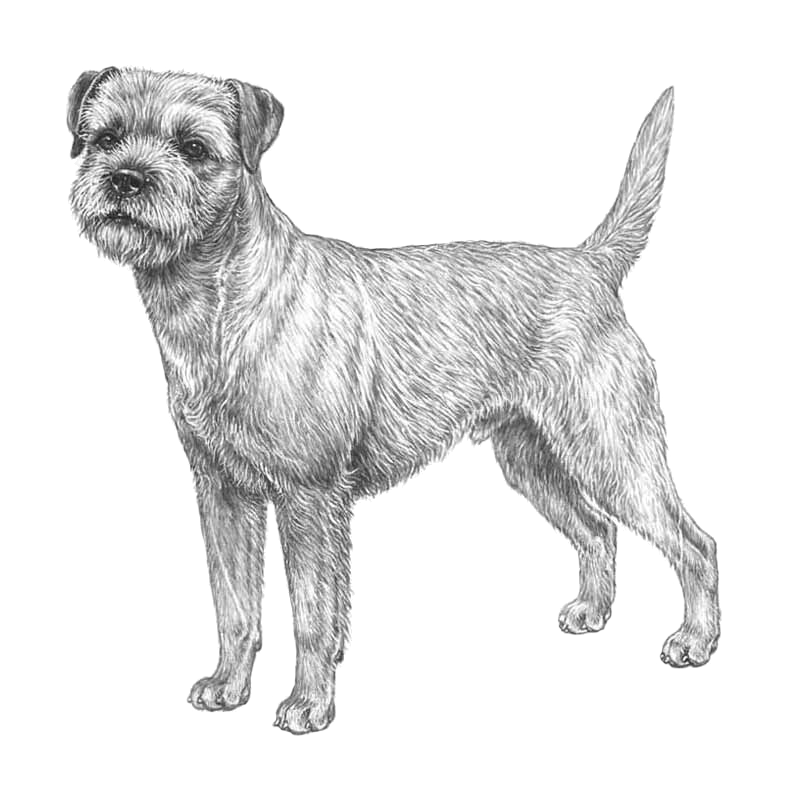
The Border Terrier is a small, rough-coated breed of dog of the terrier group. Originally bred as fox and vermin hunters, Border Terriers share ancestry with Dandie Dinmont Terriers, Patterdale terriers and Bedlington Terriers.
Source: Wikipedia
-
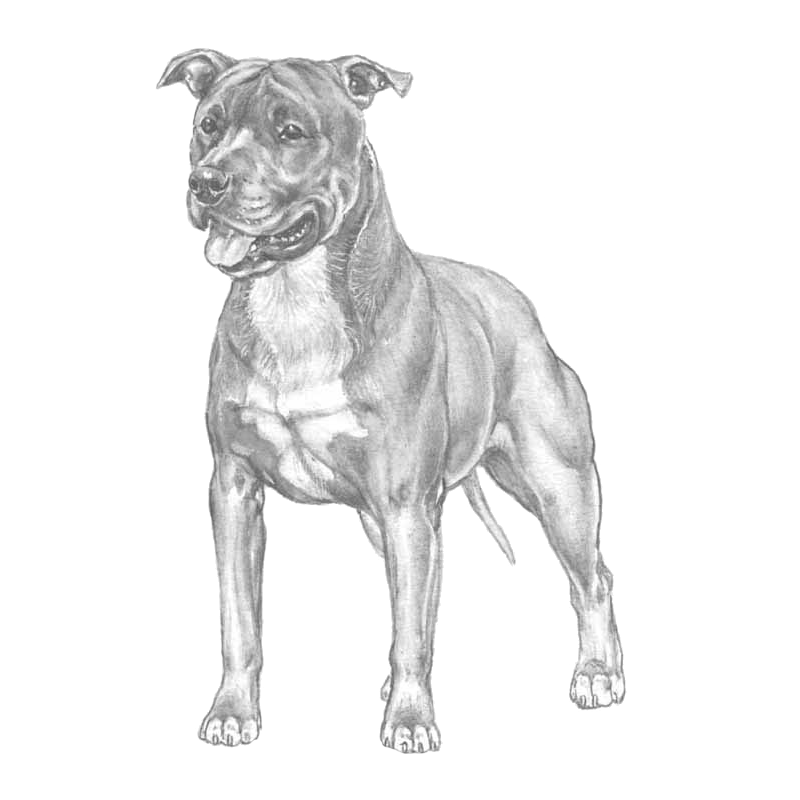
The American Staffordshire Terrier also known as Amstaff is a medium-sized, short-coated American dog breed. In the early part of the twentieth century the breed gained social stature and was accepted by the American Kennel Club as the American Staffordshire Terrier in 1936.
Source: Wikipedia
-
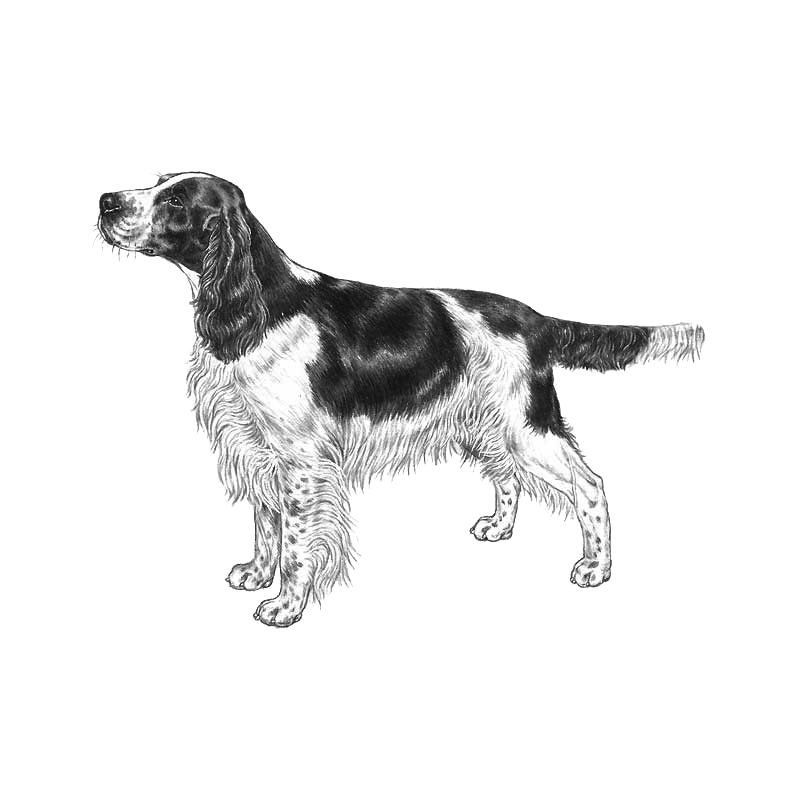
Developed to flush game from cover and to retrieve it, the English springer spaniel's coat is liver and white, black and white or tri-coloured. The English Springer is the most popular of the spaniels for working in the field. A happy and very biddable temperament lends itself well to family life. Field-bred and bench-bred dogs are available - as the names suggest the Field type is used in the field for hunting and the Bench type is bred for their looks in the show ring. Field dogs tend to be taller on leg, not as heavily bodied or boned, shorter coated and may be more energetic/hunting work oriented than their show counterparts.
-
 His nature is similar to that of the Schnauzer and is determined by the temperament and the behaviour of a small dog. Intelligence, fearlessness, endurance and alertness make the Miniature Schnauzer an agreeable house dog as well as a watch and companion dog which can be kept even in a small apartment without problems.
Small, strong, stocky rather than slim, rough coated, elegant. A reduced image of the Schnauzer without the drawback of a dwarfed appearance. His nature is similar to that of the Schnauzer and is determined by the temperament and the behaviour of a small dog. Intelligence, fearlessness, endurance and alertness make the Miniature Schnauzer an agreeable house dog as well as a watch and companion dog which can be kept even in a small apartment without problems.
Source: http://www.fci.be/en/nomenclature/MINIATURE-SCHNAUZER-183.html
-
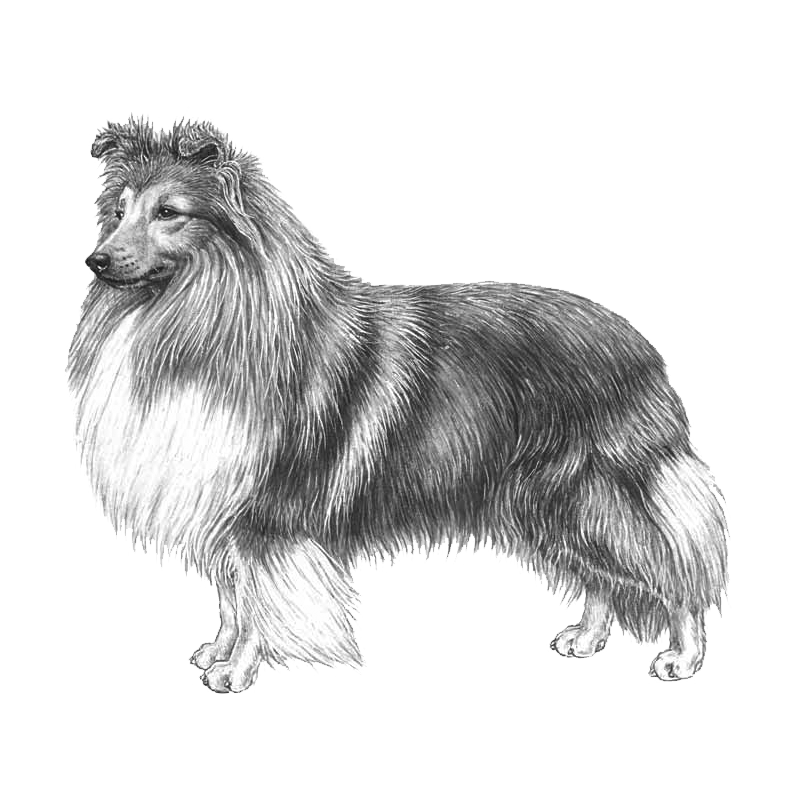
The Shetland Islands off northeast Scotland lay claim to a number of animals small in size. The Shetland Sheepdog is one – an active, intelligent and glamorous dog, who always wants to be ‘on the go’ and is virtually tireless.
Source: https://www.thekennelclub.org.uk/search/breeds-a-to-z/breeds/pastoral/shetland-sheepdog/
-
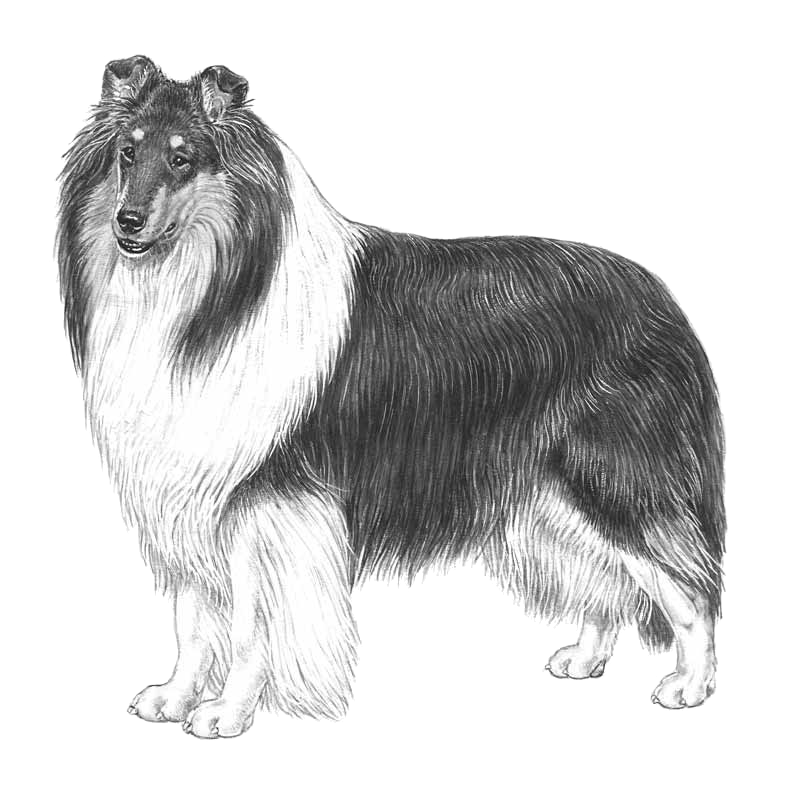
The Rough Collie is the same as the Smooth Collie with the exception of coat length. The breed is thought to have evolved from dogs brought originally to Scotland by the Romans that then mated with native types.
Source: The Kennel Club
-
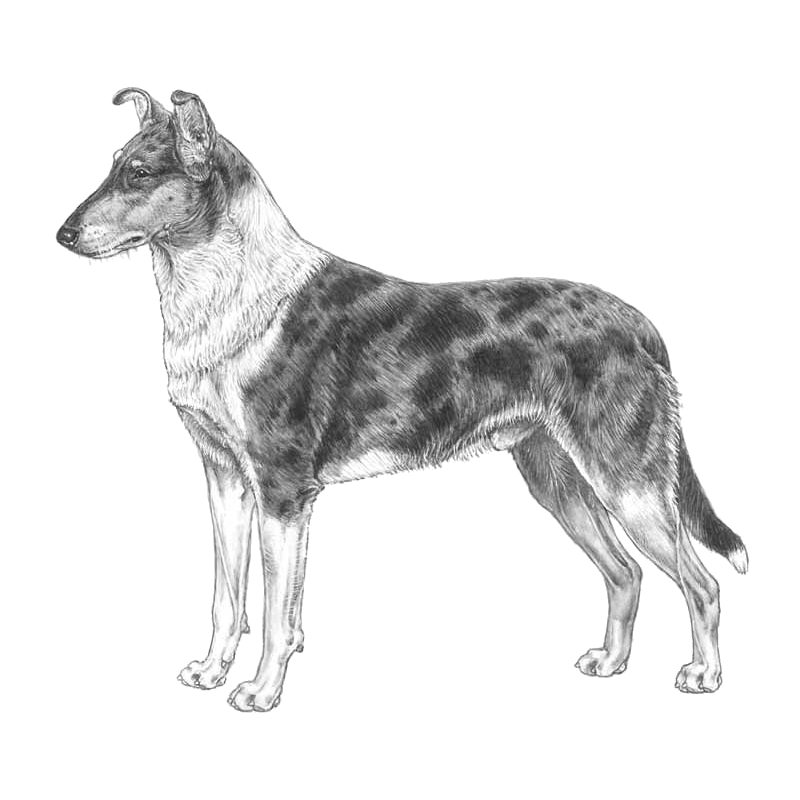
The obvious difference between the breeds Rough and Smooth Collies is the coat length, which in the case of the Smooth Collie is short and flat with a harsh texture on a dense undercoat. Source: The Kennel Club
Also see DWN's Rough Collie page for breed-specific resources.
-
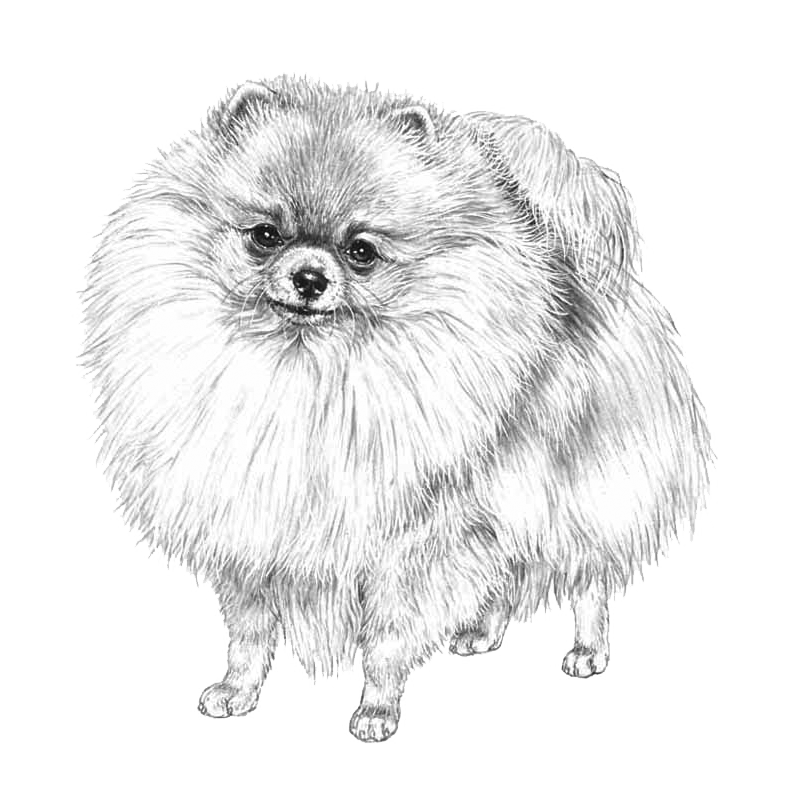
Though Britain is listed as the country of development of the Pomeranian, he is a Spitz-type dog descended from the much larger sled-hauling dogs of the Arctic. He was bred from the German Spitz before becoming known in the UK in 1870. In 1890, he entered the kennels of Queen Victoria, which popularised the breed, and the Pomeranian Club was formed the following year.
Source: https://www.thekennelclub.org.uk/search/breeds-a-to-z/breeds/toy/pomeranian/