






Pedigree Breeds
184 entries in this category
-
- Last comment date
- Title
- Start Date
- Most Commented
- Most Viewed
- Last Updated
- Publish Date
- Brief Description
- Content
- Links to Breed Descriptions
- Other Names for Breed
- Country of Origin and Parent Breed Club
- Health and Well-Being
- Breed-Specific Articles
- Breed Standards
- Breed-Specific Statistics
- Breeding/Health Strategy Documents
- Breed-Specific DNA Tests
- Other Breed-Specific Webpages
- Breed-Specific Research
- Breed Clubs
- Custom
-
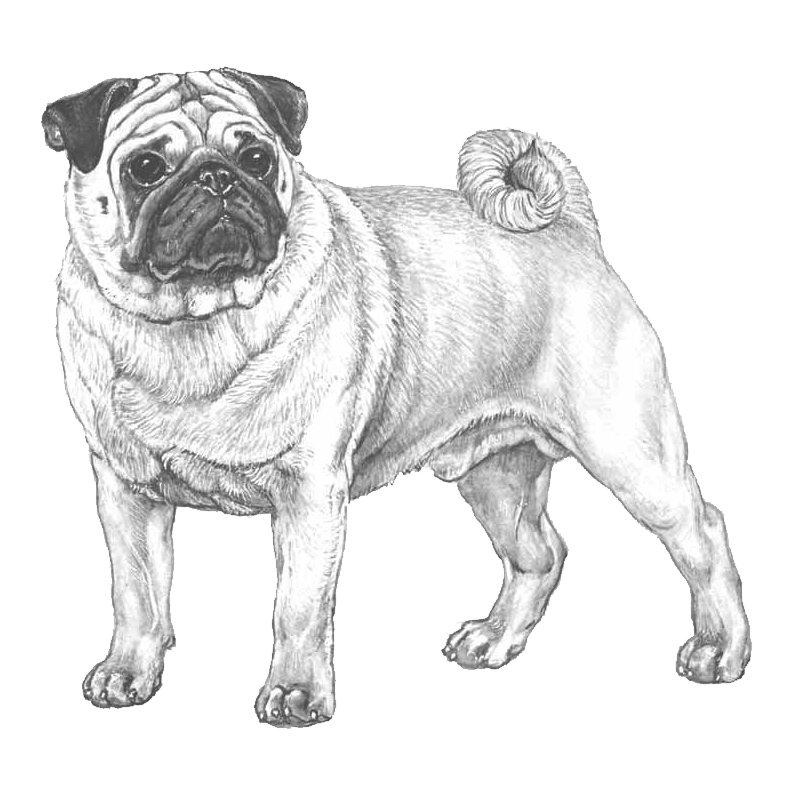
A dignified dog, very intelligent, good-natured and sociable, he is robust and self-reliant, with great character and personality. An adaptable companion for both young and old, and one who integrates himself very closely with family life. He can talk with his eyes, has his mischievous moments, and usually lives to a ripe old age.
Source: The Kennel Club: https://www.thekennelclub.org.uk/search/breeds-a-to-z/breeds/toy/pug/
-
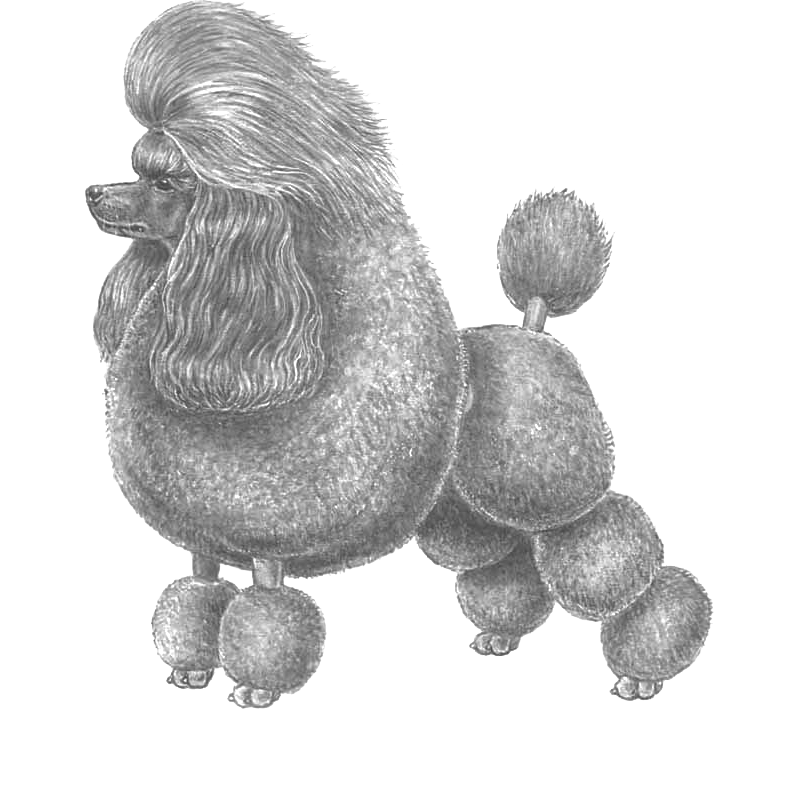
The poodle has been bred in at least three sizes, including Standard, Miniature, and Toy. According to the American Kennel Club, the Standard Poodle is the oldest of the three varieties, and was later bred down to the miniature and toy sizes.
-
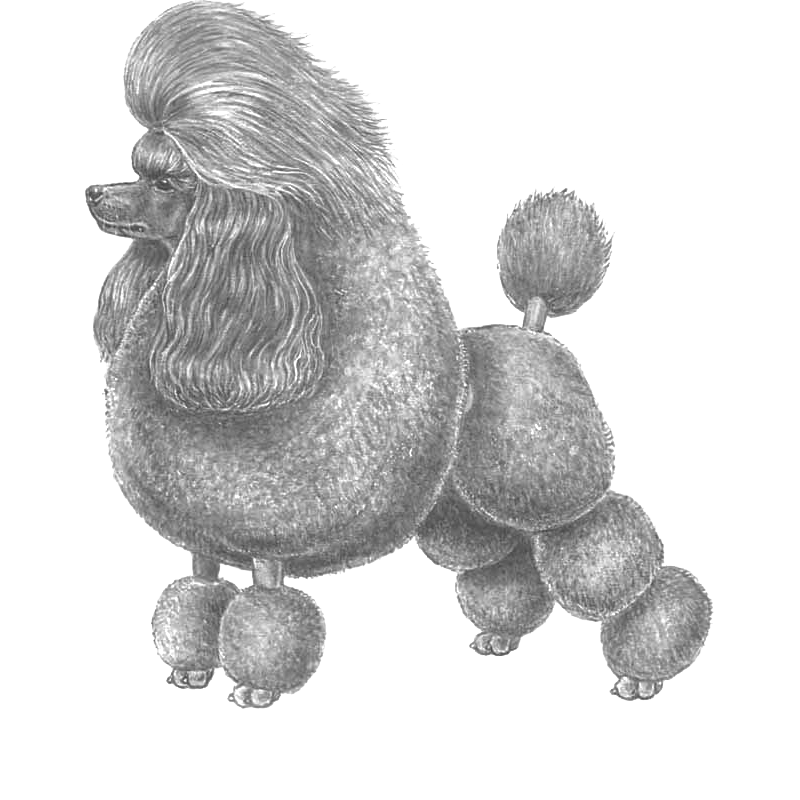
Traditionally the Standard Poodle, the largest of the subtypes, was a retriever or gun dog, used in particular for duck hunting and sometimes upland bird hunting.
-

The poodle has been bred in at least three sizes, including Standard, Miniature, and Toy. According to the American Kennel Club, the Standard Poodle is the oldest of the three varieties, and was later bred down to the miniature and toy sizes.
-
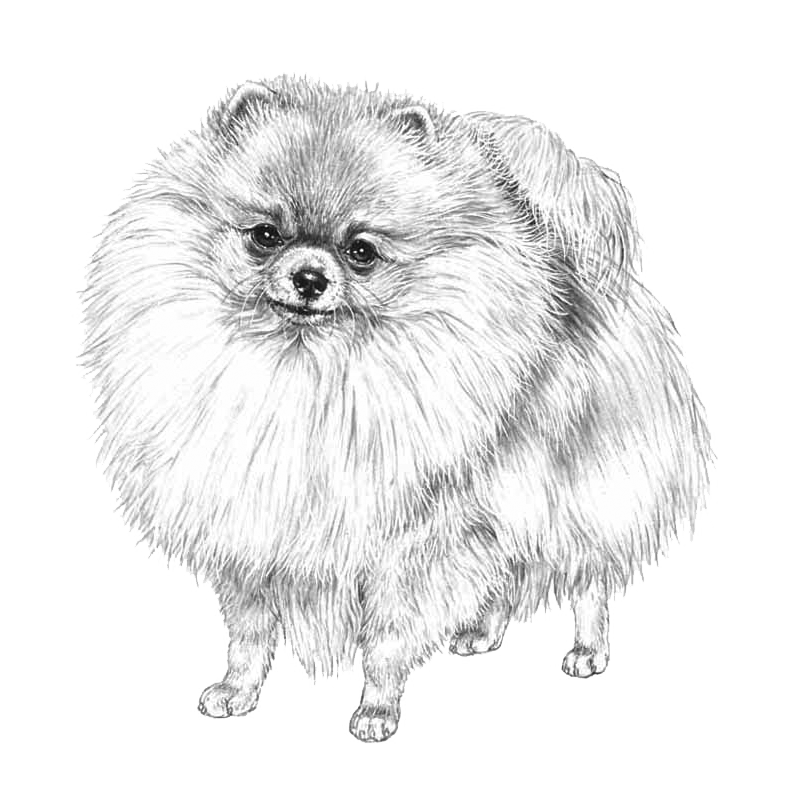
Though Britain is listed as the country of development of the Pomeranian, he is a Spitz-type dog descended from the much larger sled-hauling dogs of the Arctic. He was bred from the German Spitz before becoming known in the UK in 1870. In 1890, he entered the kennels of Queen Victoria, which popularised the breed, and the Pomeranian Club was formed the following year.
Source: https://www.thekennelclub.org.uk/search/breeds-a-to-z/breeds/toy/pomeranian/
-
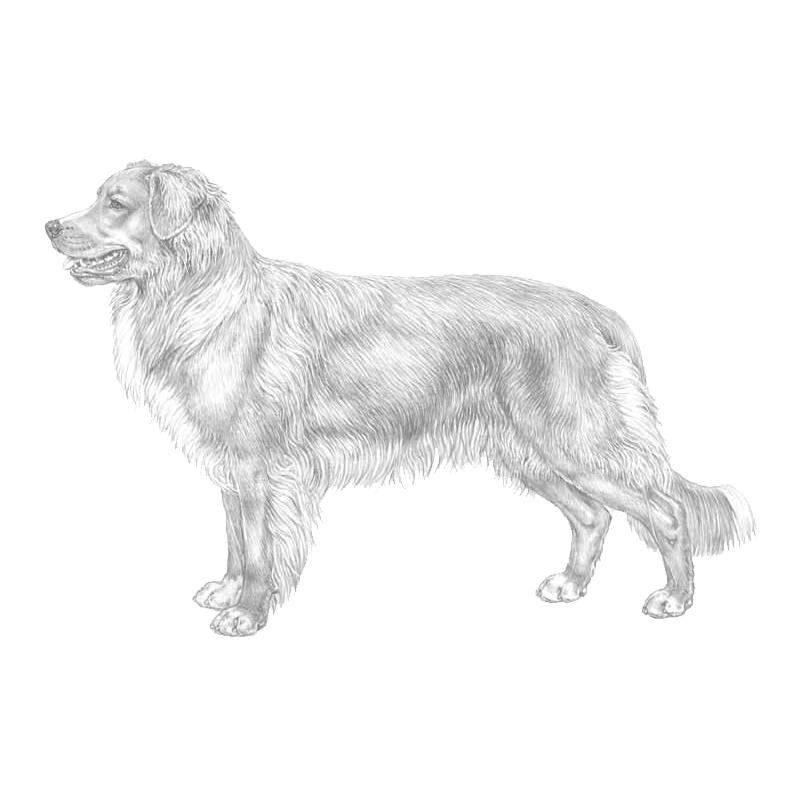 AKC: http://www.akc.org/dog-breeds/nova-scotia-duck-tolling-retriever/
The Toller is a medium-sized, powerful, compact, balanced, well-muscled dog; medium to heavy in bone, with a high degree of agility, alertness and determination. The Toller is highly intelligent, easy to train and has great endurance. A strong and able swimmer, he is a natural and tenacious retriever on land and from water setting himself for springy action the moment the slightest indication is given that retrieving is required.
Source: http://www.fci.be/en/nomenclature/NOVA-SCOTIA-DUCK-TOLLING-RETRIEVER-312.html
-
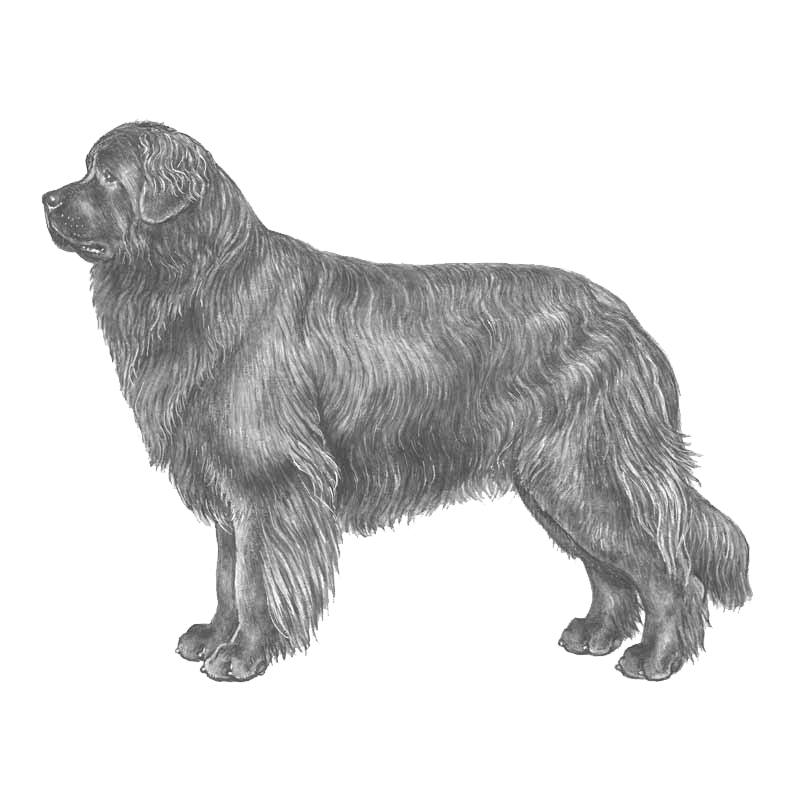
The Newfoundland is a large working dog. Newfoundlands can be black, brown, white and black (called Landseer) or gray. However, in Canada, the country of their origin, the only correct colours are black (including black with white markings) and white and black (Landseer).
-
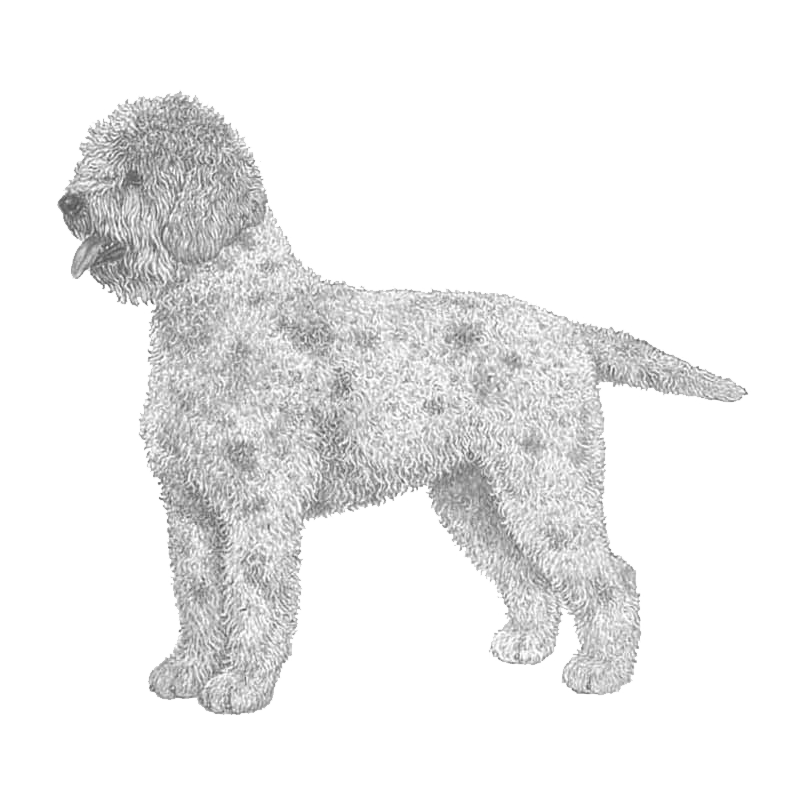
The Lagotto Romagnolo [laˈɡɔtto romaɲˈɲɔlo] is a breed of dog that comes from the Romagna sub-region of Italy. The name means "lake dog from Romagna," originating from the Italian word lago, meaning lake. Its traditional function is a gundog, specifically a water retriever.
-
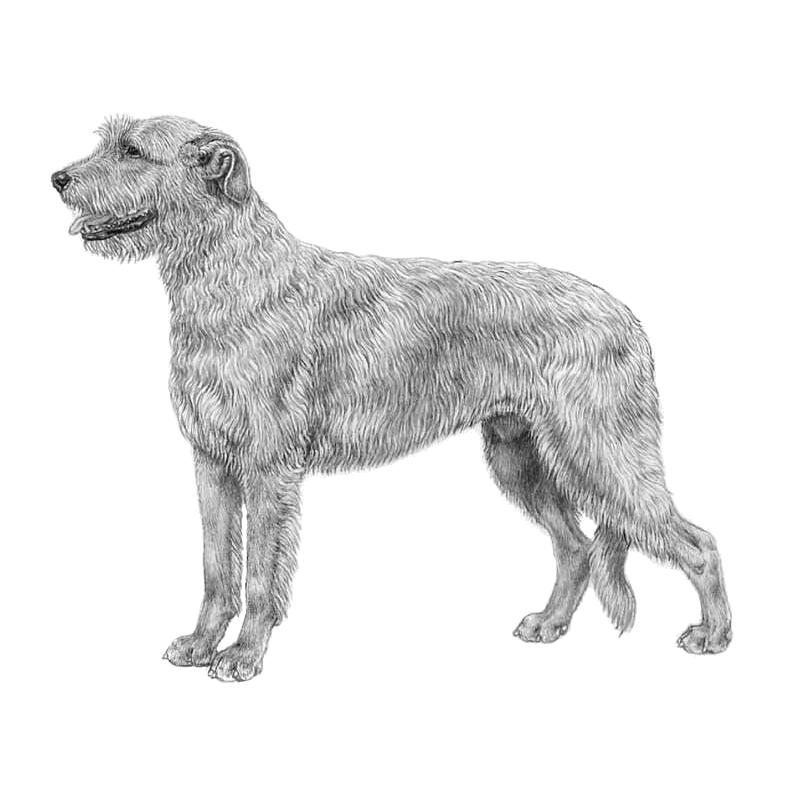
Up to the end of the17th century, Irish Wolfhounds were used for hunting wolves and deer in Ireland. They were also used for hunting the wolves that infested large areas of Europe before the forests were cleared.
Source: Irish Kennel Club
-
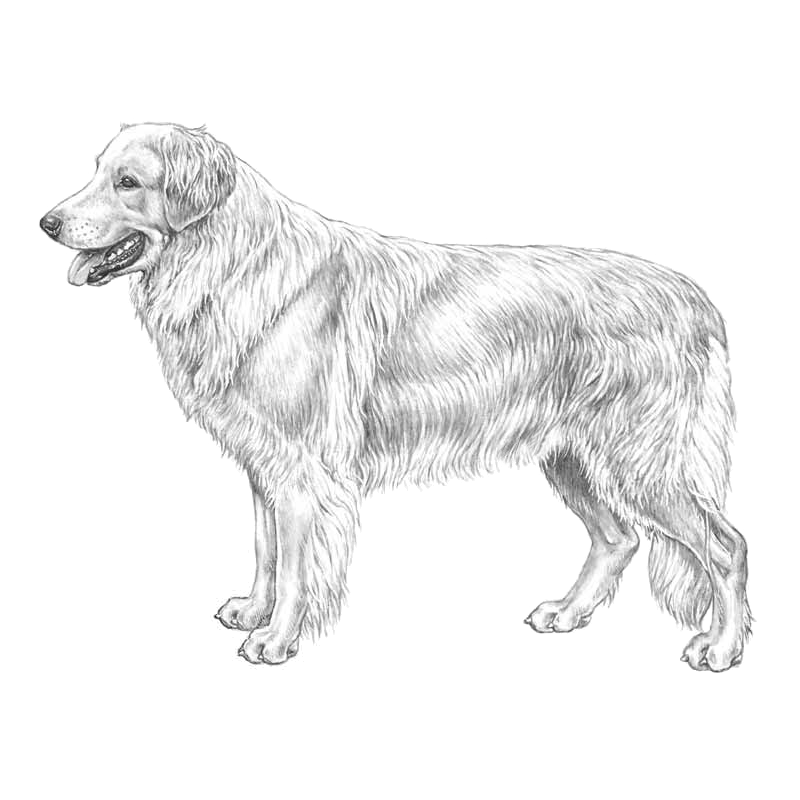
The Hovawart is a powerful, medium size, slightly elongated, long-haired working dog. Difference between sexes is clearly recognizable, specially in shape of head and build of body. Recognized working dog with versatile usage. Kind and even disposition. Has protective instinct, self-confidence and ability to take stress; of medium temperament; combined with a very good nose. His balanced body proportions and special devotion to his family make him an outstanding companion, watch, guard, tracking and rescue-dog.
-
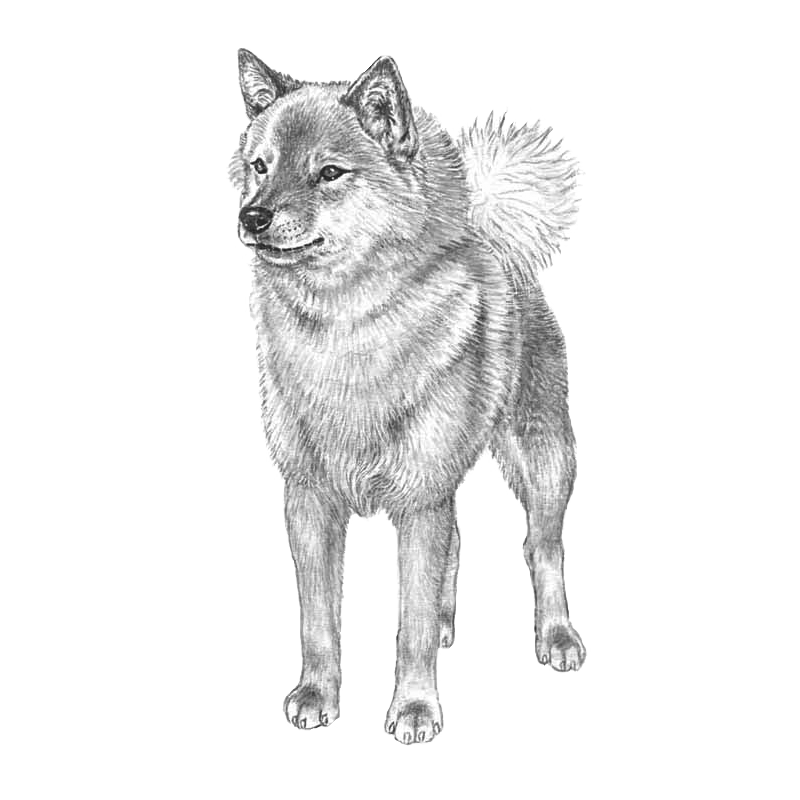
The national dog of Finland, the Finnish Spitz, is by far the oldest of all the Finnish breeds. It was bred directly from the native landrace dog population without crossbreeding, and it has followed the Finnish people since ancient times. A dog similar to the Finnish Spitz has been found in prehistoric cave paintings. The Finnish people lived in isolated residential areas in the wilderness in the Northern part of Finland, from Kainuu all the way to Murmansk, and their dogs remained purer in comparison with dogs living more south where they easily got mixed with other dogs.
See More: From the Finnish Dog Museum (Online)
-
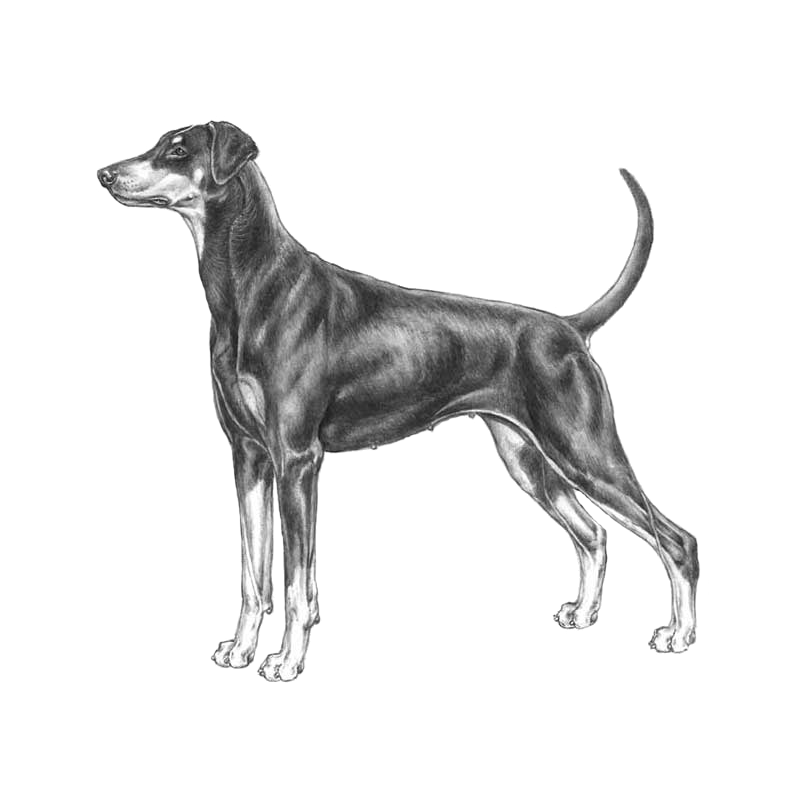 The Dobermann breed requires a medium sized, powerful, muscular dog. Despite his substance he shall be elegant and noble, which will be evident in his body line. He must be exceptionally suitable as a companion, protection and working dog and also as a family dog.
The Dobermann is the only German breed which bears the name of its original breeder, Friedrich Louis Dobermann (02.01.1834 – 09.06.1894). He was believed to be a tax collector, offal abbatoir manager (knacker) and a part time dog catcher, legally able to catch all stray dogs. He bred with animals from this reservoir that were particularly sharp. The so called “butcher’s dogs” which were already considered a relatively pure breed at that time, played a most important role in the origination of the Dobermann breed.
Source: FCI
-
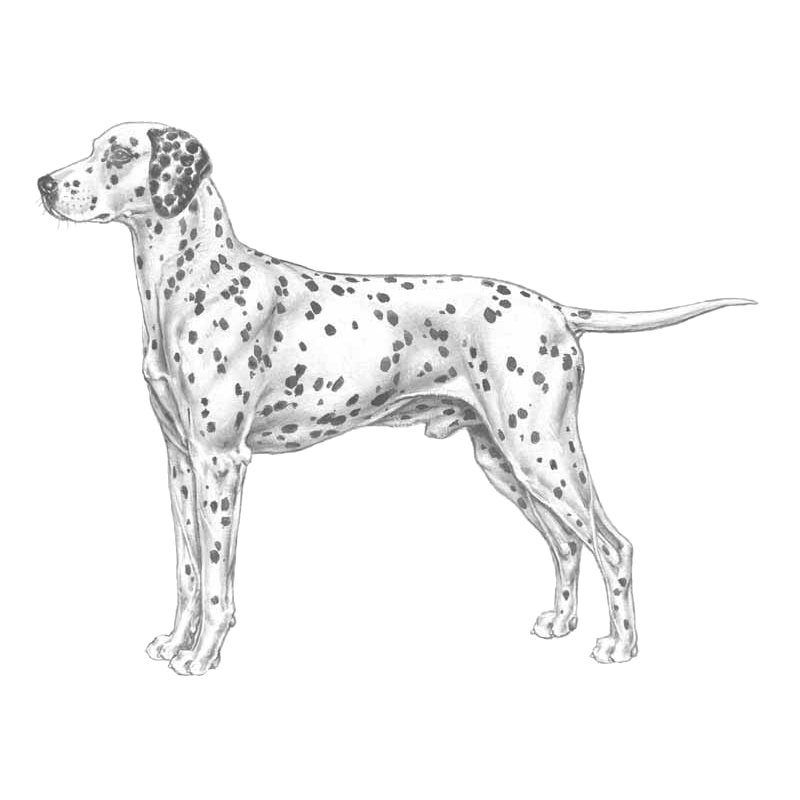
The Dalmatian is a large breed of dog noted for its unique black or liver spotted coat and was mainly used as a carriage dog in its early days.
Source: Wikipedia
-
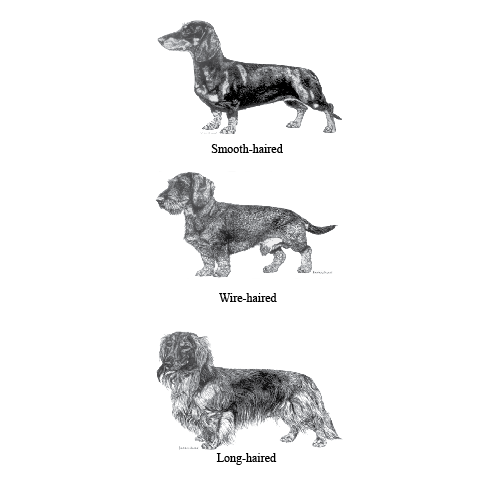 photo source: http://dgk.dk/wp-content/uploads/Diskusprolaps-hos-gravhunde_Charlotte-Mørck-Andersen-Tine-Marx.pdf
The Dachshund, also called Dackel or Teckel, has been known since the Middle Ages. Low, short legged, elongated but compact build, very muscular with cheeky, challenging head carriage and alert facial expression. His general appearance is typical of his sex. In spite of his legs being short in relation to the long body, he is very mobile and lithe. For decades the Dachshund has been bred in three sizes (Teckel, Miniature Teckel and Rabbit Teckel) and in three different kinds of coat (Smooth-haired, Wire-haired and Long-haired).
Source: FCI
-
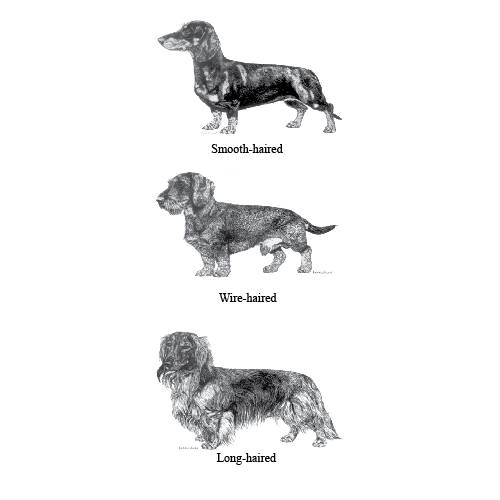
The Dachshund, also called Dackel or Teckel, has been known since the Middle Ages. Low, short legged, elongated but compact build, very muscular with cheeky, challenging head carriage and alert facial expression. His general appearance is typical of his sex. In spite of his legs being short in relation to the long body, he is very mobile and lithe. For decades the Dachshund has been bred in three sizes (Teckel, Miniature Teckel and Rabbit Teckel) and in three different kinds of coat (Smooth-haired, Wire-haired and Long-haired).
Source: FCI
-
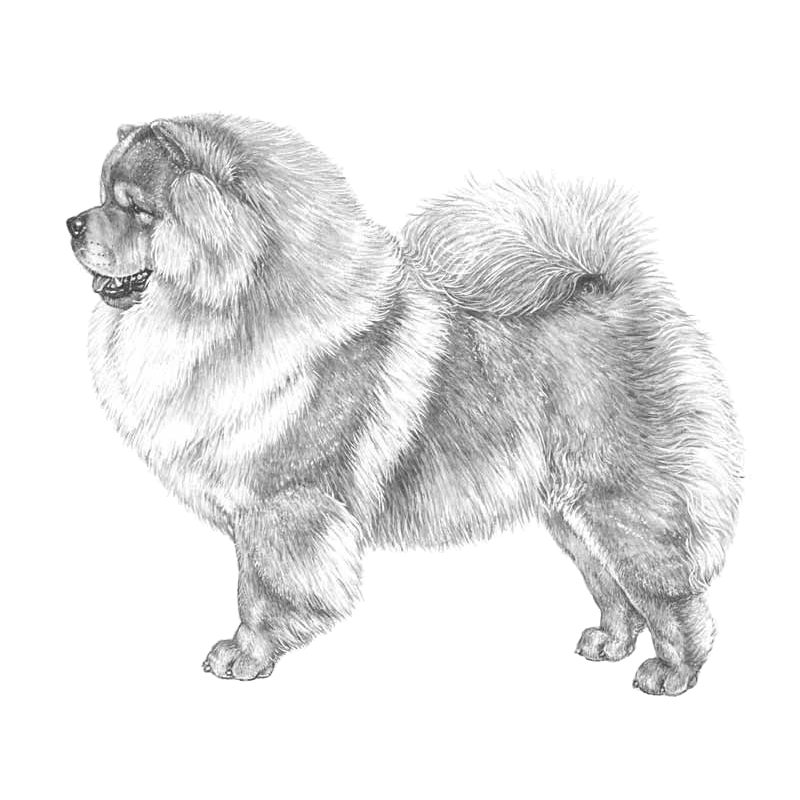
The Chow Chow (sometimes simply Chow) is a dog breed originally from northern China,] where it is referred to as Songshi Quan (Pinyin: sōngshī quǎn 鬆獅犬), which means "puffy-lion dog".
Source: Wikipedia
-
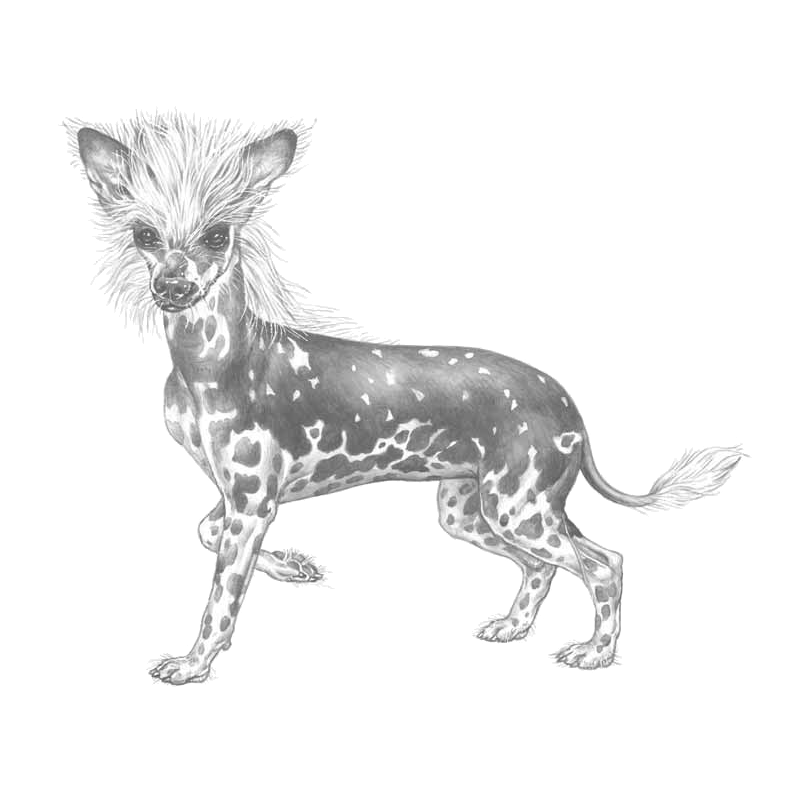
The Chinese crested dog is a hairless breed of dog. Like most hairless dog breeds, the Chinese crested comes in two varieties, with and without fur, which are born in the same litter: the Powder Puff and the Hairless.
Source: Wikipedia
-
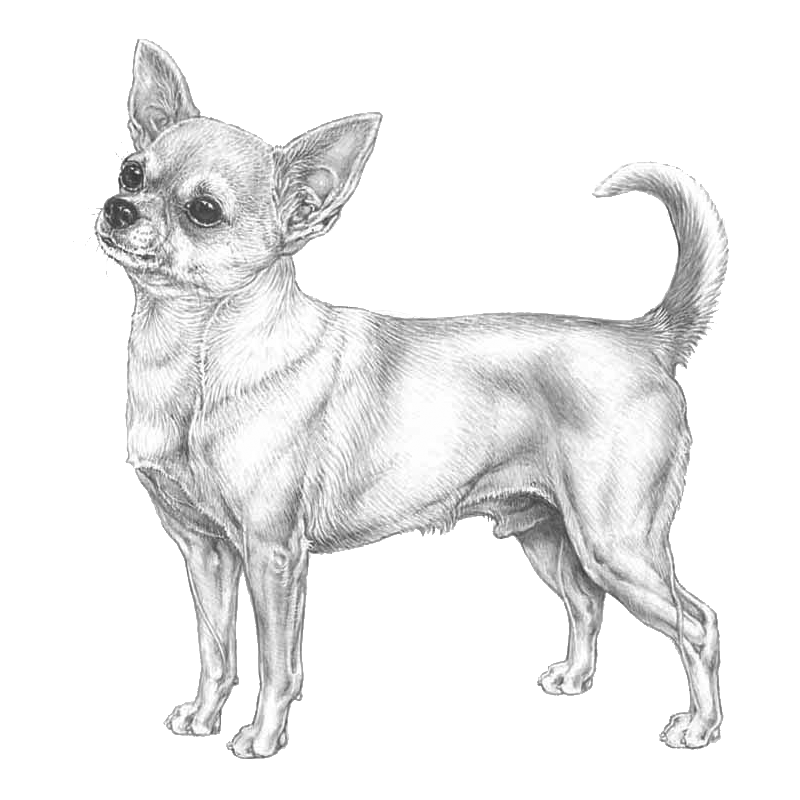
The Chihuahua tʃɪˈwɑːwɑː/ (Spanish: chihuahueño) is the smallest breed of dog and is named for the state of Chihuahua in Mexico. Chihuahuas come in a wide variety of sizes, head shapes, colors, and coat lengths.
Source: Wikipedia
-
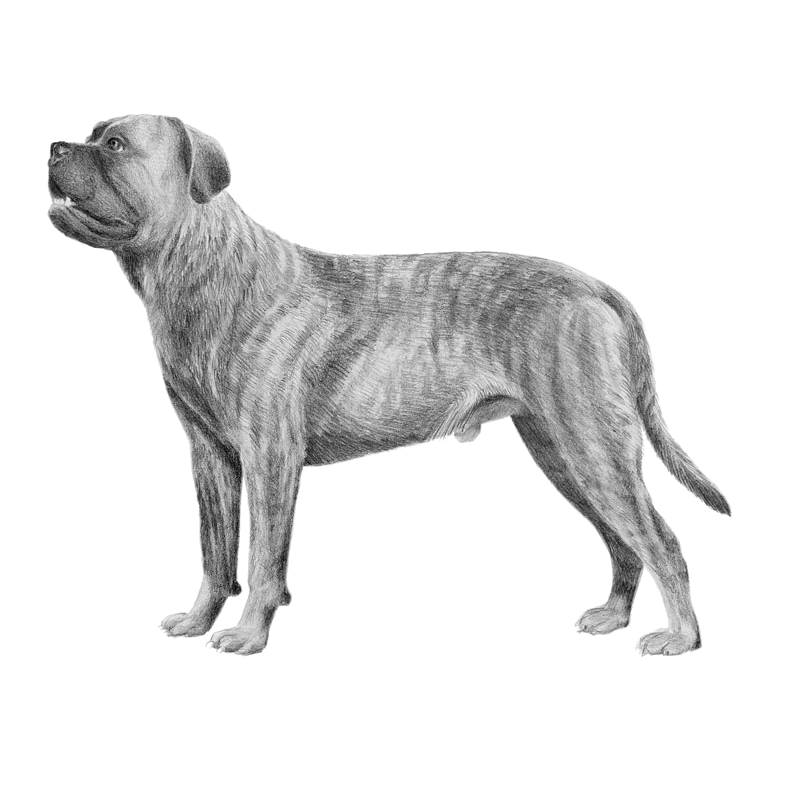
The Cane Corso [ˈkaːne ˈkɔrso] is a large Italian breed of dog, for years valued highly in Italy as a companion, Guard dog and hunter.
Source: Wikipedia
-
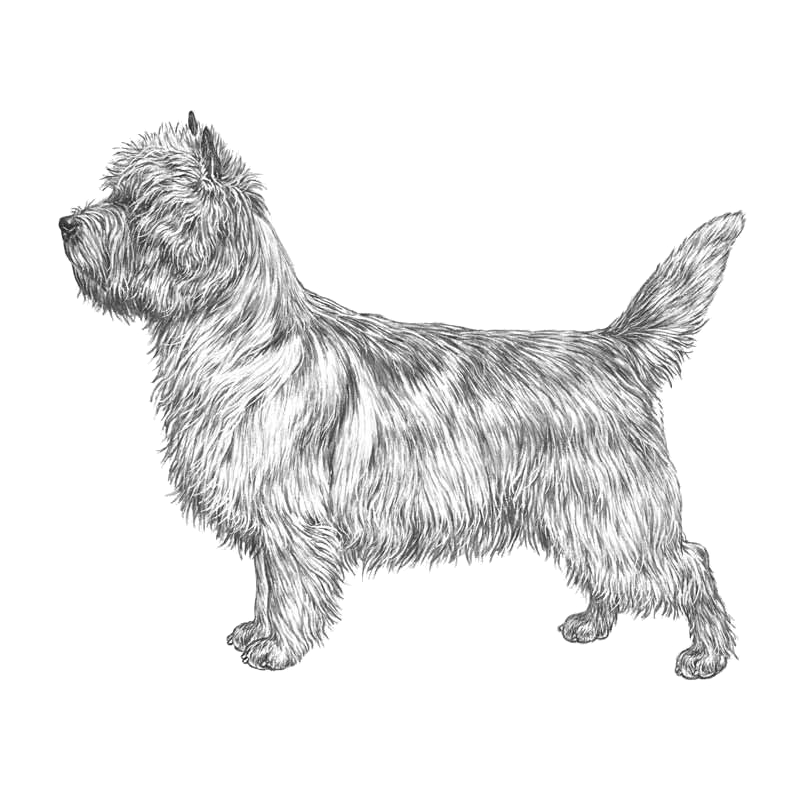
The Cairn Terrier is one of the oldest of the terrier breeds, originating in the Scottish Highlands and recognized as one of Scotland's earliest working dogs.
Source: Wikipedia
-
- swedish insurance data
- health surveys
- boxer
- registration statistics
- international breed collaboration
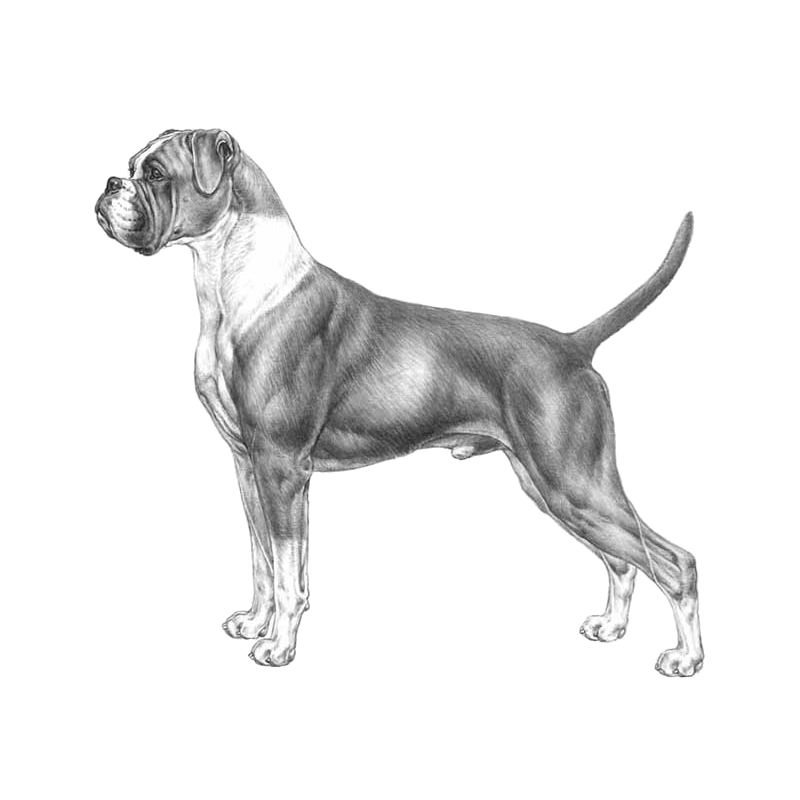
The Boxer is a medium sized, smooth coated, sturdy dog of compact, square build and strong bone. His muscles are taut, strongly developed and moulded in appearance. His movement is lively, powerful with noble bearing. The Boxer must be neither cumbersome nor heavy, nor light or lacking in body substance.
Source: FCI
-
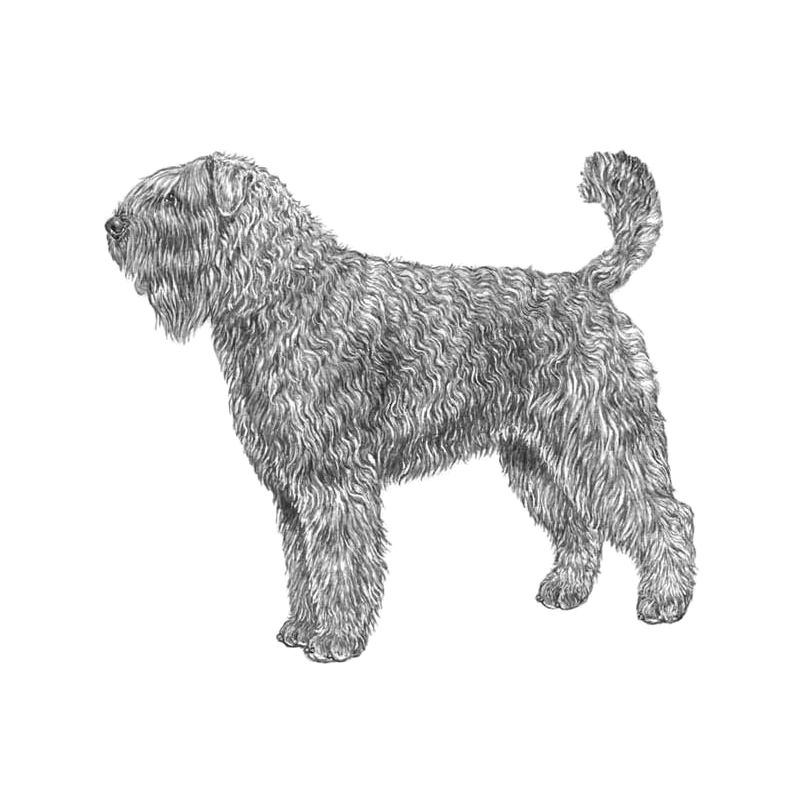
The Bouvier des Flandres is a herding dog breed originating in Flanders. They were originally used for general farm work including cattle droving, sheep herding, and cart pulling, and nowadays as guard dogs and police dogs, as well as being kept as pets.
Source: Wikipedia
-
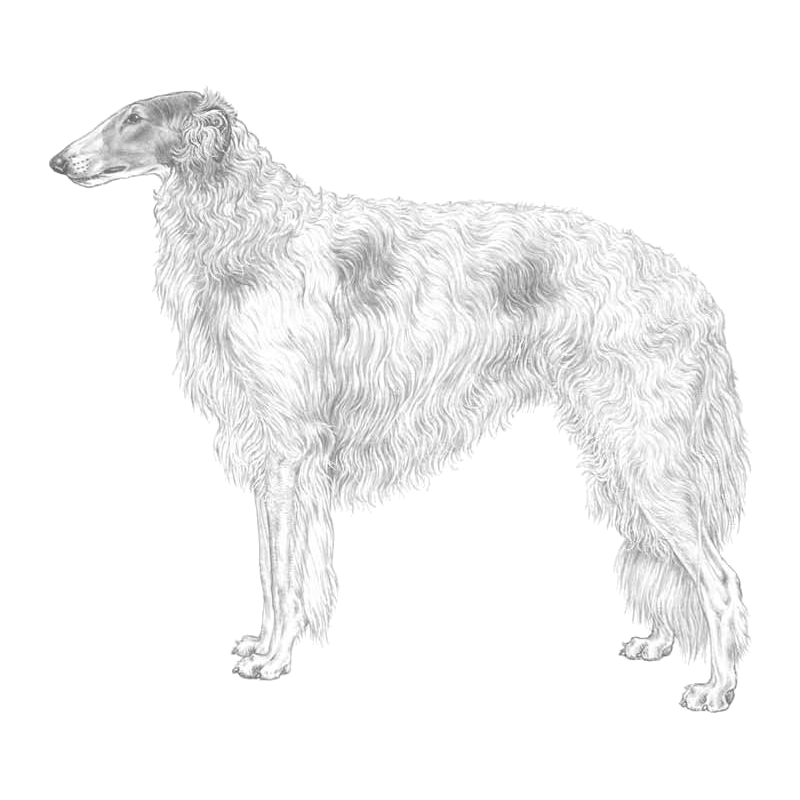
The Borzoi (/ˈbɔrzɔɪ/, literally "fast"), also called the Russian wolfhound (Russian: Ру́сская псовая борзая), is a breed of domestic dog (Canis lupus familiaris). Descended from dogs brought to Russia from central Asian countries, it is similar in shape to a greyhound, and is also a member of the sighthound family.
Source: Wikipedia
-
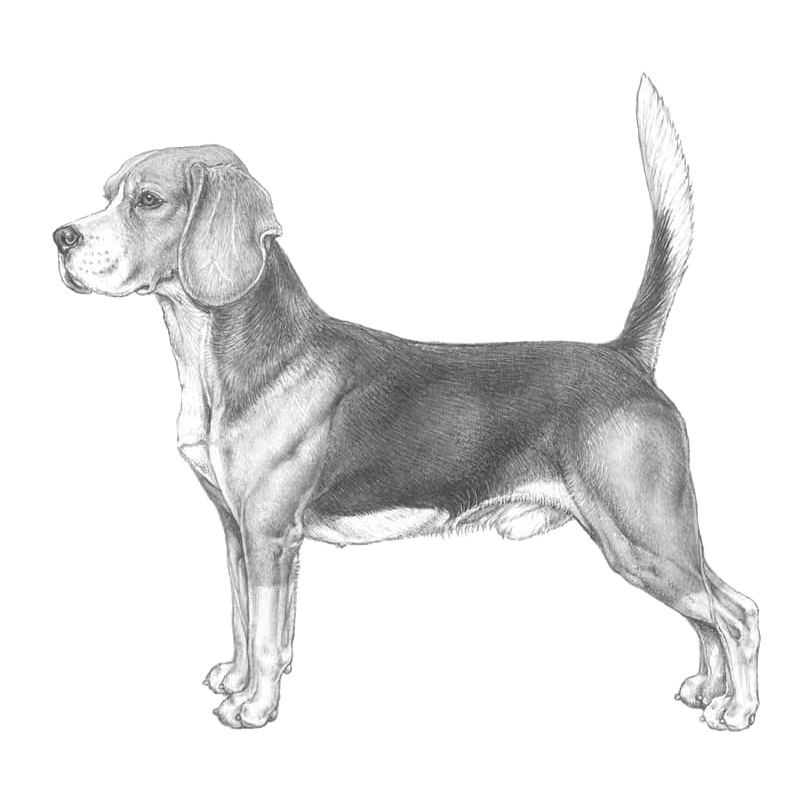
A member of the hound group, it is similar in appearance to the foxhound, but smaller with shorter legs and longer, softer ears. Beagles are scent hounds, developed primarily for tracking hare, rabbit, deer, and other small game.
Source: Wikipedia
-
- international breed collaboration
- swedish insurance data
- australian shepherd
- health surveys
- australia
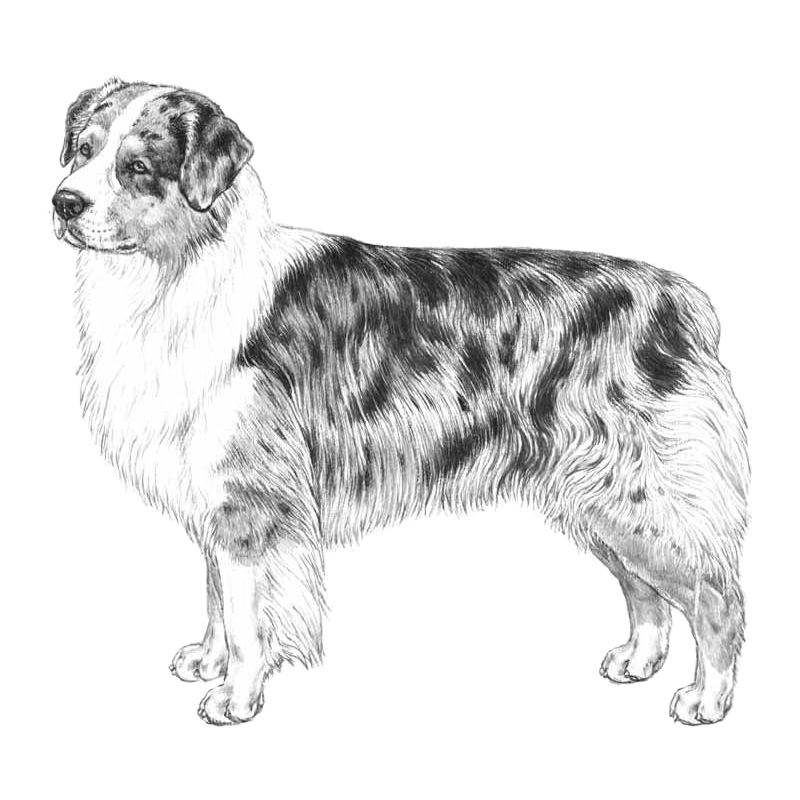
The Australian Shepherd, commonly known as the Aussie, is a medium size breed of dog that was developed on ranches in the western United States. Despite its name, the breed was not developed in Australia, but rather in the United States where they were seen in the West as early as the 1800s.
Source: Wikipedia
The Australian Shepherd was given its name because of the association with Basque Sheepherders who came to the United States from Australia in the 1800’s.