






Pedigree Breeds
184 entries in this category
-
- Last comment date
- Title
- Start Date
- Most Commented
- Most Viewed
- Last Updated
- Publish Date
- Brief Description
- Content
- Links to Breed Descriptions
- Other Names for Breed
- Country of Origin and Parent Breed Club
- Health and Well-Being
- Breed-Specific Articles
- Breed Standards
- Breed-Specific Statistics
- Breeding/Health Strategy Documents
- Breed-Specific DNA Tests
- Other Breed-Specific Webpages
- Breed-Specific Research
- Breed Clubs
- Custom
-
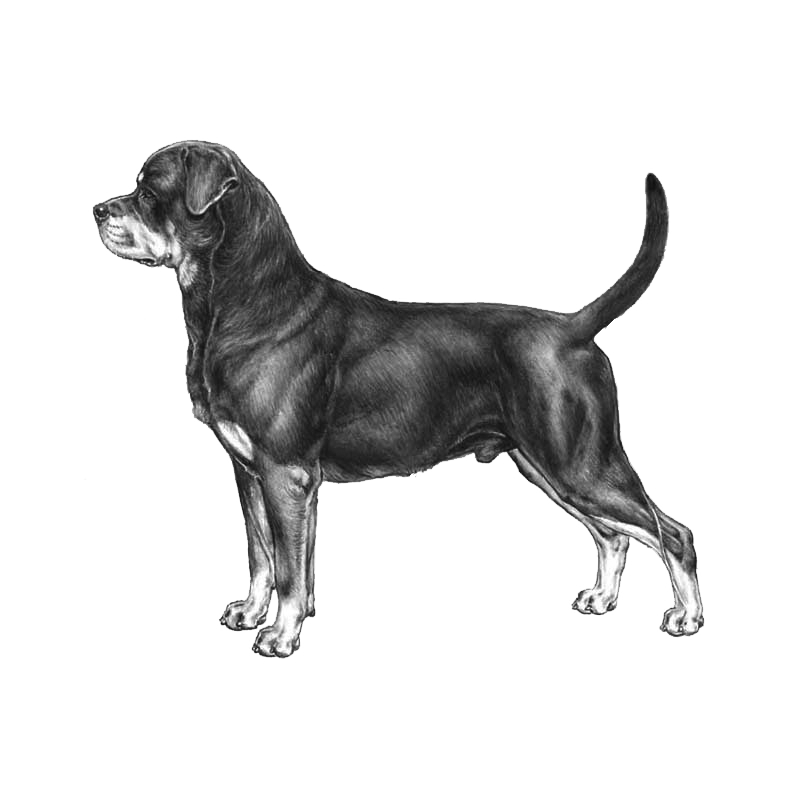 These Mastiff-type dogs stem from animals taken to Germany by Roman soldiers as they marched across Europe. Used to guard livestock, they were either discarded as the cattle were eaten or were left to guard outposts, and many finished up in Switzerland while others reached southern Germany. They were especially known around the town of Rottweil, which for 1,800 years was a centre for livestock trading. The evolving dog became a butcher’s dog, drover and draught dog. The Rottweiler, which fi
He is a very active dog that needs plenty of exercise, but his smooth coat requires only short periods of regular grooming to keep it in the desired shining condition.
Source: https://www.thekennelclub.org.uk/search/breeds-a-to-z/breeds/working/rottweiler/
-
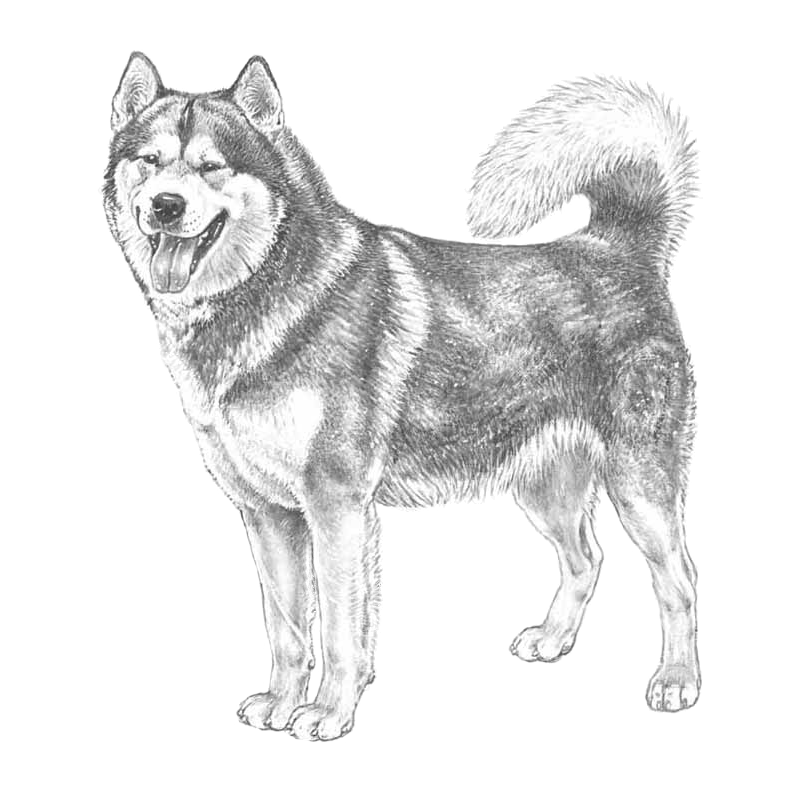
The Alaskan Malamute, one of the oldest Arctic sled dogs, is a powerful and substantially built dog with a deep chest and strong, well-muscled body.
Source: AKC
-
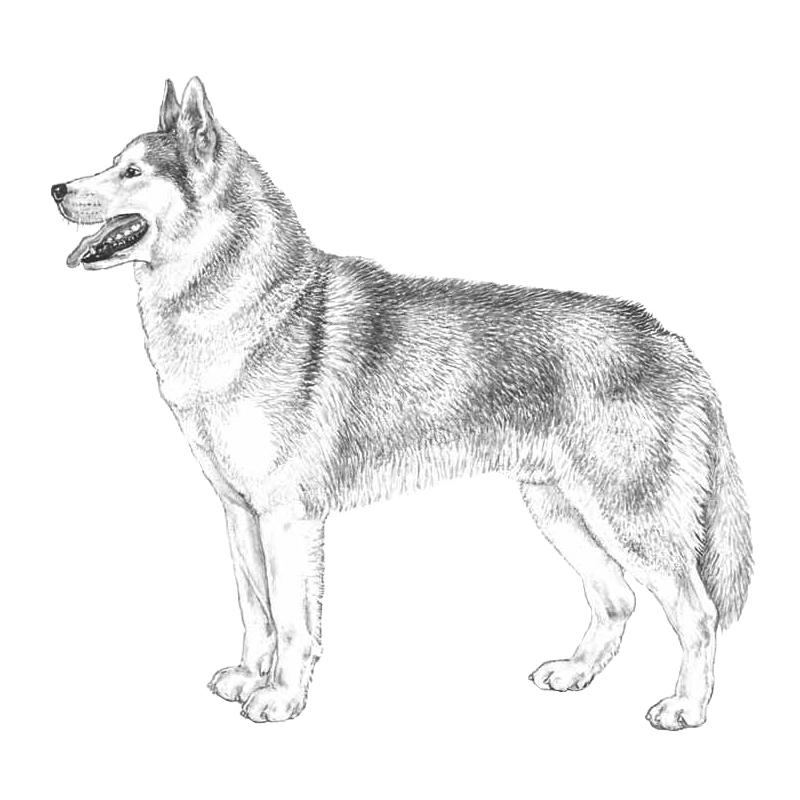
The Siberian Husky (Russian: сибирский хаски, "Sibirsky hasky") is a medium size, dense-coat working dog breed that originated in north-eastern Siberia. The breed belongs to the Spitz genetic family.
-
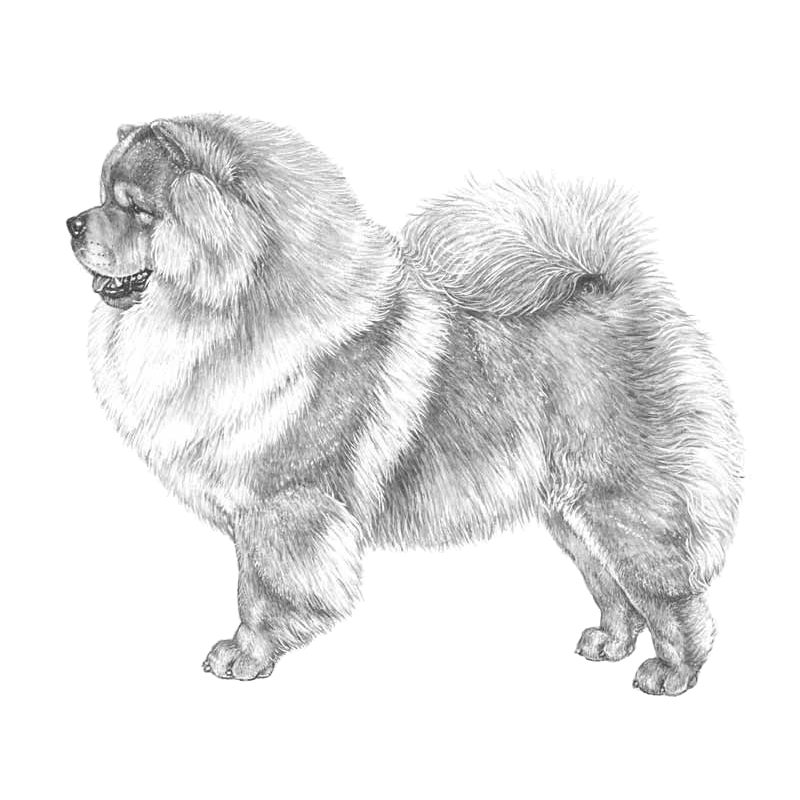
The Chow Chow (sometimes simply Chow) is a dog breed originally from northern China,] where it is referred to as Songshi Quan (Pinyin: sōngshī quǎn 鬆獅犬), which means "puffy-lion dog".
Source: Wikipedia
-
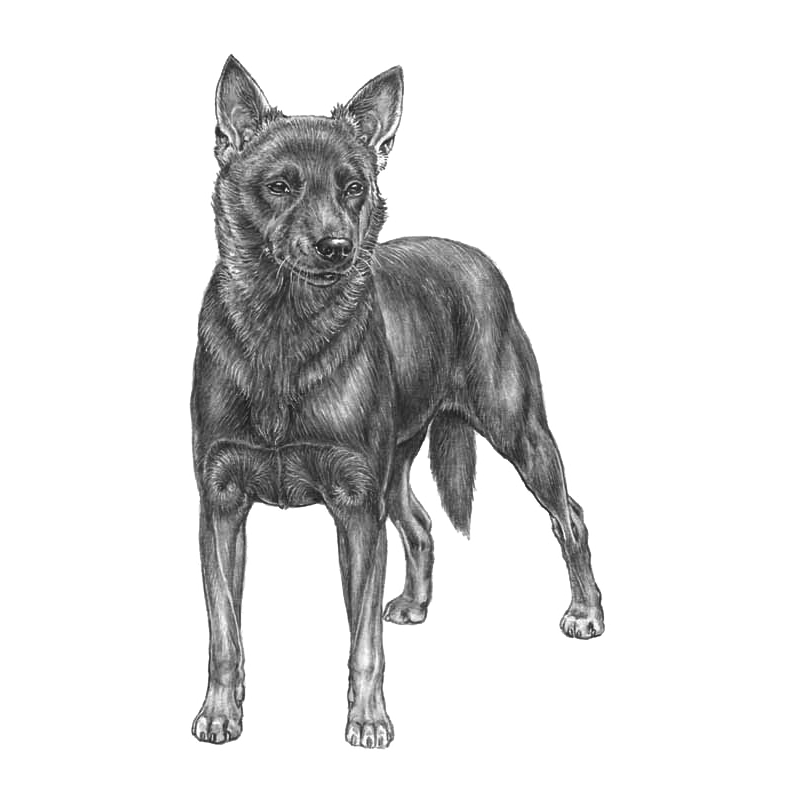
The Australian Kelpie, or simply Kelpie, is an Australian sheep dog successful at mustering and droving with little or no guidance. It is a medium-sized dog and comes in a variety of colours.
Source: Wikipedia
-
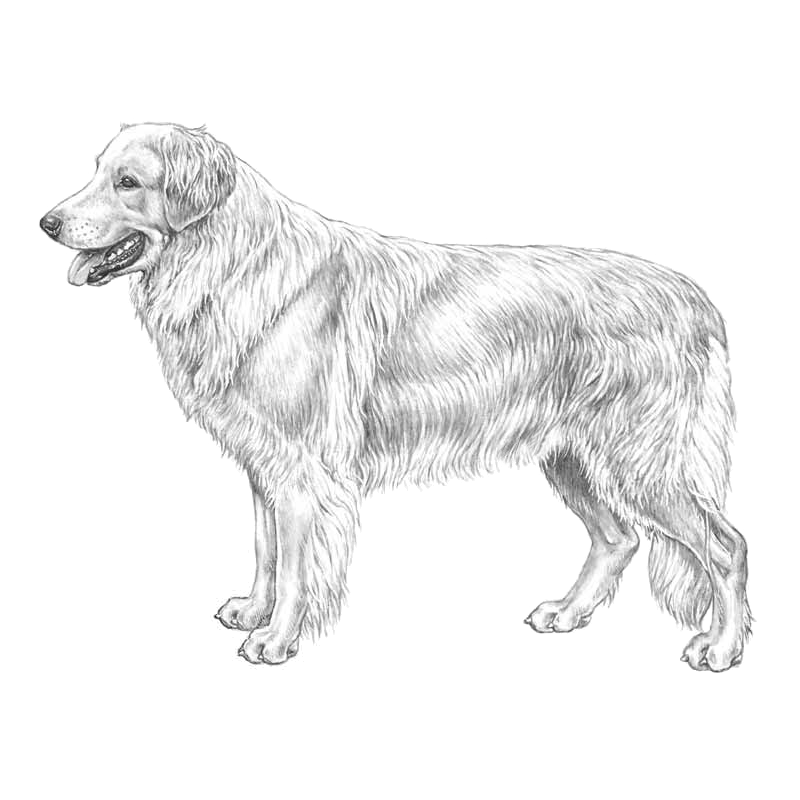
The Hovawart is a powerful, medium size, slightly elongated, long-haired working dog. Difference between sexes is clearly recognizable, specially in shape of head and build of body. Recognized working dog with versatile usage. Kind and even disposition. Has protective instinct, self-confidence and ability to take stress; of medium temperament; combined with a very good nose. His balanced body proportions and special devotion to his family make him an outstanding companion, watch, guard, tracking and rescue-dog.
-
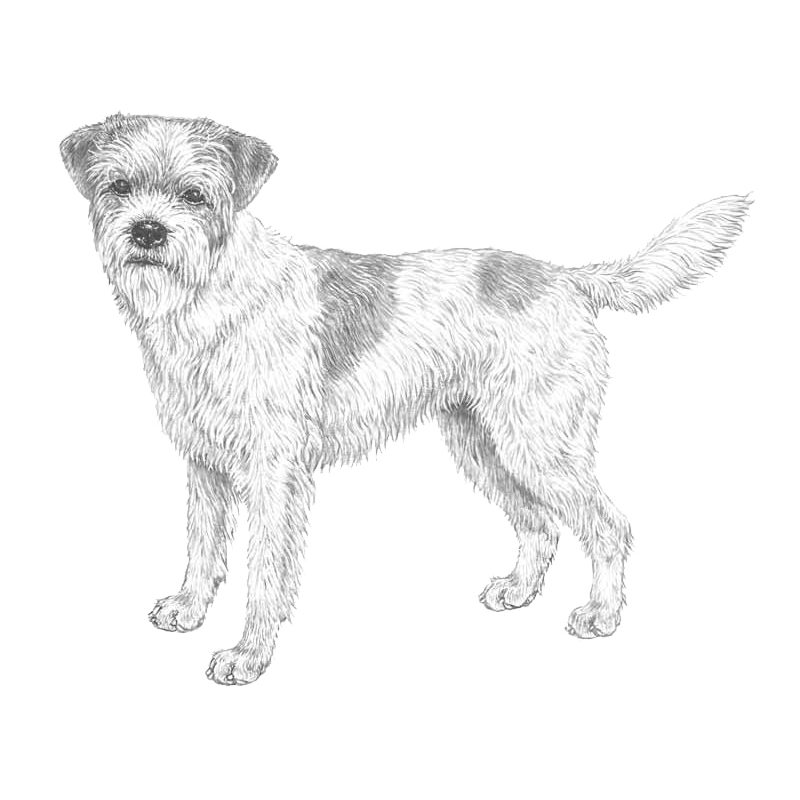
Medium size. There are two separate varieties, distinguished by coat type: Rough coat and Smooth coat. Adaptable, docile and highspirited companion and house-dog, somewhat reserved about strangers, with a moderate hunting instinct. Aggressiveness and timidity not desired.
Source: http://www.fci.be/en/nomenclature/KROMFOHRLANDER-192.html
-
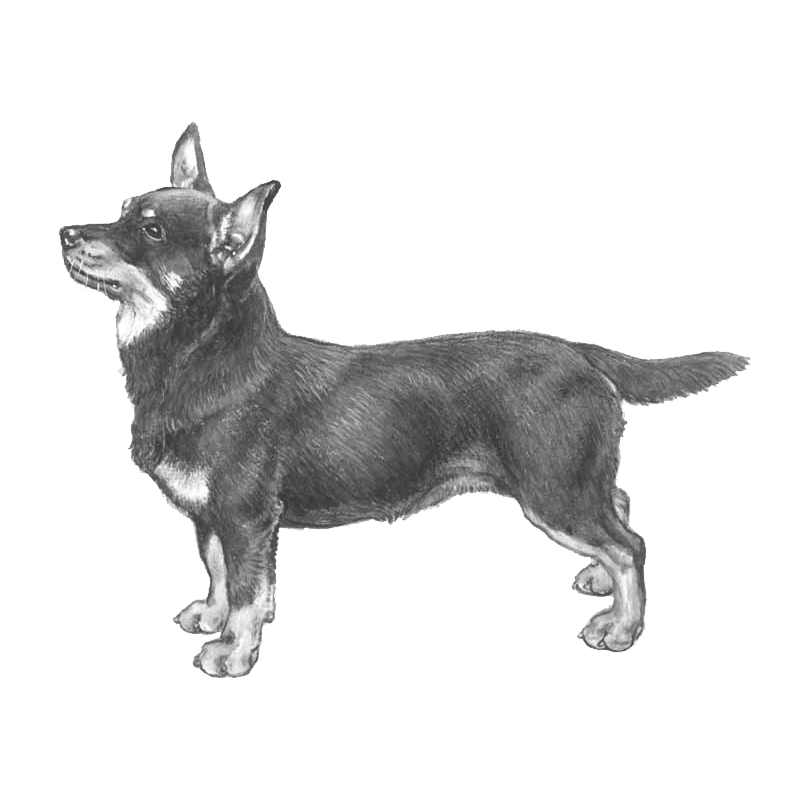 The Heeler is an intelligent, eager-to-please fellow, with a love of people; he enjoys being with children because he likes joining in games.
He is trainable but does best under a firm, kindly owner; he can be a handful if he is not kept occupied as he is possessed of a prodigious amount of energy in his small frame. If he gets excited, he can revert to his calling and take a nip at the rear end of anyone who is handy, but he is not basically a ‘biter’, being content to warn the intruder by noise accompanied by a furiously wagging tail. He has a hearty appetite to go with his super-abundant energy.
Source: https://www.thekennelclub.org.uk/search/breeds-a-to-z/breeds/pastoral/lancashire-heeler/
-
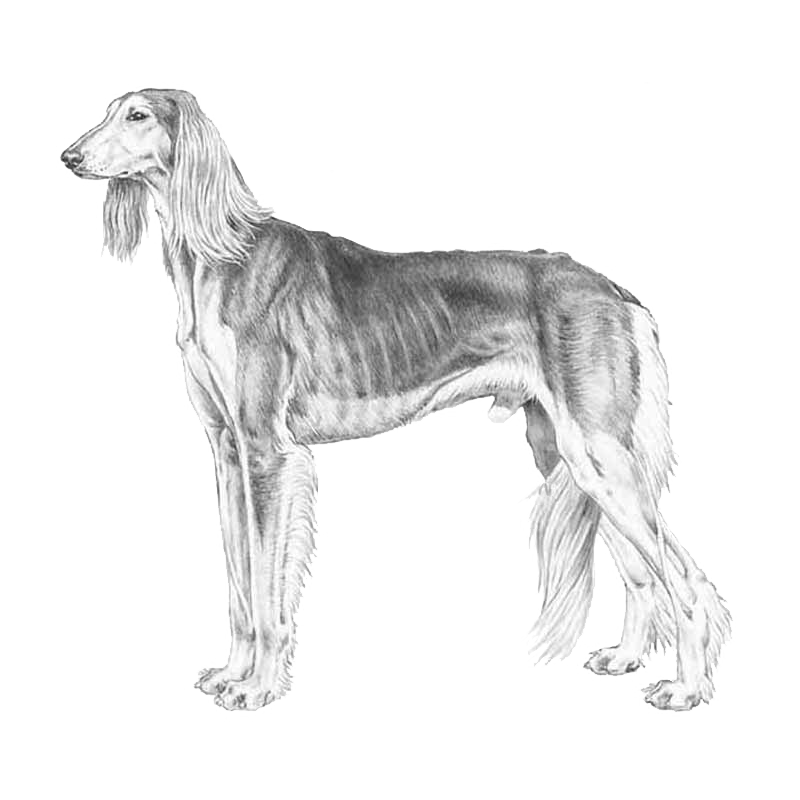 Salukis vary in type and the variation is desired and typical for the breed. The reason for the variation is the special place held by the Saluki in the Arab tradition and the immense size of the Middle East area where the Saluki has been used as a hound of the chase for thousands of years. Photo: Jessica Bolander, emoticon.se
The whole appearance of this breed should give an impression of grace and symmetry and of great speed and endurance coupled with strength and activity. Smooth variety: the points should be the same with the exception of the coat which has no feathering. Reserved with strangers, but not nervous or aggressive. Dignified, intelligent and independent.
-
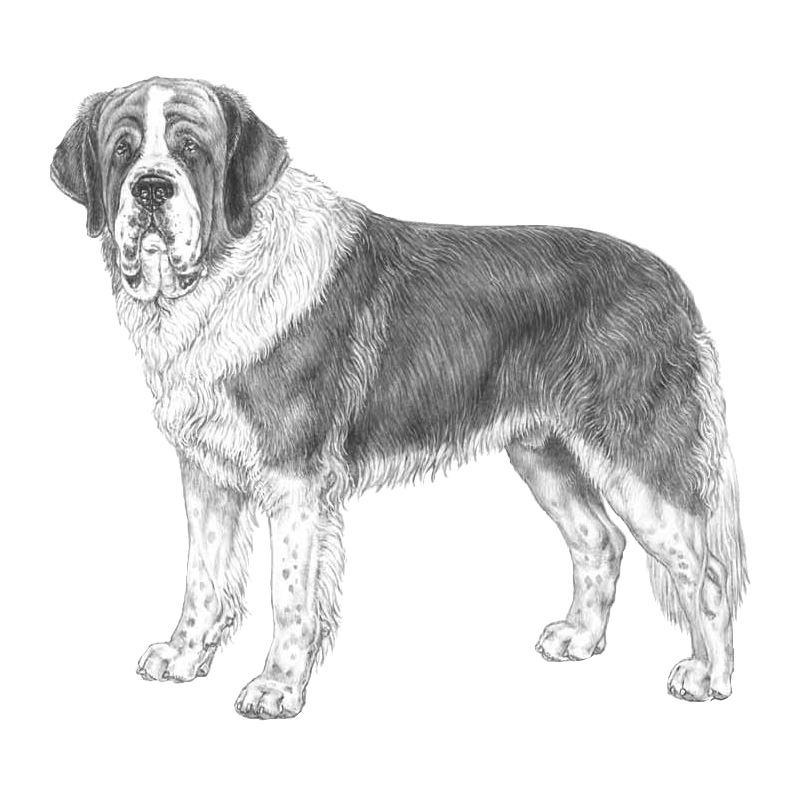
In the 11th century, monks founded a hospice as a refuge for travellers and pilgrims on the 2469 metre - high Great Saint Bernard Pass. Large mountain dogs have been kept at the hospice since the mid 17th century to guard and protect those staying there. The first photographic evidence of the presence of mountain dogs dates back to 1695, and the first written document is a hospice memo from the year 1707. The dogs were rapidly adopted as companion dogs and above all as rescue dogs for travellers who lost their way in the snow and mist. The dogs from the Great Saint Bernard Pass saved the lives of a great number of people, averting many deaths in the snow. The reputation of the Saint Bernards (then called "Barry dogs") grew throughout Europe in the 19th century thanks to chronicles published in many languages and to reports passed on by word of mouth by the soldiers who had crossed the pass with Napoleon Bonaparte in 1800. The legendary Barry became the archetype of the rescue dog.
Source: Fondation Barry: http://fondation-barry.ch/sites/default/files/mediennews/Medienmappe_FB_E.pdf?54
-
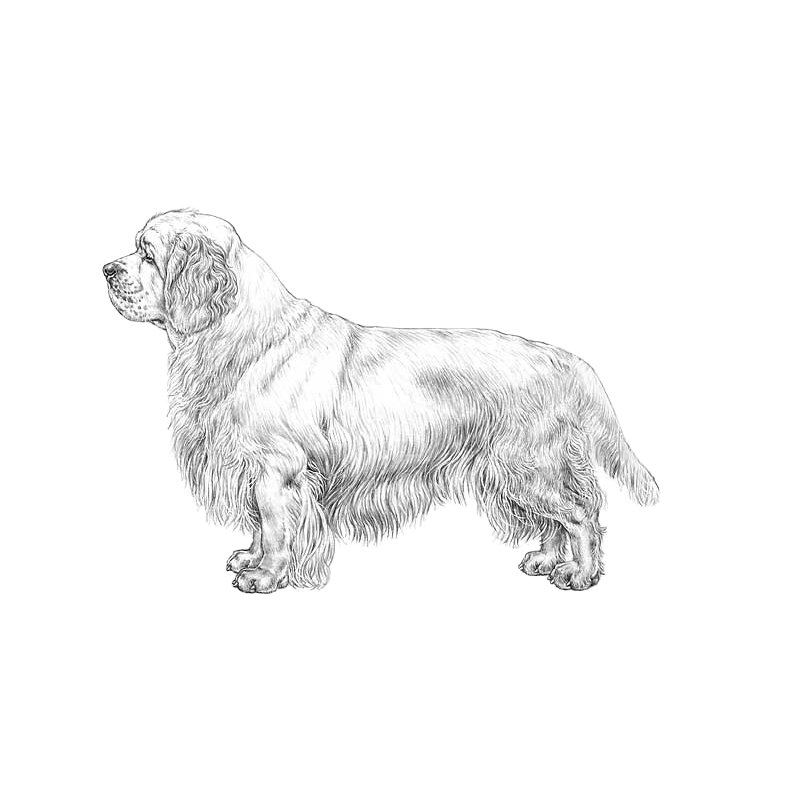
Said to have come in the first place from France more than 200 years ago, the Clumber was brought to Great Britain by the Duke of Newcastle and bred at his family home of Clumber Park in Nottinghamshire.
Source: The Kennel Club
-
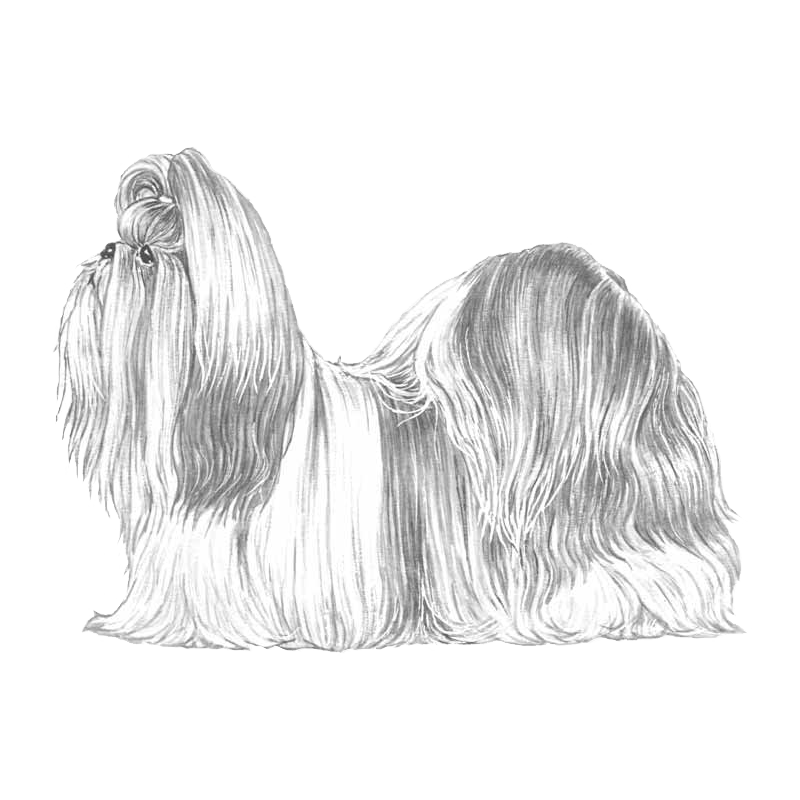
The roots of the Shih Tzu are in Tibet but it was developed in China, where dogs like these lived in the imperial palaces. After China became a republic in 1912, examples of the breed found their way to the West. Temperamentally, the Shih Tzu is a bouncy character and very outgoing. A complete extrovert and full of infectious enthusiasm, he makes a delightful companion who is happy to be part of any family.
Source: https://www.thekennelclub.org.uk/search/breeds-a-to-z/breeds/utility/shih-tzu/
-
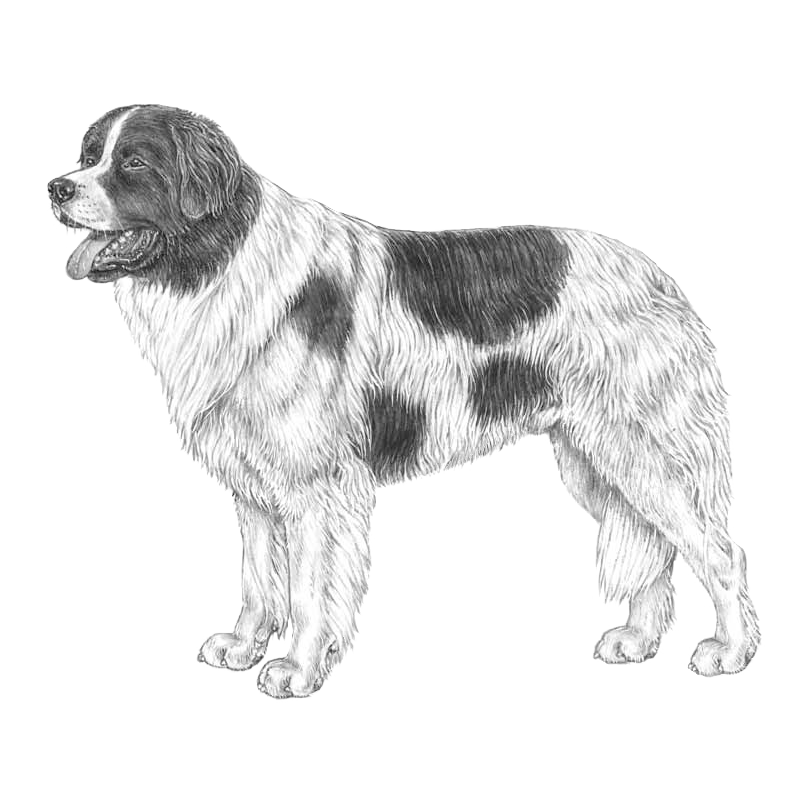 NOTE: LANDSEER ECT is not the same breed of dog as the black and white 'Landseer' Newfoundland Newfoundland - Landseer History Newfoundland, Landseer or both? Actually, there are 3 versions: The American Newfoundland Landseer, the European Newfoundland Landseer and the European Landseer ECT. The USA (AKC) recognizes both European and American Newfoundland Landseers but does not recognize the 3rd version, the Landseer ECT, as a version of the Newfoundland or even as a b
The Federation Cynologique Internationale (FCI) recognized the Landseer as a distinct breed in 1960. In countries not affiliated with the FCI, such as Canada, the U.S. and the UK, the white and black Newfoundland is still referred to as a Landseer (descriptive); everywhere else, it is a white and black Newfoundland. Between 1945 and 1960 the Landseer Continental Type was bred as a part of the Newfoundland Clubs in Europe. As the dogs had many differences to the Newfoundland and the popularity of the Landseer ECT grew, the breed was recognized as a separate breed.
Source Wiki: https://en.wikipedia.org/wiki/Landseer_%28dog%29
-
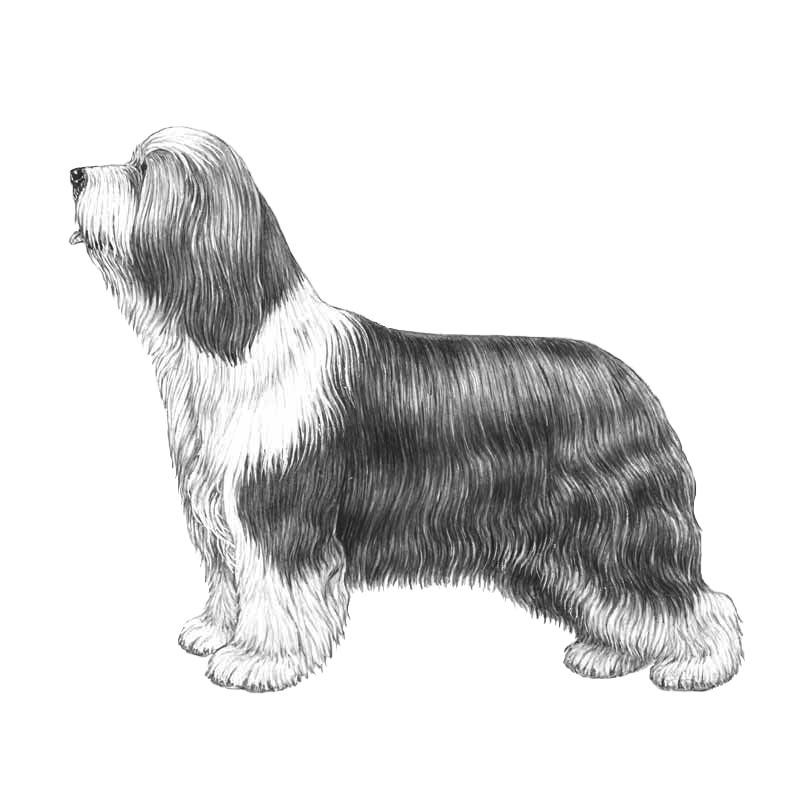
The ‘Beardie’, as he is affectionately known, is a hardy dog with a lovable temperament. His handy size and adaptability, combined with workmanlike qualities, have given him a following far outside the farming community. Ideally suited to life in the country, with a double weather-resistant coat and active nature, he is a happy dog, neither timid nor aggressive. Ready to join in any activity, he has an enquiring expression that seems to ask‘ Well, what shall we do now?’ Gentle, and good with children and adults, he makes an ideal member of a fun-loving family.
Source: The Kennel Club
-
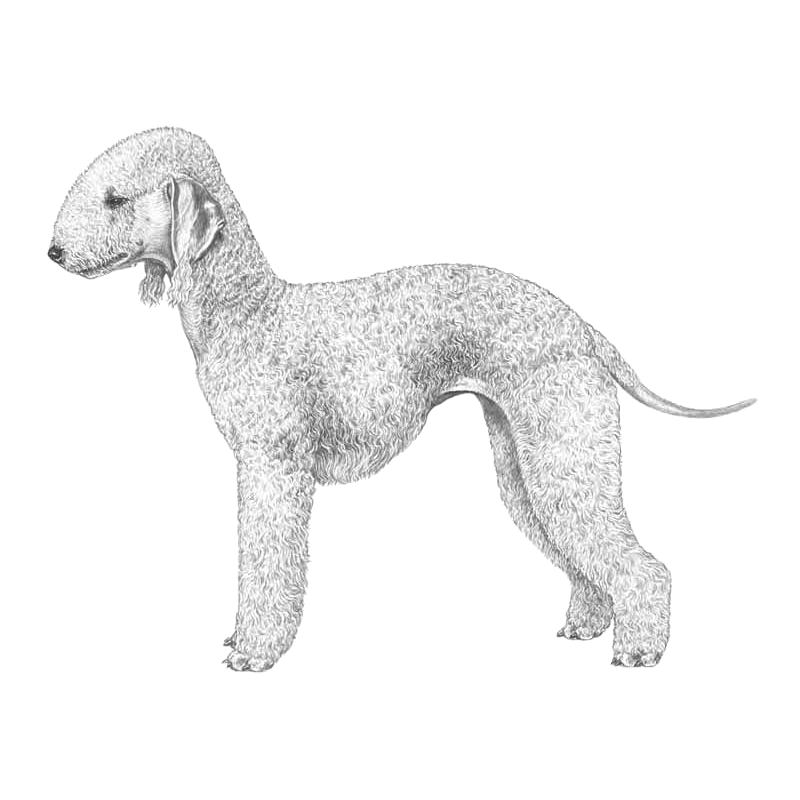
The linty coat and distinctive arched loin of the Bedlington and his long head give him a lamb-like appearance, but he is an excellent dispatcher of vermin from rabbit to fox. The origins of the breed are much debated with some suggestion of the Bull Terrier and the Otterhound and perhaps some Dandie Dinmont but as in many breeds there is some dispute in the background of the breed.
Source: The Kennel Club
-
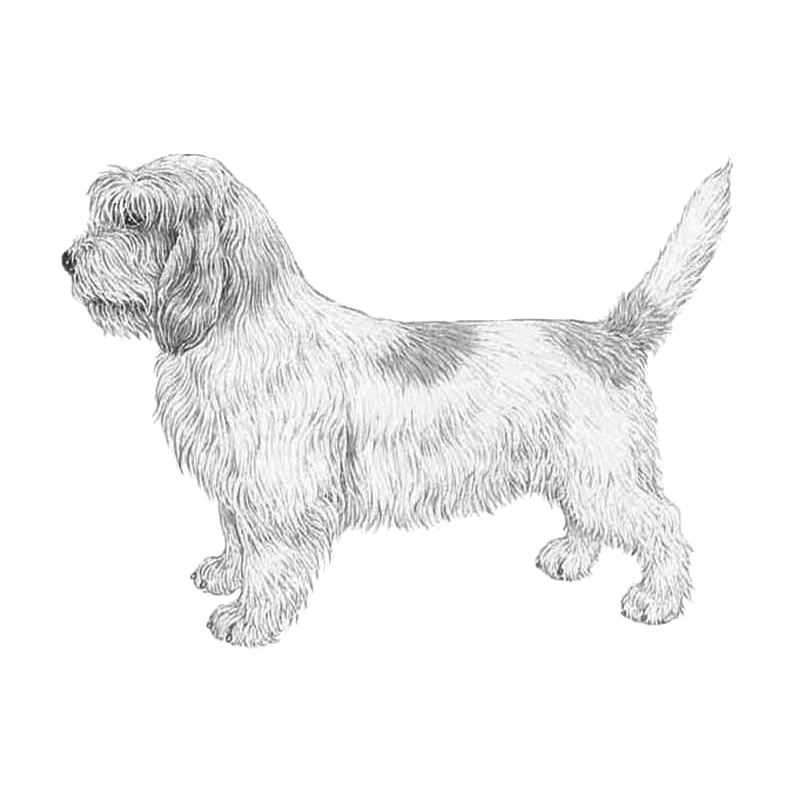
The Petit Basset Griffon Vendéen or PBGV, is a breed of dog of the scent hound type, bred to trail hares in bramble-filled terrain of the Vendée district of France.
Source: https://en.wikipedia.org/wiki/Petit_Basset_Griffon_Vendéen
-
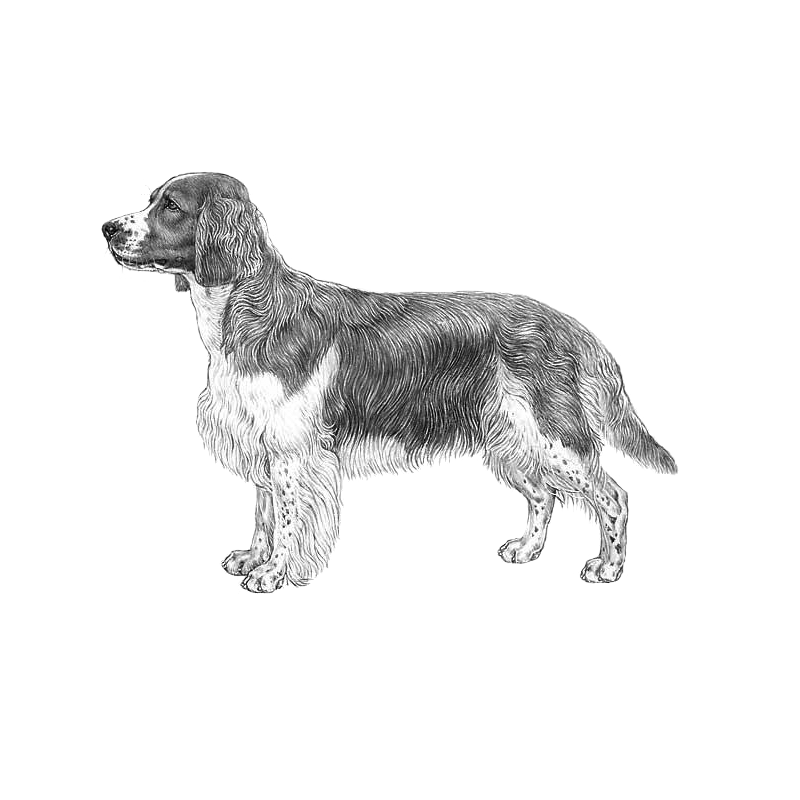
Thought to be comparable to the old Land Spaniel, they are similar to the English Springer Spaniel and historically have been referred to as both the Welsh Spaniel and the Welsh Cocker Spaniel.
Source: https://en.wikipedia.org/wiki/Welsh_Springer_Spaniel
-
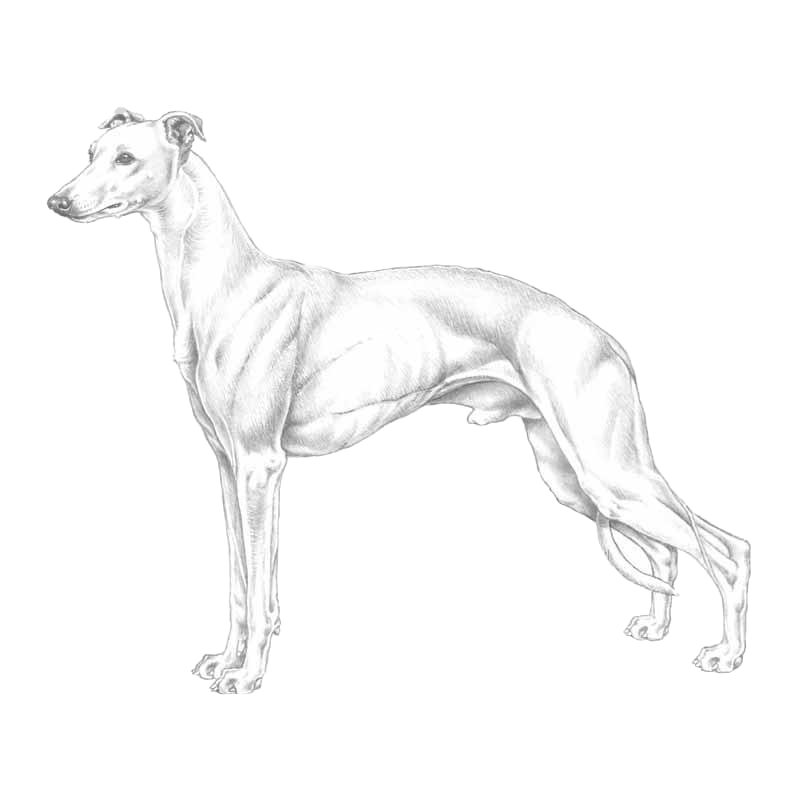
The Whippet (also English Whippet or Snap dog) is a dog breed of medium-size. They are a sighthound breed that originated in England, where they descended from greyhounds. Whippets today still strongly resemble a smaller greyhound.
-
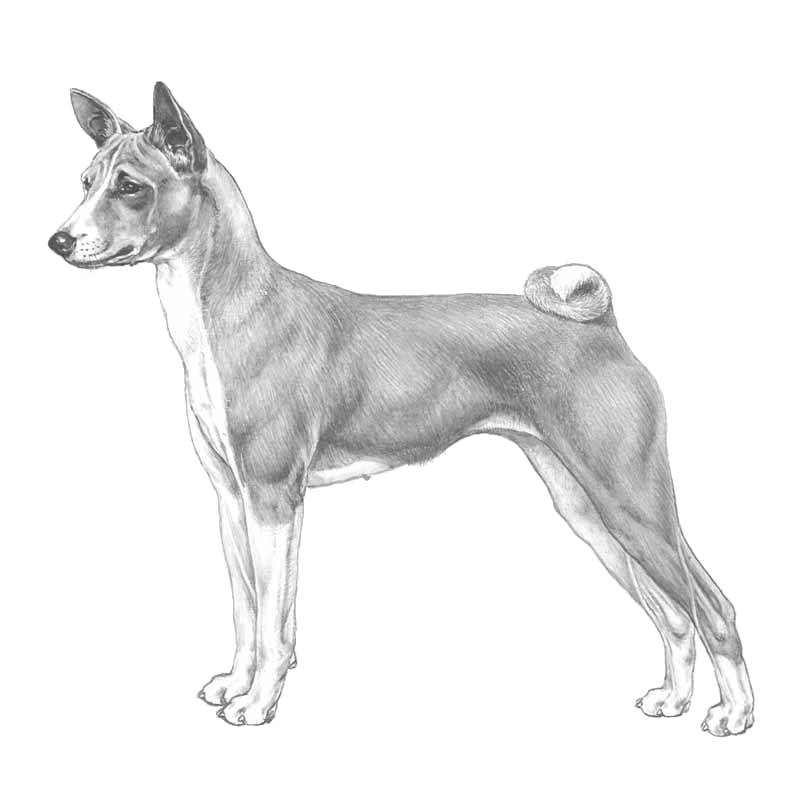
The Basenji originated in the "African Congo, where they had been used as an all purpose hunter working by sight and by scent.""
Basenji "history extends back to the time of the Pharaohs and paintings in their tombs bear a similar resemblance to the breed. Gazelle like in his elegance and with a stylish, swinging stride, he is catlike in his cleanliness and has no bark which is replaced by a yodeling sound."Source: The Kennel Club
-
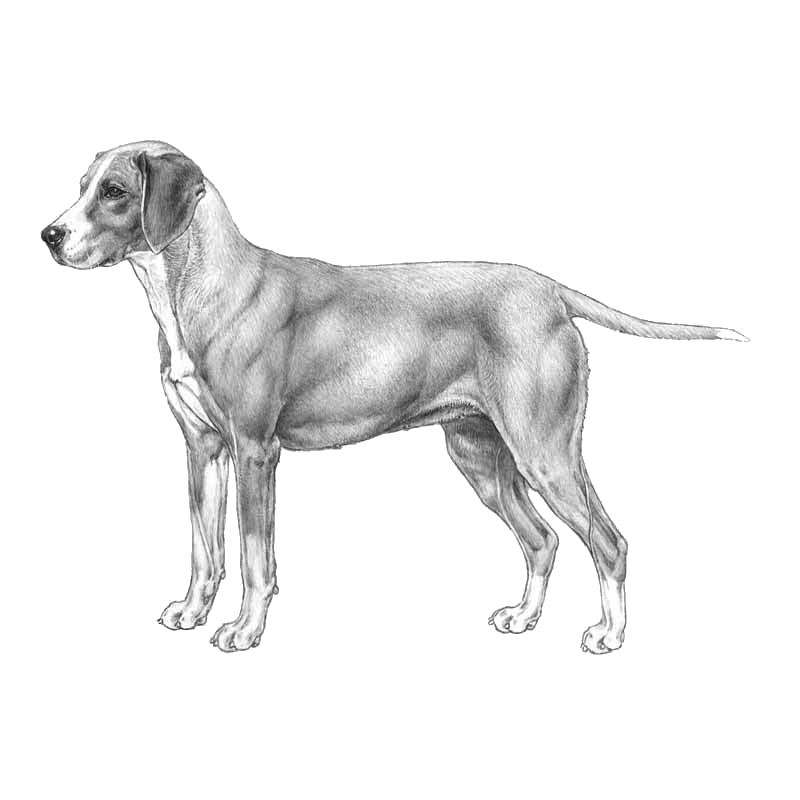
The Gotlandsstövare is rectangular in body, noble but with an impression of strength and endurance. Gotlandsstövaren is a driving hunting dog for hunting hare and fox. The race also serves as a companion provided that you take into account its strong hunting instinct and big business needs.
Source: http://www.skk.se/sv/hundraser/gotlandsstovare/?breed=Gotlandsstövare
-
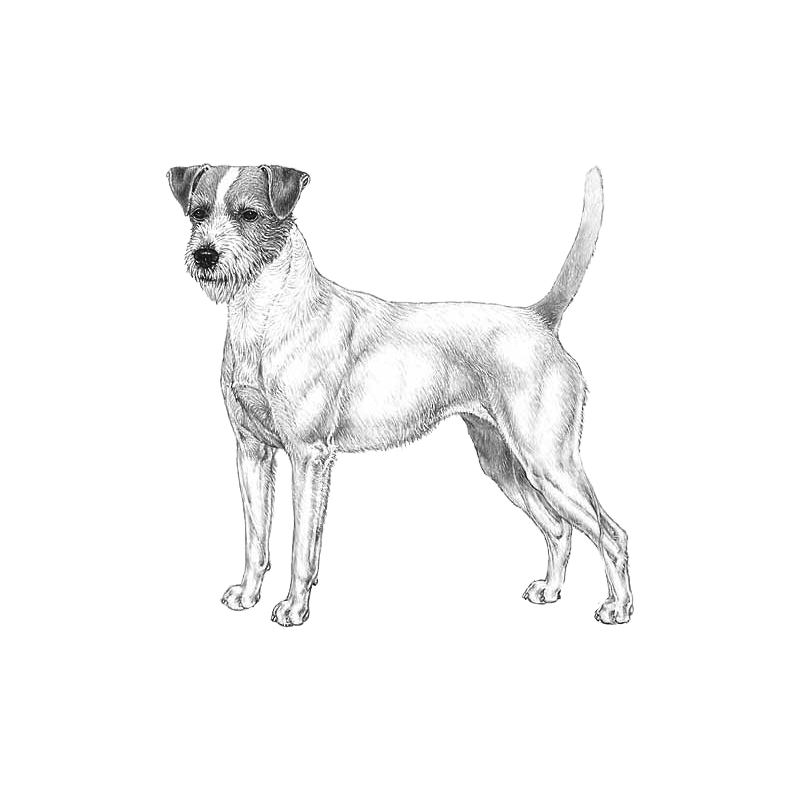
The Parson Russell Terrier was bred to go to ground and was often used as the earth dog for badger or fox. It is said that he had to be a handy size to go to ground, but also had to possess stamina and be sufficiently racy to keep up with hounds...The Breed was formally recognised by the Kennel Club in 1990 as the Parson Jack Russell Terrier. However, in 1999, the breed name was changed to the Parson Russell Terrier to differentiate the two breeds. The Parson Russell is now well established in the show ring and retains its working abilities as a ‘fox’ terrier.
Source: https://www.thekennelclub.org.uk/search/breeds-a-to-z/breeds/terrier/parson-russell-terrier/
-
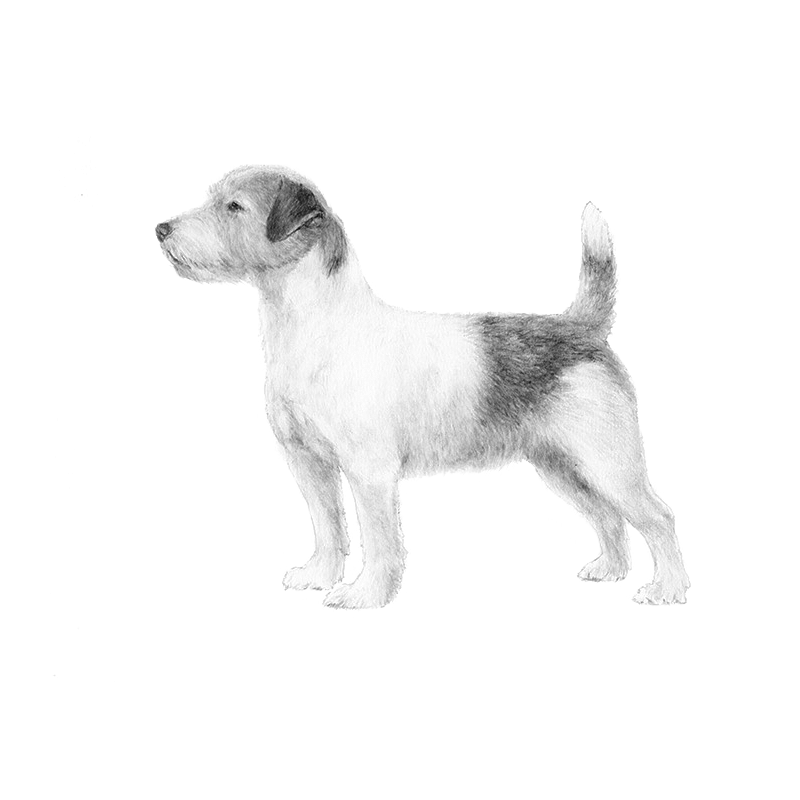
The Russell Terrier is a strong, hardy, earth-working Terrier. He is full of life and moves with confidence that matches his keen expression. The breed's handy size, small flexible chest, nose, strong voice and fearless nature make it an excellent specimen to work vermin below ground. Its weatherproof coat may be smooth, broken or rough and is predominantly white with tan and/or black markings.
-
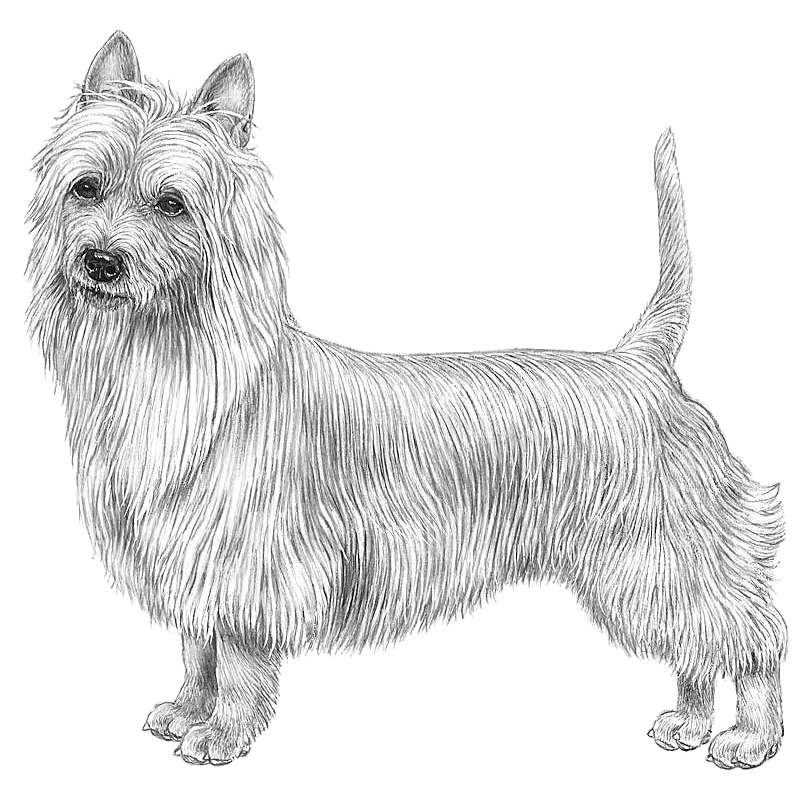
The Australian Terrier, one of the smallest of the working Terriers, was bred to be both a helper and companion in rough times and terrain. A native dog (known as the "rough-coated terrier") and a close relative of the old Scotch dog of Great Britain (not to be confused with the present-day Scottish Terrier) are believed to have been cross-bred with a number of other breeds of British stock to produce the fast, sturdy, weather-resistant and fearless little dog that the settlers needed as they expanded the frontiers of their country.
Source: Australian Terrier Club
-
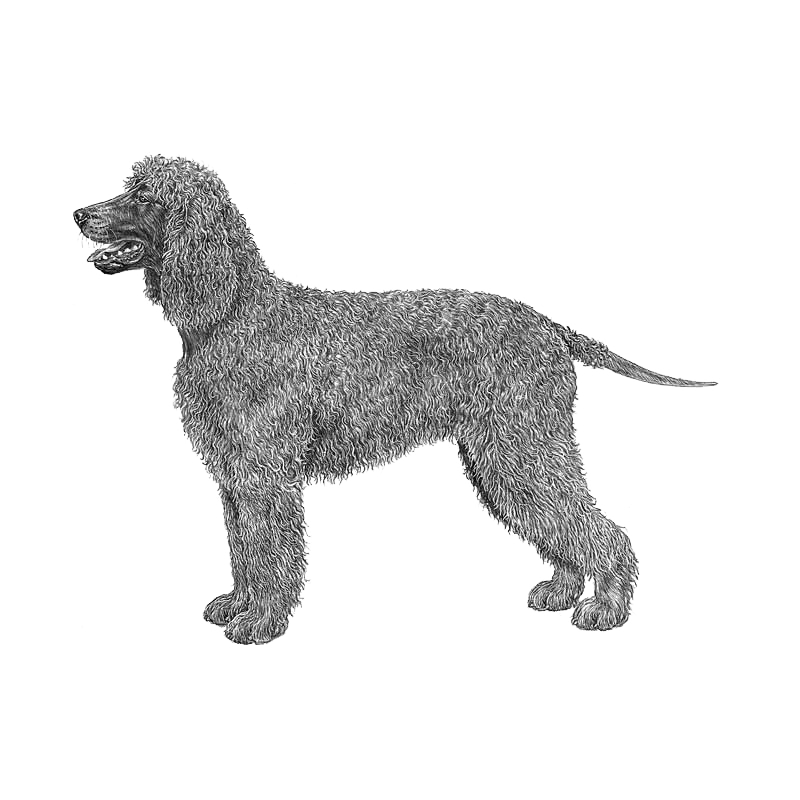
There is no real evidence of the ancestry of the Irish Water Spaniel except in its most peculiar feature-the rat tail. This feature appears in no similar dog and makes it very likely that the modern breed had an indigenous Irish ancestor. The tail has given rise to the names “ Whip Tail” and “ Rat Tail”.
(Source: Irish Kennel Club)
-
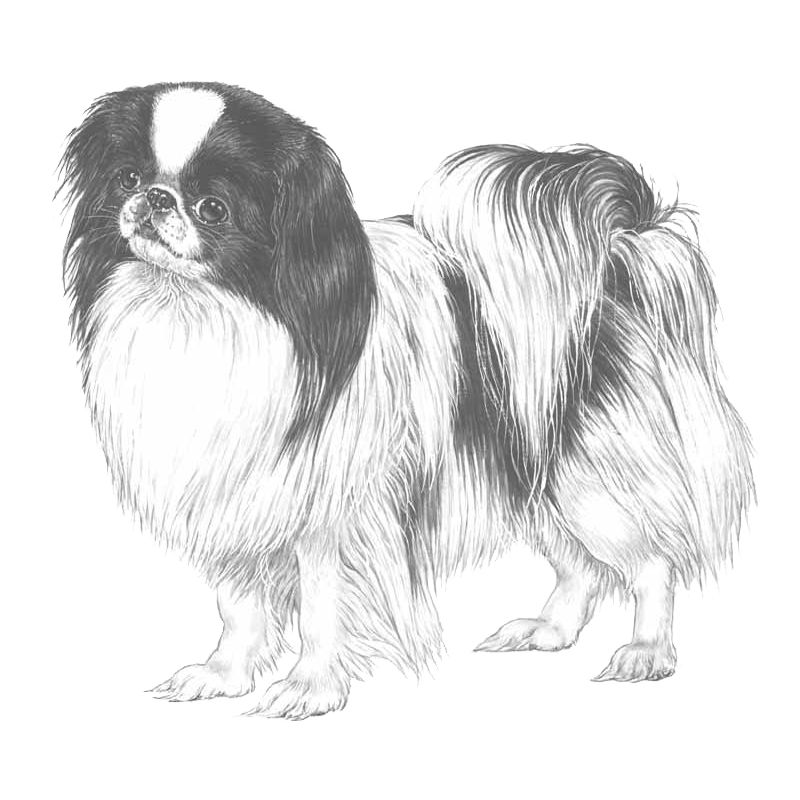
The Japanese Chin, also known as the Japanese Spaniel, is a dog acknowledged for its importance to Japanese nobility. It is also known for its strabismus of the eyes.