





Jump to content
View in the app

A better way to browse. Learn more.

DogWellNet

A full-screen app on your home screen with push notifications, badges and more.

To install this app on iOS and iPadOS
  1. Tap the Share icon in Safari
  2. Scroll the menu and tap Add to Home Screen.
  3. Tap Add in the top-right corner.
To install this app on Android
  1. Tap the 3-dot menu (⋮) in the top-right corner of the browser.
  2. Tap Add to Home screen or Install app.
  3. Confirm by tapping Install.

Blogs

Featured Entries

Why do legislators address the supply side and not demand? There continue to be reports of legislative and legal approaches and other actions related to the issue of brachycephalic (short-nosed) dogs.  The international dog community is closely following the Norwegian legal action against kennel and breed clubs, and individual breeders.  A ruling is expected by the end of the month.  Issues in the Netherlands are ongoing. [links below].  As I work closely with various groups on the is
Trends in the Pet Industry - Interesting or Troubling? As the New Year begins, I am pondering several topics that have been raised through various channels. This morning I received this (link below):  7 Pet Industry Trends To Know (2021-2025).  Essentially this is about where people are spending their money on pets - and just how much money that is.  It would confirm what we know about people treating their pets more and more like humans, for better or for worse!  This includes toys an
We Need to Focus on Breeding Healthy Dogs While We Await Technological Advances   This blog is stimulated by, but is not really a review of this paper:  Advancing Genetic Selection and Behavioral Genomics of Working Dogs Through Collaborative Science, Frances L. Chen,  Madeline Zimmermann, Elinor K. Karlsson, et.al.  Front. Vet. Sci., 06 September 2021 | https://doi.org/10.3389/fvets.2021.662429. The authors make it clear that their focus is on working dogs, and the need to i
Inbreeding has proven negative effects for health, says a new study in dogs by Katariina Mäki A recent study by an international team led by veterinary geneticist Danika Bannasch is a welcome wake-up call for all of us in the world of pedigree dogs. While it has been well established that closed studbooks cause inbreeding to accumulate, the special importance of the study lies in the bond between inbreeding and health: the results in 162 breeds show that inbreeding contributes
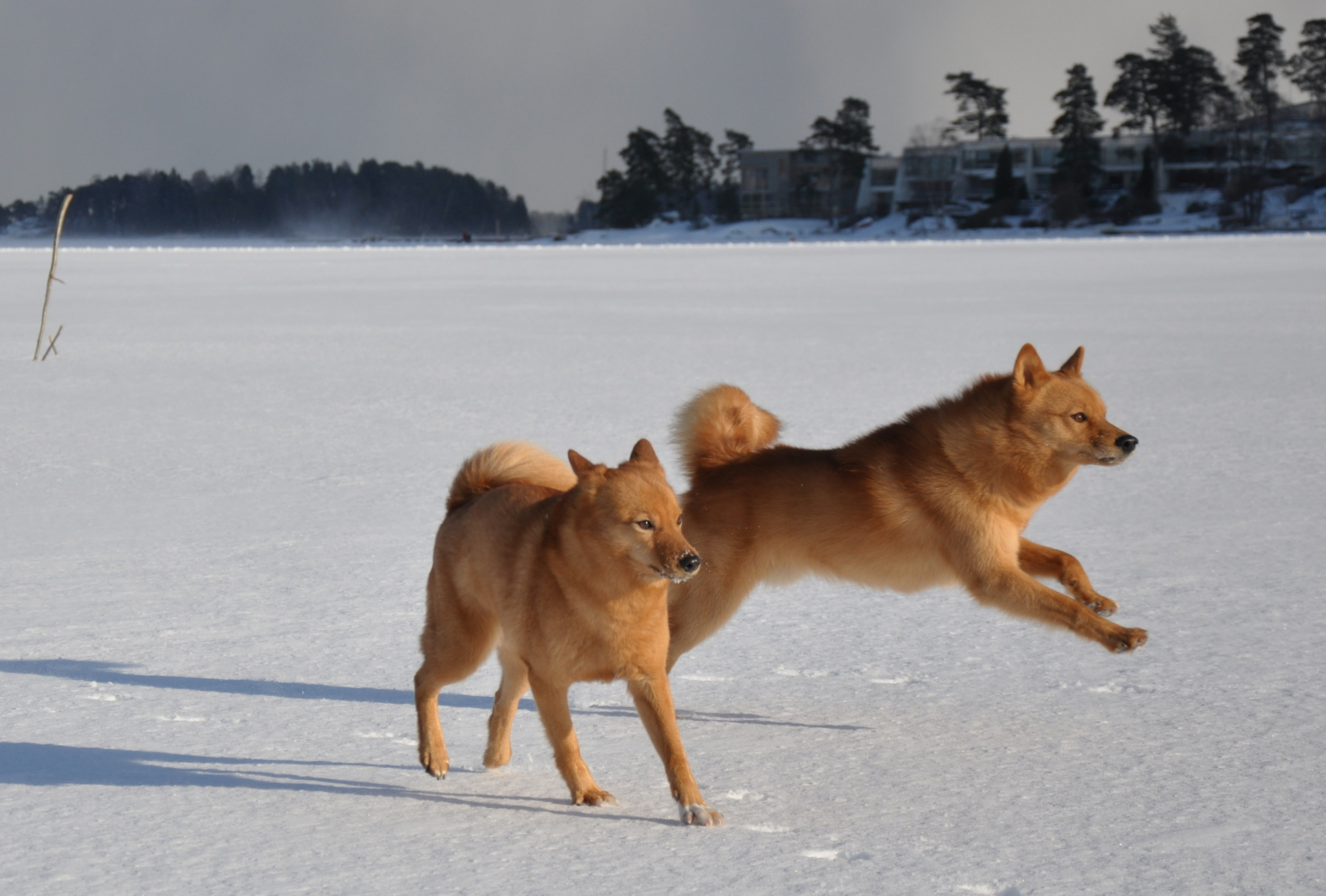
(Above photo by Kaisa Huttunen) We published a Get a GRIHP! article on the Finnish Spitz in August 2020. While gathering information for the article, we got to know the work being done in the Finnish breed association Suomen Pystykorvajärjestö - Finska Spetsklubben ry (SPJ). SPJ, together with the other Nordic breed clubs of the breed, has worked very hard to maintain and improve health and genetic diversity in the breed. A very good example of this is the successful work in reducing the fr
A recent research commentary paper, DEGENERATIVE MYELOPATHY-DIAGNOSIS AND INHERITANCE - Dr. Jerold Bell, from a lecture presented at the World Small Animal Veterinary Association 2021 Virtual World Congress 13 Nov. 2021 has summarized and clarified information on the clinical diagnosis and use of genetic testing for degenerative myelopathy (DM). Please see linked references below for more details.  Due to this new information, we have taken the decision to update the breed relevance ratings
The 9 November FCI (Fédération Cynologique Internationale) podcast, hosted by Attila Márton, featured Dr Sára Sándor, who gave an excellent description of what a genomic chip is and how it assesses a dog's DNA to identify genetic variants (mutations) - taking some of the mystery out of a technology that many may know the name of, but few could describe!   Canine genetic testing technology has changed rapidly since the first DNA tests were offered to dog breeders and owners in the late 1
End Pet Homelessness - Mars Petcare   One of the projects I have been working on over the last year is with our Partner Mars Petcare.  Their ambition to "End Pet Homelessness" is a bold and innovative attempt to address the troubling problem of unwanted, uncared for, and stray pets.  I have been serving on their Advisory Panel for the State of Pet Homelessness Index with an international group of stellar individuals with varied areas of expertise ranging across dogs and cats, epidemiol
On September 16, 2021 this article of mine was published on the Veterinary Information Network (V.I.N.):   Veterinary Information Network (VIN) Article: Banning brachycephalic breeds is unrealistic   It was written in response to a previous article on V.I.N. about veterinarians signing a breed banning petition and legislative actions against breeders in Norway. In my article, I discuss the complex nature of challenges around dogs with extreme conformation and stress the indiv
FECAVA video: Please don't buy flat-faced animals The Federation of European Companion Animal Veterinary Associations (an IPFD Collaborating Partner) has come out with a powerful new video bringing the voices of veterinary practitioners together in a plea for people not to buy brachycephalic - flat-faced - animals. As we have been discussing and blogging (see links below) - the incredible popularity of these animals has led to increased stress and anguish for veterinarians throughout t
The Great Divide - Responses to Challenges in Extreme Breeds Last week (Oct 2021) saw postings of two initiatives related to brachycephalic (flat-faced) and other extreme breeds.  One was information on legal questions being put forward to demand that the UK Kennel Club not register ‘non-standard colours’ of certain breeds. The second was posters erected in, I believe, subway stations warning people of the problems of various breeds. The first is essentially a complaint about colours t
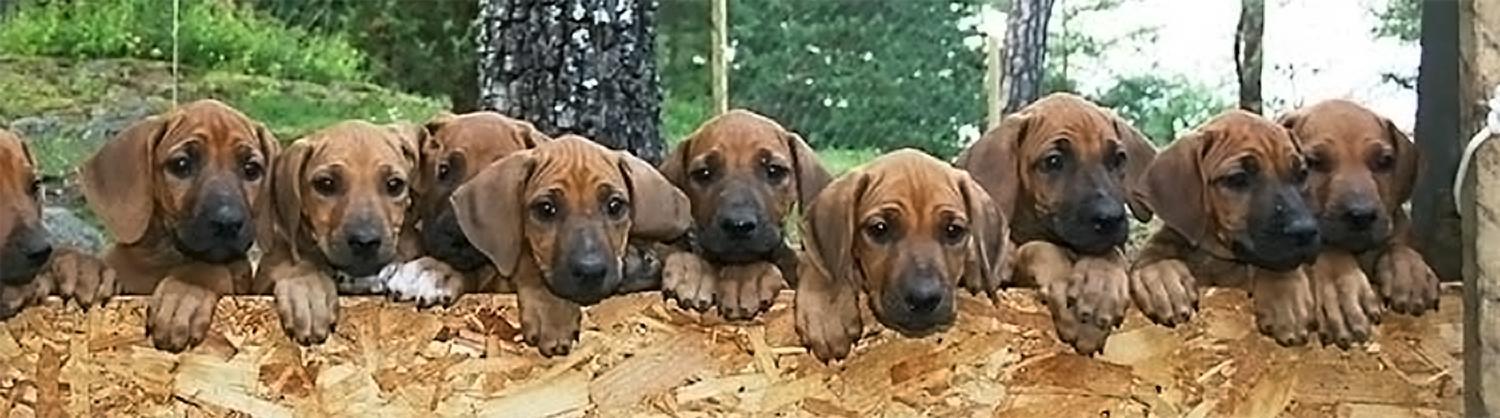
We are always struggling with defining good breeders, and it is a true challenge.  But I have been talking about this topic lately, so thought I would blog on: Good Breeders follow ALL their puppies! And share the data. This is one thing that there is really no good excuse for not doing, so kennel and breed club breeders - anyone who considers themselves a 'good breeder' should do their best in this regard.  This was one topic I discussed in a recent talk to the Rhodesian Ridgeback Clu
The Relatedness of Breeds - A fun, interactive resource with some cautions ...see references below... The Guardian has come out with an interactive tool for looking a the relatedness between breeds.  Based on 'clades' (genetic groupings) research and genomic work by by Heidi Parker and Elaine Ostrander's team, it is an interesting resource.  Click on your breed - see what others breeds it is related to.  Fun! But there are a couple of cautions that apply: This is great wor
"Guess my dog's breed"... Maybe? The popularity of breed identification tests has been increasing in parallel with the interest in human “ancestry” genetic tests. The technology is similar, as are the sometimes surprising results. We recently had contact from a friend of IPFD who put their dog Olive through three different breed identification tests – with some expected, and unexpected (and perhaps concerning) results. This blog explores some of the reasons for variation in results, as well
Engdahl K, Hanson J, Bergström A, Bonnett B, Höglund O, Emanuelson U. Epidemiology of stifle joint disease in an insured Swedish dog population. Vet Rec. 2021;e197. https://doi.org/10.1002/vetr.197 https://bvajournals.onlinelibrary.wiley.com/doi/10.1002/vetr.197     Abstract Background: Stifle joint diseases (SJD) are common in dogs and include a variety of diagnoses. The objective of the study was to provide an overview of the epidemiology of S
Veterinarians and Brachycephalic Dogs - Ethics and Reality   I have been starting to read the new textbook, Health and Welfare of Brachycephalic (Flat-faced) Companion Animals - A Complete Guide for Veterinary and Animal Professionals, Edited By Rowena Packer, Dan O'Neill; Copyright Year 2021 (ref below). This book has two parts.  The first part offers a group of articles on the backgrounds, history, ethics, international developments, and other aspects that define and impinge on the heal
4th International Dog Health Workshop - 2 Years On   Facebook reminded me that two years ago today we had just wrapped up the 4th IDHW in Windsor, UK - co-hosted by the Kennel Club. It was a great event, in beautiful surroundings.                 Our catchphrase for the IDHWs is captured in the workshop logo - and as described in our publications on the workshop, e.g. Moving from Information and Collaboration to Action:  Report f
Artificial Insemination in Dogs - Recent Information and Misinformation   A recent post(s) on CRUFFA re: "Good news! Another step in law enforcement in the Netherlands. Standard artificial insemination is forbidden in the Netherlands for dogbreeding." is an inaccurate or, at best, incomplete description of the situation. Even if if were true, celebrating a total elimination of artificial insemination (A.I.) in dogs would be ill-advised and inappropriate.  CRUFFA moderator Jemima H
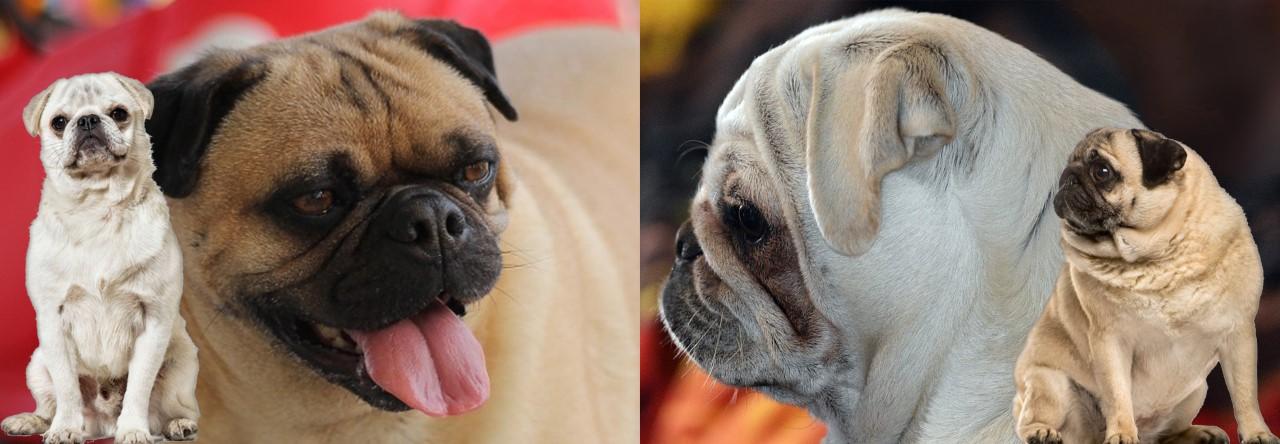
Summary of Kennel Club Breed Records: Pug 2020 A new research report, Summary of Kennel Club Breed Records: Pug 2020, has been produced by Cassandra Smith. The report utilises publicly available data offered by The Kennel Club to describe health and breeding-related statistics and information. The author’s previous reports on similar and other breeds have been well-accepted, with appropriate methodology and presentation.  This analysis includes KC-registered dogs with statistics presen
HGTD This Week: NEW feature - Key Comments In our continued effort to improve HGTD, we have a new addition to our breed-specific testing information. Complementing the Breed Relevance Ratings, the new Key Comments feature highlights in the breed search, any tests that have a comment related to the relevance of the test for that breed. Users can then click through to the phenes information to not only read the Key Comment, but also other general, and breed-specific information about the p
As part of IPFD's support of new research and research participation, we welcome this guest blog by Quinn Rausch. The Puppy Project is an opportunity for  breeders in the US and CA to contribute to important research on puppy socialization and behaviour development. The content of this blog, including  external links and all information was provided by Quinn Rausch, and all questions should be directed to them.  Background to the Puppy Project To what extent does a young puppy’s experi
Is it "tough talk" or "open dialogue" - and why is it a challenge in the dog world?   As often happens, the same topic comes up several times in a short space of time - and from different sources and angles. Someone asked me why do many kennel clubs not record or link any health information to pedigrees, when in most countries kennel clubs are under a mandate to not only register dogs, but also to protect the health of those for whom they are responsible?  Explanations might inclu
Recently we have had questions from dog breeder health advisors about using inbreeding tools, particularly pedigree-based tools such as estimating Coefficients of Inbreeding (COI). This blog discussion describes COIs, some advantages and disadvantages, and provides thoughts on usage.    There are several resources available to both individual breeders and breed organizations (clubs and kennel clubs) that can help to monitor and track genetic diversity, and estimate an individual dog's

Blogs Disclaimer
The contents of these blogs are for informational purposes only and represent the opinion of the author(s), and not that of the International Partnership for Dogs (IPFD). This is not intended to be a substitute for professional, expert or veterinarian advice, diagnosis, or treatment. We do not recommend or endorse any specific tests, providers, products, procedures, opinions, or other information that may be mentioned on, or linked to from these blogs.

Disclaimer
All materials on this site are the property of their respective authors and may not be reprinted without the author's written permission, unless otherwise indicated. The views and opinions expressed by the authors and those providing information or comments on this website are theirs alone, and do not necessarily reflect the views, opinions or positions of the International Partnership for Dogs (IPFDogs) or DogWellNet.com. We make no representations as to accuracy, completeness, timeliness, suitability or validity of any information and will not be liable for any errors, omissions, or delays in this information or any losses, injuries or damages arising from its display or use. All rights reserved. DogWellNet © 2014 - 2026
Find Us On
Contact Us
Questions? Comments? Looking to get involved in our work? We’d like to hear from you!
or if you prefer feel free to reach out to us on social media.

Powered by Invision Community

Important Information

By using this site, you agree to our Terms of Use.

Configure browser push notifications

Chrome (Android)
  1. Tap the lock icon next to the address bar.
  2. Tap Permissions → Notifications.
  3. Adjust your preference.
Chrome (Desktop)
  1. Click the padlock icon in the address bar.
  2. Select Site settings.
  3. Find Notifications and adjust your preference.