






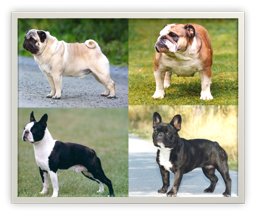
 An investigation would curb problems with dog breeding through monitoring criteria and ethical delegation
 An investigation would curb problems with dog breeding through monitoring criteria and ethical delegation
September 2, 2020, from: Dated link: https://www.ruokavirasto.fi/sv/privatkunder/sallskaps--och-hobbydjur/nyheter/en-utredning-skulle-tygla-problem-med-hundavel-genom-overvakningskriterier-och-etisk-delegation/ See Internet archives: An investigation would curb problems with dog breeding through monitoring criteria and ethical delegation - Livsmedelsverket (archive.org)
NOTE from IPFD: The summary page posted by the Finnish Food Authority shown below is translated by Google from the original.
According to an investigation carried out by the Natural Resources Institute (Luke) together with the Ministry of Agriculture and Forestry (JSM) and the National Food Administration, the aim is to eliminate dog breeding that causes the animal suffering and hereditary diseases with the help of monitoring criteria. For some dog breeds, the criteria would exclude a large proportion of the dogs from breeding. The inquiry also recommends that an ethical delegation be established for breeding and that the veterinarians' reporting obligation be extended.
The monitoring criteria described in the investigation focus on problems due to shortened skull, but also include criteria that can be applied to a larger group of dogs. Shortened skull, ie. excessive brachycephaly, increases the risk of the animal suffering from a number of hereditary defects and diseases that impair the animal's quality of life and cause the animal suffering and significant inconvenience. The problems are associated with, among other things, the animal's breathability, set of teeth, reproductive ability and the health of the eyes, skin and digestive tract. The investigation states that the breeding of an excessively short skull shape can be considered contrary to Finland's current Animal Welfare Act. The Animal Welfare Act prohibits such breeding that may cause the animal suffering or significant inconvenience to the animal's health or well-being.
According to the proposed monitoring criteria, a breeding dog must not show serious malformations associated with bracycephalic anatomy that increase the risk of significant harm to the animal's well - being, or have diseases or symptoms due to excessively short skull shape. The criteria are based on the principle that a dog with a minor defect or disease can be used for breeding if the other party in the combination does not have the same defect or disease.
For some of the criteria, a transition period of e.g. five years, when breeders have time to find individuals who meet the monitoring criteria for breeding and to refine the dogs' anatomy so that it becomes healthier. The breeder must be able to show that the animals he or she uses for breeding meet the requirements of animal welfare legislation. For many breeds, this means that breeding dogs must undergo several health examinations before mating.
The inconveniences to well-being caused by excessively short skull shape, as well as other exaggerated traits, can be permanently averted only by changing these traits in a more normal direction by means of breeding. Due to the monitoring criteria, a large proportion of dogs are eliminated from breeding within certain breeds. In the case of some breeds, in the light of current knowledge, it is also not possible to change the shape of the skull through breeding, as these breeds do not have any genetic forms that give a normal skull. In such a situation, the processing can continue e.g. using racial crosses.
In connection with the introduction of the monitoring criteria, it is also necessary to consider various ways of intervening in the import of such animals for which the breeding does not meet the requirements of Finnish animal welfare legislation. A step in this direction is to increase the sellers 'obligation to provide information about the problems that in the investigation are said to cause significant inconvenience to the well-being of dogs and their significance for the dogs' well-being.
The investigation also proposes an obligation for the treating veterinarian to report hereditary defects and diseases that have required care of an animal that is used for breeding or that impairs the animal's quality of life. In addition, the establishment of an ethical delegation for breeding is recommended. This is an impartial, consulting expert body that assists the authorities in difficult issues concerning animal breeding.
In order to make the boundary between permitted and prohibited breeding clearer, the inquiry considers it necessary to develop legislation on animal welfare. In connection with the new law on animal welfare, an ordinance is needed on which the supervision that enforces the law can be based, as well as instructions on supervision. The regulation shall prescribe in more detail, for example, the hereditary defects to which the veterinarians' obligation to report applies. It must also be prescribed for such defects that clearly exclude the animal from breeding.
More information:
Chief Inspector Sari Salminen, tel. +358 29 520 4971, sari.salminen@ruokavirasto.fi (Animal Welfare Monitoring)
Specialist Tiina Pullola, tel. +358 29 516 2108, tiina.pullola@mmm.fi (Animal Welfare Law )
Researcher Riitta Kempe, .kempe @ luke.fi (the author of the report)
-
Read more: Preliminary investigation of problems in connection with dog breeding and methods of intervention (pdf, Finnish)
-
See The English Translation of the full 89 page report.
- This translation has been facilitated by the International Partnership for Dogs and posted at: https://dogwellnet.com/content/international-actions/extremes-of-conformation-brachycephalics/finnish-investigation-problems-and-means-of-intervention-in-the-breeding-of-dogs-r708/
- We extend our thanks to author, Katariina Mäki for her assistance with the translation.
- Disclaimer: The IPFD and Ms. Mäki take no responsibility for the accuracy of the translation and readers are directed to the Finnish version as the true source. This version was based on a translation from: https://www.pdfwordconvert.com/app/convertprocess.
IPFD NOTE: Table of Contents of the investigation file below:



.png.2e5ef23577d5471a291d9cb2e13e95ab.png)
Recommended Comments
Join the conversation
You can post now and register later. If you have an account, sign in now to post with your account.
Note: Your post will require moderator approval before it will be visible.