






Pedigree Breeds
184 entries in this category
-
- Last comment date
- Title
- Start Date
- Most Commented
- Most Viewed
- Last Updated
- Publish Date
- Brief Description
- Content
- Links to Breed Descriptions
- Other Names for Breed
- Country of Origin and Parent Breed Club
- Health and Well-Being
- Breed-Specific Articles
- Breed Standards
- Breed-Specific Statistics
- Breeding/Health Strategy Documents
- Breed-Specific DNA Tests
- Other Breed-Specific Webpages
- Breed-Specific Research
- Breed Clubs
- Custom
-
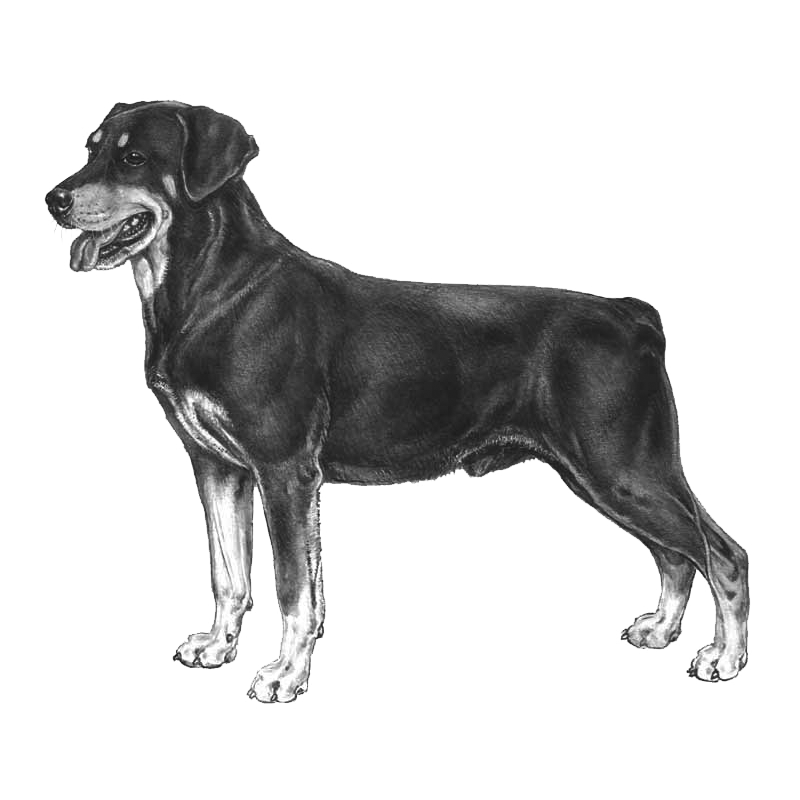
The Smaland Hound (Swedish: Smålandsstövare) is a breed of dog that originated in Sweden in the 16th century. Thought to be the oldest scent hound breed native to Sweden, it was first recognized by the Swedish Kennel Club in 1921.
-
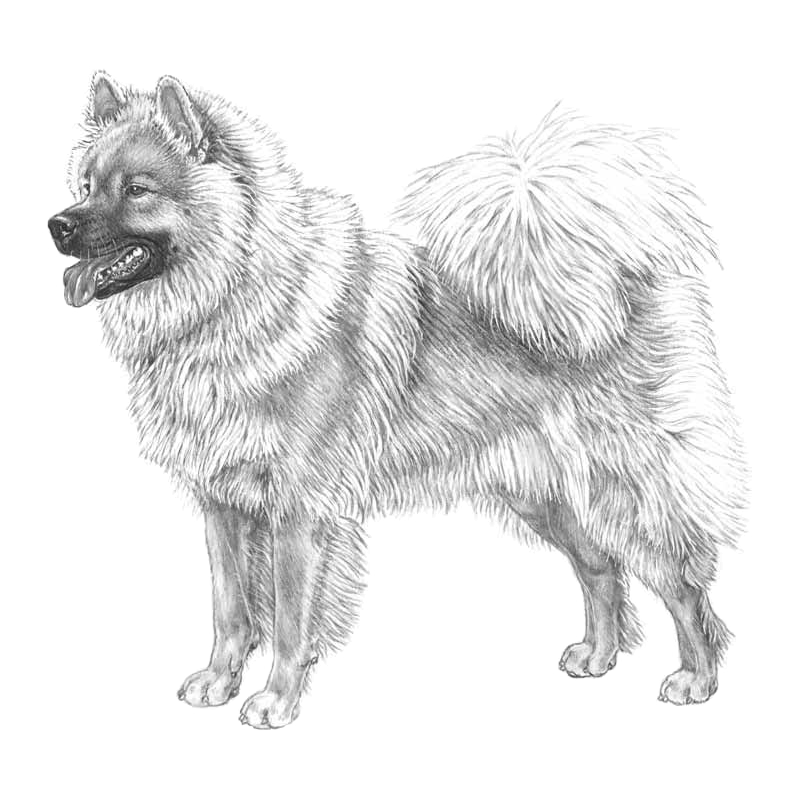 Balanced, well constructed medium sized dog of Spitz type with prick ears and coat in varied colours. Length of coat should be such as still to reveal the body proportions. With medium bone. Balanced, well constructed medium sized dog of Spitz type with prick ears and coat in varied colours. Length of coat should be such as still to reveal the body proportions. With medium bone. Self-assured, calm, even tempered with high resistance against any provocation.
Watchful and alert without being noisy. Very strongly developed link to his family. Reserved towards strangers without being aggressive. No hunting instinct. For the full development of these qualities, the Eurasian needs constant close domestic contact with his family and understanding, yet consistent training.
-
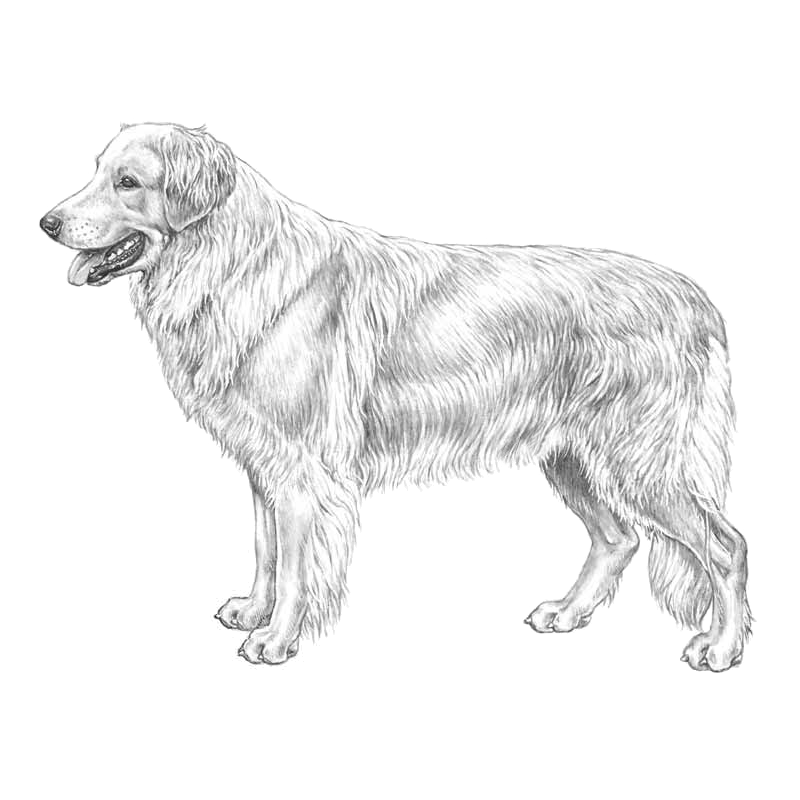
The Hovawart is a powerful, medium size, slightly elongated, long-haired working dog. Difference between sexes is clearly recognizable, specially in shape of head and build of body. Recognized working dog with versatile usage. Kind and even disposition. Has protective instinct, self-confidence and ability to take stress; of medium temperament; combined with a very good nose. His balanced body proportions and special devotion to his family make him an outstanding companion, watch, guard, tracking and rescue-dog.
-
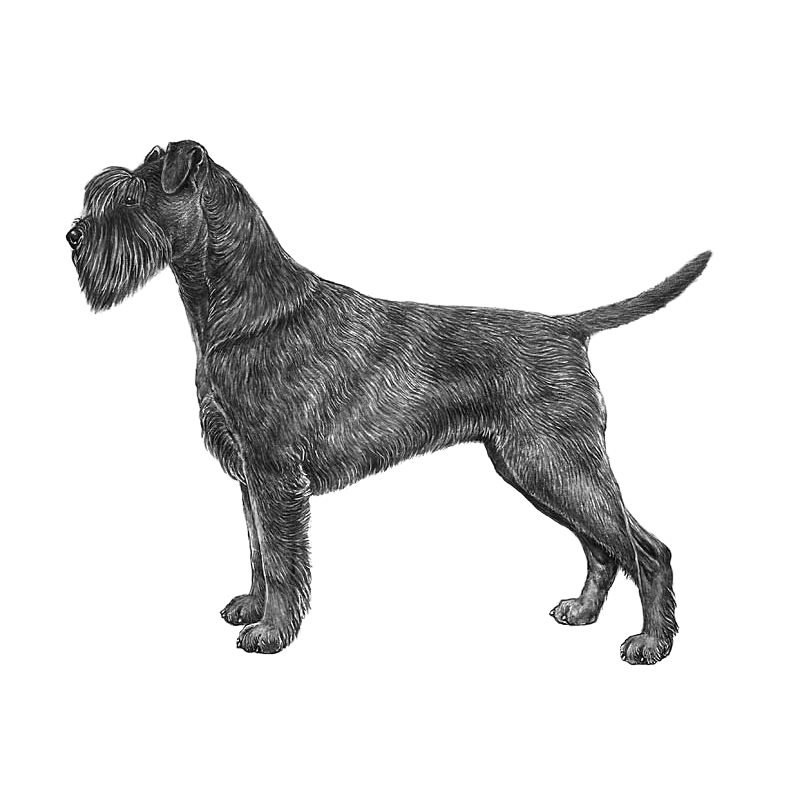
Medium sized, strong, stocky rather than slim, rough haired. Typical characteristics are his lively temperament, coupled with placid composure. Typical are his good nature, his playfulness and his proverbial devotion to his master. He loves children, is incorruptible, alert, yet not noisy.
Source: http://www.fci.be/en/nomenclature/SCHNAUZER-182.html
-
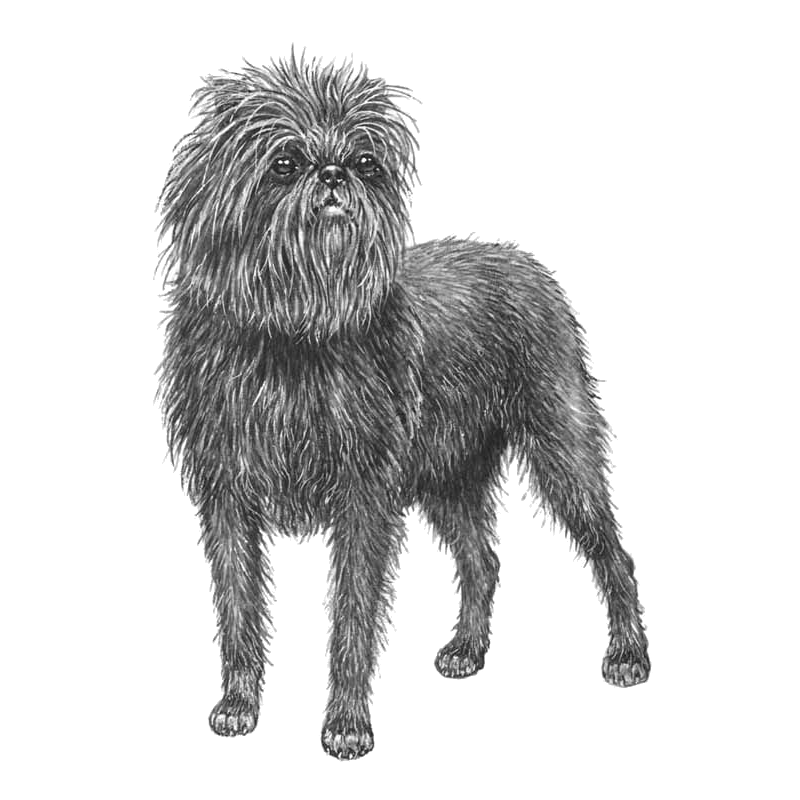
The Affenpinscher is rough haired, small and compact with a monkey-like expression. Fearless, alert, persistent and devoted, sometimes full of quick-tempered passion. He is an agreeable family dog in all aspects.
-
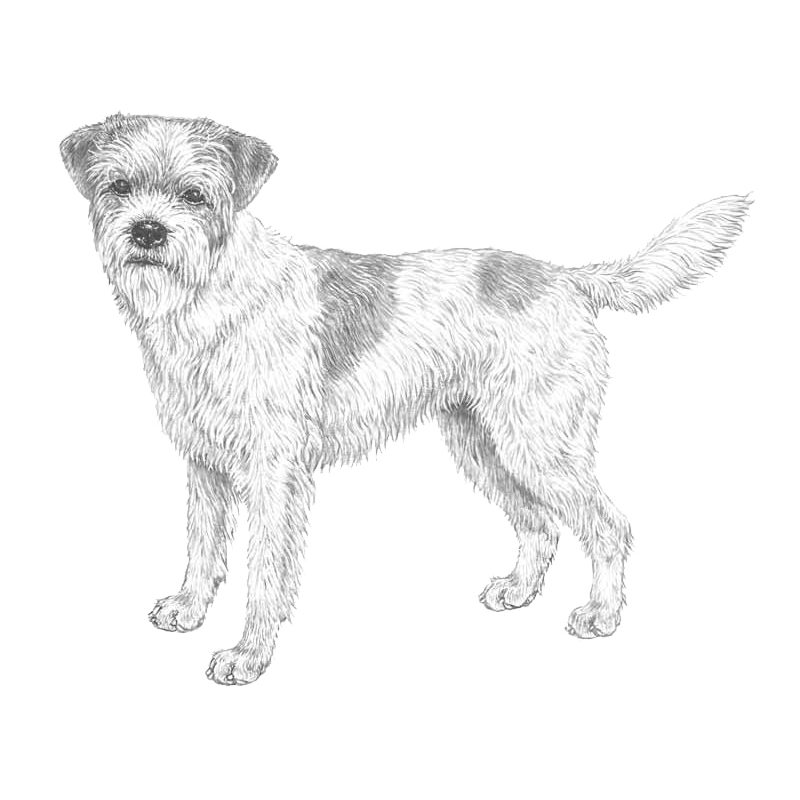
Medium size. There are two separate varieties, distinguished by coat type: Rough coat and Smooth coat. Adaptable, docile and highspirited companion and house-dog, somewhat reserved about strangers, with a moderate hunting instinct. Aggressiveness and timidity not desired.
Source: http://www.fci.be/en/nomenclature/KROMFOHRLANDER-192.html
-
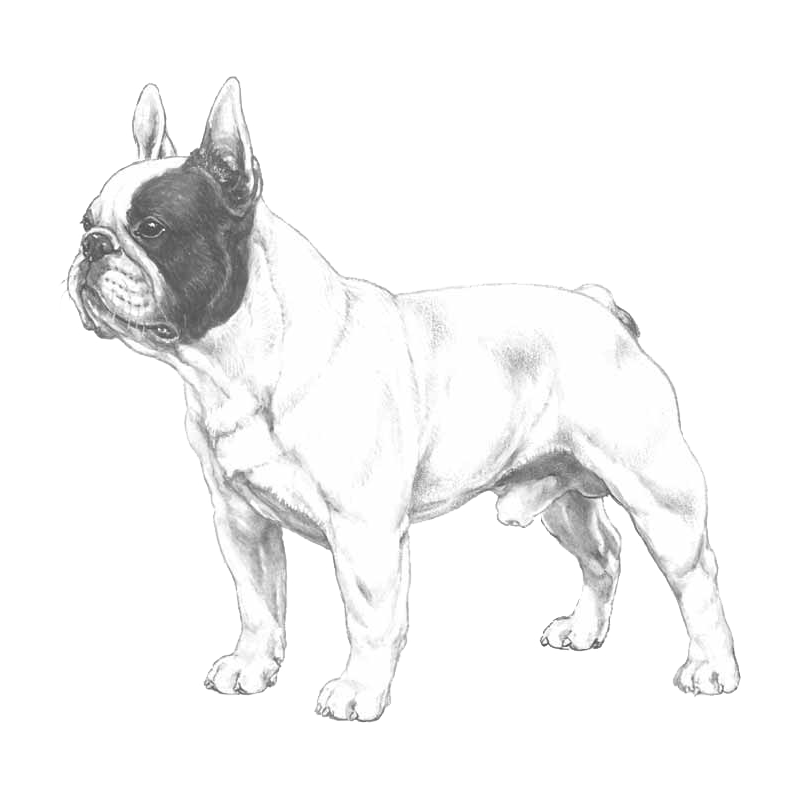
The French Bulldog is a small breed of domestic dog. "Frenchies" were the result in the 1800s of a cross between bulldog ancestors imported from England and local ratters in Paris (France).
-
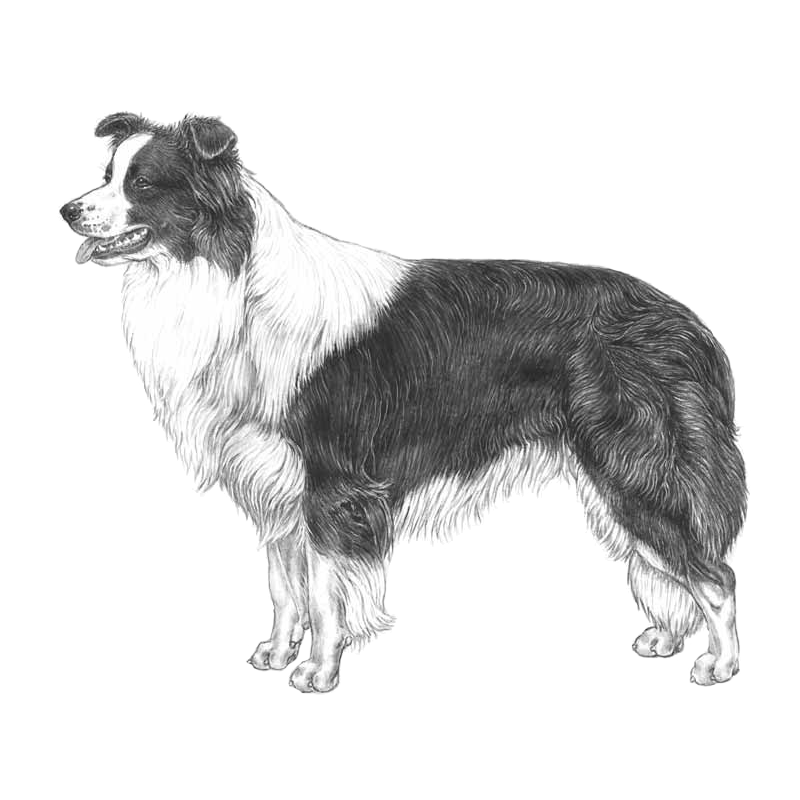
This highly intelligent dog has an inborn instinct to work, and responds readily and eagerly to training. He was originally used for working sheep in the hills and mountains, mainly in the border counties of England, Scotland and Wales, but his prowess as a working sheepdog has now spread countrywide throughout Britain and even farther afield.
Source: The Kennel Club
-
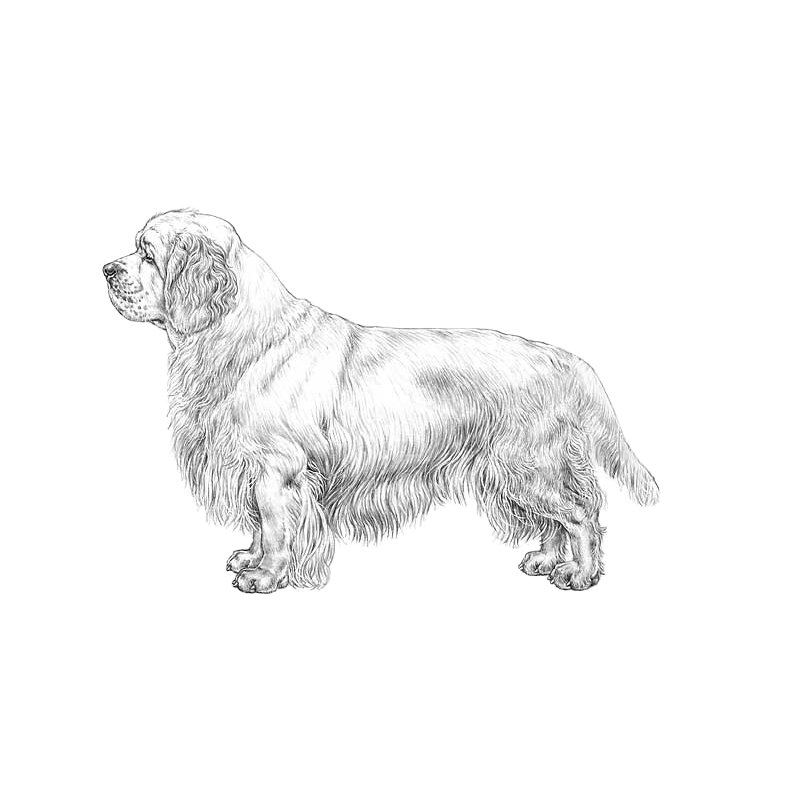
Said to have come in the first place from France more than 200 years ago, the Clumber was brought to Great Britain by the Duke of Newcastle and bred at his family home of Clumber Park in Nottinghamshire.
Source: The Kennel Club
-
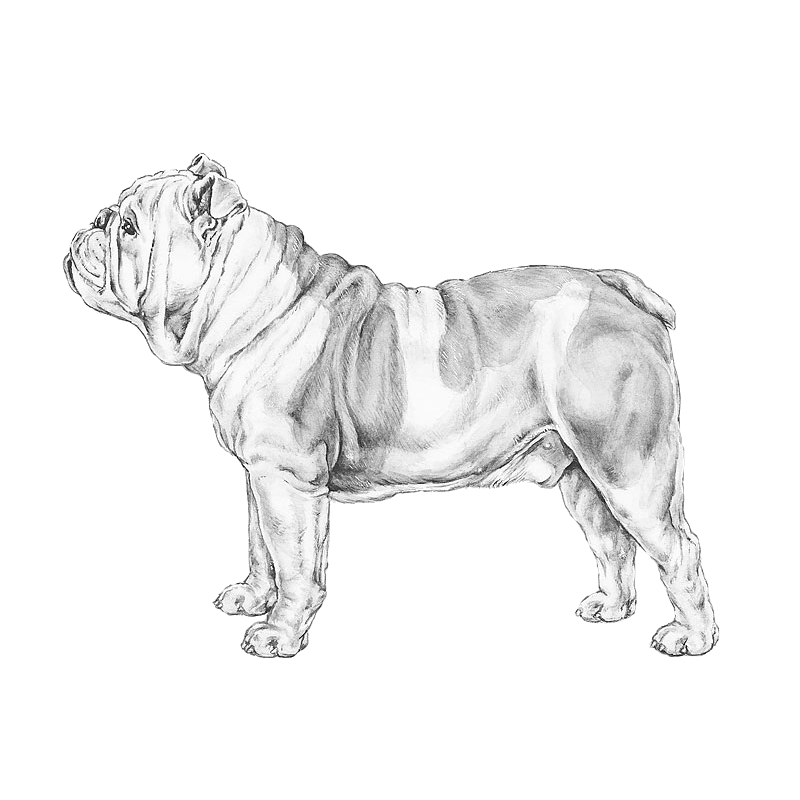
One of Britain’s oldest indigenous breeds, the Bulldog is known as the National dog of Great Britain and is associated throughout the world with British determination and the legendary John Bull. The Bulldog was first classified as such in the 1630s, though there is earlier mention of similar types referred to as bandogs, a term reserved today for a type of fighting dog.
Source: The Kennel Club
-
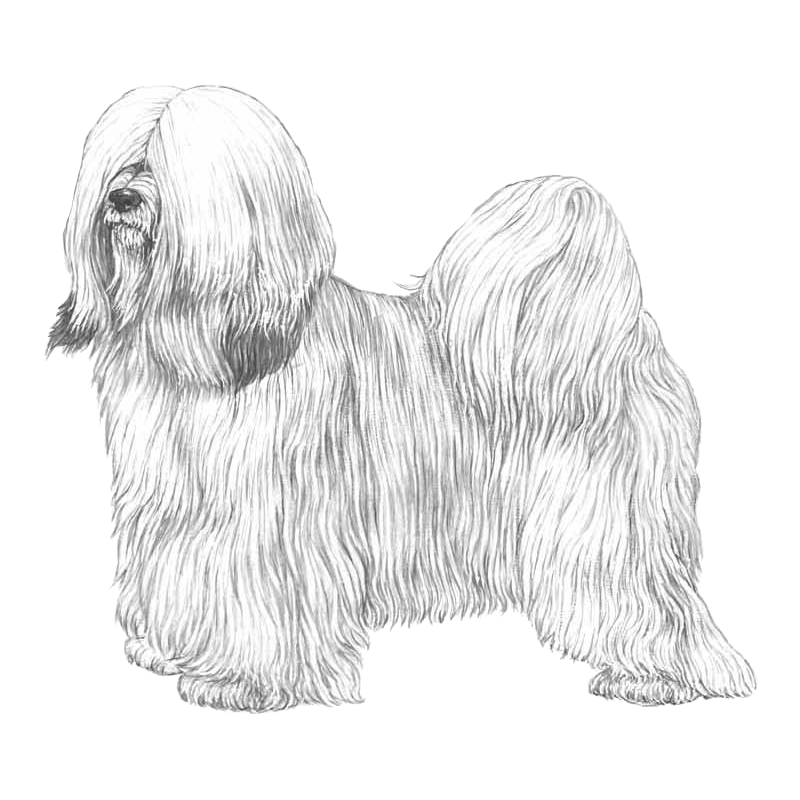
The Tibetan Terrier is a medium-size breed of dog that originated in Tibet. Despite its name, it is not a member of the terrier group. The breed was given its English name by European travelers due to its resemblance to known terrier breeds. The Tibetan name for the breed, Tsang Apso, roughly translates to "shaggy or bearded ("apso") dog, from the province of Tsang".
-
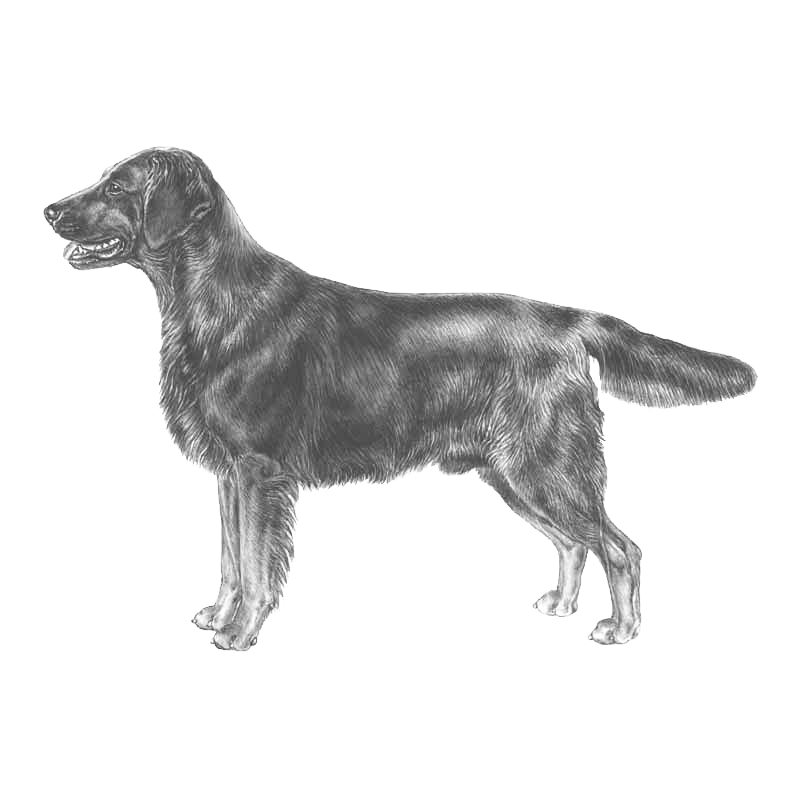
The Flat-Coated Retriever is a gundog breed originating from the United Kingdom. It was developed as a retriever both on land and in the water.
-
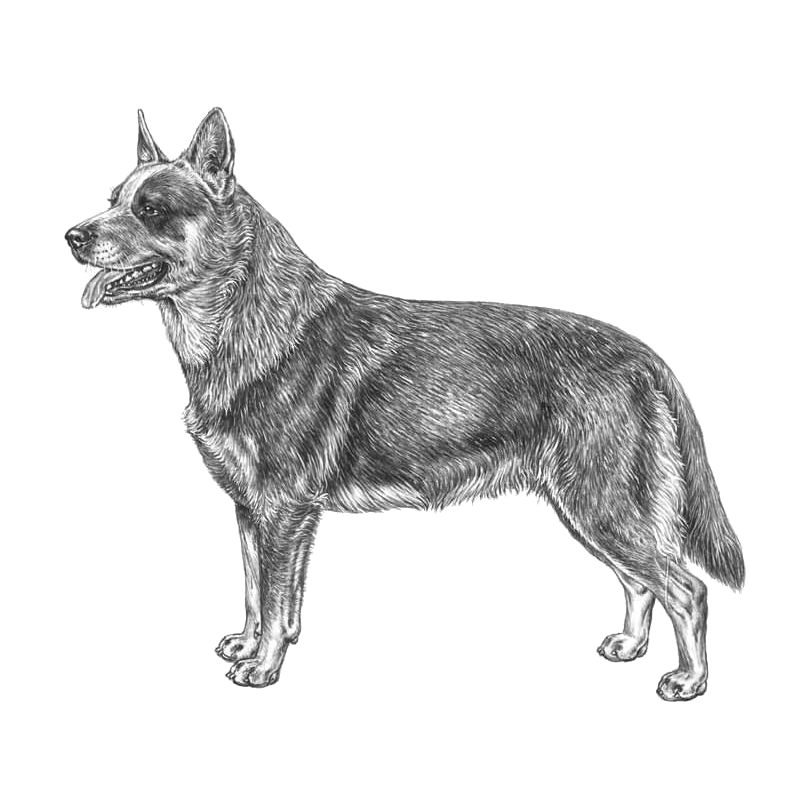
The Australian Cattle Dog (ACD), or simply Cattle Dog, is a breed of herding dog originally developed in Australia for droving cattle over long distances across rough terrain.
Source: Wikipedia
-
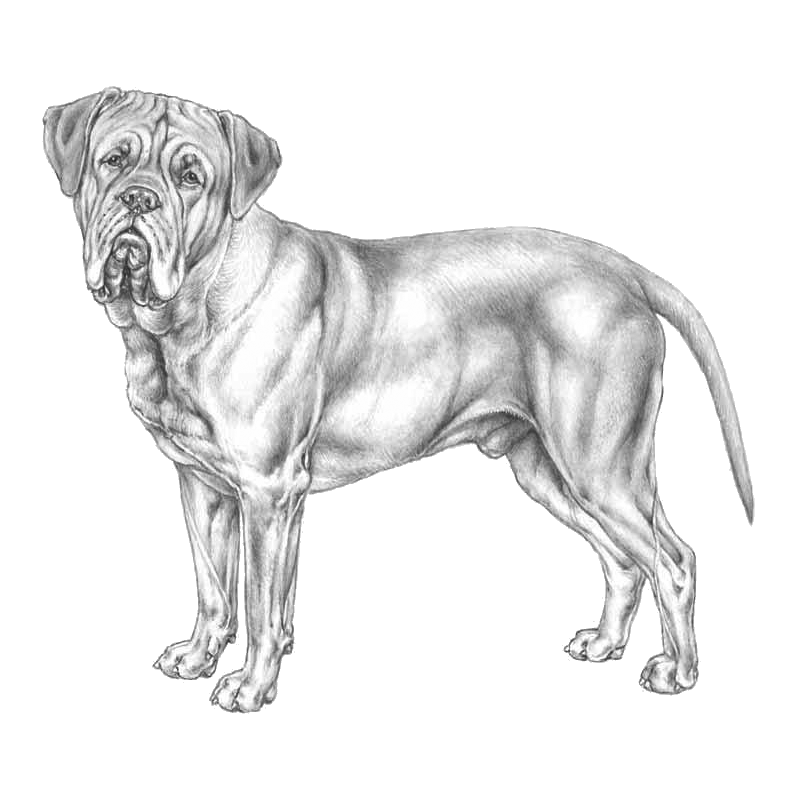
The Dogue de Bordeaux, Bordeaux Mastiff, French Mastiff or Bordeauxdog is a large French Mastiff breed—and one of the most ancient French dog breeds.
Source: Wikipedia
-
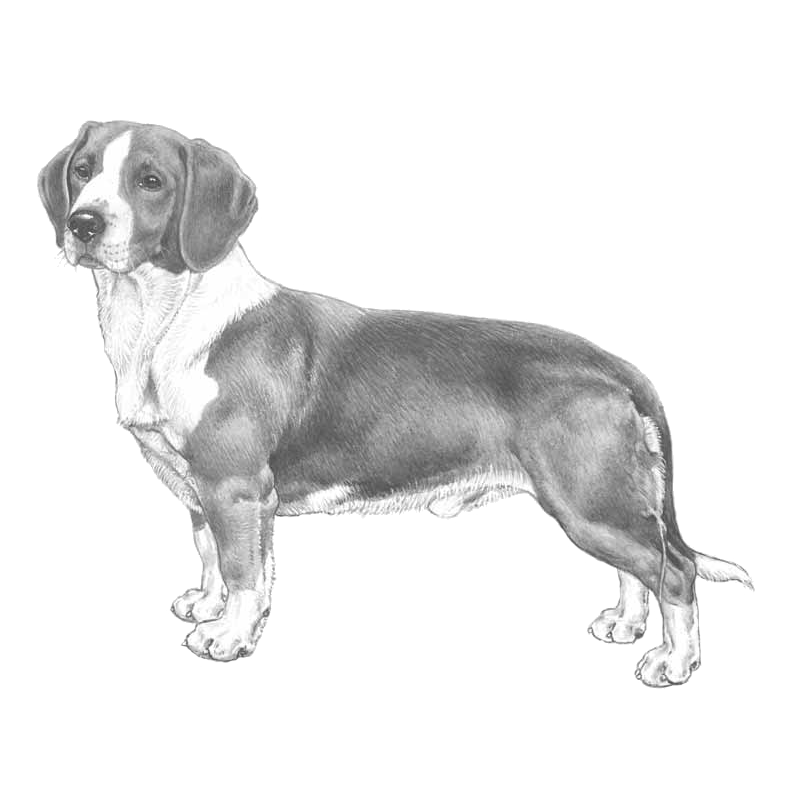
The Drever is a breed of dog, a short-legged scenthound from Sweden used for hunting deer and other game.
Source: Wikipedia
-
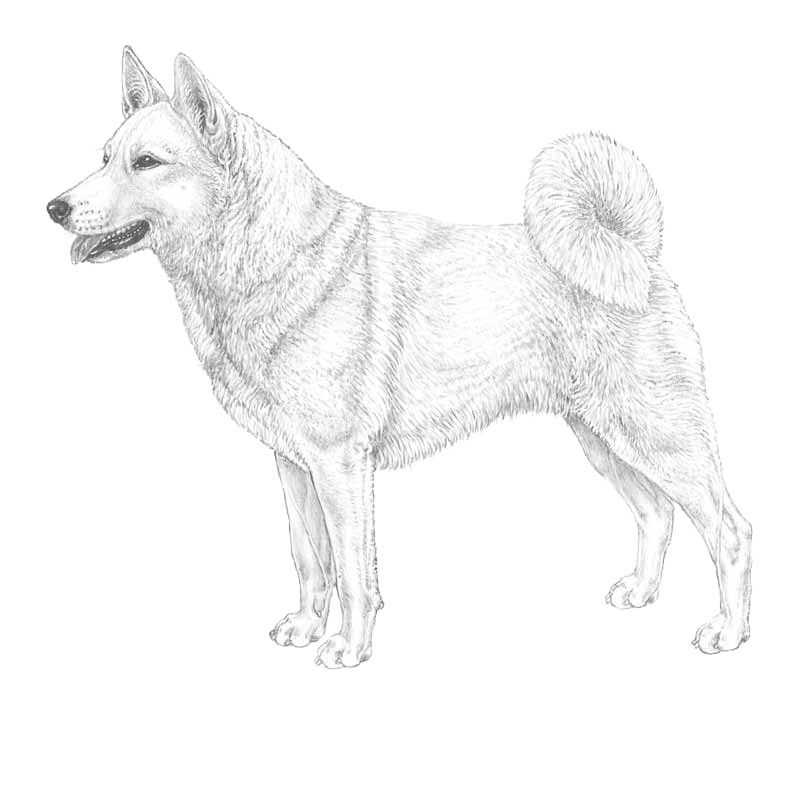
- The White Elkhound derives from the grey Jämthund and the grey Norwegian Elkhound.The type is like the Jämthund, regarding both size and proportions. It is a distinct hunting dog. In addition to hunting moose, the breed is also good at hunting bears, lynx and badgers. Source: SKK
The Svensk vit älghund is recognized by the NKU and belongs to group 5. The breed is not recognized by the FCI. Source NKU: https://www.skk.se/en/NKU-home/nordic-dog-breeds/sweden/svensk-vit-alghund/
-

Many hunters consider the Finnish Hound to be the world's best game-pursuing breed at the moment.
The Finnish Hound is a native breed and one of the most popular dog breeds in Finland. It is used almost solely to hunt hares or foxes. It works independently, tracking either earth or airborne scent and will pursue game and bark passionately. The long hunting season for hares and foxes contribute to the breed's popularity. The Finnish Kennel Club registered 1,475 Finnish Hounds in 2012. In total, 20,030 Finnish Hounds were registered in 2003-2012.
From: Kennelliito (The Finnish Kennel Club, IPFD Founding Partner) Native Breeds
-
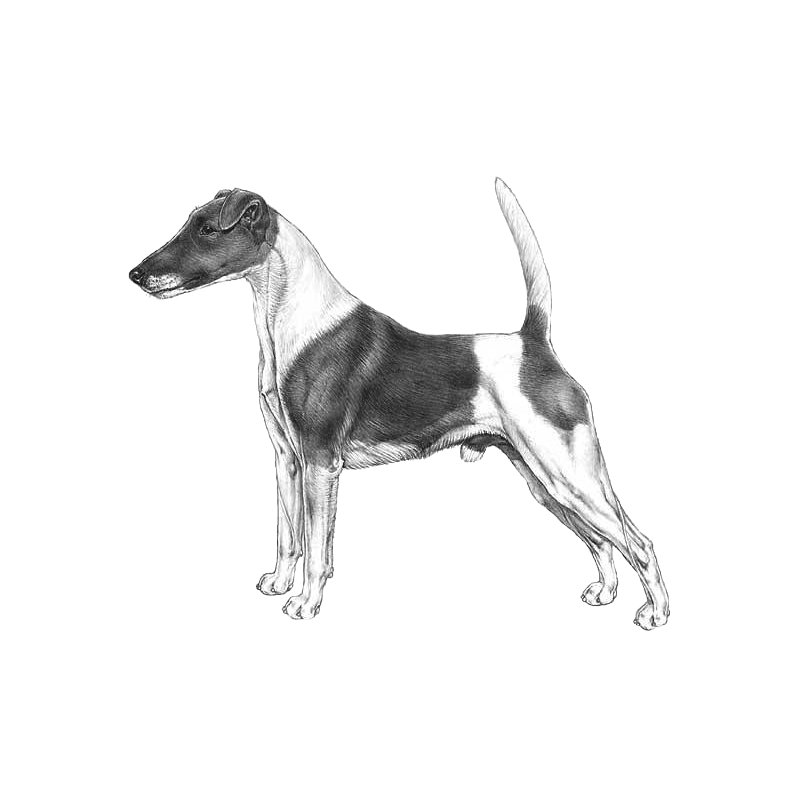
It was the first breed in the fox terrier family to be given official recognition by The Kennel Club (circa 1875; breed standard 1876). It is well known, and although not a widely popular breed today outside of hunting and show circles, it is extremely significant due to the large number of terriers believed descended from it.
-
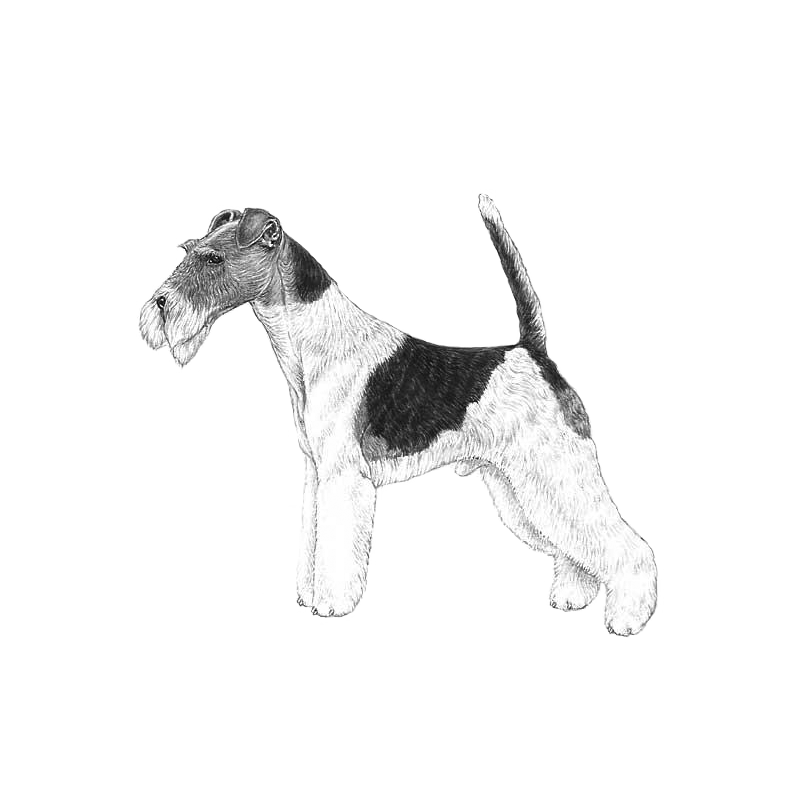
It is a fox terrier, and although it bears a resemblance to the smooth fox terrier, they are believed to have been developed separately.
-
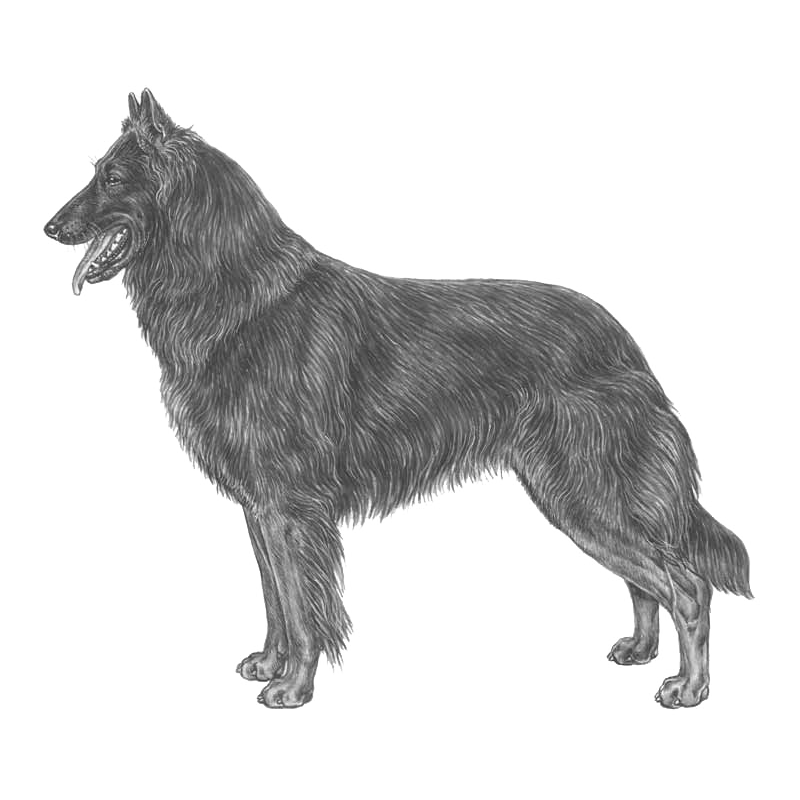
The Groenendael /ˈɡroʊnɨndæl/ is a dog that is included in the Belgian Shepherd breed. In the United States it is generally recognized under the name Belgian Sheepdog.
Source: https://en.wikipedia.org/wiki/Groenendael_(Belgian_Shepherd_Dog)
-
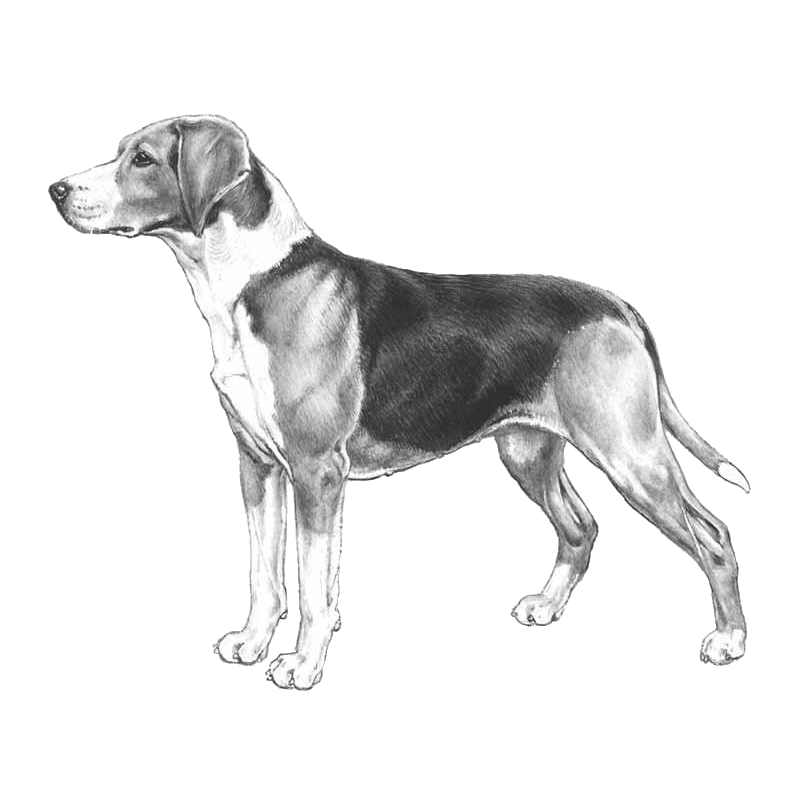
The Hamiltonstövare is above all a working dog, bred for hunting fox and hare, working singly or in pairs rather than in a pack. The combination of working ability and a lovely temperament makes the Hamiltonstövare a pleasant shooting dog. Standing 19 to 24 inches (49 to 61 centimetres) at the withers, makes him one of the larger stövare.
source: http://caninechronicle.com/uncategorized/masterminds-the-hamilton-hound/
-
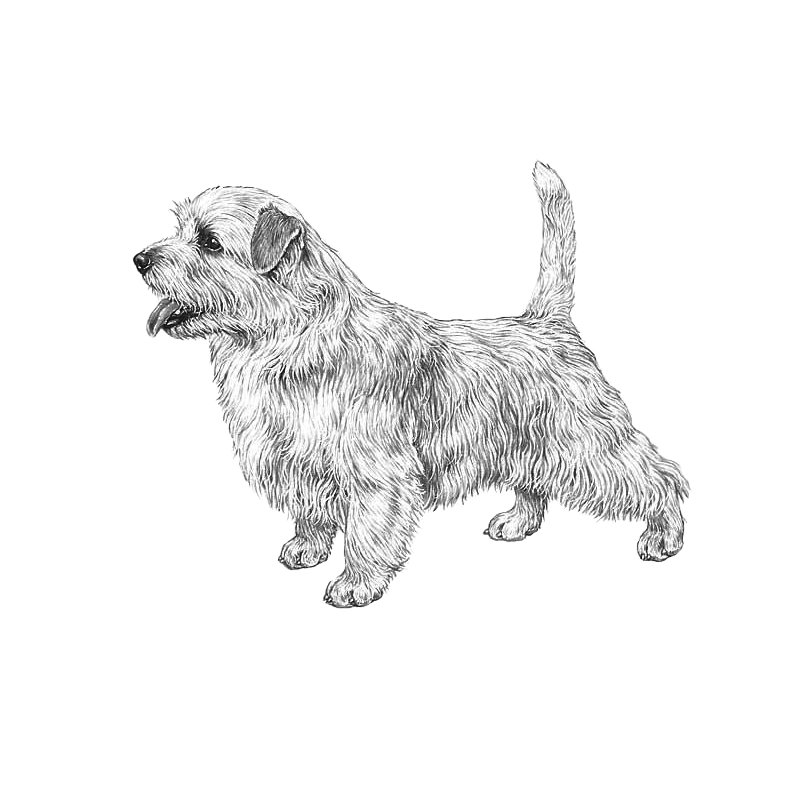
Prior to gaining recognition as an independent breed in 1960, it was a variety of theNorwich Terrier, distinguished from the "prick eared" Norwich by its "drop ears" (or folded ears). Together, the Norfolk and Norwich Terriers are the smallest of the working terriers.
-
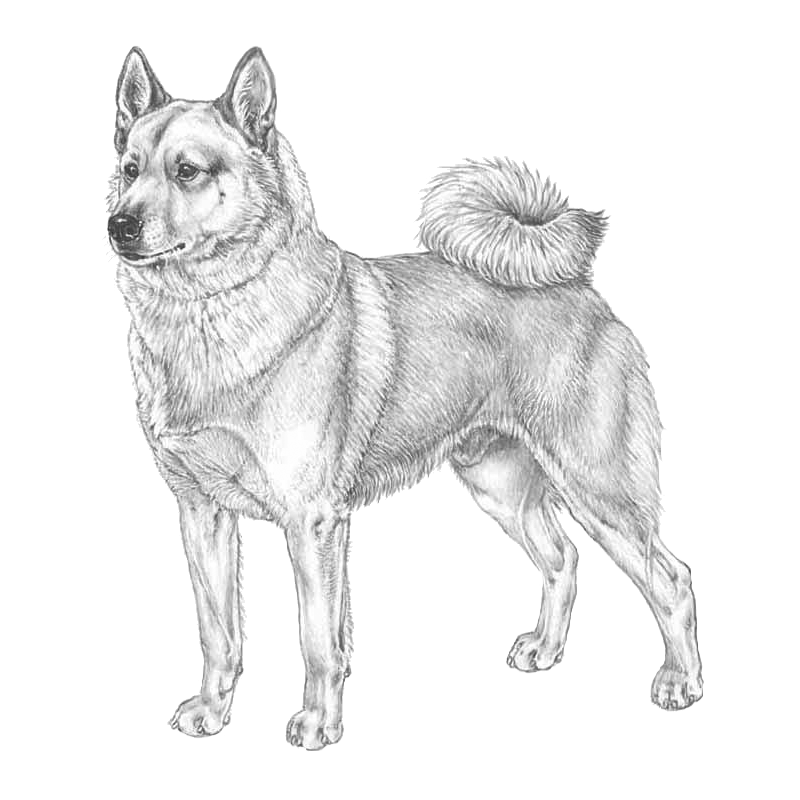
The Norwegian Buhund is a breed of dog of the spitz type. It is closely related to the Icelandic Sheepdog and the Jämthund. The Buhund is used as an all purpose farm and herding dog, as well as watch dog.
-
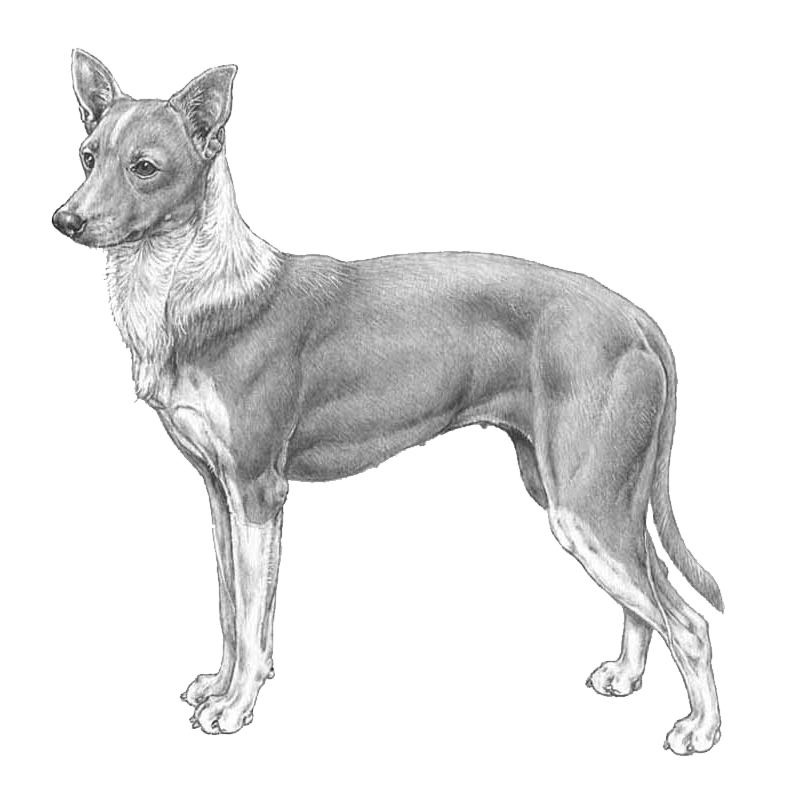
The Portuguese Podengo is an ancient multi-sensory hound breed of dog from Portugal. As a breed, the Podengo is divided into three size categories that are not interbred: small, medium and large.
-
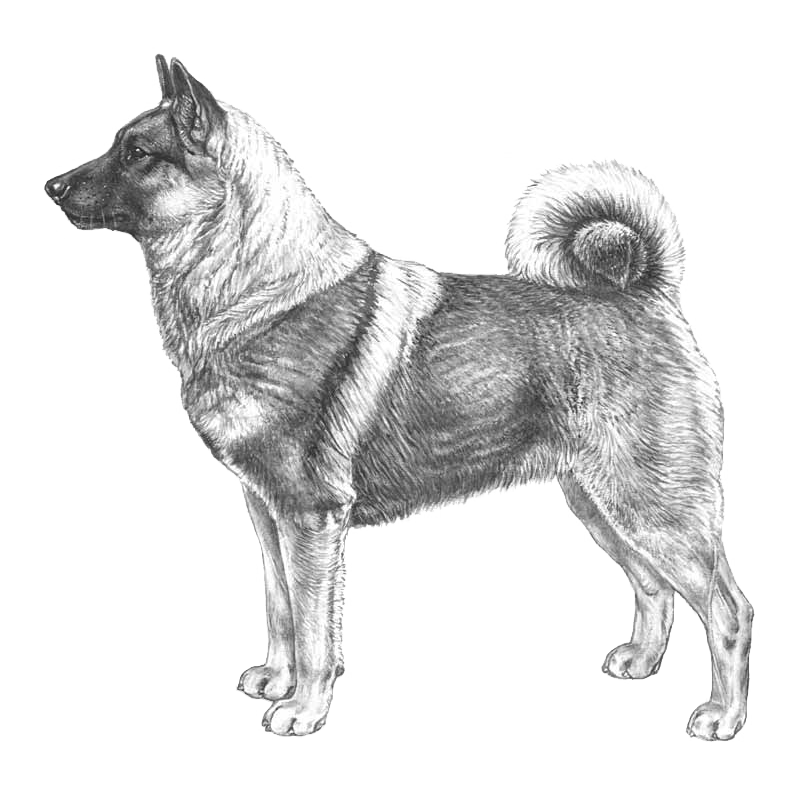
The Norwegian Elkhound is one of the ancient Northern Spitz-type breed of dog and is the National Dog of Norway. The Elkhound has served as a hunter, guardian, herder, and defender.
Source: Wikipedia