






Pedigree Breeds
184 entries in this category
-
- Last comment date
- Title
- Start Date
- Most Commented
- Most Viewed
- Last Updated
- Publish Date
- Brief Description
- Content
- Links to Breed Descriptions
- Other Names for Breed
- Country of Origin and Parent Breed Club
- Health and Well-Being
- Breed-Specific Articles
- Breed Standards
- Breed-Specific Statistics
- Breeding/Health Strategy Documents
- Breed-Specific DNA Tests
- Other Breed-Specific Webpages
- Breed-Specific Research
- Breed Clubs
- Custom
-
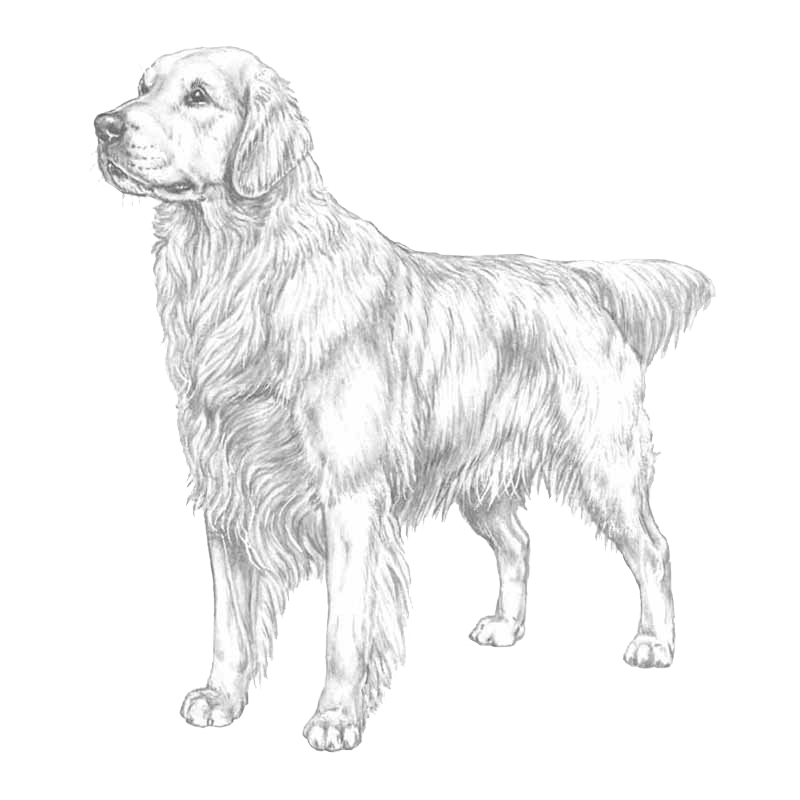
The Golden Retriever is a large-sized breed of dog bred as gun dogs to retrieve shot waterfowl such as ducks and upland game birds during hunting and shooting parties, and were named 'retriever' because of their ability to retrieve shot game undamaged.
-
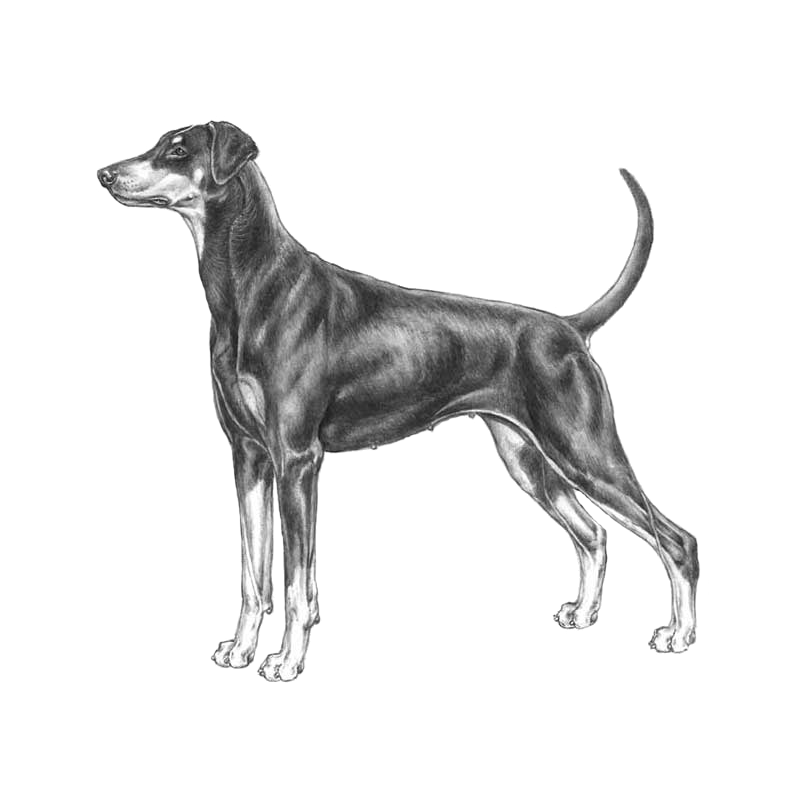 The Dobermann breed requires a medium sized, powerful, muscular dog. Despite his substance he shall be elegant and noble, which will be evident in his body line. He must be exceptionally suitable as a companion, protection and working dog and also as a family dog.
The Dobermann is the only German breed which bears the name of its original breeder, Friedrich Louis Dobermann (02.01.1834 – 09.06.1894). He was believed to be a tax collector, offal abbatoir manager (knacker) and a part time dog catcher, legally able to catch all stray dogs. He bred with animals from this reservoir that were particularly sharp. The so called “butcher’s dogs” which were already considered a relatively pure breed at that time, played a most important role in the origination of the Dobermann breed.
Source: FCI
-
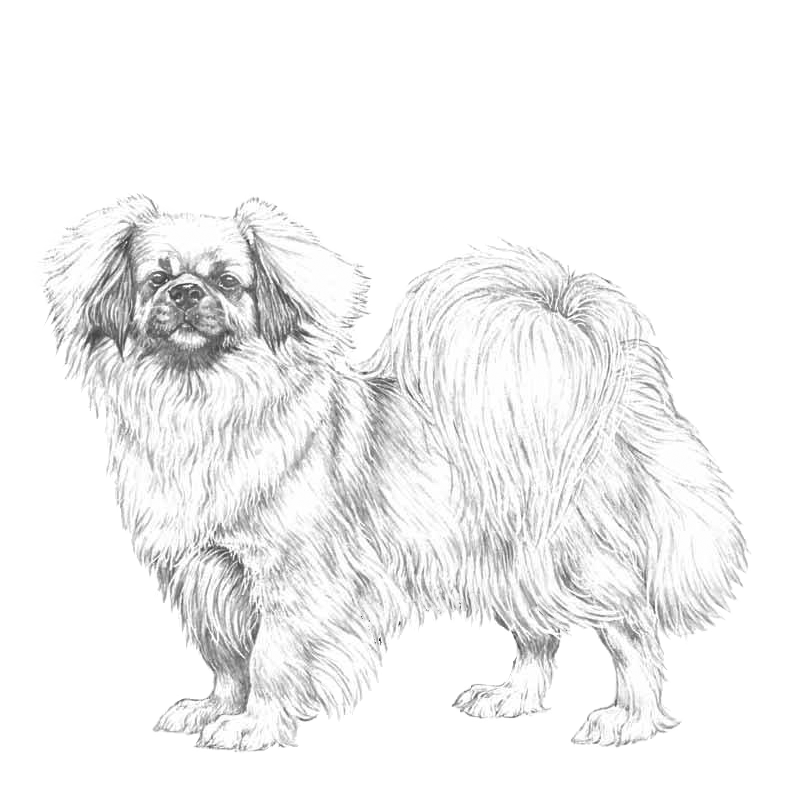
The Tibetan Spaniel is a breed of assertive, small, intelligent dogs originating over 2,500 years ago in the Himalayan mountains of Tibet. They share ancestry with the Pekingese, Japanese Chin, Shih Tzu, Lhasa Apso, Tibetan Terrier and Pug.
-
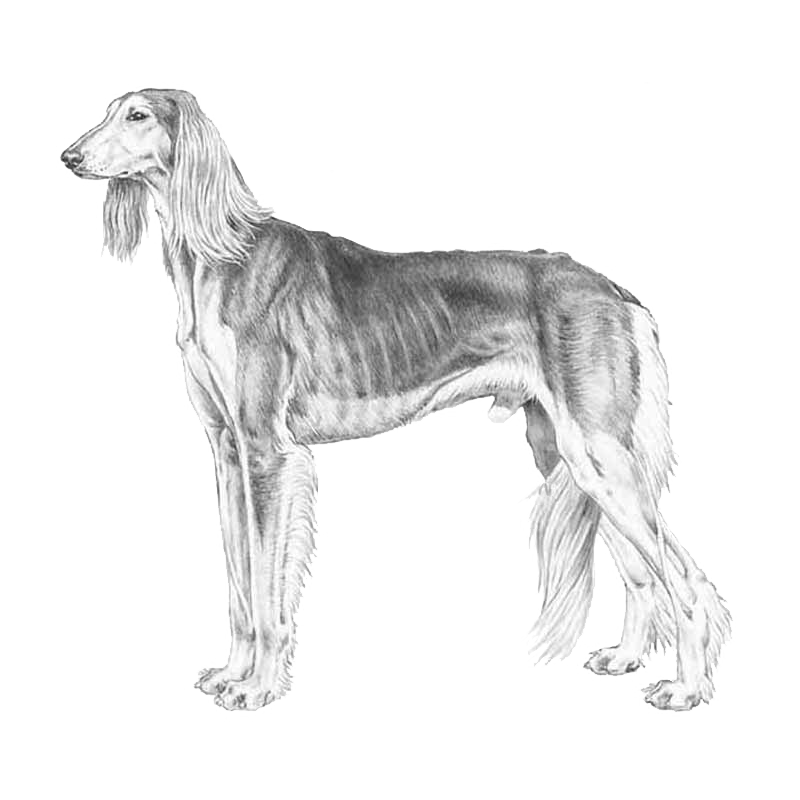 Salukis vary in type and the variation is desired and typical for the breed. The reason for the variation is the special place held by the Saluki in the Arab tradition and the immense size of the Middle East area where the Saluki has been used as a hound of the chase for thousands of years. Photo: Jessica Bolander, emoticon.se
The whole appearance of this breed should give an impression of grace and symmetry and of great speed and endurance coupled with strength and activity. Smooth variety: the points should be the same with the exception of the coat which has no feathering. Reserved with strangers, but not nervous or aggressive. Dignified, intelligent and independent.
-
- international breed collaboration
- swedish insurance data
- australian shepherd
- health surveys
- australia
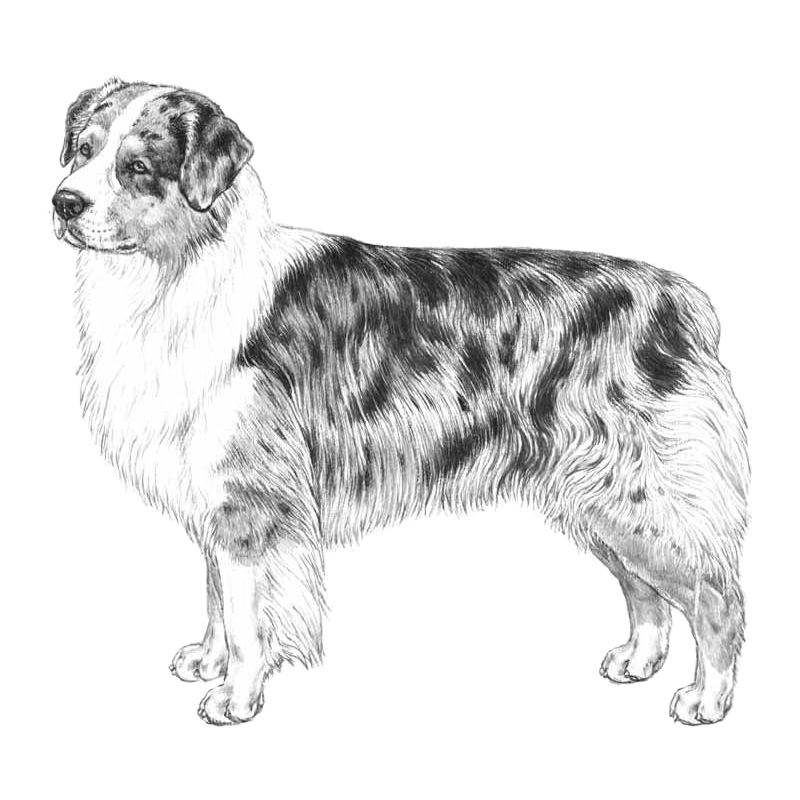
The Australian Shepherd, commonly known as the Aussie, is a medium size breed of dog that was developed on ranches in the western United States. Despite its name, the breed was not developed in Australia, but rather in the United States where they were seen in the West as early as the 1800s.
Source: Wikipedia
The Australian Shepherd was given its name because of the association with Basque Sheepherders who came to the United States from Australia in the 1800’s.
-
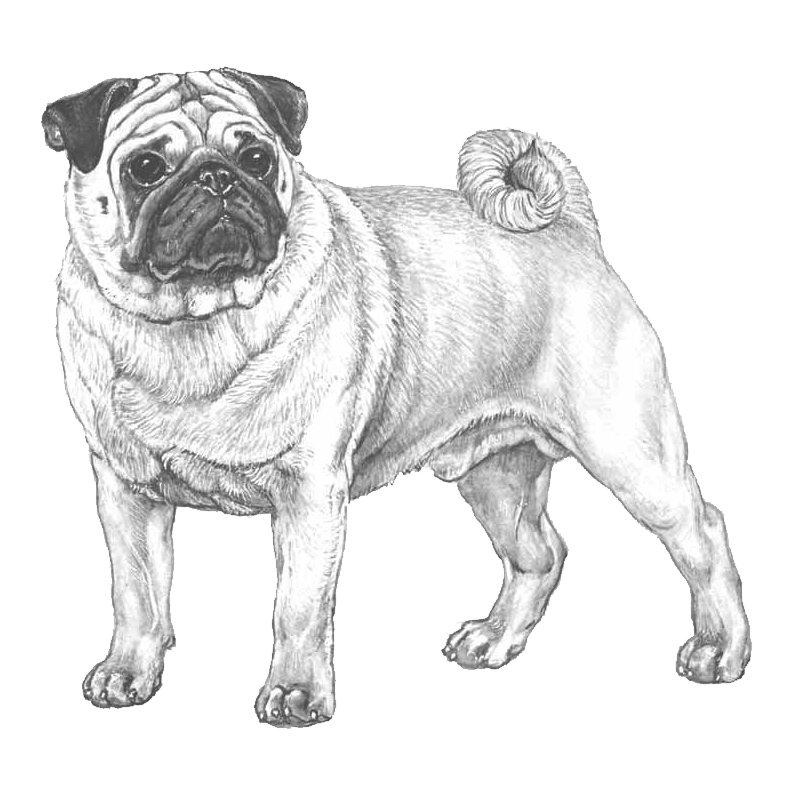
A dignified dog, very intelligent, good-natured and sociable, he is robust and self-reliant, with great character and personality. An adaptable companion for both young and old, and one who integrates himself very closely with family life. He can talk with his eyes, has his mischievous moments, and usually lives to a ripe old age.
Source: The Kennel Club: https://www.thekennelclub.org.uk/search/breeds-a-to-z/breeds/toy/pug/
-
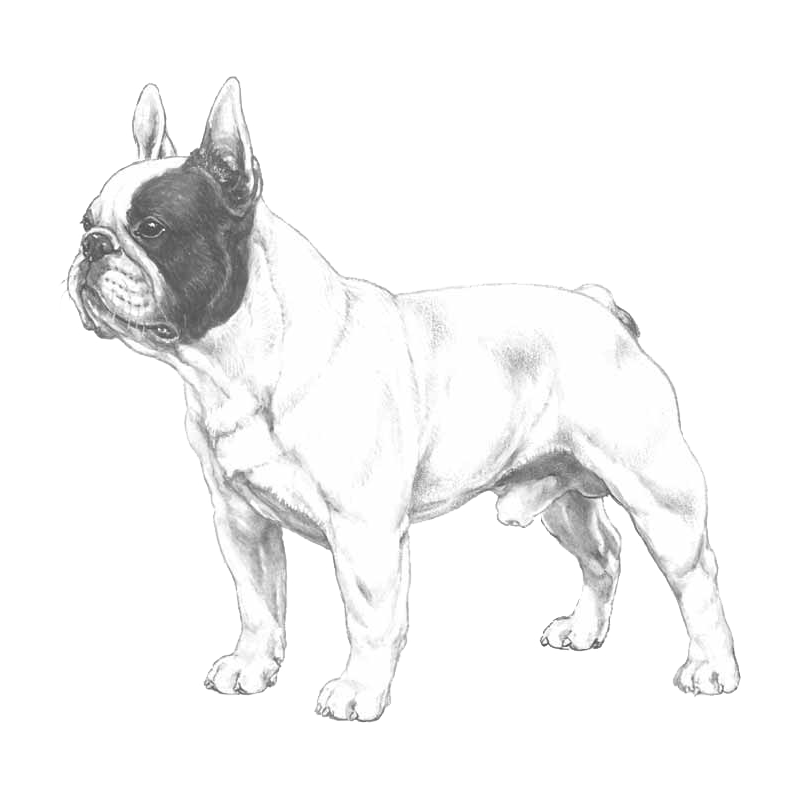
The French Bulldog is a small breed of domestic dog. "Frenchies" were the result in the 1800s of a cross between bulldog ancestors imported from England and local ratters in Paris (France).
-
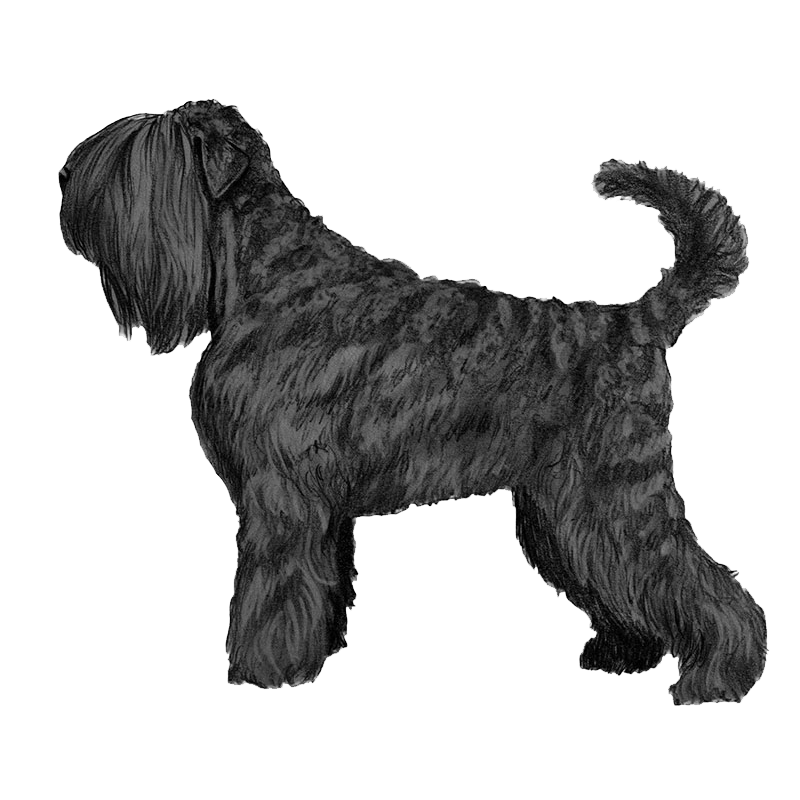
The Black Russian Terrier, also known as the Chornyi Terrier is a breed of dog created in the USSR in the Red Star Kennel during the late 1940s and the early 1950s for use as military/working dogs. BRTs are calm, confident, self-assured, highly intelligent dogs that with proper training and socialization are loyal, reliable, robust working companions. This large and powerful dog is not in all likelihood an ideal fit for the first-time dog owner.
-
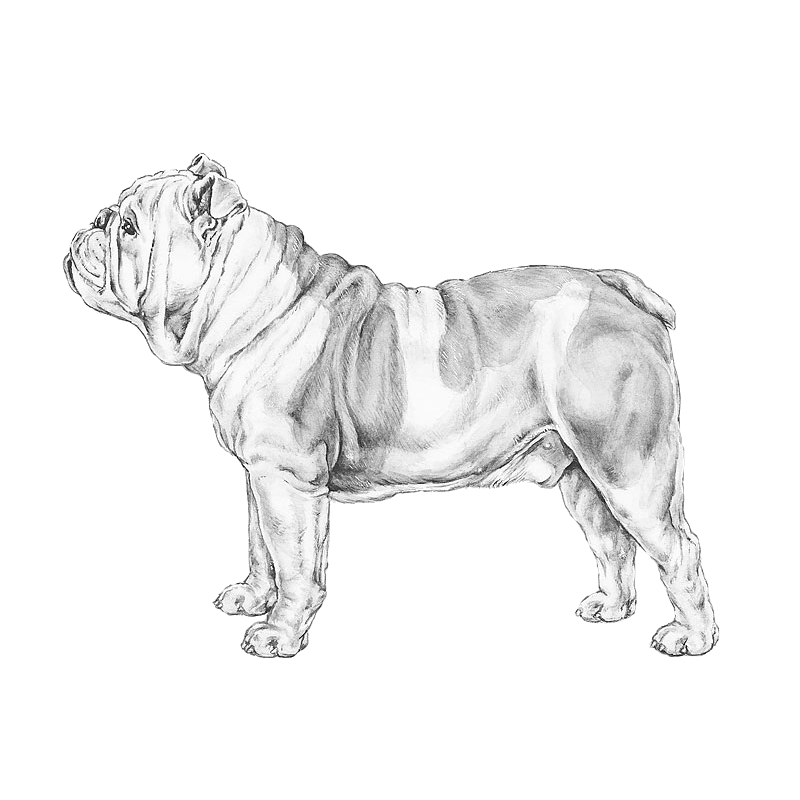
One of Britain’s oldest indigenous breeds, the Bulldog is known as the National dog of Great Britain and is associated throughout the world with British determination and the legendary John Bull. The Bulldog was first classified as such in the 1630s, though there is earlier mention of similar types referred to as bandogs, a term reserved today for a type of fighting dog.
Source: The Kennel Club
-
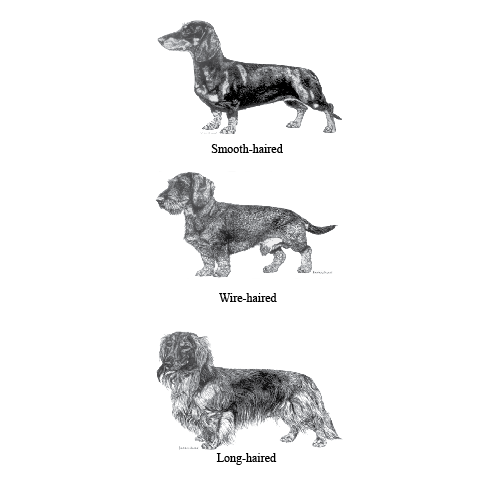 photo source: http://dgk.dk/wp-content/uploads/Diskusprolaps-hos-gravhunde_Charlotte-Mørck-Andersen-Tine-Marx.pdf
The Dachshund, also called Dackel or Teckel, has been known since the Middle Ages. Low, short legged, elongated but compact build, very muscular with cheeky, challenging head carriage and alert facial expression. His general appearance is typical of his sex. In spite of his legs being short in relation to the long body, he is very mobile and lithe. For decades the Dachshund has been bred in three sizes (Teckel, Miniature Teckel and Rabbit Teckel) and in three different kinds of coat (Smooth-haired, Wire-haired and Long-haired).
Source: FCI
-
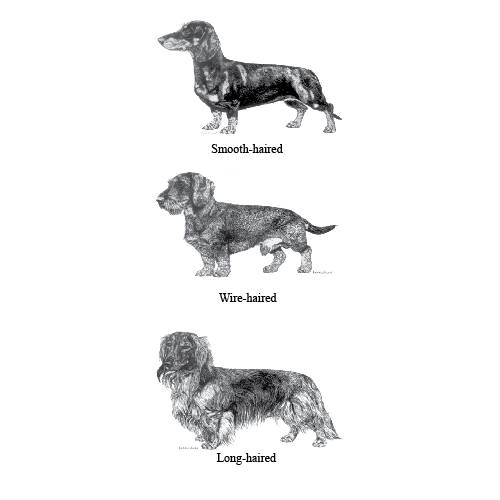
The Dachshund, also called Dackel or Teckel, has been known since the Middle Ages. Low, short legged, elongated but compact build, very muscular with cheeky, challenging head carriage and alert facial expression. His general appearance is typical of his sex. In spite of his legs being short in relation to the long body, he is very mobile and lithe. For decades the Dachshund has been bred in three sizes (Teckel, Miniature Teckel and Rabbit Teckel) and in three different kinds of coat (Smooth-haired, Wire-haired and Long-haired).
Source: FCI
-
- swedish insurance data
- health surveys
- boxer
- registration statistics
- international breed collaboration
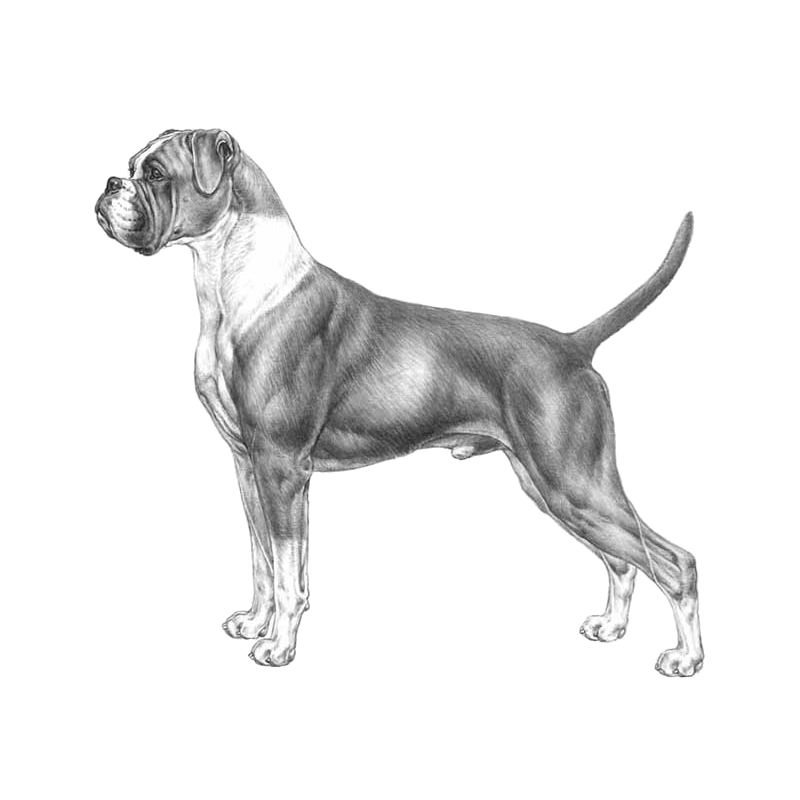
The Boxer is a medium sized, smooth coated, sturdy dog of compact, square build and strong bone. His muscles are taut, strongly developed and moulded in appearance. His movement is lively, powerful with noble bearing. The Boxer must be neither cumbersome nor heavy, nor light or lacking in body substance.
Source: FCI
-
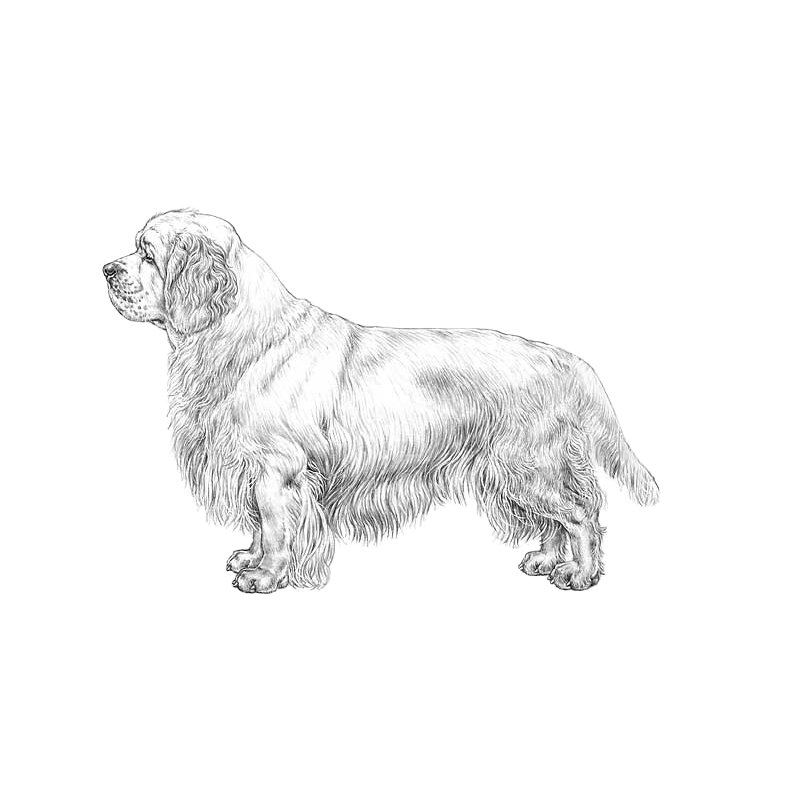
Said to have come in the first place from France more than 200 years ago, the Clumber was brought to Great Britain by the Duke of Newcastle and bred at his family home of Clumber Park in Nottinghamshire.
Source: The Kennel Club
-
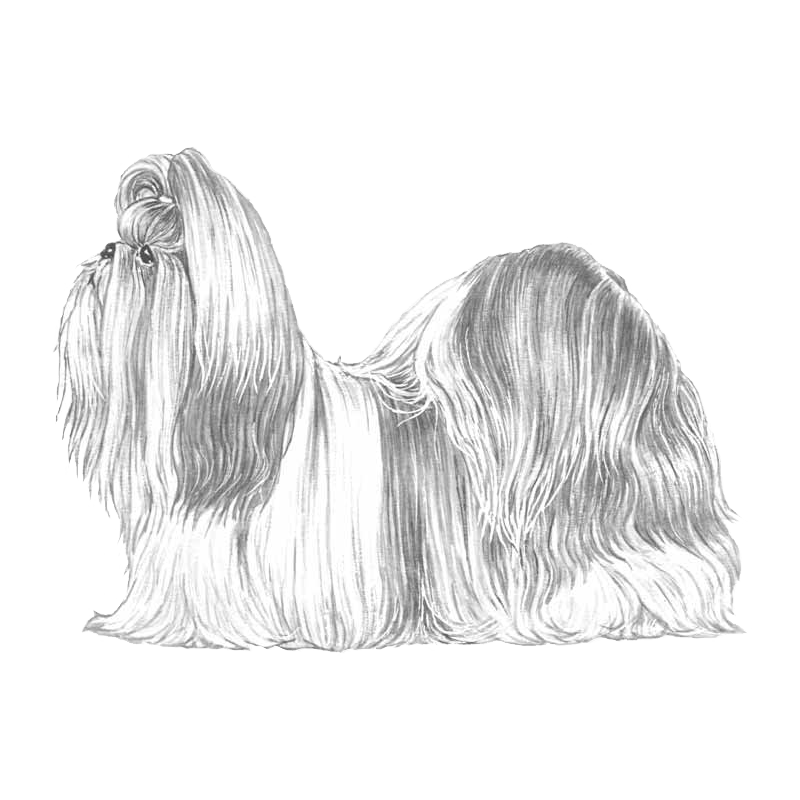
The roots of the Shih Tzu are in Tibet but it was developed in China, where dogs like these lived in the imperial palaces. After China became a republic in 1912, examples of the breed found their way to the West. Temperamentally, the Shih Tzu is a bouncy character and very outgoing. A complete extrovert and full of infectious enthusiasm, he makes a delightful companion who is happy to be part of any family.
Source: https://www.thekennelclub.org.uk/search/breeds-a-to-z/breeds/utility/shih-tzu/
-
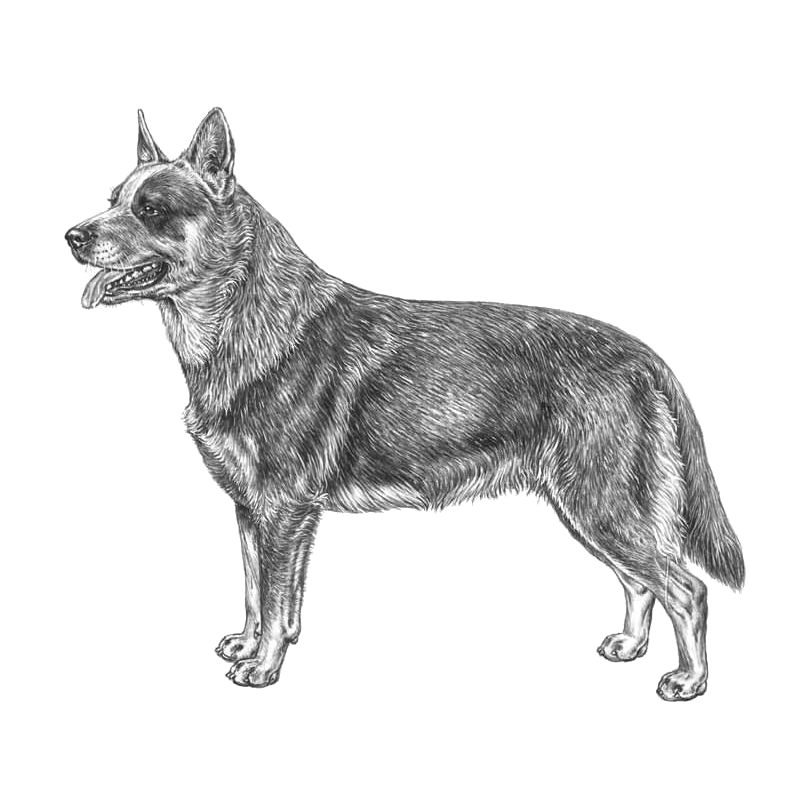
The Australian Cattle Dog (ACD), or simply Cattle Dog, is a breed of herding dog originally developed in Australia for droving cattle over long distances across rough terrain.
Source: Wikipedia
-
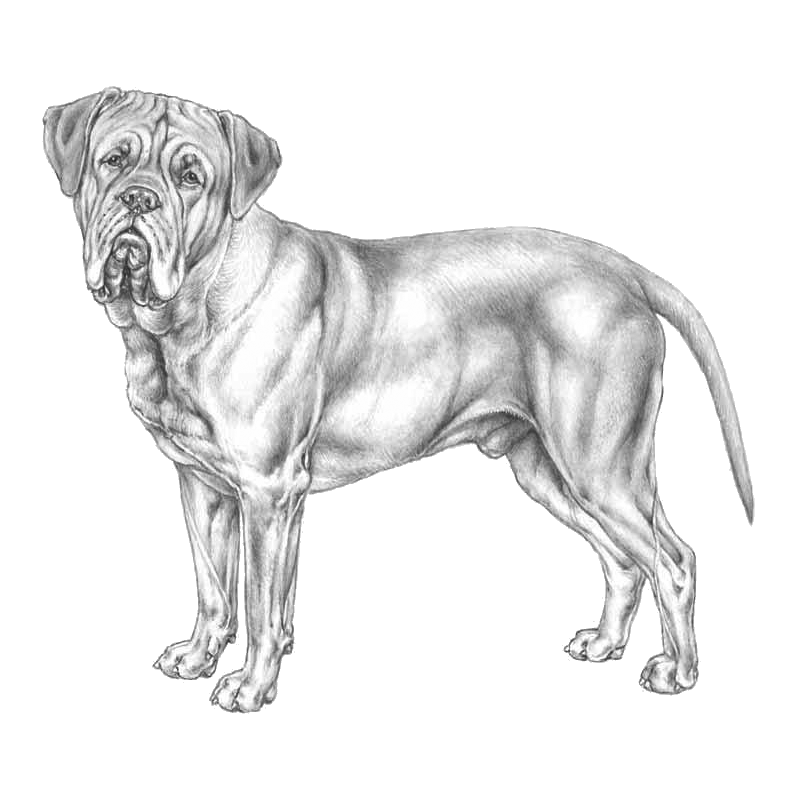
The Dogue de Bordeaux, Bordeaux Mastiff, French Mastiff or Bordeauxdog is a large French Mastiff breed—and one of the most ancient French dog breeds.
Source: Wikipedia
-
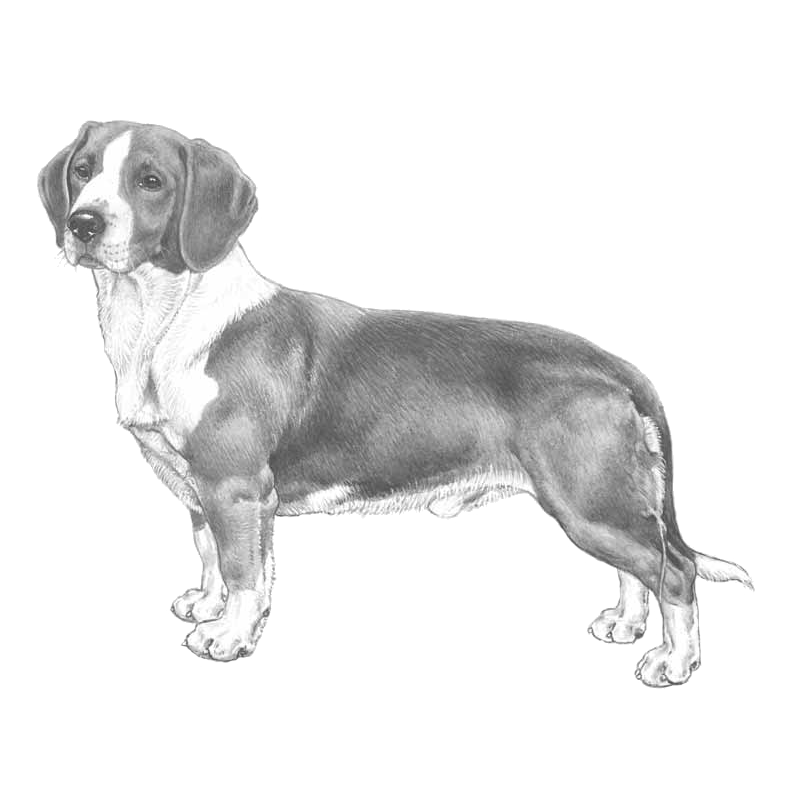
The Drever is a breed of dog, a short-legged scenthound from Sweden used for hunting deer and other game.
Source: Wikipedia
-
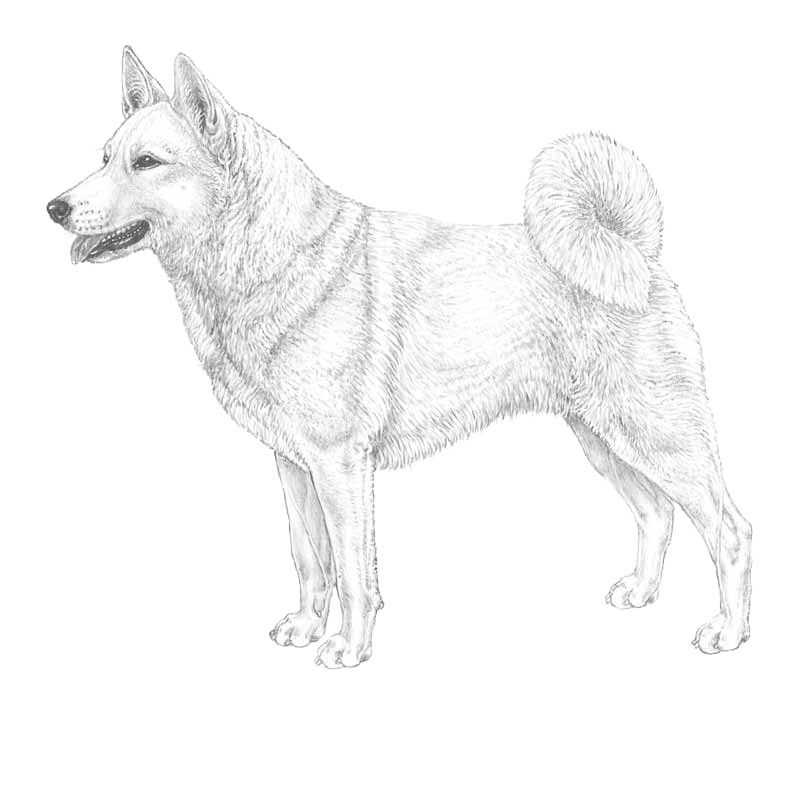
- The White Elkhound derives from the grey Jämthund and the grey Norwegian Elkhound.The type is like the Jämthund, regarding both size and proportions. It is a distinct hunting dog. In addition to hunting moose, the breed is also good at hunting bears, lynx and badgers. Source: SKK
The Svensk vit älghund is recognized by the NKU and belongs to group 5. The breed is not recognized by the FCI. Source NKU: https://www.skk.se/en/NKU-home/nordic-dog-breeds/sweden/svensk-vit-alghund/
-

Many hunters consider the Finnish Hound to be the world's best game-pursuing breed at the moment.
The Finnish Hound is a native breed and one of the most popular dog breeds in Finland. It is used almost solely to hunt hares or foxes. It works independently, tracking either earth or airborne scent and will pursue game and bark passionately. The long hunting season for hares and foxes contribute to the breed's popularity. The Finnish Kennel Club registered 1,475 Finnish Hounds in 2012. In total, 20,030 Finnish Hounds were registered in 2003-2012.
From: Kennelliito (The Finnish Kennel Club, IPFD Founding Partner) Native Breeds
-
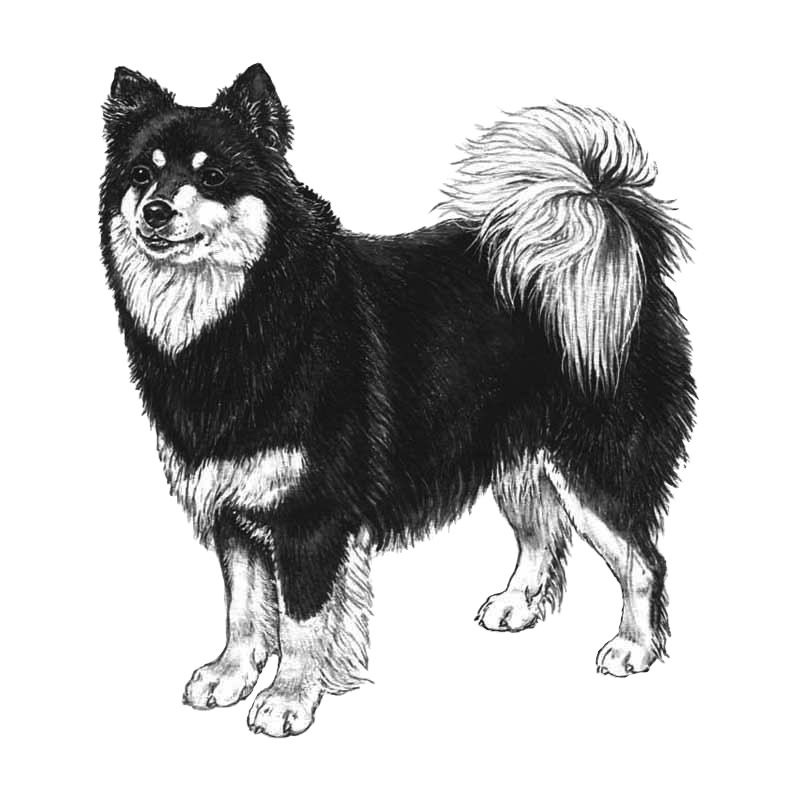
The Finnish Lapponian Dog shares its roots with the Lapponian Herder and the Swedish Lapphund. It is descended from the long-haired reindeer herding dogs that are common in the fell regions of Lapland and is nowadays a popular companion dog. The Finnish Lapponian Dog is intelligent, brave, eager to learn, friendly and fairly submissive. Its herding instinct is strong and it displays a clear disposition to guard.
From: Kennelliito (The Finnish Kennel Club, IPFD Founding Partner) Native Breeds
-
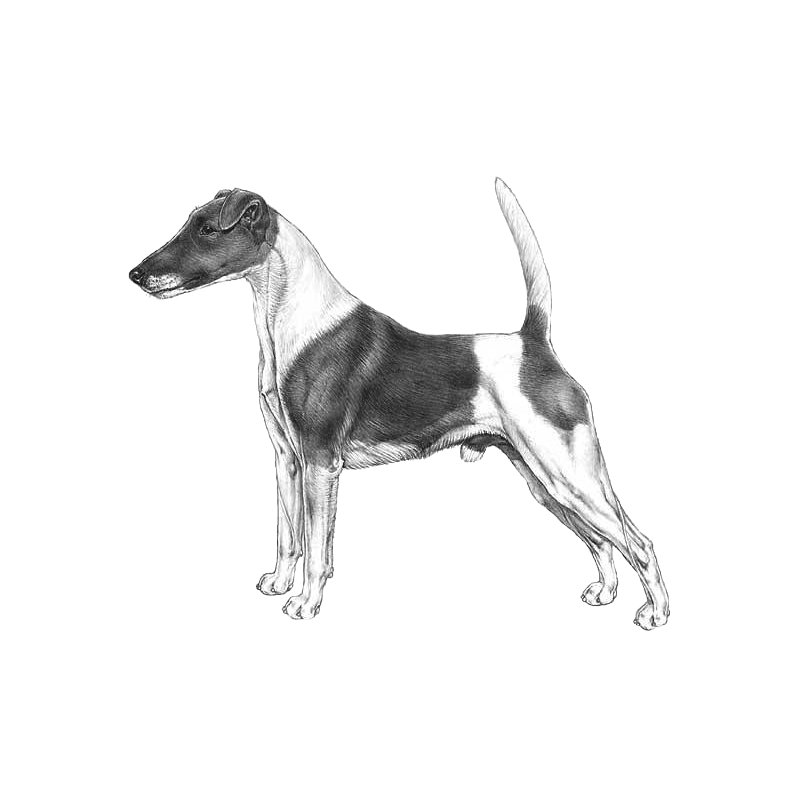
It was the first breed in the fox terrier family to be given official recognition by The Kennel Club (circa 1875; breed standard 1876). It is well known, and although not a widely popular breed today outside of hunting and show circles, it is extremely significant due to the large number of terriers believed descended from it.
-
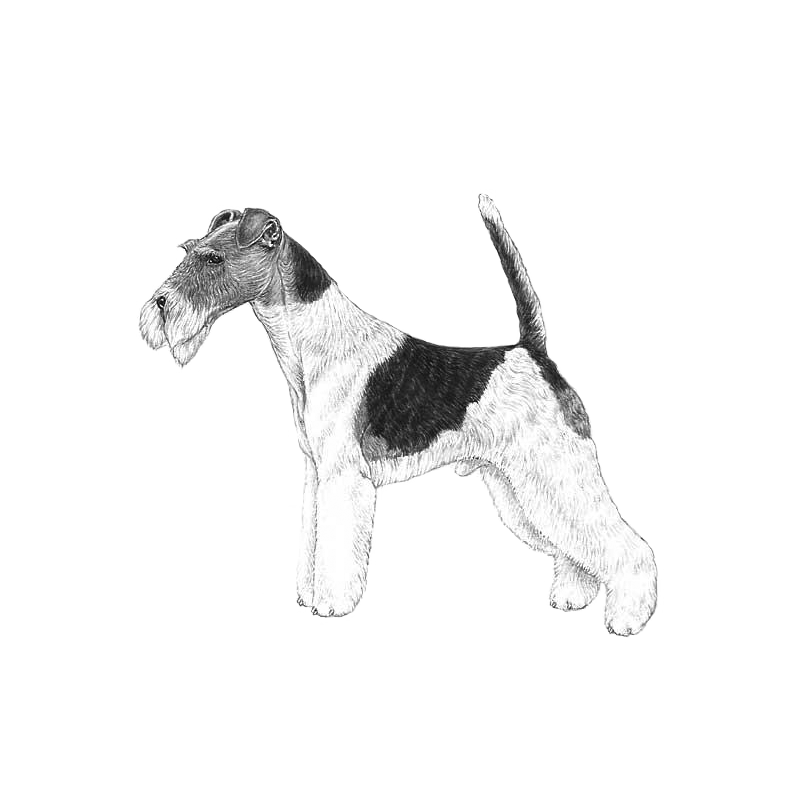
It is a fox terrier, and although it bears a resemblance to the smooth fox terrier, they are believed to have been developed separately.
-
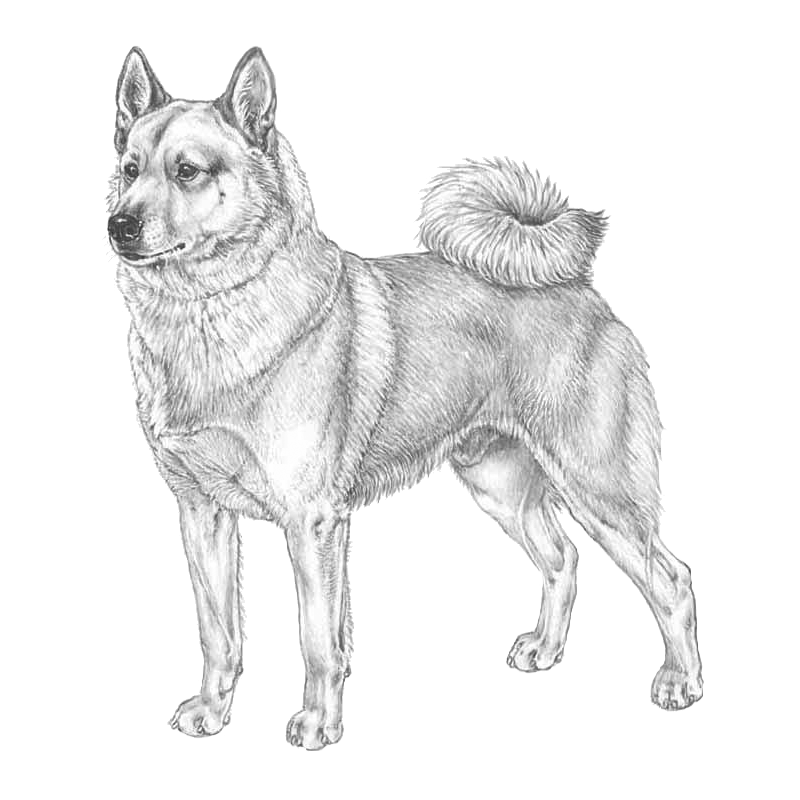
The Norwegian Buhund is a breed of dog of the spitz type. It is closely related to the Icelandic Sheepdog and the Jämthund. The Buhund is used as an all purpose farm and herding dog, as well as watch dog.
-
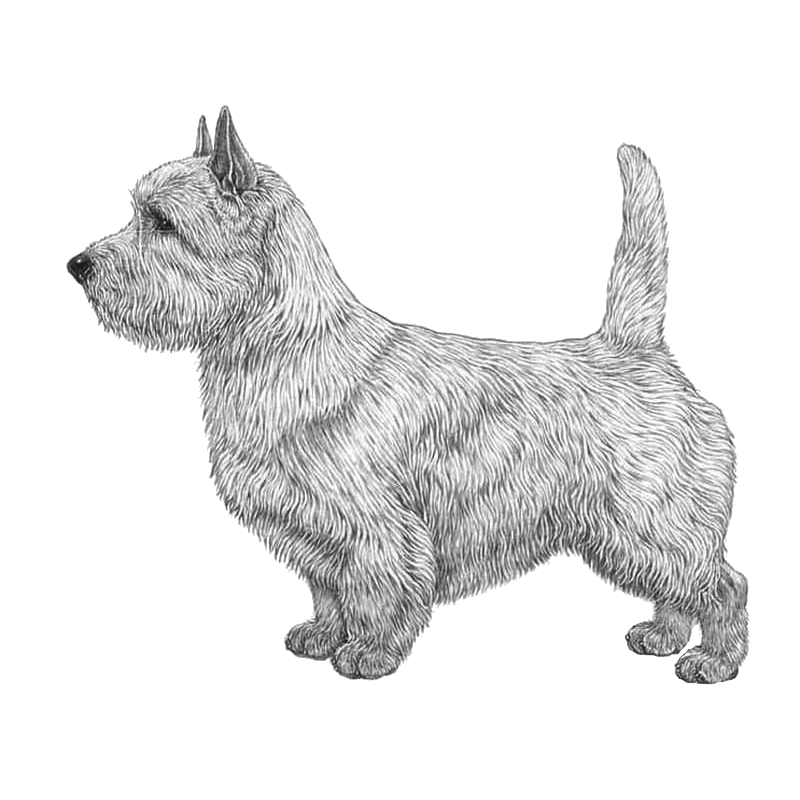
It originates in the United Kingdom and was bred to hunt small vermin or rodents. With a friendly personality, Norwich Terriers are today mostly a companion dog breed.
-
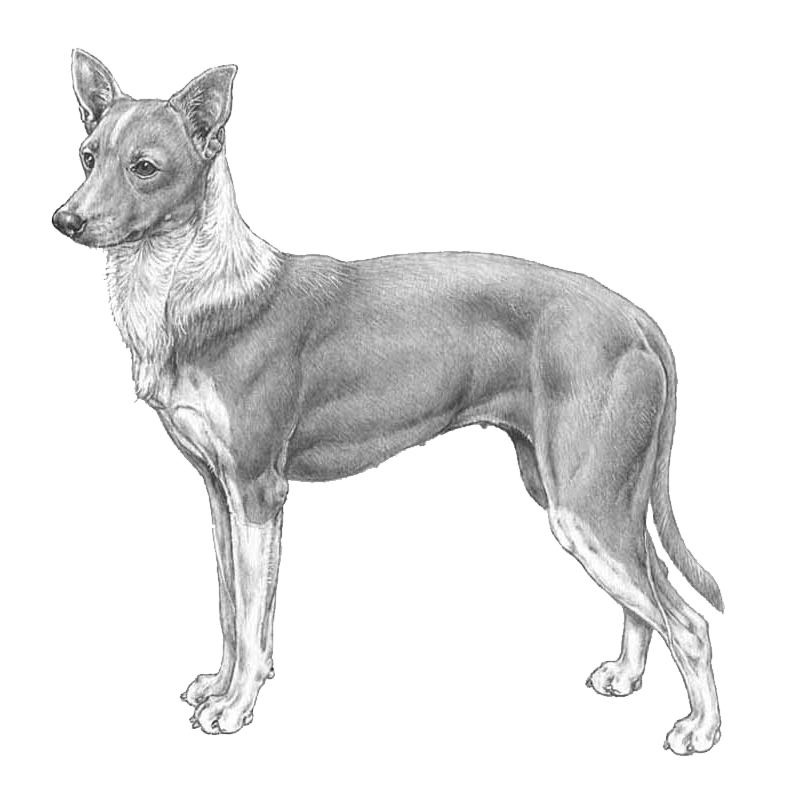
The Portuguese Podengo is an ancient multi-sensory hound breed of dog from Portugal. As a breed, the Podengo is divided into three size categories that are not interbred: small, medium and large.