





Breeding Guidelines for Commercial Breeders
This section focuses on international developments and specific guidelines, regulations and restrictions, by source/country.
4 articles in this category
-
 Candace Croney, director of Purdue University’s Center for Animal Welfare Science, explains need for new, rigorous standards for commercial dog breeders. Extension publications including assessments of key aspects of management and environments impacting kennel dog welfare are available... https://vet.purdue.edu/CAWS/engagement.php Research on socialization - Canine development research at The University of Pennsylvania - Presentation by James Serpell Long- ter
- Purdue's Center for Animal Welfare Science The CAWS Project aim is "to help the US pet industries address the socio-ethical and scientific (well-being) concerns embedded in commercial dog breeding. With the support of dog breeders, pet industry representatives, animal health and welfare experts, and other key stakeholders, the researchers are developing and testing voluntary standards for the care and well-being of dogs in commercial breeding facilities." Establishing science-based standards for the care and welfare of breeding dogs...
-
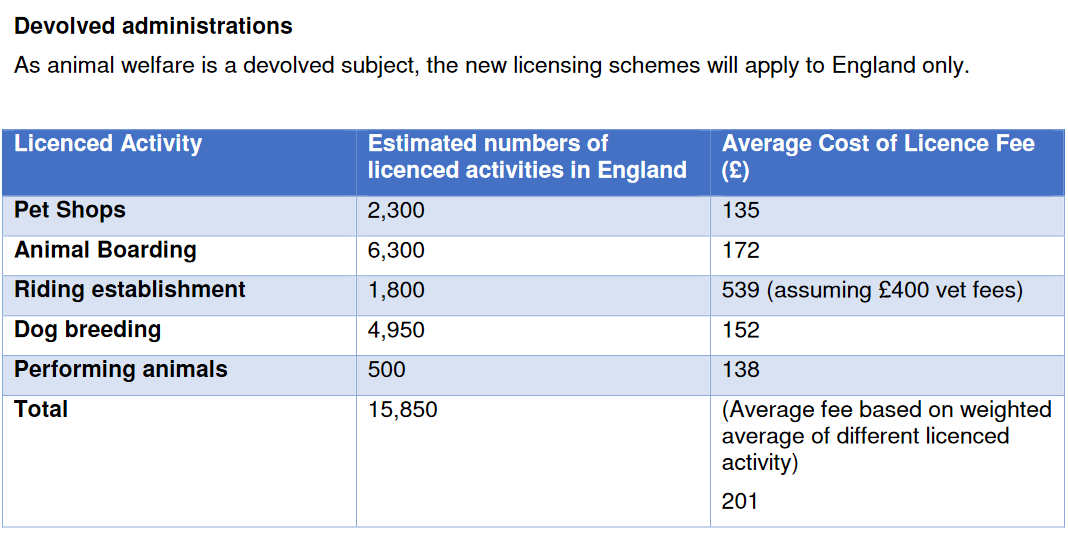
 The Kennel Club offers a summary of new regulations that could affect dog breeders/puppy sellers. New Dog Breeding Regulation The Department for Food, Environment and Rural Affairs (DEFRA) published procedural guidance for reference by local authorities and to assist businesses in meeting the new requirements set out under the new Regulations. The procedural guidance and other guidance notes can be downloaded from Canine and Feline Sector Group's website.
- England: October 1st 2018: new Regulations replaced a number of existing licensing regimes involving activities related to dog ownership, management and dog breeding:
- selling animals as pets
- providing for or arranging for the provision of boarding for cats or dogs
- hiring out horses
- dog breeding
- keeping or training animals for exhibition
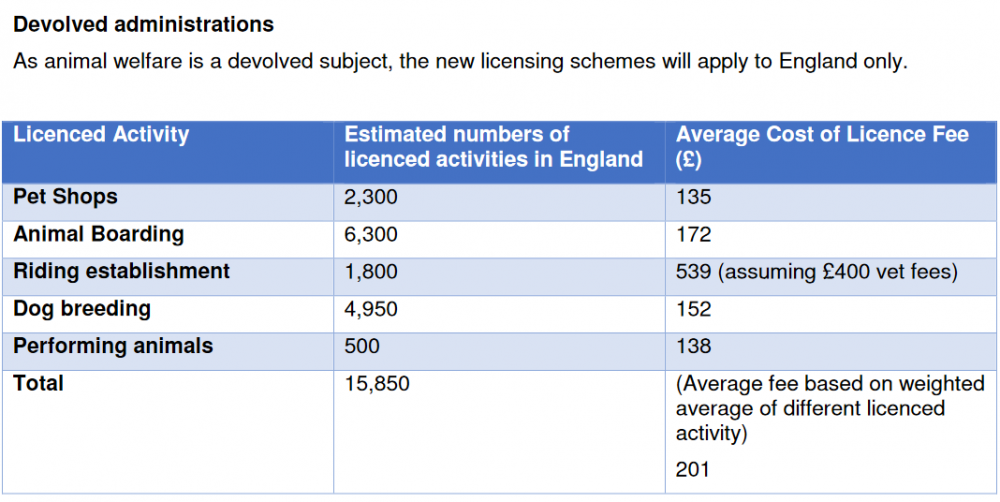 Under the new Regulations it is hoped that the Risk-based assessments for determining the length of time between business license renewals (1 up to 3 years) will result "in a shift towards more favourable practices by businesses in order to move into the lower and medium risk categories" - thereby reducing costs.
-
 Also see: Breeding Regulations / Restrictions by Source of Country http://dogwellnet.com/content/welfare-legislation/commercial-breeding/breeding-guidelines-for-commercial-breeders/breeding-regulations-restrictions-by-source-of-country-r68/ Review of legislation across EU Countries Source: http://www.dogandcatwelfare.eu Excerpt... "Executive Summary The EU Dog & Cat Alliance was established in 2014 and brings together dog and cat welfare organisations from across the EU. The Alliance
- In the USA, Canada and Europe, major developments are underway by local and national authorities, industry, academics and the dog community to explore and address the complex and challenging issues about commercial breeding of dogs. Although efforts may have started to address concerns about puppy mills, guidelines and legislation is already impacting other breeders who may have high standards. Here are links and review of some international developments.
-
 Restrictions on ownership and or management of breeds, including laws that impact husbandry practices utilized for breeding animals, exist - regulations are variable. For a list of banned breeds by country (which may include breeding regulations pertaining to specific breeds) see: https://petolog.com/articles/banned-dogs/ For information on dog regulations/laws in effect in the United States see Michigan State University's Animal Legal and Historical Center's website. The article below provide
- Generally speaking, aside from numerous Kennel Club or Cynological organization's breeding regulations for all registered dogs or breed specific breeding regulations that impact registration eligibility which can be located by reviewing articles contained in IPFD's Ethical and Breeding Guidelines section at http:///health-and-breeding/breeding/general-quidelines/, there are laws enacted by national, regional and local governmental bodies in different countries.