






By typical questions:
What are the important health issues in the breed?
Club Health Committee members can see examples of breeding strategies, get a sense of the international 'picture' of work being done for a given breed, by checking out the Nordic country's RAS & JTO documents, accessing links to US club's use of OFA CHIC testing information for breed, the UK's Breed Conservation Plans, and an array of impactful health & welfare tools, programs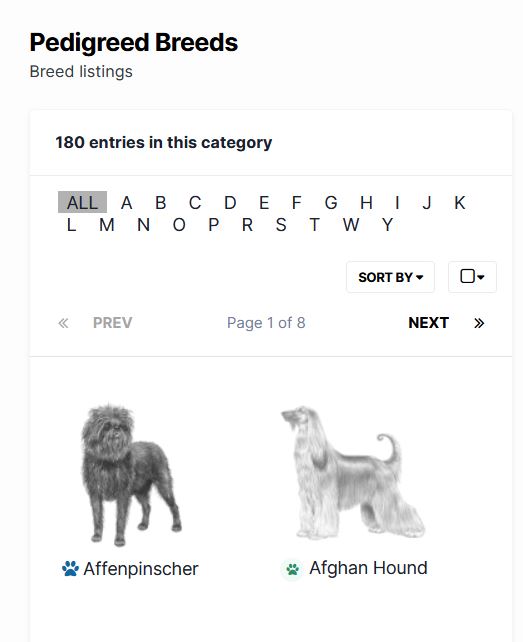 and initiatives.
-
Breeds with summaries of Swedish KC, Finnish KC or Norwegian KC Breeding Strategies
-
GRIHP articles offer a 'global' view of breed-specific health profiles
-
Search for a breed - Pedigree Dogs Database
Links to Evidence-based Resources
There is a breed-specific component to the frequency of disorders in particular dog breeds or in 'groups' of dogs; for example large sized dogs, working breeds, herding breeds, short-muzzled or short-legged breeds... 'groups' can have similar health disorders or shared welfare management concerns. Using a breed-specific approach to identify which health issues occur in a breed and how many dogs are impacted by a given condition(s) guides any breed manager's focus and efforts to address and improve the situation for individual dogs and the breeds at large.

 The Swedish Kennel Club, working with Agria Animal Insurance, Sweden (Agria Djurförsäkring, Stockholm, Sweden) has produced information on both health care and life insurance claims in a format requested by and developed in consultation with breed clubs. Evidence based data on breeds is available in the Swedish Agria Breed Profiles.
- Breed Profiles - (2006-2011) for 122 breeds are available in our Downloads or links through our Pedigreed Dogs database
- Breed Profiles - (2011-2016) for 188 breeds are also available in our Downloads or links through our Pedigreed Dogs database
 IPFD Collaborator, VetCompass (UK) has produced breed and health condition studies (veterinary practice based data).
- Further information on breeds, canine research and health conditions is available in the "Learn Zone".
- Ever have a dog with seizures? Epilepsy is a condition that occurs in mixed and purebred dogs - see DWN's article Exploring canine epilepsy - the VetCompass view. Did your older dog experience a sudden loss of balance, collapsing, disorientation, head tilt and flickering of the eyes? - see French Bulldogs and Bulldogs at high risk of "old dog syndrome" | Vestibular disease might be the reason.
For Breed Managers -- Breeding Programs
"In some countries, kennel and breed clubs have created breed-specific, comprehensive strategies to determine the current situation for the breed, including disease and population statistics, and describe actions for a sustainable future... 1
1 Breed-specific Breeding Strategies - 2017 IDHW
-
DogWellNet Downloads Links – Breed-specific Breeding Strategy English RAS/JTO Summaries (26 breeds and templates)
- Note: Breed population and health test results data available through the Swedish, Norwegian and Finnish Kennel Club's recording system databases is employed in creating the RAS & JTO documents.
Recommended Comments
Join the conversation
You can post now and register later. If you have an account, sign in now to post with your account.
Note: Your post will require moderator approval before it will be visible.