






Breed-Specific Health Reports
36 articles in this category
-
 By typical questions: What are the breed's typical characteristics? See the Pedigree Dogs Database (180 breeds). Puppy Buyers can look to the curated videos, breed descriptions and articles and breed club links - use the resources to become better informed BEFORE bringing a dog into your life and family. In the database breeders, judges, veterinarians and researchers will find links to breed standards from AKC, the UK, and FCI; and illustrated study guides. Link
This article highlights DogWellNet content and resources that can assist puppy buyers, new or existing owners, dog breeders, breed managers and veterinarians to answer basic questions that pertain to health, welfare, management and breeding of dogs. And to find link to international resources.
Do you have a question about a breed - about a breed-specific health condition - about health screening or genetic tests? Are you looking for guidelines or example programs that can enhance practices that improve the quality of human and dog interactions? Through collaboration and working with our partners and breed experts we are continually compiling and collating information that may be helpful to you. Check into DogWellNet.com often... bookmark this page for a list of resources. DogWellNet.com - so much better than a Google search or social media post:
-
Impartial, accurate, evidence-based data, information, and commentary from IPFD consultants and global experts
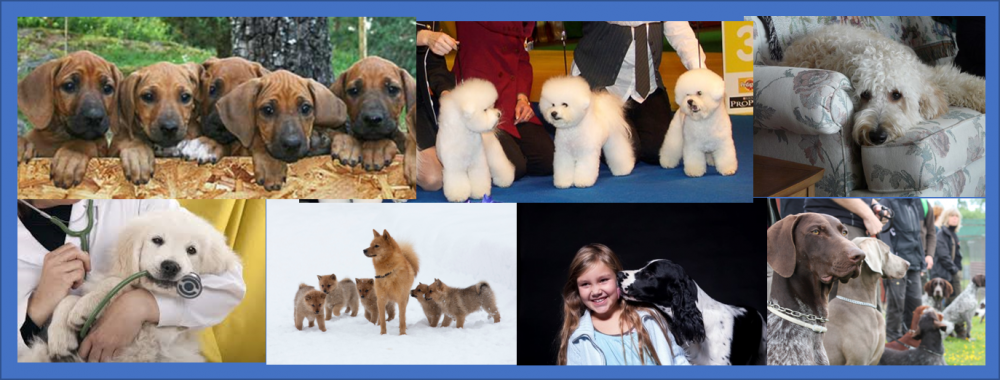
- In collaboration with our partners - kennel and breed clubs, academics, specialists and veterinarians; international resources
-
The Big Picture - how the complexities of health, welfare, and human-animal interactions come together. For all dogs.
-
Impartial, accurate, evidence-based data, information, and commentary from IPFD consultants and global experts
-
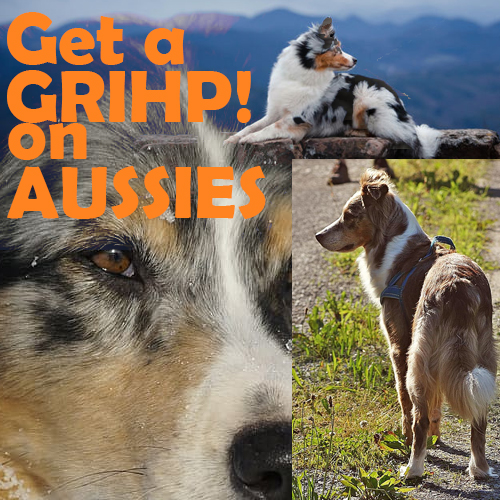 Table of Contents Breed Overview - In a Nutshell Key Health Concerns of this Breed What do caretakers of Australian Shepherds need to know? NOTE: For a list of problem drugs for dogs with MDR1 mutation(s) see: VCPL - WSU Population statistics for Australian Shepherds - the trends Health Statistics Agria - Swedish Breed Profiles Australian Shepherds - Breed-Specific Health Strategies Health Screening Tests for Australian She
Get a GRIHP! on Australian Shepherds
This article on Australian Shepherds is part of a series to highlight the Big Picture of health, welfare, and breeding and to help develop Globally Relevant Integrated Health Profiles (GRIHPs) for many breeds. See IPFD's Get a GRIHP! on Breed Health Initiative
-
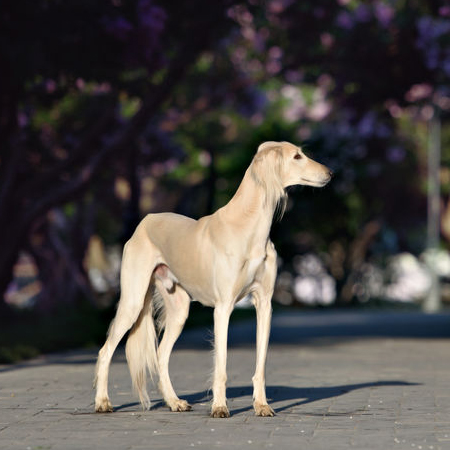 Get a GRIHP! on Salukis Table of Contents Get a GRIHP! on Salukis Breed Overview - In a Nutshell Key Health Concerns of this Breed What do caretakers of Salukis need to know? Population statistics for Salukis - the trends Health Statistics Agria - Swedish Breed Profiles Salukis - Breed-Specific Health Strategies IPFD and the World Small Animal Veterinary Association References and Resources DogWellNet R
- get a grihp
- breeding
- health
- veterinarians
-
Tagged with:
Get a GRIHP! on Salukis
This article on Salukis is part of a series to highlight the Big Picture of health, welfare and breeding and to help develop Globally Relevant Integrated Health Profiles (GRIHPs) for many breeds. See IPFD's Get a GRIHP! on Breed Health Initiative. PLEASE NOTE: This installment is just the beginning...we will add further statistics and information as they become available.
-
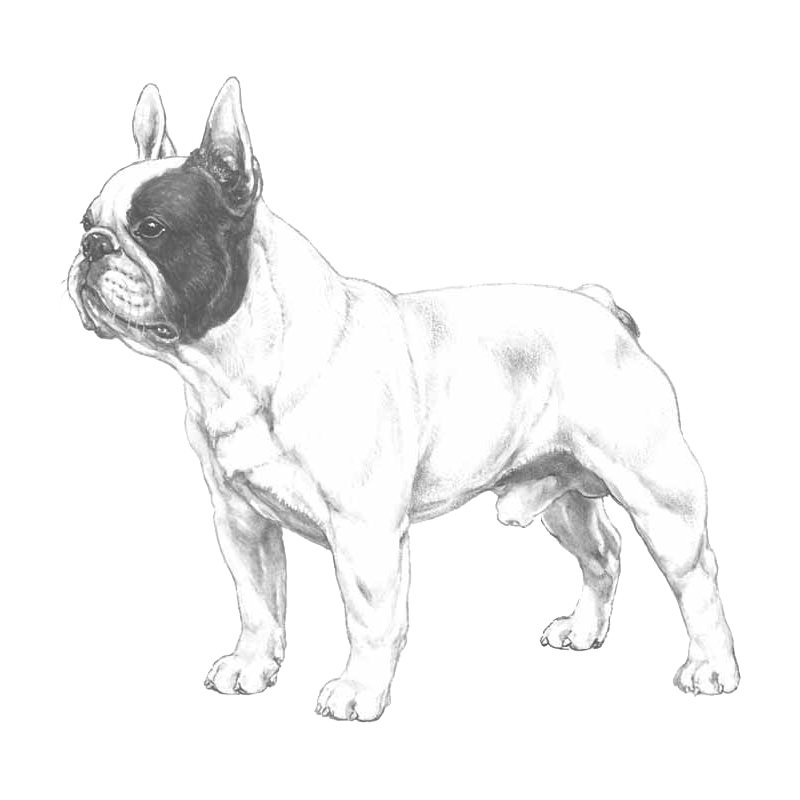 Get a GRIHP! on French Bulldogs Table of Contents Get a GRIHP! on French Bulldogs Breed Overview - In a Nutshell Key Health Concerns of this breed What do caretakers of Frenchies need to know? Population statistics for French Bulldogs - the trends Health Statistics Agria - Swedish Breed Profiles Overall and specific causes - relative risks for all dogs - morbidity (veterinary care visits) and mortality (life claims):
- health
- french bulldog
- brachycephalics
- sourcing
-
Tagged with:
Get a GRIHP! on French Bulldogs
This article on French Bulldogs is part of a series to highlight the Big Picture of health, welfare and breeding. Concerns for the welfare of brachycephalic breeds, including the French Bulldog, have been the subject of much debate over the past several years. The popularity of French Bulldogs is undeniable; demand for this breed has soared over the past decade. Supply and demand has led to production of pups by less than scrupulous breeders who are not operating under the umbrella or direction of KCs and Breed club health improvement program recommendations. Extremes of conformation are recognized as contributing factors in development of health and welfare challenges. French Bulldogs are short-muzzled dogs - the breed has historically exhibited short noses. But over time, incrementally shorter faces and heavier, shorter-backed body proportions (related to spinal abnormalities) have become an accepted norm in the breed. Extreme examples of some brachycephalic breeds go even further than the drift that has occurred in the conformation rings over the past 100 years into the realm of essentially deformed dogs with almost no muzzle, deformed jaws, no tails, unbalanced proportions and poor skeletal structure. The catastrophic health problems associated with extreme conformations has been well documented.** Health management and breeding strategies constructed by Kennel and Breed clubs are focused on identifying the prevalence of and effective methods to address key health concerns in the breed. In some cynological organizations Breed Standard wording has been clarified to minimize the acceptability of extreme traits. In 2020 legislative action was taken by the Netherlands to regulate breeding of Brachycephalic breeds with the goal to enhance health and welfare. Additional legislative processes are underway in several other countries in Europe. Criteria for breeding outlined in the Dutch legislation involves the requirement to increase the ratio of length of muzzle to back skull (CFR). The information in this article will assist all stakeholders to see the Big Picture - internationally - for the French Bulldog. It should help the veterinary community to guide clients and to educate potential owners in determining whether a French Bulldog is the right breed for them. Sourcing of puppies from breeders who practice critical, rational, logical thinking about breeding decisions focused on health and welfare of the dogs produced and kept as companions is an important pre-purchase consideration for anyone with an interest in obtaining a French Bulldog. However, more than one research study has shown that people who are attracted to the appearance of Frenchies, do not prioritize health when they are acquiring one of these dogs, and, in spite of serious and costly veterinary care, as well as suffering for the dog and the owner, many indicate that they would purchase another one. Why do people choose the dogs they do - and what is the impact on dog health and welfare?
-
 Table of Contents Breed Overview - 'In a nutshell' Key Health Concerns for Dachshunds What do caretakers of Dachshunds need to know? Population statistics for Dachshunds... the trends. Dachshund - Disease Conditions and Health Strategies Agria 2011-2016 - Swedish Breed Profile Dachshund - Specific Health Strategies Dachshund - Health Testing Recommendations/requirements A word on Dachshunds used in crossbreeding Re
- dachshunds miniature
- get a grihp
- dachshund
- dachshunds standard
-
Tagged with:
Get a GRIHP! on Dachshunds
This article on Dachshunds is part of a series to highlight the Big Picture of health, welfare and breeding and to help develop Globally Relevant Integrated Health Profiles (GRIHPs) for many breeds. See IPFD's Get a GRIHP! on Breed Health Initiative
-
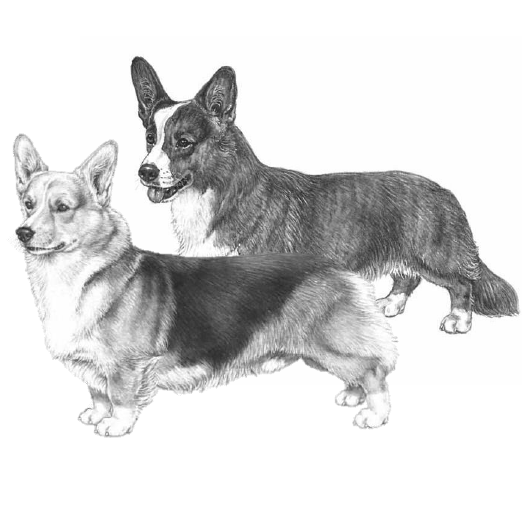 Table of Contents Breeds Overview - 'In a nutshell' What do caretakers of Corgis need to know? Population Statistics for Corgis - the Trends Corgis - Disease Conditions and Health Strategies Pembroke Welsh Corgi - Conformation, Distinguishing information Health Testing Recommendations and Requirements for Pembrokes Cardigan Welsh Corgi - Conformation - Distinguishing Information Health Testing Reco
Get a GRIHP! on Welsh Corgis
This article on Welsh Corgis is part of a series to highlight the Big Picture of health, welfare and breeding and to help develop Globally Relevant Integrated Health Profiles (GRIHPs) for many breeds. See IPFD's Get a GRIHP! on Breed Health Initiative.
-
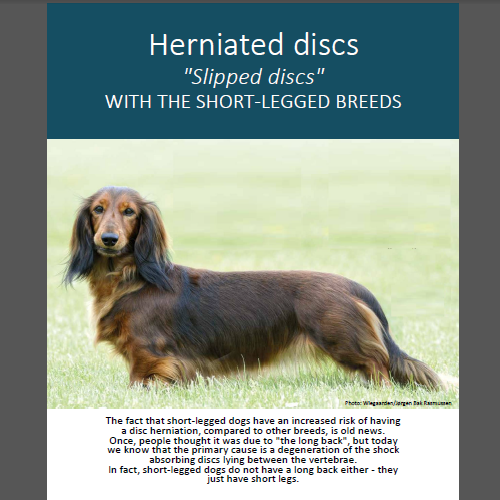
 AUTHOR: HELLE FRIIS PROSCHOWSKY, DVM, PH.D., SPECIAL CONSULTANT, THE DANISH KENNEL CLUB (DKC)
See: https://www.dachshund-ivdd.uk/what-is-ivdd/danish-ivdd-paper-2019/
PDF version: https://www.dachshund-ivdd.uk/app/download/11009159/Herniated+discs+HFP+2019+v4.pdf
IVDD is explored in this concise presentation which was originally published in the March 2019 issue of the Danish Kennel Club magazine (HUNDEN).
Translated version by Frøydis Hardeng and Ian Seath..
QuoteThe breeding program Denmark has been at the forefront when it comes to research into disc prolapse, and therefore the Danish Dachshund breeders have had the opportunity to X-ray their dogs’ spines for almost 20 years. During this period of time, the screening programme has alternated between being voluntary and mandatory. This has not been optimal, and from April 1 2019 X-raying of both males and females will be mandatory (Box 4). Additionally, screening programmes have now been implemented in Norway, Sweden, Finland, Australia and UK as well. The Swedish images are scored in Norway and the UK images are scored in Finland. Based on the the number of calcified discs, the dogs are given a back status which can be Free (0 calcifications), Mild (1-2 calcifications), Moderate (3-4 calcifications) or Severe degree (5 or more calcifications) (Figure 2).
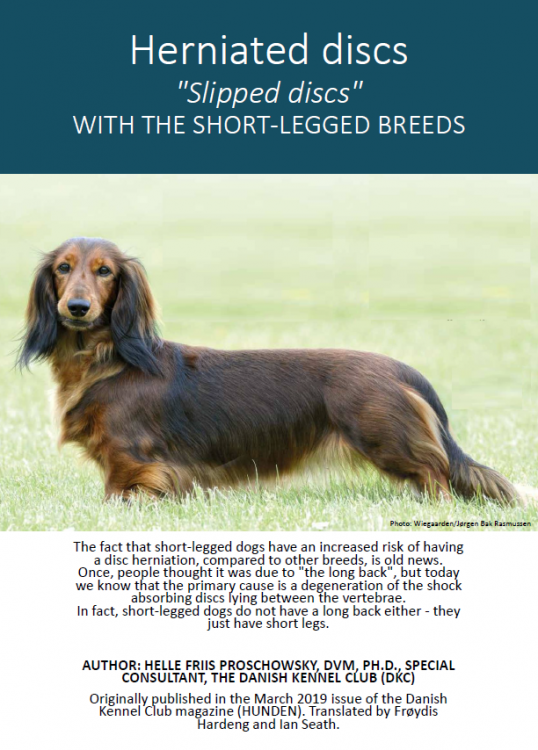
AUTHOR: HELLE FRIIS PROSCHOWSKY, DVM, PH.D., SPECIAL CONSULTANT, THE DANISH KENNEL CLUB (DKC)
See: https://www.dachshund-ivdd.uk/what-is-ivdd/danish-ivdd-paper-2019/
PDF version: https://www.dachshund-ivdd.uk/app/download/11009159/Herniated+discs+HFP+2019+v4.pdf
IVDD is explored in this concise presentation which was originally published in the March 2019 issue of the Danish Kennel Club magazine (HUNDEN).
Translated version by Frøydis Hardeng and Ian Seath..
QuoteThe breeding program Denmark has been at the forefront when it comes to research into disc prolapse, and therefore the Danish Dachshund breeders have had the opportunity to X-ray their dogs’ spines for almost 20 years. During this period of time, the screening programme has alternated between being voluntary and mandatory. This has not been optimal, and from April 1 2019 X-raying of both males and females will be mandatory (Box 4). Additionally, screening programmes have now been implemented in Norway, Sweden, Finland, Australia and UK as well. The Swedish images are scored in Norway and the UK images are scored in Finland. Based on the the number of calcified discs, the dogs are given a back status which can be Free (0 calcifications), Mild (1-2 calcifications), Moderate (3-4 calcifications) or Severe degree (5 or more calcifications) (Figure 2).-
- Check out Brenda's blog... and the Seminar video...
-
 The following summary provides further information on the RRWC Health Committee's dermoid sinus investigation. The Ridge on the back of the Rhodesian Ridgeback is the hallmark of the breed, but unfortunately the genes for the ridge can also cause the congenital neural tube defect known as dermoid sinus ( Duplication of FGF3, FGF4, FGF19 and ORAOV1 causes hair ridge and predisposition to dermoid sinus in Ridgeback dogs., Hillbertz N, Nature genetics,2007 vol: 39 (11) pp: 1318-1320) .
- The Rhodesian Ridgeback World Congress meets every four years where a large number of breeders and fanciers (domestic as well as international) come together to discuss the breed. Many thanks to Helle Lauridsen, DWN contibutor, for providing a follow-up to the Rhodesian Ridgeback World Congress 2016. This article provides a follow-up to the 2016 event - with a focus on addressing Dermoid Sinus in Rhodesian Ridgebacks. The congress was a great success with a full day focused on breed health. A whole chapter was focused on Dermoid Sinus, the only breed specific disease for Ridgebacks.
Helle Lauridsen writes... on the topic...
"Dermoid Sinus has been seen by the outside world as a huge problem, but much less so by Rhodesian Ridgeback breeders...
-
as it is now very rarely encountered and not always, as myth and an old article in Nature indicates, only in ridged dogs.
- DS also occurs in RR mixes and in other breeds and is always (100%) operable."
"At the congress it was decided by the delegates to counter the 'stories' about Dermoid Sinus with facts. While the German clubs are progressing towards funding a DS DNA study, the RRWC Health committee wanted to investigate the size and development of the problem, before moving forward initiating a research project into the correlation of the 1996 Australian Folic Acid Study by Felicity A. Nicholls-Grzemski. Her theory is that as DS in dogs and spina bifida in humans are both embryo neural tube defects; DS can also be easily prevented with Folic Acid as Spina Bifida is prevented in humans.
-
as it is now very rarely encountered and not always, as myth and an old article in Nature indicates, only in ridged dogs.
-
 Pneumonia -- Irish Wolfhound This video link provided below shows the typical stance of an Irish Wolfhound with pneumonia. Pneumonia in an irish wolfhound from Per Arne Flatberg on Vimeo. If you see this in your Irish wolfhound, go straight to the vet and urgently request immediate treatment with antibiotics. The dog may or may not have fever, the blood samples may well be normal, and the lungs may or may not be congested on x-rays. If not taken seriously, th
- Some Irish Wolfhounds may be affected by respiratory conditions; pneumonia can be life threatening and requires immediate veterinary attention. Although affected dogs may have a typical look or presentation, it may not be recognised by those who have not seen it before. This article presents links to information and videos for both owners and veterinarians from the Irish Wolfhound Health Group, an excellent international effort for the breed. In addition, research evidence from Sweden confirms that this is an important condition in this breed. According to Agria insurance reports, on veterinary care events and deaths, the Irish Wolfhound breed is at increased risk for veterinary care events related to the respiratory system issues than compared to All Breeds.
-
 This article 'Prevalence of disorders recorded in Cavalier King Charles Spaniels attending primary-care veterinary practices in England' is freely available open access.
- Concerns have been raised over breed-related health issues in purebred dogs, but reliable prevalence estimates for disorders within specific breeds are sparse. Electronically stored patient health records from primary-care practice are emerging as a useful source of epidemiological data in companion animals. This study used large volumes of health data from UK primary-care practices participating in the VetCompass animal health surveillance project to evaluate in detail the disorders diagnosed in a random selection of Cavalier King Charles Spaniels (CKCSs). Study findings suggest that many of the disorders commonly affecting CKCSs are largely similar to those affecting the general dog population presented for primary veterinary care in the UK. However, cardiac disease (and MVD in particular) continues to be of particular concern in this breed.




Important Information
By using this site, you agree to our Terms of Use.