







Jump to content
View in the app

A better way to browse. Learn more.

DogWellNet

A full-screen app on your home screen with push notifications, badges and more.

To install this app on iOS and iPadOS
  1. Tap the Share icon in Safari
  2. Scroll the menu and tap Add to Home Screen.
  3. Tap Add in the top-right corner.
To install this app on Android
  1. Tap the 3-dot menu (⋮) in the top-right corner of the browser.
  2. Tap Add to Home screen or Install app.
  3. Confirm by tapping Install.

Veterinary Cancer Glossary - Help for Tough Discussions

 

Veterinary-client communication is key to good care for our pets, and a new resource to support owners and vets is now available from IPFD partner World Small Animal Veterinary Association (WSAVA). 

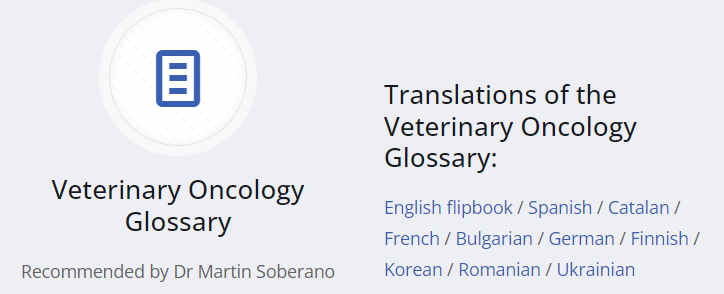
Let's face it - cancer/neoplasia can be a complex subject to discuss and even harder to comprehend when one is faced with the emotional aspects of a challenging diagnosis. The Veterinary Oncology Glossary provides an understandable source of information that can be used by veterinarians and their clients.

 The Veterinary Oncology Glossary is:

  • Concise and clear, with helpful images
  • Available in multiple languages
  • Contains common terms around the diagnosis, treatment, and management of cancer.
     

Vet Oncology Glossary image.png

Download the English version here:     Veterinary Oncology Glossary-WOW-13.11.2021.pdf

Go to the Oncology Working Group site to learn more or download in other languages.

https://wsava.org/committees/oncology-working-group/ - is the link.... and you will see this:


rr and other cancer.png


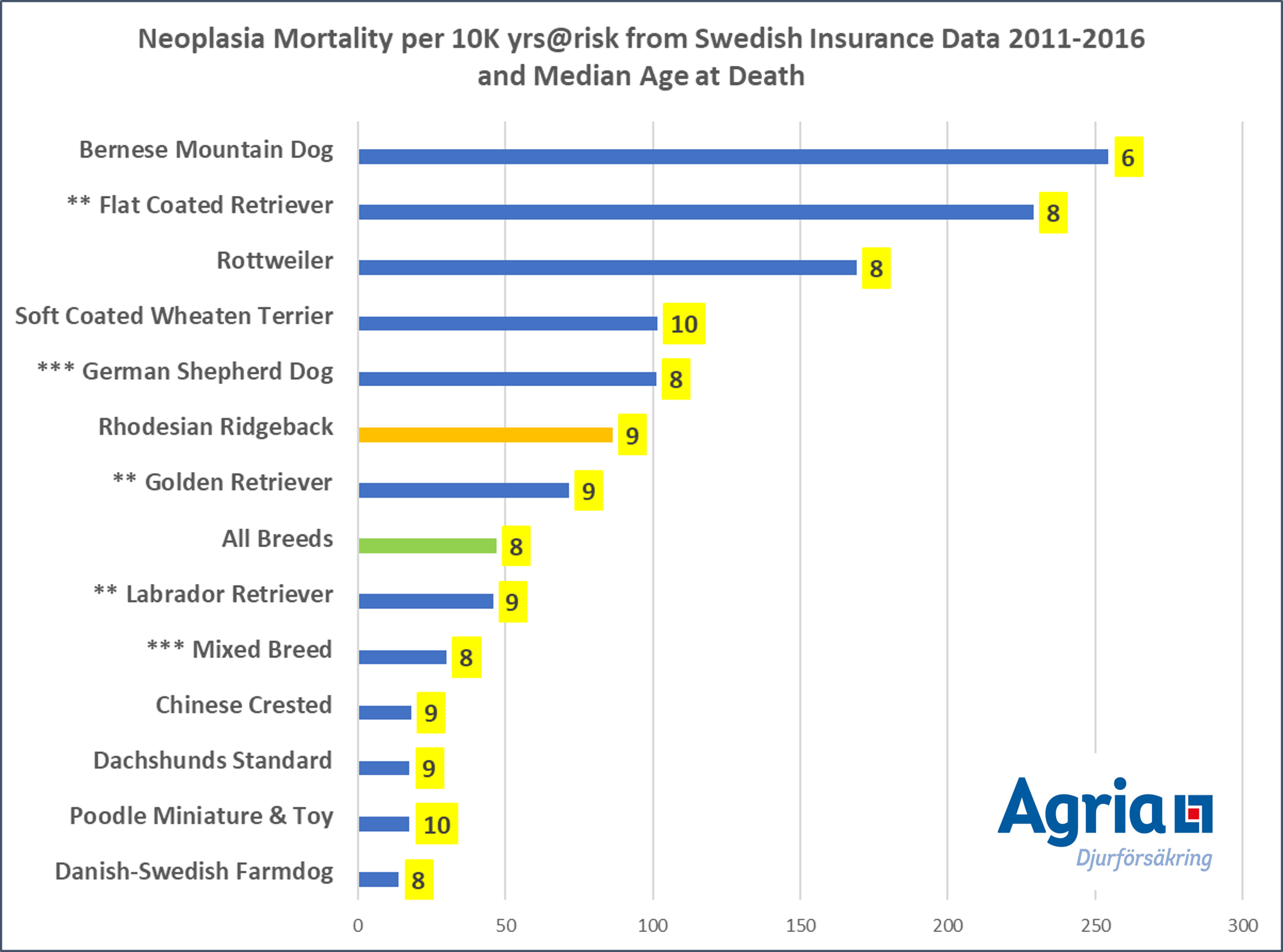
Unfortunately, cancer is very common in some breeds and can happen in any dog.  This chart of Swedish data shows high and low risk breeds and ages at death. 

(From Get a GRIHP on Rhodesian Ridgebacks)


We all know someone who is affected by cancer.  The WSAVA glossary resource can help us understand the terminology and communicate with others.


0 Comments

Recommended Comments

There are no comments to display.

Guest
Add a comment...

Blog Disclaimer
The contents of this blog are for informational purposes only and represent the opinion of the author(s), and not that of the International Partnership for Dogs (IPFD). This is not intended to be a substitute for professional, expert or veterinarian advice, diagnosis, or treatment. We do not recommend or endorse any specific tests, providers, products, procedures, opinions, or other information that may be mentioned on, or linked to from this blog.

Disclaimer
All materials on this site are the property of their respective authors and may not be reprinted without the author's written permission, unless otherwise indicated. The views and opinions expressed by the authors and those providing information or comments on this website are theirs alone, and do not necessarily reflect the views, opinions or positions of the International Partnership for Dogs (IPFDogs) or DogWellNet.com. We make no representations as to accuracy, completeness, timeliness, suitability or validity of any information and will not be liable for any errors, omissions, or delays in this information or any losses, injuries or damages arising from its display or use. All rights reserved. DogWellNet © 2014 - 2026
Find Us On
Contact Us
Questions? Comments? Looking to get involved in our work? We’d like to hear from you!
or if you prefer feel free to reach out to us on social media.

Powered by Invision Community

Important Information

By using this site, you agree to our Terms of Use.

Configure browser push notifications

Chrome (Android)
  1. Tap the lock icon next to the address bar.
  2. Tap Permissions → Notifications.
  3. Adjust your preference.
Chrome (Desktop)
  1. Click the padlock icon in the address bar.
  2. Select Site settings.
  3. Find Notifications and adjust your preference.