





Jump to content
View in the app

A better way to browse. Learn more.

DogWellNet

A full-screen app on your home screen with push notifications, badges and more.

To install this app on iOS and iPadOS
  1. Tap the Share icon in Safari
  2. Scroll the menu and tap Add to Home Screen.
  3. Tap Add in the top-right corner.
To install this app on Android
  1. Tap the 3-dot menu (⋮) in the top-right corner of the browser.
  2. Tap Add to Home screen or Install app.
  3. Confirm by tapping Install.

… and responsibilities

(0 reviews)

blog-0595645001419934859.jpgSo who is responsible?

Of course, breeders will probably be the first to be blamed, because they are those who are at the origin of the selection and evolution of dog breeds… also because, in comparison to other domestic species, dog breeders have almost no constraints to make their own selection. Legal background for breeding and reproduction is indeed more permissive than in livestock species, while, as breeding remains a hobby for most, breeders have a large liberty in choosing their reproducers.


Yet the blame is easy…

If more and more dogs have been produced with exaggerated morphological features, it is because there has been a demand on it… Public (I am including me in it) likes those spectacular animals, those looney tunes Bulldogs and other pocket Chihuahuas. And the reason why is that there is still a lack of public awareness on the issue. Here we join again the question of education and information, and also the responsibilities of media in it. Indeed, if media may have a salutary role in the denunciation of the dog loving world excesses, they can as well play a major role in the public enthusiasm toward spectacular dogs.

Coming back to the dog world, breed clubs and judges also share their part. Breed clubs, because the responsibilities have rarely been taken to proceed to real measure for the improvement of dog health, either for personal interest, political reasons or lack of awareness. Judges, because of their own interpretation of standards, complying more with the requirement of the star system, than to the interest of dogs. In that extent, there is an effort to be made in judge formation.

Finally, scientists and veterinary professionals have also frequently failed in their role to provide adequate information to dog owners and breeders. Outside of the Internet, a veterinarian is logically the main person to which a dog owner will turn to about dog health. Meyers-Wallen underlined in 2003 that increasing information from genetic research would be useful in improving canine health only if practitioners have the knowledge and skills to use it ethically and responsibly. Again there is urgent need is that extent.

To conclude, it appears clear that the responsibility about dog health is shared by the different actors of dog world. Development of education and information around dog breeding are probably among the main tools needed to improve the situation. It is actually one of the main purpose of this website - DogWellNet.com and other initiatives such as the Institute of Canine Biology.


References:

  • Meyers-Wallen V.N. (2003) Ethics and Genetic Selection in Purebred Dogs Reprod Dom Anim 38, 73–76.


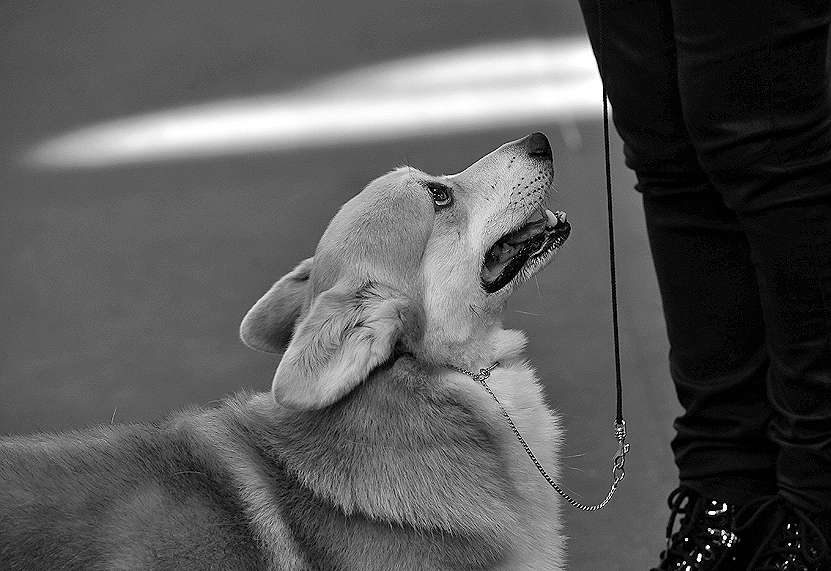
Credit picture: I. Horvath


blogentry-20-0-16363800-1418831108.jpg

blogentry-20-0-76952500-1418832390.jpg

1 Comment

Recommended Comments

patricianolson

Advanced Members

Meyers-Wallen has done a good job in attempting to advance canine health through her research - much of which also has applicability to humans.  Since the era of personalized medicine is upon us, it seems like ascribing blame is not helpful.  As genetic tests are now available to help breeders evaluate inbreeding and heritable disorders, perhaps we can experience a future where dog breeding becomes both a passion and process for improving heath.  When I was the Director of Canine Health and Training at Guide Dogs for the Blind, Inc. we knew that strategic breeding was key for producing excellent guide dogs.  This included longevity for the dog/handler team (health) and a propensity for being an excellent working dog (behavior training).  I am excited about global efforts of sharing information through IPFD.  Patricia Olson

Guest
Add a comment...

Blog Disclaimer
The contents of this blog are for informational purposes only and represent the opinion of the author(s), and not that of the International Partnership for Dogs (IPFD). This is not intended to be a substitute for professional, expert or veterinarian advice, diagnosis, or treatment. We do not recommend or endorse any specific tests, providers, products, procedures, opinions, or other information that may be mentioned on, or linked to from this blog.

Disclaimer
All materials on this site are the property of their respective authors and may not be reprinted without the author's written permission, unless otherwise indicated. The views and opinions expressed by the authors and those providing information or comments on this website are theirs alone, and do not necessarily reflect the views, opinions or positions of the International Partnership for Dogs (IPFDogs) or DogWellNet.com. We make no representations as to accuracy, completeness, timeliness, suitability or validity of any information and will not be liable for any errors, omissions, or delays in this information or any losses, injuries or damages arising from its display or use. All rights reserved. DogWellNet © 2014 - 2026
Find Us On
Contact Us
Questions? Comments? Looking to get involved in our work? We’d like to hear from you!
or if you prefer feel free to reach out to us on social media.

Powered by Invision Community

Important Information

By using this site, you agree to our Terms of Use.

Configure browser push notifications

Chrome (Android)
  1. Tap the lock icon next to the address bar.
  2. Tap Permissions → Notifications.
  3. Adjust your preference.
Chrome (Desktop)
  1. Click the padlock icon in the address bar.
  2. Select Site settings.
  3. Find Notifications and adjust your preference.