






Skip to content
View in the app

A better way to browse. Learn more.

DogWellNet

A full-screen app on your home screen with push notifications, badges and more.

To install this app on iOS and iPadOS
  1. Tap the Share icon in Safari
  2. Scroll the menu and tap Add to Home Screen.
  3. Tap Add in the top-right corner.
To install this app on Android
  1. Tap the 3-dot menu (⋮) in the top-right corner of the browser.
  2. Tap Add to Home screen or Install app.
  3. Confirm by tapping Install.

Welfare Consultations to Improve Pet Wellbeing and Generate Revenue

(0 reviews)

Improving animal welfare is the basis of veterinary medicine. However, improving animal welfare can oftentimes be costly. A new consultation structure, PetWise MOTs, created by the UK’s leading veterinary charity, PDSA, is a step to overcoming these obstacles. PetWise MOTs can be used to improve pet welfare and generate additional revenue for practices. 


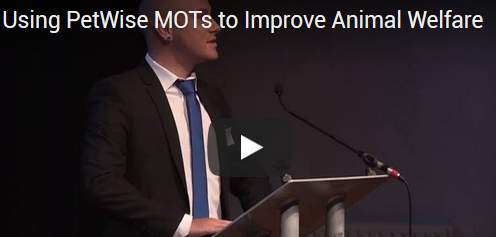
A review of the UK’s Animal Welfare Act in 2010 placed additional emphasis on veterinary involvement in promoting better pet welfare. The PetWise MOTs model was created because while clients value their pet’s welfare, they are often unsure how to improve it. The video below explains the development of the PetWise MOT concept. 


The five areas that are focused on in these appointments are good health, the ability of an animal to express normal behavior, availability of companionship, providing a safe environment, and feeding a suitable diet. During a PetWise MOT appointment, veterinarians are able to ask more in-depth questions of their clients that may not be able to be discussed during a normal visit.


Using this structure, PDSA saw an up to 40% uptake of preventative medicine services and a 28% increase in treatment for problems that usually would go unnoticed with a traditional appointment. 100% of clients believed that every practice should offer this service. 


Through 2016 the introductory training course is free and there are still openings for the 13 December 2016 training course.


Please comment if you know of other similar services or have experience with PetWise MOTs. Would love to hear from you!
 

3 Comments

Recommended Comments

Brenda Bonnett

Advanced Members

I saw the PetWise MOTs model demonstrated at the Human Behaviour Change for Animal Welfare conference in the UK in September 2016 and was very impressed.  I like the traffic light concept.  Although it may seem overly simple for some situations, it is an effective communication tool with clients.


One always worries nowadays when we see veterinarians looking for more ways to 'generate revenue'.  However, PDSA really seems to have an emphasis on providing preventive health care.  Hopefully, having this communication model will help clients get the care they need for their pet before major problems arise.  Unfortunately, we have little good evidence in veterinary medicine as to whether our interventions really make animals healthy or live longer.  Nice to see PDSA also taking efforts to monitor the impact of the program.

Jim Stephens

Advanced Members

not sure if you have seen this paper

Canine behaviour problems: discussions between veterinarians and dog owners during annual booster consultations (http://veterinaryrecord.bmj.com/content/early/2012/12/27/vr.101125) which provides information on  relationship between veterinarians and the addressing of problem behaviour. Although a small study it provides an insight into the difficulties of clients asking for and accessing veterinary support during the annual vaccination visit. worth a read.

Thank you very much for the comment and link to a very interesting article Jim. Moving beyond just health and biological functioning, as Fraser described, to include the other spheres could provide both better welfare outcomes for patients and financial opportunities for veterinarians. Also neat that the paper cited the article by Shaw 2008. I am currently in a communications rotation right now with Dr. Shaw discussing some of these tough issues and learning tools to navigate them. 

Guest
Add a comment...

Blog Disclaimer
The contents of this blog are for informational purposes only and represent the opinion of the author(s), and not that of the International Partnership for Dogs (IPFD). This is not intended to be a substitute for professional, expert or veterinarian advice, diagnosis, or treatment. We do not recommend or endorse any specific tests, providers, products, procedures, opinions, or other information that may be mentioned on, or linked to from this blog.

Disclaimer
All materials on this site are the property of their respective authors and may not be reprinted without the author's written permission, unless otherwise indicated. The views and opinions expressed by the authors and those providing information or comments on this website are theirs alone, and do not necessarily reflect the views, opinions or positions of the International Partnership for Dogs (IPFDogs) or DogWellNet.com. We make no representations as to accuracy, completeness, timeliness, suitability or validity of any information and will not be liable for any errors, omissions, or delays in this information or any losses, injuries or damages arising from its display or use. All rights reserved. DogWellNet © 2014 - 2026
Find Us On
Contact Us
Questions? Comments? Looking to get involved in our work? We’d like to hear from you!
or if you prefer feel free to reach out to us on social media.

Powered by Invision Community

Important Information

By using this site, you agree to our Terms of Use.

Account

Navigation

Search

Search

Configure browser push notifications

Chrome (Android)
  1. Tap the lock icon next to the address bar.
  2. Tap Permissions → Notifications.
  3. Adjust your preference.
Chrome (Desktop)
  1. Click the padlock icon in the address bar.
  2. Select Site settings.
  3. Find Notifications and adjust your preference.